Advanced PSA Grading App for Pokémon and Trading Cards
Analyze Pokémon and trading cards with an advanced PSA grading app, estimate grades instantly, and screen submissions smarter—try it now.
You just found a dusty old 1999 Pokémon card collection in your childhood closet. You start to wonder what every returning Pokémon fan wonders: do I have a fortune on my hands? Stories about million-dollar Charizards have captivated the masses, but the reality is that most collections are worth far less unless the cards are both rare and exceptionally well preserved. What looks perfect to an untrained eye can still have flaws that dramatically reduce value. Only experienced graders—or the right technology—can spot them reliably.
Think of professional card grading as a certification process similar to what exists for diamonds, but for trading cards. PSA is one of the best-known grading companies. It inspects cards for flaws, assigns a grade from 1 to 10, and seals them in a protective plastic holder called a slab. A card’s market value can change dramatically based on that result. Cards graded Gem Mint 10, meaning virtually flawless, can sell for thousands.
Today, an advanced PSA grading app for Pokémon and trading cards allows anyone to use a smartphone to analyze centering, corners, edges, and surface condition in seconds. By using AI card grading for Pokémon and trading cards, collectors can pre-grade cards at home and bridge the gap between casual collecting and professional-level decision-making before spending money on grading fees.
AI Card Grader
Know your card's grade before you submit
Snap a photo with your phone and get an instant AI-powered grade estimate. Check centering, corners, edges, and surface — just like the pros.
- Instant grade estimate
- Sub-grades for all 4 pillars
- Built-in ROI calculator
- Free to use
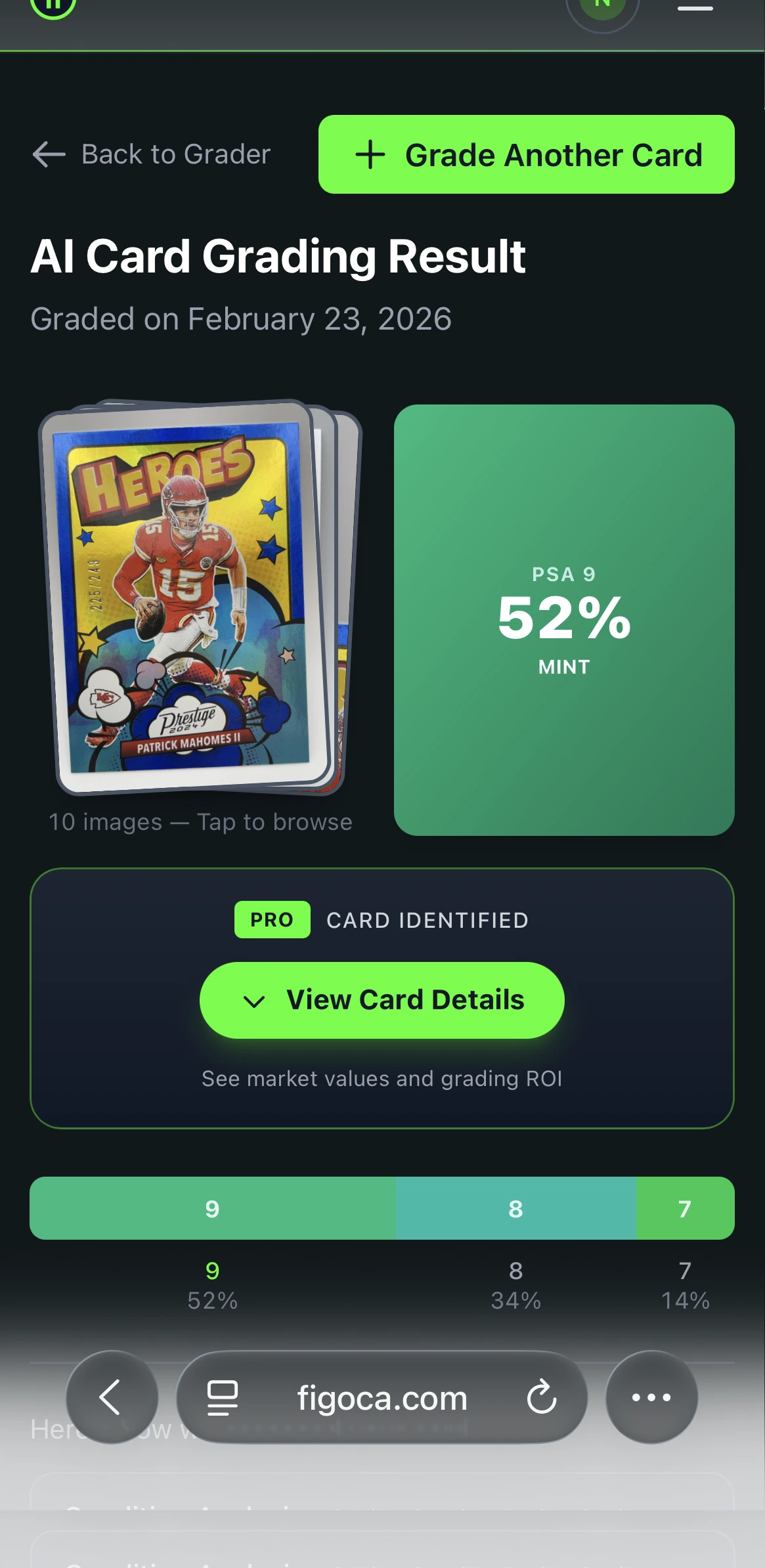
Why a "Perfect" Card is Worth 10x More: The Math Behind Professional Grading
Most of us look at a shiny Charizard and see a flawless treasure, but professional grading companies judge cards on an unforgiving 1-to-10 scale. Think of this scale as a report card where the difference between a passing grade and perfection is enormous. A 7 (Near Mint) is respectable, but it may show whitening, edge wear, or light scratches. A 10 (Gem Mint) is virtually perfect, even under magnification. That distinction drives the market. A card that looks “good enough” might sell for a modest amount, while that same card in a perfect slab can be worth many times more.
Scarcity drives those prices, but not just scarcity of supply. It is also about how many copies survived in pristine condition. This is often called condition rarity. Grading companies publish population reports that show how many examples of a card exist at each grade. If thousands of copies of a Pikachu exist but only a few dozen earned a 10, the premium for that top grade can explode.
Navigating these price gaps requires more than a quick glance. Because even a microscopic dent can tank value, relying on the naked eye is risky. That is why smart collectors combine pre-grading with a grading expected value calculator to estimate whether a card is actually worth submitting.
If you want a broader framework for deciding whether grading makes financial sense, this guide on whether your card is worth grading is a strong companion read.
How Computer Vision "Sees" What Your Eyes Miss: The Tech Behind Digital Pre-Grading
While a human collector looks at a holographic card and admires the artwork, an AI-powered grading app sees the card as a detailed visual data set. Modern smartphones can capture high-resolution scans that turn a simple image into millions of pixels. That shift from subjective opinion to objective measurement is what makes digital pre-grading so powerful. It reduces the risk that nostalgia clouds your judgment.
To estimate whether a card is truly Gem Mint, the software compares your copy against a reference model of what a flawless version should look like. This is the essence of how AI is transforming card grading. The app overlays your image against ideal proportions and surface expectations to detect anomalies such as a shifted border, edge whitening, print dots, or tiny scratches.
Surface damage is often the silent grade killer. It can stay invisible until light hits the foil at the wrong angle. A strong AI card condition analyzer uses changes in texture, contrast, and reflection to flag issues such as silvering, holo scratches, and print defects that many collectors miss. If you want another angle on this topic, this related article on an AI trading card grading tool fits naturally here as well.
The Four Pillars of Condition
Even a card pulled fresh from a booster pack is not automatically perfect. Professional graders typically evaluate four core categories, and understanding them is essential if you want to judge whether a card could realistically achieve a top grade.
- Centering: Is the card image properly positioned within the borders?
- Corners: Are the corners sharp and free from wear or whitening?
- Edges: Are the edges clean, smooth, and free from chipping or silvering?
- Surface: Is the card free from scratches, dents, print lines, and factory defects?
Centering is one of the most misunderstood parts of grading. A card can look clean overall but still be noticeably off-center once measured. PSA allows some tolerance, but serious imbalance can keep a card out of Gem Mint territory. If you need a better foundation for understanding what grades actually mean in practice, see PSA grades explained.
Corners and edges are especially important on vintage cards, where whitening and wear are common. Surface issues are often the hardest to spot because they hide in glare or appear only at certain angles. This is exactly why a dedicated AI card grading app can be so useful. It gives collectors a structured way to review the Big Four before making a submission decision.
A Step-by-Step Guide to Scanning Your Cards for Accuracy
Turning your kitchen table into a card grading station involves more than opening an app. The quality of the scan directly affects the quality of the estimate. Lighting is especially important because the AI depends on pixel-level detail to evaluate flaws. Avoid strong overhead lights that create glare and reflections. Natural daylight near a window is usually a better option because it helps the camera distinguish between dust and actual damage.
For the most accurate result, remove the card from sleeves and top loaders before scanning. Otherwise, scuffs and reflections on the plastic can produce a misleadingly poor result. Place the card on a dark, matte, non-reflective background such as a mousepad or black paper, then follow these basic scanning rules:
- Lens Prep: Wipe the camera lens with a microfiber cloth.
- Alignment: Hold the phone parallel to the card so it appears as a rectangle, not a trapezoid.
- Stabilization: Rest your elbows on the table to reduce shake.
- Movement: Use the app’s angle guidance to catch the right reflection across the holo surface.
This kind of workflow pairs especially well with a dedicated AI card grader, because the app can only be as accurate as the scan you provide.
AI Accuracy vs. Human Subjectivity: Why Pre-Grading Saves You Hundreds in Submission Fees
Sending a card to a grading company without screening it first is often a financial gamble. Many collectors make blind submissions because a childhood favorite looks clean to the naked eye. But professional graders use magnification and consistent standards, and a mediocre grade can leave you with a slab worth less than the total grading cost.
That is why AI pre-grading acts as a financial gatekeeper. Instead of letting nostalgia make the decision, you get an unbiased estimate of a card’s likely quality. A good app can help you decide whether a card has real Gem Mint upside or whether it is better left raw.
The hidden costs of grading add up quickly:
- Service Fees: Often $25 to $50 per card or more.
- Shipping and Insurance: These rise with declared value and submission size.
- Opportunity Cost: Cards can be tied up for months while the market moves.
This is why articles like how to select cards to submit for grading and the card grading 80 dollar rule are highly relevant for collectors trying to protect their budget.
If you are comparing where to send your best cards, this guide on PSA vs CGC vs BGS vs SGC is the best internal comparison piece from your sitemap.
How Advanced Algorithms Detect Counterfeit Pokémon Cards
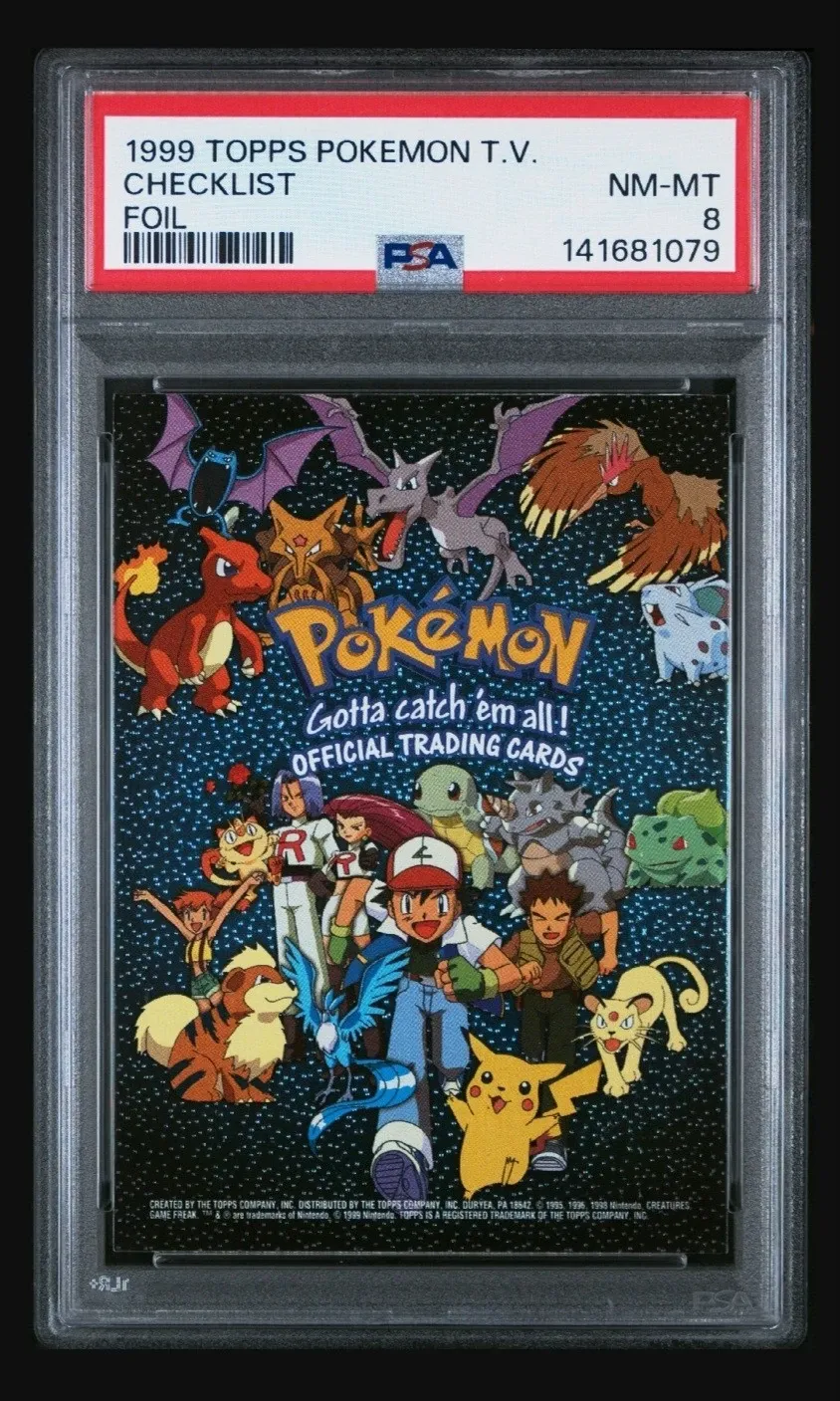
Finding a bargain on a rare Charizard feels amazing until you realize it might be fake. Obvious counterfeits can look glossy, blurry, or washed out, but better fakes are designed to fool collectors at a glance. That is where AI-based analysis becomes useful beyond simple condition grading.
An advanced AI card grading tool can inspect text sharpness, border consistency, print detail, and other visual patterns against known authentic examples. This kind of image-based analysis can help flag inconsistencies that are difficult to spot casually.
Traditional methods such as the light test are no longer enough against modern counterfeits. Better digital analysis gives you another layer of protection, whether you are screening cards before purchase or deciding whether a card is even worth sending to a grading company. If authenticity and slab trust matter to the reader, you can also point them to fake PSA slabs: 60-second check and the PSA cert checker.
Your 3-Step Action Plan: Turning Cardboard into Certified Gold with AI
You no longer need to rely on guesswork or a magnifying glass to understand the potential of your collection. Instead of staring at stacks of old cards and wondering where to start, use a simple workflow:
- Scan and Pre-Grade: Use an AI card grading app to identify hidden flaws such as off-centering, whitening, and surface scratches.
- Check the Value: Use a grading expected value tool to compare the likely grade with current market value.
- Submit the Winners: Send only the strongest candidates to PSA using this step-by-step PSA submission guide.
This approach removes the analysis paralysis that keeps so many collections sitting in closets. You do not need to be a professional dealer to make smarter grading decisions anymore. Start with the figoca AI card grading app and screen your best cards before you spend on submission fees.

Card enthusiast, figoca founder, and independent software developer
Nico is a card enthusiast who built figoca after running into the same problems many collectors face: uncertain pre-grading decisions, too much tab switching for comps, and no fast way to price cards on the go. He is also a big Kansas City Chiefs fan (❤️💛), follows the Kansas City Royals (💙), and enjoys Formula 1 and Golf.
- Sports Card enthusiast
- Founder of figoca
- Independent software developer with a TypeScript and AWS background