Best Magnetic Card Holders (35pt, 55pt, 130pt): What Fits What?
Find the best magnetic card holders for 35pt, 55pt, and 130pt cards. Learn what fits what, protect your collectibles, and choose the right holder for maximum safety and display.
Best Magnetic Card Holders (35pt, 55pt, 130pt): What Fits What?
You just pulled a stunning holographic card or a thick jersey relic, but the excitement fades when you try to protect it. Whether the magnet refuses to click shut or the card slides around dangerously, getting the fit wrong is a collector's worst nightmare. Magnetic holders, frequently called One-Touches, are widely regarded as the gold standard for display, yet finding the best magnetic card holders requires solving a confusing math problem first.
This sizing puzzle revolves entirely around the "point" or "pt" measurement found on packaging. Industry standards define 1pt as exactly 1/1000th of an inch, meaning a higher number equals a thicker case. While a standard base card sits comfortably at 35pt, premium inserts can easily require 35pt vs 55pt card holders or even larger sizes to accommodate distinct layers of material.
Ignoring these specific dimensions creates real risks for your collection. A holder that is too tight can crush the surface gloss, while a loose fit fails the "Rattle Test," allowing the card to bounce against hard plastic edges. By understanding how to use basic trading card tools and visual checks, you can ensure your most prized cards remain secure rather than accidentally damaged.
The 1-Minute Measurement Guide: How to Tell 35pt From 130pt Without a Ruler
Most Card collectors don't keep a set of calipers on their desk, and eyeballing a fraction of a millimeter is a recipe for frustration. While professional supply kits often include a card thickness point gauge , a specifically marked tool that lets you slide your card into color-coded slots to find the perfect fit , you likely don't have one lying around right now. Instead of guessing and risking a holder that squeezes your card too tight or allows it to bounce around, you can use common household items as immediate measuring references.
The easiest method for measuring trading card thickness without buying new equipment is the "Physical Proxy" strategy, often called the Penny Test. Since magnetic holders have specific internal depths, stacking standard US pennies next to your card gives you a surprisingly accurate estimate of the point (pt) size required. This works because the thickness of a penny aligns closely with the jump between common holder sizes, providing a tactile unit of measurement that makes sense instantly.
Use this quick proxy scale to visualize the size you need before you buy:
- Standard Card (35pt): Significantly thinner than a dime.
- 1 Penny (~60pt): A close match for 55pt or 75pt holders.
- 2 Pennies (~120pt): Fits comfortably in a 130pt holder.
If you prefer more precision, many manufacturers offer a card thickness printable ruler that you can download and print at 100% scale. Once you have confirmed your measurements, you will likely find that the vast majority of your collection falls into the smallest, most common category.
AI Card Grader
Know your card's grade before you submit
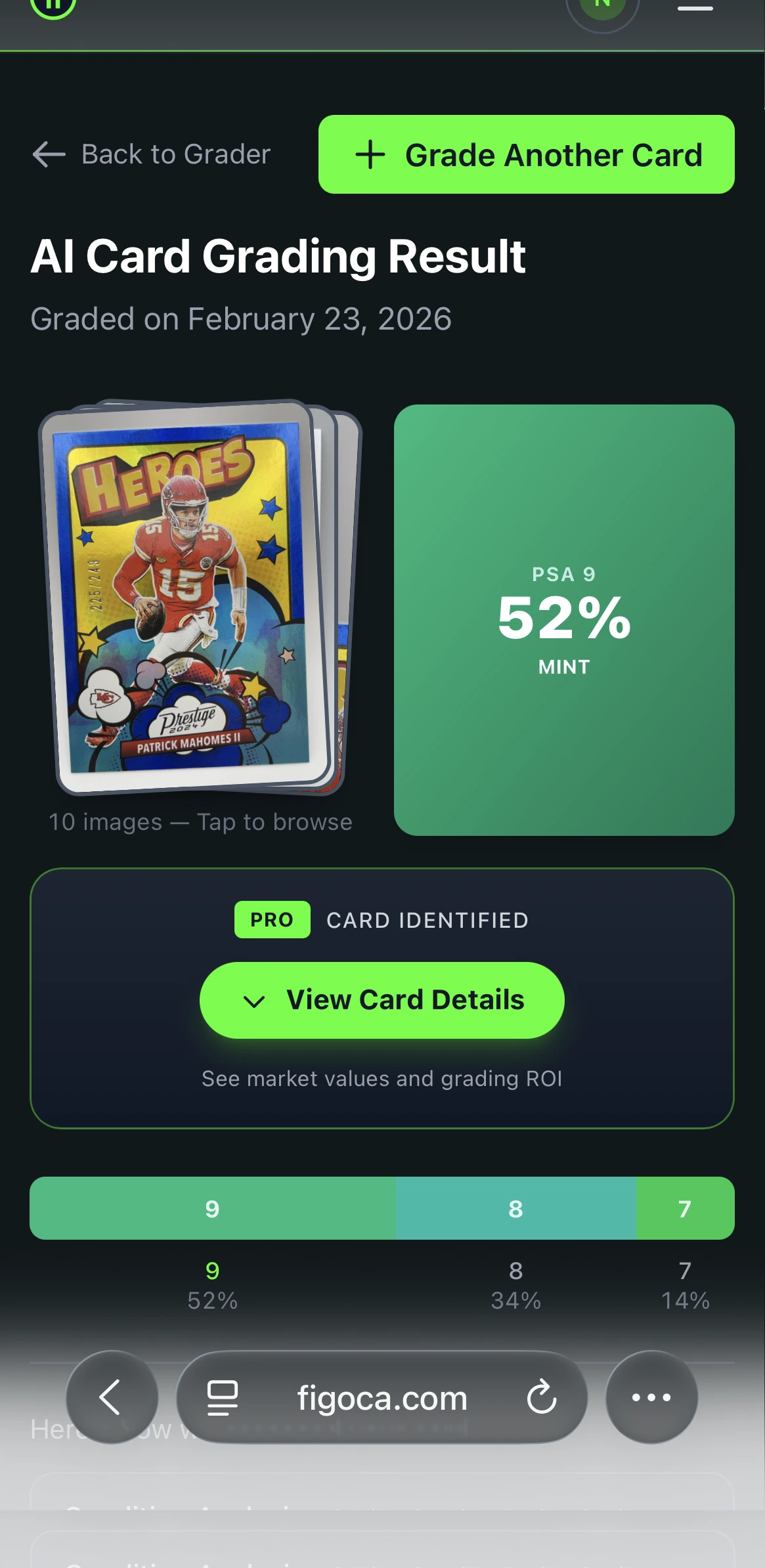
Snap a photo with your phone and get an instant AI-powered grade estimate. Check centering, corners, edges, and surface — just like the pros.
- Instant grade estimate
- Sub-grades for all 4 pillars
- Built-in ROI calculator
- Free to use
The 35pt Gold Standard: Perfect Protection for Your Base Cards and Pokémon Pulls
If you grab a random pack of cards off the shelf at a big box store, odds are high that every single card inside belongs in a 35pt case. This is the standard trading card protector size for the hobby, covering almost everything from Pokémon and Magic: The Gathering to your standard paper Topps baseball cards. Because these "base" cards are printed on standard cardstock without layers of memorabilia or heavy acetate finishes, they are roughly 35/1000ths of an inch thick. For the vast majority of collectors, this is the default size you should stock up on first to handle your general collection.
Achieving the right fit is about balancing stability with safety. A proper 35pt card holder provides a "flush fit," meaning the card sits perfectly flat within the recessed area without sliding up, down, or side-to-side. When you pick up the magnetic case and give it a gentle shake, the card should remain stationary. If you put a thin standard card into a larger case, like a 55pt or 130pt, it will rattle against the plastic walls, potentially damaging the delicate corners over time as it moves.
Conversely, trying to force a card into a holder that is too shallow creates a hidden danger known as surface crushing. While magnetic card holders are designed to snap shut securely, using a 35pt case for a slightly thicker card can cause the plastic to press down onto the card's face. This pressure is particularly dangerous for holographic or foil finishes, which can scratch or peel under the strain. If the magnet does not click shut effortlessly, never force it, the resistance is a warning sign that your card needs more depth.
While the 35pt size is the universal standard for paper cards, modern printing technology has introduced a tricky middle ground that often confuses new collectors. Many premium sets, such as Panini Prizm or Topps Chrome, use a slightly thicker, curved cardstock that technically fits in a 35pt case but benefits significantly from just a bit more space to avoid that dreaded surface compression.
Why Your Prizm and Chrome Cards Need a Little Extra Breathing Room (55pt to 75pt)
Modern trading card sets featuring metallic finishes, like Panini Prizm or Topps Chrome, often introduce a subtle challenge called the "chrome curve." These cards are printed on thicker stock with heavy acetate layers that naturally bow slightly, making them effectively thicker than a standard paper base card. While you might be able to force them into a 35pt case, doing so flattens the curve aggressively and creates potential for long-term surface damage.
You can spot a dangerous fit by looking for the dreaded "oil slick" effect in the center of the holder. This visual distortion, which looks like a wet rainbow patch, appears when the plastic cover presses firmly against the glossy card surface with zero air gap. Seeing this blotch is a clear indicator that your card is suffocating and needs immediate relief to prevent the finish from sticking to the magnetic holder over time.
Choosing a 55pt card holder (or sometimes 75pt for extra-thick parallels) resolves this issue instantly. The slightly deeper recess accommodates the card's natural arch and thicker stock, eliminating the oil slick while maintaining a secure fit that prevents rattling. If you find yourself asking which one touch for chrome cards is best, this intermediate size is usually the safest bet for high-end modern sets that feel just a bit sturdier than vintage cardboard.
Moving beyond simple thickness variations, the hobby throws a drastic curveball when actual pieces of memorabilia are embedded inside the cardboard. A patch of a game-worn jersey adds massive bulk that requires a completely different tier of protection, leading us to the heavy-duty world of thick memorabilia holders.
Taming the Patch: How to Size 130pt Magnetic Holders for Your Thickest Memorabilia
Holding a card with a piece of uniform inside feels substantially different than a standard baseball card. When you start storing thick memorabilia cards, you are dealing with a sandwich of cardboard and fabric that is roughly the thickness of three stacked quarters. This added bulk almost always requires the 130pt magnetic holder, which is the reliable industry standard for the vast majority of relic and patch releases.
Determining exactly how many points a jersey card has can be tricky because fabric thickness varies, but the "Magnet Test" serves as your fail-safe. Place the card in the recessed area and gently lower the magnetic top. If the magnet snaps shut with a crisp click and stays closed without assistance, the size is correct. If the magnets seem to repel each other or the case pops open the moment you let go, the card is too thick, and forcing it shut will crush the memorabilia window.
For general sorting, you can safely grab a 130pt holder for these common thick hits:
- Standard game-worn jersey swatches
- Thick Rookie Patch Autographs (RPAs)
- Double-layered or multi-swatch memorabilia cards
Getting this fit right is critical because a tight squeeze often causes "corner softening," where the pressure eventually turns sharp card edges into mushy, rounded nubs. While finding the best case for patch cards solves the immediate thickness puzzle, even the perfect depth can fail if the case design itself lacks specific safety features.
Beyond the Magnet: Why Recessed Corners and UV Coating are Non-Negotiable
Finding the right depth is only half the battle , the design of the interior wall is just as vital for preserving value. High-quality holders feature recessed corners for card protection, often called "diamond corners," which are small geometric cutouts ensuring the card's fragile edges hover freely rather than pressing against hard plastic. Without this feature, even a perfectly sized case can act like a slow-motion vice, fraying those sharp gem-mint corners every time the case is jostled or moved.
While physical damage is obvious, invisible environmental threats can be just as destructive to your collection's long-term health. UV protection magnetic card cases are essential for any card you plan to display, as standard indoor lighting and sunlight can fade vibrant ink and turn bold autographs into ghostly smudges over time. Most reputable brands specifically label their products as "UV safe" or "archival safe," effectively applying a layer of invisible sunscreen to your investment.
Skimping on these materials to save a few cents is rarely worth the risk, which is why sticking to industry standards like Ultra PRO vs BCW magnetic holders is generally safer than buying unbranded bulk packs. These established manufacturers consistently use acid-free, non-PVC materials that won't strip the glossy finish off your cards during long-term storage. With the sizing logic and safety features now demystified, you are ready to build a defense strategy for your entire collection.
Your No-Fail Protection Plan: 3 Steps to Selecting the Right Magnetic Holder Every Time
You no longer need to guess which holder fits your best pulls or worry about crushing a valuable jersey patch. By mastering the difference between standard 35pt cards and thick 130pt relics, you ensure your collection remains pristine. The right fit isn't just about a clean display, it is the primary defense against surface scratches and corner damage, preserving the value of your investment for years to come.
Establish a simple routine for every new addition to your collection using this Final Protection Checklist:
- Measure: Use the "Penny Test" or a thickness gauge to quickly estimate depth.
- Size: Select the standard 35pt for base cards or scale up to 55pt and 130pt for chrome and memorabilia.
- Test: Ensure the magnet clicks firmly without forcing it and check that the card doesn't rattle.
Once your cards are securely housed, you are ready to assess their true potential. If a card looks perfect in its magnetic holder, consider taking the next step toward professional grading. Use our Free AI Card Grading App to get an instant estimate, and visit the ** Figoca Blog** for more trading card tools to manage your growing portfolio.

Card enthusiast, figoca founder, and independent software developer
Nico is a card enthusiast who built figoca after running into the same problems many collectors face: uncertain pre-grading decisions, too much tab switching for comps, and no fast way to price cards on the go. He is also a big Kansas City Chiefs fan (❤️💛), follows the Kansas City Royals (💙), and enjoys Formula 1 and Golf.
- Sports Card enthusiast
- Founder of figoca
- Independent software developer with a TypeScript and AWS background