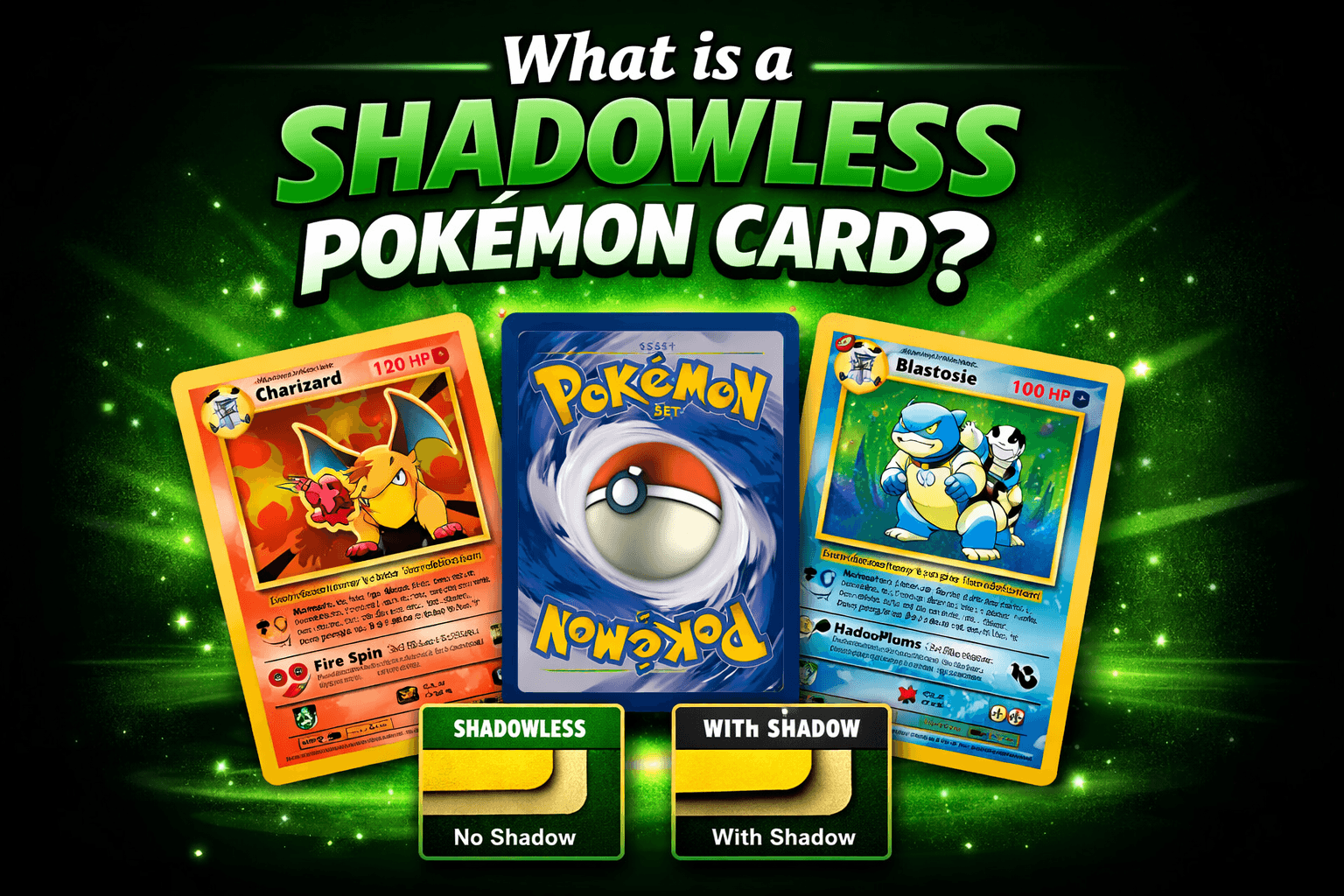
What is a shadowless Pokemon card?
A shadowless Pokémon card is an early print from the Base Set without a drop shadow around the artwork box. These rare cards are highly valued by collectors for their unique design and scarcity.
Dusting off a childhood binder of Pokémon trading cards from the late 1990s feels like opening a time capsule. Millions of kids tucked away beloved Pikachus and Charizards, unaware that a fraction of these nostalgic vintage Pokémon cards hide a lucrative secret in plain sight. To the untrained eye, two early Base Set Pokémon cards might look completely identical, prompting many returning hobbyists to ask exactly what makes these early editions so special. That tiny missing sliver of digital ink fundamentally changes a piece of cardboard into a piece of history.
Imagine holding two identical portraits where only one lacks a faint drop-shadow behind the subject. In the Pokémon card collecting realm, the original manufacturers released the "Base Set Pokémon cards, ", the very first batch of Pokémon cards printed in 1999, before finalizing their graphic design. During this initial phase, the golden frame surrounding the character artwork was printed completely flat, lacking the heavy right-side shadow that became standard on billions of later copies. Spotting this subtle omission transforms a normal nostalgic find into a highly sought-after, rare Pokémon card.
According to historical auction data, these shadowless Pokémon cards represent a brief print run sandwiched between the fabled 1st Edition Pokémon card release and the mass-produced versions everyone remembers. Because factories quickly updated the layout to give the artwork more visual depth, the uncorrected original shadowless Base Set cards survive in extremely limited numbers. This brief printing evolution explains why that seemingly insignificant design tweak directly drives Pokémon card value today.
The Missing Ink: Visualizing the Shadowless Pokémon Card Design
Look at two nearly identical Pikachu Pokémon cards side by side. One has a faint dark border behind the character box, and the other doesn't. This literal missing sliver of digital ink, where the gold frame lacks a 3D "drop-shadow", gives the shadowless Pokémon card a distinctly flat appearance compared to standard prints.
This subtle design quirk traces back to the franchise's earliest days. The original manufacturer, Wizards of the Coast (WotC), hadn't quite finalized the Pokémon card layout. They released a small, early batch of shadowless Pokémon cards without that shadow, making them authentic pieces of history rather than mere misprints or errors. You can easily verify their age by checking the bottom text for the specific 1999 copyright dates.
Finding one of these flat-bordered rare Pokémon cards means you are holding the rare middle child of Pokémon's original printing history. Their unique place in the Pokémon card-collecting hobby becomes clear when tracking how the 1999 Base Set Pokémon card changed across three distinct print runs.
Pokémon 50 Card Mystery Pack
Assorted 50-card mystery pack with mostly Pokémon cards. Good starter lot for collectors and traders; card mix and duplicates may vary.
100+ bought in past month
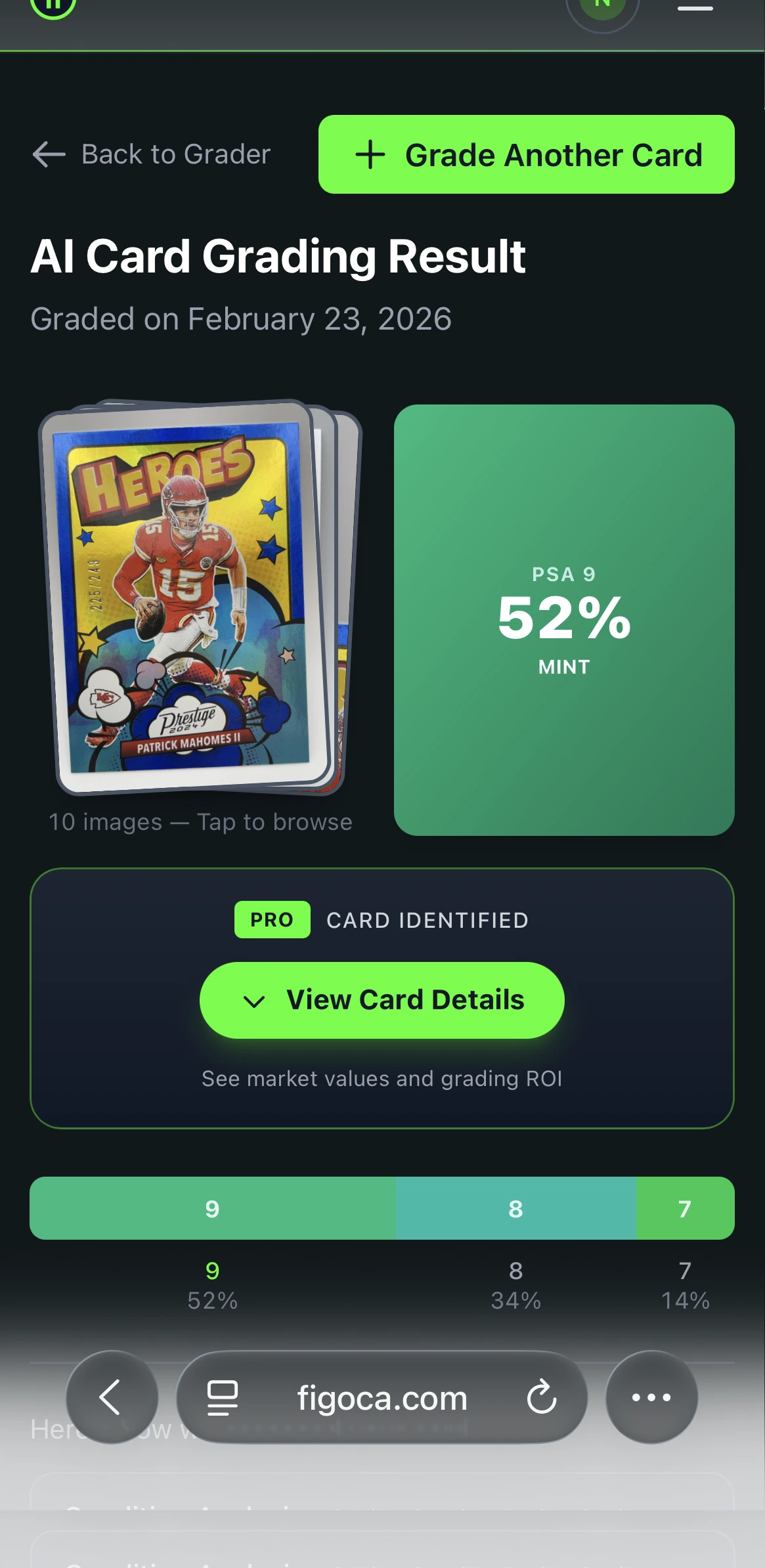
AI Card Grader
Know your card's grade before you submit
Snap a photo with your phone and get an instant AI-powered grade estimate. Check centering, corners, edges, and surface — just like the pros.
- Instant grade estimate
- Sub-grades for all 4 pillars
- Built-in ROI calculator
- Free to use
The Evolution of a Pokémon Card Design Across Three Print Runs
When early Pokémon trading card print runs hit shelves in 1999, the manufacturer adjusted the Pokémon card designs as worldwide demand skyrocketed. This brief timeline reveals exactly why rarity shifts so dramatically across the early Base Set Pokémon cards.
Collectors categorize these historic first Pokémon card printings into three distinct waves:
1st Edition Pokémon Card (The Rarest Tier): These feature a small black "1st Edition" stamp below the character and completely lack a drop-shadow.
Shadowless Pokémon Card (The Rare Transition Phase): The stamp was removed, but the flat, shadow-free artwork remained.
Unlimited Pokémon Card (The Mass-Produced Final Version): A dark drop-shadow was finally added to the right side of the art box.
Spotting the difference between these early shadowless Pokémon card variants and the Unlimited Base Set simply requires knowing where to look. While the black stamp disappeared immediately after the initial release, that flat golden border stuck around just a little longer before billions of regular Pokémon cards flooded the market. Evaluating your childhood Pokémon card collection begins with the most obvious visual marker.
Step 1: The Border Check, Identifying a Shadowless Pokémon Card

If you hold up a classic Pokémon card, your eyes naturally draw toward the shiny gold border surrounding the character illustration. That square area, known as the art frame, is exactly where to look to identify an early print Pokémon card. Imagine laying a picture completely flat against a table, it casts no silhouette. The original manufacturers created these early shadowless Pokémon cards with that same two-dimensional aesthetic.
To spot the difference, look closely at the right side of the gold border encasing the character art. On billions of common Pokémon cards produced later, designers added a distinct, dark gray line against that edge to create a 3D effect. A missing drop shadow on these borders is definitive proof of an early shadowless Pokémon card. Instead of adding depth, the bright yellow background sits completely flush against the side of the gold frame.
Glancing at this right-hand boundary offers the fastest way to quickly sort through a dusty binder of vintage Pokémon cards. Once you train your eyes to spot the flat artwork on a shadowless Pokémon card, filtering out the mass-produced versions becomes effortless. However, checking the frame alone isn't always enough to make a confident final confirmation.
Step 2: Decoding the Copyright Line on Your Pokémon Card
While checking the art frame is usually reliable, worn edges or fading ink can play tricks on your eyes. When you need absolute certainty that you have a shadowless Pokémon card, look down at the fine print. At the very bottom edge of the Pokémon card sits a tiny string of text detailing legal information.
This sequence of numbers tells the story of the early Pokémon card print runs. If you read the text on a standard, mass-produced Pokémon card, the years will simply say "1995, 96, 98 Nintendo." However, rare shadowless Pokémon cards include a crucial extra number inserted right before the company name. You are specifically searching for the 1999 Wizards of the Coast Pokémon card copyright dates, which will clearly read "1995, 96, 98, 99 Nintendo."
Spotting that extra year perfectly validates what the flat artwork borders already hinted at. Combining this legal text cross-reference with the missing drop-shadow allows you to confidently sort your Pokémon card collection. Still, one more subtle typographic clue hides in plain sight.
Step 3: The 'Thin HP' Font Variation on Shadowless Pokémon Cards
Once you verify the art box and copyright date, the final clue sits at the top right corner of your Pokémon card. Every character has Hit Points (HP) printed next to a black number. Standard mass-produced Pokémon cards feature a bold, heavy typeface, making it easy to quickly read stats during a game. Early shadowless Pokémon cards use much lighter text. Recognizing this thin HP font versus the thicker version requires a keen eye but serves as a definitive marker of a rare Pokémon card.
Designers originally used this slender text before realizing bolder numbers popped better in mass production. Guaranteeing the authenticity of a shadowless Pokémon card ultimately comes down to running cards through this 3-point visual checklist:
No drop-shadow behind the character art frame.
The "99" included in the bottom legal copyright line.
A delicate, thin HP font instead of bold lettering.
Passing this strict inspection guarantees your childhood find is a genuinely rare, shadowless Pokémon card , a real piece of gaming history.
Distinguishing Between a 1st Edition Pokémon Card and a Shadowless Pokémon Card
Sorting a shoebox of Pokémon cards becomes much easier once you factor in how the original manufacturers adjusted their printing presses. The very first batch of 1st Edition Pokémon cards received a special black stamp just below the character artwork. When that initial run sold out, printers removed the stamp but kept the same graphic design, creating a brief transition window of shadowless Pokémon cards.
This dynamic corrects a common misconception in Pokémon card collecting: a card does not need a stamp to be incredibly rare. Every single English 1st Edition Pokémon card from this original release is naturally shadowless. However, if you find a Pokémon card without that iconic black stamp that still passes the visual 3-point checklist, you are holding the elusive middle child of the print run, a true shadowless Pokémon card.
The "Unlimited" run represents the billions of mass-produced Pokémon cards where designers permanently added the drop-shadow and bolded the text. Because this final shadowed version flooded playgrounds worldwide, the earlier shadowless Pokémon cards became legendary among collectors.
25 Rare Pokémon Cards 100 HP+ Assorted Lot
Assorted no-duplicate lot of 25 Pokémon cards, each with 100 HP or more. Standard borders and backs; may include cards from any series.
AI Card Grader
Know your card's grade before you submit
Snap a photo with your phone and get an instant AI-powered grade estimate. Check centering, corners, edges, and surface — just like the pros.
- Instant grade estimate
- Sub-grades for all 4 pillars
- Built-in ROI calculator
- Free to use
Rarity and Investment Potential of Shadowless Pokémon Cards
Discovering shadowless Pokémon cards isn't just a nostalgic trip; it often represents a significant financial find. When evaluating Pokémon card value, collectors use the shadowless Charizard Pokémon card as the ultimate benchmark. Because this powerful dragon was universally loved, kids played with it constantly, meaning most copies suffered heavy wear in pockets and backpacks. Finding a pristine, shadowless Pokémon card survivor from that brief transition period is remarkably difficult, pushing rare Pokémon card prices consistently upward. The rarity equation is simple: few survived perfectly, yet every nostalgic adult wants one.
Subtle details also create massive spikes in Pokémon card value. During the earliest printings, artists mistakenly gave the Pikachu Pokémon card bright red cheeks instead of the intended yellow. This famous "Red Cheeks" shadowless Pokémon card variation was quickly corrected before the final mass-produced run, trapping this quirky mistake exclusively within these early unshadowed eras.
These historical misprints make the brief 1999 shadowless Pokémon card printing window incredibly desirable to hobbyists today. Unfortunately, that intense demand naturally attracts scammers hoping to cash in on the vintage Pokémon card nostalgia boom.
Red Flags: How to Protect Yourself from Counterfeit Shadowless Pokémon Cards
High Pokémon card values naturally attract counterfeiters. The first giveaway is often a lazy mistake , many scammers simply copy the rare "1999" copyright text and slap it onto a regular Pokémon card that still has a drop-shadow. A true shadowless Pokémon card cannot have both a shadow and the rare '99-only copyright date. Beyond checking dates, identifying a forged shadowless Pokémon card requires trusting your senses. Run any suspicious Pokémon cards through this quick checklist:
Shiny Backgrounds: Verify authentic vintage Pokémon card holofoil patterns by checking the shiny part behind the character for a distinct, starry glint. Fakes often look completely flat and dull.
Crisp Text: The original manufacturers printed Pokémon cards with precision. Blurry, bleeding, or misaligned letters are major red flags.
The Light Test: Authentic Pokémon card stock blocks bright light. Holding a flashlight directly against the paper reveals a hidden black layer inside real Pokémon cards that stops the beam. Cheap fakes let light shine completely through.
Card Backs: Fake Pokémon cards usually have washed-out or purplish-blue backs instead of a rich, deep blue.
Appraising and Preserving Your Shadowless Pokémon Cards
Start by pulling out your childhood binders and creating a simple inventory of any Pokémon cards missing that crucial drop-shadow. Once you spot a shadowless Pokémon card, immediately slide it into a soft plastic sleeve and a rigid toploader to prevent condition damage.
If you uncover a pristine, shadowless Charizard Pokémon card or a red-cheeked Pikachu Pokémon card, consider professional authentication. The Pokémon card value of raw cards often jumps once an expert confirms their condition. Exploring official grading services, companies that authenticate and safely encapsulate your rare shadowless Pokémon cards, is a practical next step for high-value discoveries.
That dusty shoebox represents a fascinating Pokémon card design evolution hidden in plain sight. Protect those early shadowless Pokémon cards, safely store your Pokémon card collection, and enjoy preserving a valuable piece of trading card history.
Pokémon Rare Grab Bag, 20 English Cards
Assortment of 20 genuine English Pokémon cards from any series. A simple grab bag for collectors looking for rare-rated cards.
100+ bought in past month

Card enthusiast, figoca founder, and independent software developer
Nico is a card enthusiast who built figoca after running into the same problems many collectors face: uncertain pre-grading decisions, too much tab switching for comps, and no fast way to price cards on the go. He is also a big Kansas City Chiefs fan (❤️💛), follows the Kansas City Royals (💙), and enjoys Formula 1 and Golf.
- Sports Card enthusiast
- Founder of figoca
- Independent software developer with a TypeScript and AWS background