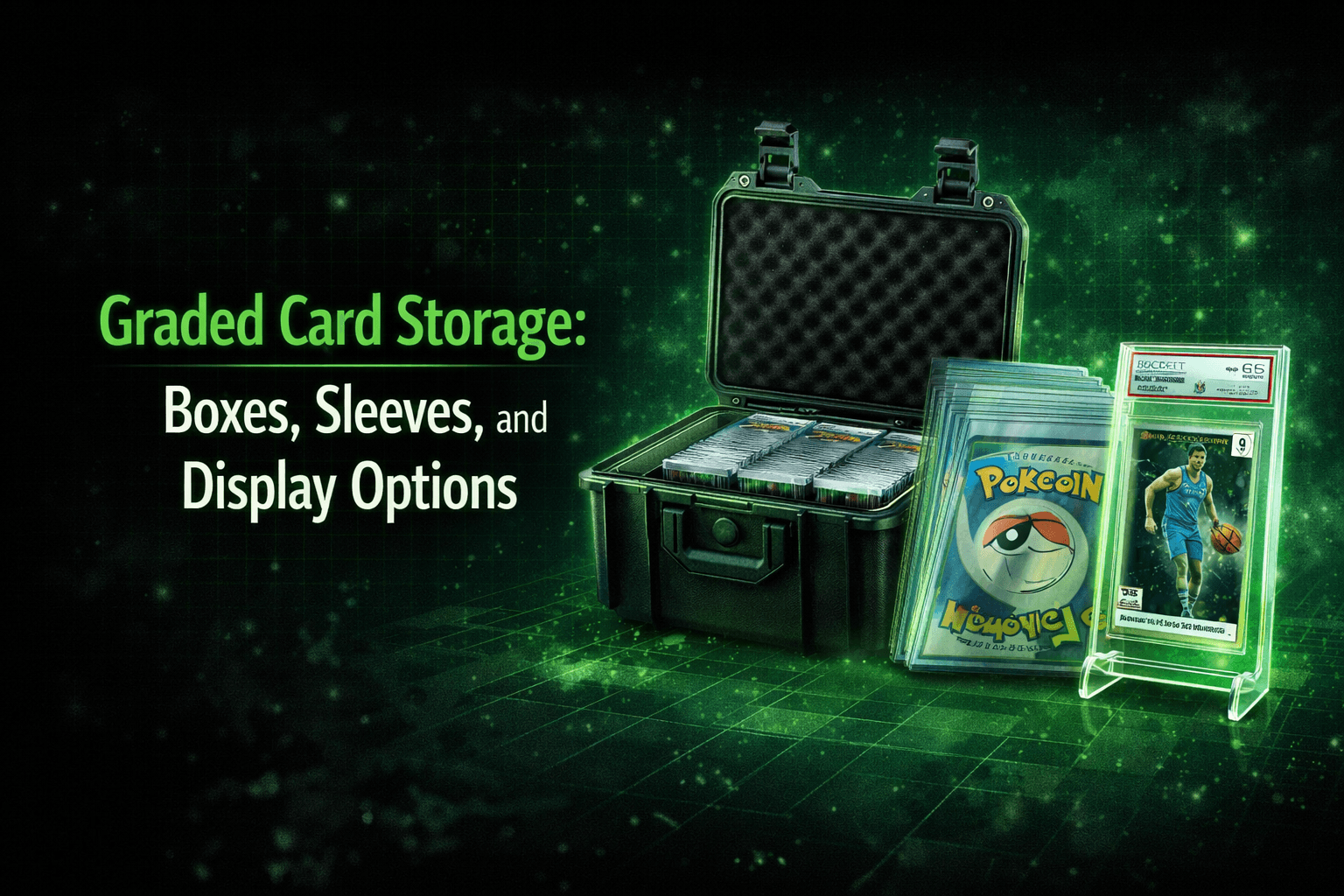
Graded Card Storage: Boxes, Sleeves, and Display Options
Keep your collection safe with graded card storage solutions. Discover durable boxes, protective sleeves, and stylish display options for collectors.
There is a specific relief that comes with holding a newly graded card, knowing your childhood Charizard or rookie cards are finally sealed inside that hard plastic shell. However, many "returners" to the hobby fall into the trap of believing this "slab" makes the card invincible. In reality, that clear casing is surprisingly vulnerable to the very environment you display it in, and recognizing this vulnerability is the first step toward proper preservation.
Think of a graded card like a cherished family photograph in a high-end frame. While the frame shields the picture, the glass itself can still crack, scratch, or gather dust. Experienced hobbyists know that a scuffed case creates a cloudy view that distracts from the card inside, potentially hurting its visual appeal and resale value. This realization often leads collectors to seek out specialized Graded Card Storage solutions rather than relying on the loose desk drawers or standard shoeboxes of the past.
Beyond physical scratches, invisible threats like sunlight and humidity pose a significant risk to your collection's longevity. Industry standards suggest that even sealed cards can suffer from "sunburn", fading ink caused by UV exposure, if left unprotected on a shelf near a window. Securing your investment requires more than just the slab; it demands Trading Card Tools specifically designed to block harmful rays and prevent the chemical yellowing that occurs with cheap plastics.
"Protecting the protector" ensures your display pieces remain pristine for years to come. By utilizing simple additions like clear sleeves and archival quality graded card storage boxes, you can enjoy your collection without fear of damage.
The 10-Cent Insurance: Why Every Slab Needs a Sleeve
It seems counterintuitive to protect a hard plastic case, but think of your graded slab like a smartphone screen. While the hard casing defends the card inside, the plastic surface itself is surprisingly prone to scuffs and swirls. Over time, friction from stacking cards or sliding them across a desk creates micro-abrasions that cloud the view, making a pristine "Gem Mint 10" look dull and potentially hurting its resale value.
Not just any plastic bag will do for this job, however. You need to specifically look for materials labeled "PVC-free" or "acid-free." Standard, cheaper plastics often degrade over time, releasing chemical gases that create a greasy, rainbow-colored residue on the surface of your slab. Using archival-safe materials ensures that the protective layer remains crystal clear and doesn't chemically react with the casing holding your prized Pokémon or baseball card.
Choosing the right type of protection usually comes down to two main styles, depending on how you plan to handle the cards:
- Resealable "Team Bags": These feature a sticky flap to seal the slab completely, offering the best defense against dust and moisture.
- Fitted "Soft Sleeves": These slide on open-ended like a glove, providing a cleaner, sleeker look that fits more easily into display stands.
Adopting a "sleeve-first" policy the moment a card arrives in the mail is the cheapest insurance you can buy for your collection. Once your cards are safely wrapped in this "second skin," the next challenge is finding a box that holds them properly, which gets tricky because not all grading companies use the same mold.
Navigating the 'Big Three' Dimensions: Will Your Slab Fit?
Finding the right home for your collection would be simple if every grading company used the same plastic mold, but unfortunately, the industry standard is surprisingly inconsistent. While a typical shoebox might hold raw cards, graded slabs require specific internal widths to prevent them from getting stuck or crushed. If you force a thick slab into a narrow row, you risk cracking the casing; conversely, putting a thin slab in a wide row allows it to rattle, leading to movement damage where the card edges hit the internal rails.
When comparing PSA vs BGS slab dimensions for storage, you are essentially looking at different weight classes that define how you shop for supplies. Understanding the dimensions of the "Big Three" grading companies helps categorize the slabs you are most likely to encounter:
- PSA (Standard): Generally, the slimmest and narrowest slabs, fitting easily into almost any graded card box.
- BGS (Thick): Known for their durability, Beckett slabs are significantly thicker and slightly wider, requiring more breathing room.
- SGC (Oversized): These "Tuxedo" slabs are taller and wider than both PSA and BGS, often requiring specialized "wide" boxes.
Because most collectors eventually end up with a mix of brands, looking for stackable storage containers for graded slabs that feature adjustable dividers is crucial. These moveable walls allow you to snug up the fit for thinner cards while creating wider compartments for bulky returns. A good rule of thumb is the "shake test": if you gently wiggle the box and hear a distinct "clack-clack," your cards have too much freedom, and you need to tighten the dividers to prevent internal damage.
Simple cardboard or plastic bins work perfectly for sitting on a closet shelf, but they offer little defense against drops or water damage during transport. If you plan to take your high-value cards to a trade show or a friend's house, you will need to upgrade from stationary storage to impact-resistant gear.
Heavy-Duty Protection: From Cardboard to 'Pelican' Style Travel Cases
While standard storage works for the closet, taking your collection on the road changes the risk profile entirely. A sudden rainstorm or a fumble in a parking lot can ruin an investment in seconds, necessitating a shift toward heavy-duty waterproof slab travel cases. If the value of the cards price of the container, upgrading to a hard shell offers essential insurance against accidents.
Most impact-resistant carriers utilize "pick-and-pluck" foam, a user-friendly system that allows you to customize the interior without tools. You simply remove pre-scored cubes of padding by hand to create snug slots that perfectly cradle your specific mix of PSA or Beckett slabs. Unlike rigid walls found in standard archival quality graded card storage boxes, this soft foam absorbs shock during a drop, dissipating energy before it can crack your plastic cases.
Pelican-style hard cases for card shipping go beyond physical padding by offering a watertight defense against the elements using a rubber O-ring seal. This barrier usually pairs with an automatic pressure equalization valve, a small vent that regulates air density during flights to prevent the case from vacuum-sealing shut. These features transform a simple bin into a climate-controlled vault that keeps moisture out.
Secure travel cases provide the ultimate peace of mind for transport, yet they share one significant downside: they keep your prized cards hidden in the dark. Once you decide to remove them from their armored shell to enjoy them visually, you expose them to a silent, invisible enemy that attacks even when the cards are perfectly still.
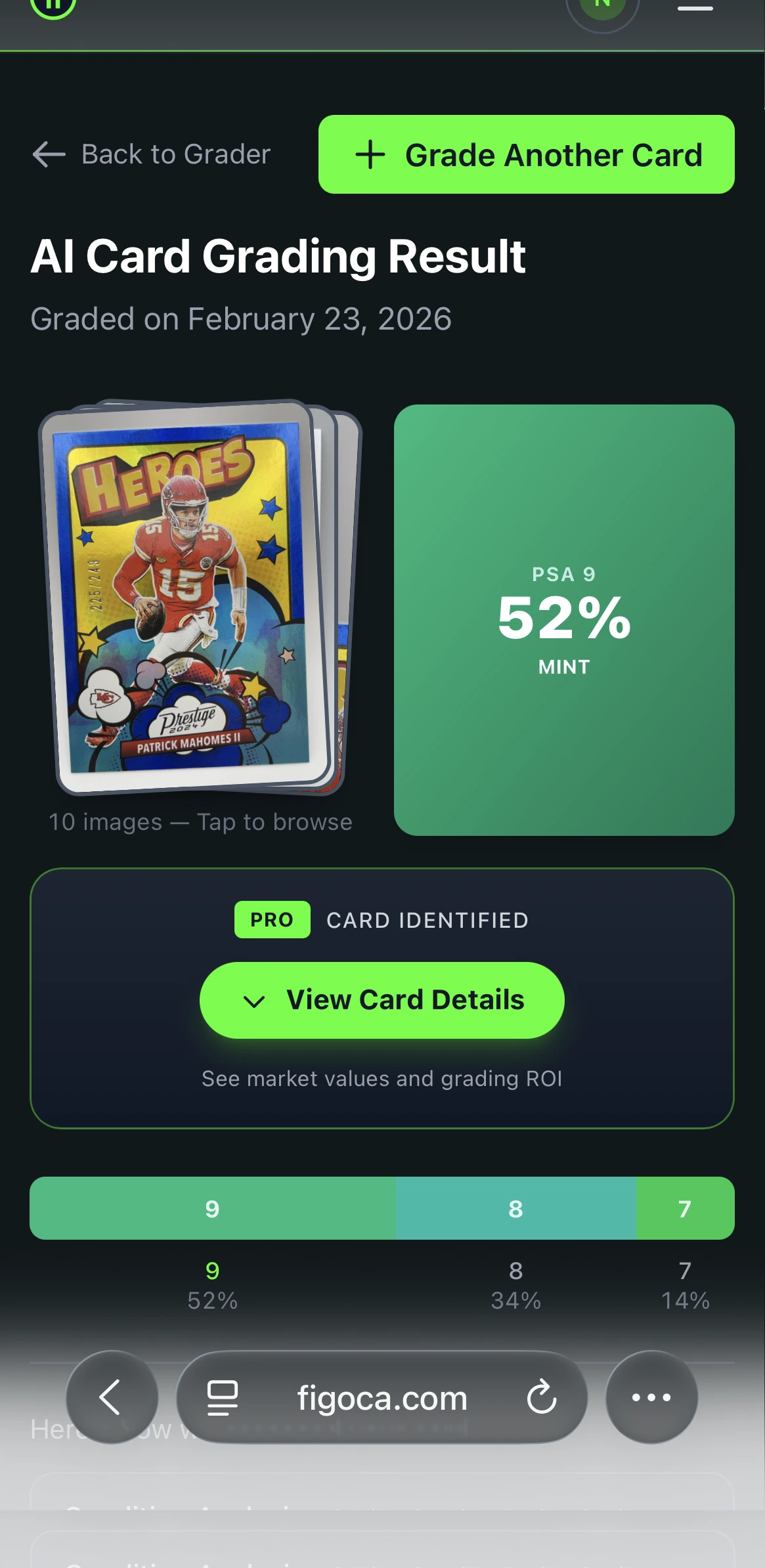
AI Card Grader
Know your card's grade before you submit
Snap a photo with your phone and get an instant AI-powered grade estimate. Check centering, corners, edges, and surface — just like the pros.
- Instant grade estimate
- Sub-grades for all 4 pillars
- Built-in ROI calculator
- Free to use
The Sunburn Analogy: How UV-Protected Displays Prevent Fading
Just like human skin burns after too much time at the beach, the ink on your prized collectibles reacts poorly to sunlight. Ultraviolet (UV) rays are the silent destroyers of the hobby, capable of bleaching vibrant colors and causing the plastic slab itself to become brittle or cloudy. Even if you aren't leaving your collection on a sunny patio, ambient light from a nearby window is often enough to start the slow process of fading. This damage is irreversible, making light management just as critical as preventing physical scratches.
Your best defense is choosing the right barrier. When shopping for a way to showcase your cards, look specifically for UV-protected sports card display cases that advertise 97% to 99% filtration ratings. Standard glass or basic acrylic frames might look clear, but they often allow harmful spectrums to pass right through. Investing in "museum-grade" acrylic acts as a permanent sunscreen for your cards, allowing you to enjoy looking at them without effectively lowering their grade.
Before you hang that Charizard or Mickey Mantle on the wall, run through this quick display checklist:
- UV Rating: Verify the manufacturer explicitly states 97%+ UV rejection.
- Format: Choose between wall-mounted frames vs tabletop card displays based on safe zones away from direct sun beams.
- Security: Look for lockable latches if you have curious kids or house guests.
Even with high-end protection, placement is key to knowing how to prevent graded cards from yellowing. Never place a display directly opposite a window; instead, opt for interior walls that only receive indirect lighting. While blocking light handles one environmental threat, the air inside the room poses a different challenge entirely, requiring you to pay attention to the invisible moisture levels in your home.
Climate Control: Managing Humidity and Heat in Your 'Card Room'
While you can easily see sunlight hitting a wall, the temperature and moisture in the air are harder to track but just as dangerous. Many collectors instinctively hide their valuables in the attic or basement to keep them safe, but these uninsulated spaces are actually the worst places for paper products. Drastic temperature swings cause materials to expand and contract, potentially warping the card inside its plastic tomb or compromising the sonic weld of the case.
Stability is the goal, so finding what is the best humidity for card storage is about moderation rather than extremes. You should aim for a "Goldilocks zone" between 45% and 55% relative humidity. If the air gets too damp, moisture can actually penetrate imperfect seals and get trapped inside the slab, leading to internal condensation or "frosting," while air that is too dry can eventually make the cardstock brittle.
Creating a safe micro-climate is often easier than climate-controlling your entire home. If you use fireproof safes for high-value trading cards, be aware that these heavy containers can trap moisture like an oven, so you must add desiccant (silica gel) packs to absorb excess dampness. Even standard archival quality graded card storage boxes benefit from a few tossed-in silica packets to ensure the internal environment remains dry and neutral.
Once you have secured a cool, dry, and dark environment, the internal safety of the card is assured. However, handling your collection during this organization process inevitably leaves fingerprints and oils on the cases, requiring you to learn the delicate art of restoring that crystal-clear shine without adding new scratches to the plastic.
Clear as Crystal: Safely Cleaning and Polishing Scuffed Slabs
Nothing ruins the visual appeal of a Gem Mint 10 like a scuffed, cloudy case. Even with careful handling, plastic surfaces inevitably accumulate micro-scratches or arrive from the grading company with dull spots that obscure the artwork. Before you try to digitally archive your collection using a card grading scanner app, you need an optically clear surface. Standard glass cleaners often contain ammonia or alcohol, which can chemically cloud the plastic over time, making learning how to safely clean graded card cases an essential skill for preservation.
Restoring clarity is simple if you use a "gentle-first" methodology. Treat the slab like a pair of expensive eyeglasses , paper towels are abrasive and will actually add more friction marks. Instead, assemble a dedicated restoration kit to restore the shine:
- Microfiber Cloths: Use new, high-pile cloths to trap dust away from the surface rather than dragging it across the plastic.
- Plastic Polish: A mild compound (like PlastX or Novus 2) designed for headlights or acrylics can gently buff out fine swirls.
- Compressed Air: Blasts away loose grit before you start wiping, vital for preventing scratches on PSA card slabs.
While polishing works wonders on light "spider web" scuffs, you must know your limits. Deep gouges that catch your fingernail cannot be buffed out safely; trying to remove them usually results in a warped, wavy surface that ruins the case's structural integrity. In these extreme instances, the only fix is sending the card back to the grading company for a "re-holder" service. With your prized cards now clean, clear, and chemically stable, the final challenge is arranging them logically so you can actually find them.
Organizing the Horde: Strategies for Large-Scale Collections
Once your collection expands beyond a few display pieces, finding specific items becomes a logistical nightmare. Standardizing your approach with solutions for organizing large graded card collections is critical to prevent constant handling of the slabs. Think of your storage box like a spreadsheet, assign each row a letter and each card a number, so you can locate a specific Gem Mint Charizard without flipping through hundreds of plastic cases and risking accidental scratches.
Modern collectors have a massive advantage over previous generations thanks to digital integration. By using a card grading scanner on your smartphone, you can create a searchable virtual library that mirrors your physical boxes. Many platforms now offer AI card grading online features that automatically identify the card and log its details, saving you from manually typing out serial numbers for every single slab in your inventory.
Stacking cardboard boxes might work for lighter raw cards, but graded slabs are dense and require structural support to prevent crushing. Investing in heavy-duty, interlocking plastic bins ensures that the bottom container doesn't buckle under the weight of the top one. These systems utilize vertical space efficiently, turning a cluttered closet floor into a neat, secure archive where your inventory remains accessible yet protected from environmental hazards.
Technology continues to evolve, with an AI trading card grading app now capable of tracking real-time market values alongside your location data. This hybrid approach ensures you know exactly what you own and precisely where it is stored without disturbing the physical collection. With your organizational system in place, you are ready to finalize your strategy with a routine maintenance plan.
Your Preservation Checklist: The 3-Step Plan for Long-Term Value
You have moved past the assumption that the hard plastic case is invincible and now understand that the protector itself needs protection. By mastering the layers of Graded Card Storage, you ensure your collection retains its visual appeal and financial value. You no longer need to fear accidental scratches or the slow fade of UV damage; instead, you can enjoy your hobby with total peace of mind.
To lock in this safety, apply "The Ultimate Protector's Checklist" to every new return or purchase:
- Sleeve Immediately: Slide every slab into a tight-fitting sleeve to prevent surface scuffs.
- Box Securely: Place non-display cards in a rigid, size-appropriate box to eliminate rattling.
- Audit the Environment: Perform an annual check to ensure display areas are free from direct sunlight and humidity spikes.
Take five minutes today to look at where your cards are currently sitting. If you spot a slab gathering dust on a shelf or sitting in a sunbeam, you now have the expertise to fix it. Whether you are preserving a childhood memory or a modern investment, proper storage is the final step in honoring the history inside the case.

Card enthusiast, figoca founder, and independent software developer
Nico is a card enthusiast who built figoca after running into the same problems many collectors face: uncertain pre-grading decisions, too much tab switching for comps, and no fast way to price cards on the go. He is also a big Kansas City Chiefs fan (❤️💛), follows the Kansas City Royals (💙), and enjoys Formula 1 and Golf.
- Sports Card enthusiast
- Founder of figoca
- Independent software developer with a TypeScript and AWS background