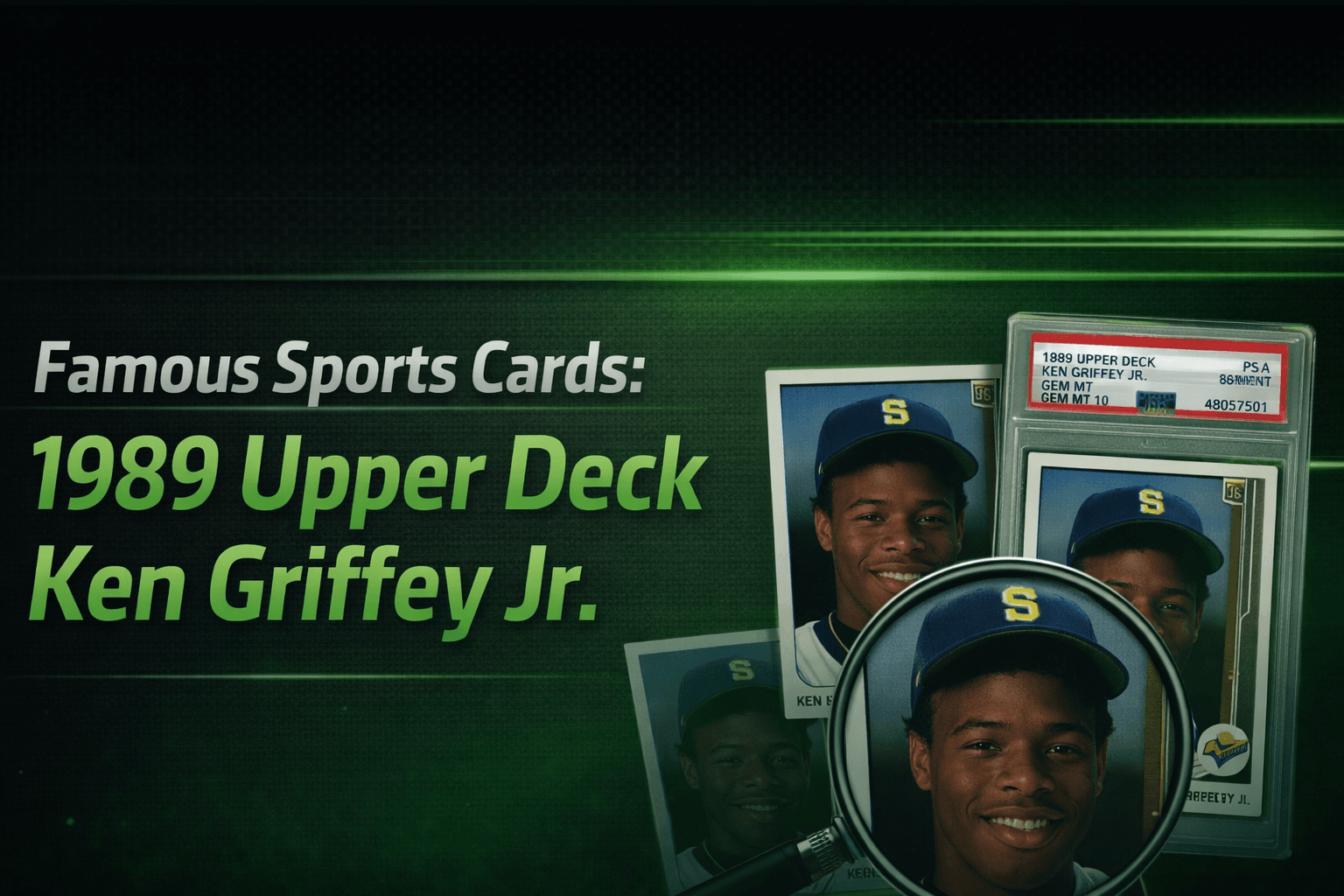
Famous Sports Cards: 1989 Upper Deck Ken Griffey Jr
Learn about the 1989 Upper Deck Ken Griffey Jr card, including its price, grading tips, and why it’s a top collectible in sports card history.
Picture a neighborhood hobby shop in the late 1980s, buzzing with kids searching for one specific piece of cardboard. Most 30-year-old memorabilia is worthless today, but a smiling 19-year-old kid from Seattle changed the financial landscape of baseball collecting forever. For an entire generation, the 1989 Upper Deck Ken Griffey Jr. card wasn't just a lucky pull , it was the ultimate white whale. That high-definition photograph featuring Griffey's brilliant smile became a universal symbol of 90s nostalgia.
Before this momentous release, buying packs meant dealing with cheap paper and stale gum. Upper Deck arrived as the Apple of the industry, introducing the concept of premium sports cards through tamper-proof foil packaging and glossy photography. Historical market data reveals that while competitors flooded shelves with millions of cheap prints, this elevated approach helped Upper Deck escape the era's notorious death by oversupply.
Why did a new company bet its reputation on a teenager who hadn't played a single Major League game? Launching "The Star Rookie Series," executives executed a brilliant marketing masterstroke by assigning Griffey the highly coveted position of Card #1. Giving the top spot to an unproven prospect was a massive gamble that perfectly matched their disruptive energy.
The significance of the 1989 Upper Deck release extends beyond simple monetary value. In the realm of famous sports cards, the 1989 Upper Deck Ken Griffey Jr. remains a defining piece of cultural history.
Beyond the Wax Paper: How Upper Deck Disrupted a Boring Market
Before 1989, opening a baseball card meant tearing through waxy paper and tossing aside a piece of brittle gum. Major brands were mass-producing cheap cardboard by the millions, a period of oversupply known as the "Junk Wax Era." Due to this extreme overprinting, the impact of the junk wax era on collectible values was devastating, rendering most everyday cards practically worthless.
Enter a new company that decided to treat cards like luxury items. In any Upper Deck vs. Topps rookie card comparison from that year, the leap in quality was staggering. The history of the Upper Deck Star Rookie series began with three massive upgrades:
- Tamper-evident foil: Replacing easily resealable wax wrappers with secure, metallic pouches to stop people from searching packs.
- Anti-counterfeit holograms: Placing a shiny, 3D security sticker on the back of every card to guarantee authenticity.
- High-definition photography: Swapping out grainy game shots for crisp, studio-style portraits on premium white paper.
These features didn't just look incredible, they brought absolute trust to a flooded market. With a revolutionary product finally ready to hit shelves, the creators just needed a fresh face, which perfectly explains why Ken Griffey Jr. was the ideal choice for the #1 spot.
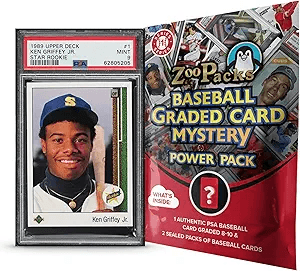
Ken Griffey Jr. PSA Graded Mystery Pack
Includes 1 PSA-graded Ken Griffey Jr. card (8, 9, or 10) and 2 sealed baseball card packs. Packs may be from Panini, Topps, Donruss, Upper Deck, or Fleer.
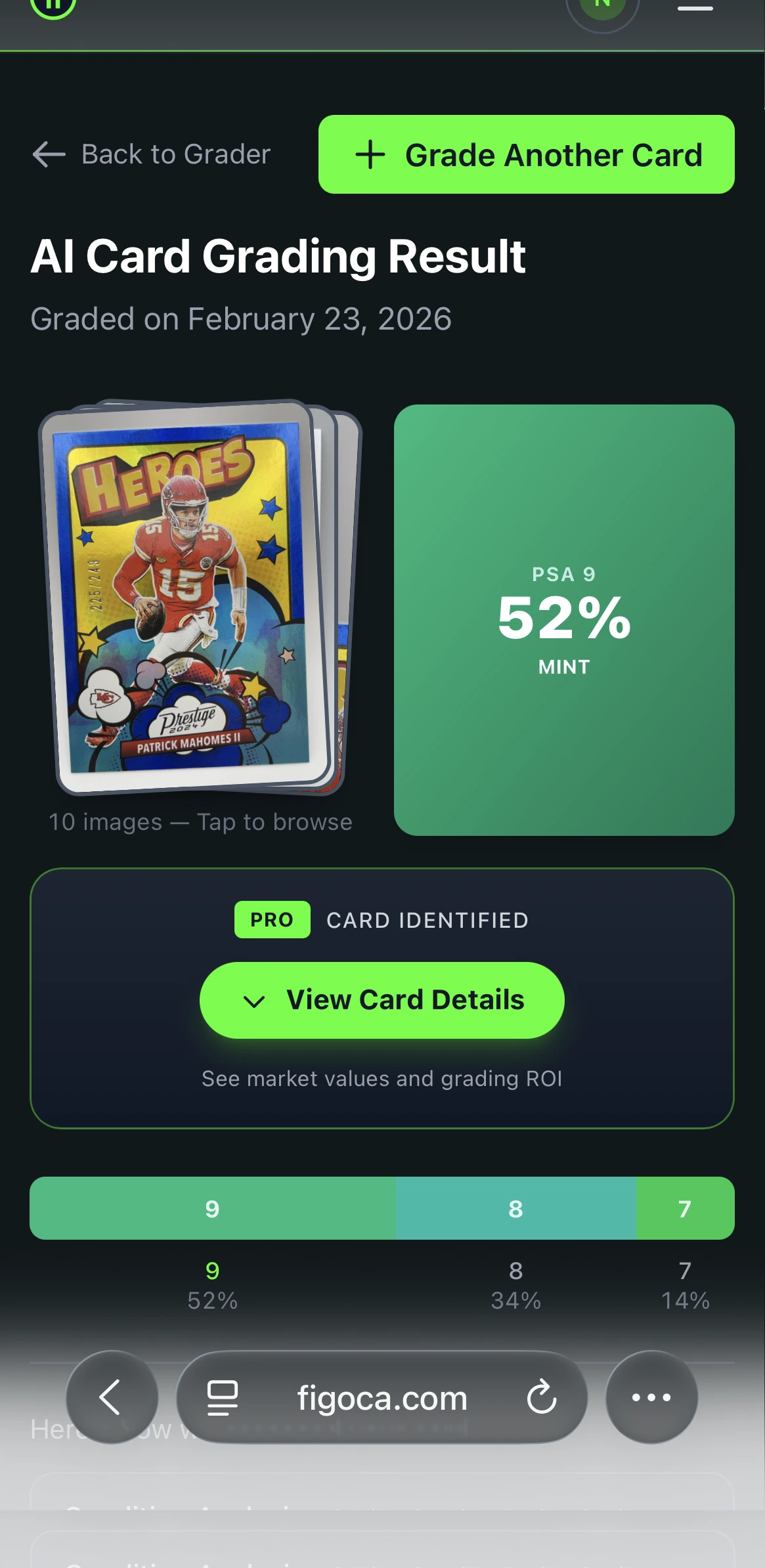
AI Card Grader
Know your card's grade before you submit
Snap a photo with your phone and get an instant AI-powered grade estimate. Check centering, corners, edges, and surface — just like the pros.
- Instant grade estimate
- Sub-grades for all 4 pillars
- Built-in ROI calculator
- Free to use
Why Ken Griffey Jr. Was the Perfect Choice for the #1 Spot
Launching a premium brand required a bold statement, and Upper Deck decided its flagship card, the prestigious Card #1 in the set, had to be absolutely unforgettable. Instead of picking an established superstar, they engaged in high-stakes prospecting. They gambled their entire reputation on a nineteen-year-old kid who hadn't played a single Major League inning. Griffey was an electrifying talent with a famous baseball lineage, making him the ultimate symbol of the sport's bright future.
That famous photograph holds a clever secret. Because Griffey was still a minor leaguer, Upper Deck couldn't shoot him in an official Seattle Mariners jersey. Instead, they photographed him in a San Bernardino Spirit uniform, later altering the "S" on his hat to an "M." This premium portrait captured his iconic smile perfectly, cementing his youthful optimism in cardboard history.
Holding a piece of this history feels incredible today, but not every copy survived the decades perfectly intact. Many early prints suffer from Ken Griffey Jr. rookie card centering issues, meaning the white borders are noticeably uneven. This microscopic detail dictates whether your childhood keepsake is just a fun memory or a financial jackpot.
Is Your Card a Gold Mine? The Real-World Difference Between $5 and $5,000
Finding that iconic Griffey card tucked away in a dusty shoebox is a thrill, but a pristine-looking card to the naked eye doesn't guarantee a massive payday. To bridge the gap between a five-dollar piece of nostalgia and a five-thousand-dollar investment, you have to submit your treasure to a professional authentication and grading process. This transforms a loose, unprotected card into a secure asset.
When grading sports cards for maximum value, independent experts from companies like PSA or BGS examine your prized possession under intense magnification. They scrutinize the corners, edges, surface, and centering to assign a strict score from one to ten. Earning a perfect ten means the card is officially declared "Gem Mint", an essentially flawless specimen that looks exactly as it did the moment it left the printing press in 1989.
Why does that tiny number in the corner of the plastic case matter so much? The secret lies in public databases called Population Reports, which track exactly how many copies of a card exist at each specific grade. Because millions of these Griffeys were printed but only a fraction survived in flawless shape, sheer rarity drives the modern PSA 10 Gem Mint value trends through the roof.
Consulting a standard trading card glossary provides a quick refresher on this terminology. However, before worrying about getting your childhood masterpiece graded, you must first confirm it is genuine. With a surprising number of clever counterfeits in the wild, mastering the hologram test is crucial to spotting a fake 1989 Upper Deck rookie.
The Hologram Test: How to Spot a Fake 1989 Upper Deck Rookie
Because the 1989 Ken Griffey Jr. card commanded premium prices, it inevitably attracted counterfeiters. You don't need a forensics lab to avoid scams, but knowing how to spot a fake requires understanding the specific security features the company originally introduced. Upper Deck essentially treated their cardboard like currency, adding intricate details that standard home printers couldn't replicate.
Armed with standard trading card tools like a magnifying glass, you can quickly verify authenticity. The crucial step is identifying counterfeit Upper Deck holograms, as scammers notoriously struggled to duplicate this specific anti-fraud technology. Run any questionable card through this four-point inspection:
- Hologram clarity: Genuine diamond holograms show distinct, multi-dimensional baseballs when tilted in the light , fakes often look flat, silver, or blurry.
- Logo color saturation: The front "Star Rookie" logo must be a rich, solid yellow, never pixelated or washed out.
- Card stock thickness: Authentic copies were printed on premium paper that feels much sturdier than a standard generic playing card.
- Printing dot patterns: Under magnification, the sharp border lines should look crisp and solid, not made of fuzzy, multi-colored micro-dots.
Once you verify your piece of baseball history is genuine, the next hurdle is evaluating its physical perfection. Ironically, those exact same premium features, specifically the slick finish and exact borders, make this card a nightmare for professional graders.
AI Card Grader
Know your card's grade before you submit
Snap a photo with your phone and get an instant AI-powered grade estimate. Check centering, corners, edges, and surface — just like the pros.
- Instant grade estimate
- Sub-grades for all 4 pillars
- Built-in ROI calculator
- Free to use
Centering and Gloss: Why This Card is a Nightmare for Professional Graders
Finding a card straight out of a vintage pack feels incredible, but "factory fresh" rarely guarantees a perfect score from professional graders. The most frequent hurdle involves Ken Griffey Jr. rookie card centering issues. Imagine printing a photograph where the main image is slightly misaligned, leaving a thicker white border on the left side than on the right. You don't need a magnifying glass to spot this; simply eyeball the dark green wall behind Griffey to see if the white borders framing the photo are perfectly even.
Upper Deck revolutionized the hobby with paper resembling a premium magazine cover, which inadvertently introduced new vulnerabilities. Preserving the condition of glossy card stock over three decades is notoriously difficult because the slick surface acts like a magnet for scratches. Even a microscopic scuff invisible in normal room lighting will drastically drop a card's grade when examined under professional halogen lamps.
Beyond the delicate finish, 1989 printing technology occasionally left stray ink bubbles right across Griffey's famous smile. Because these factory flaws happened during manufacturing, thousands of crisp copies will never achieve a perfect score. Since condition dictates value, collectors constantly debate where the highest-quality prints actually ended up, hidden inside standard foil packs, or sealed within complete factory sets.
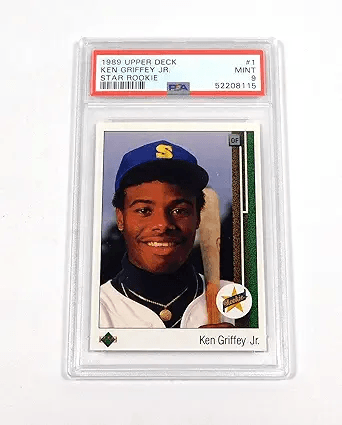
1989 Upper Deck Ken Griffey Jr. #1 PSA 9
1989 Upper Deck Ken Griffey Jr. #1 Star Rookie card graded PSA 9. A key Mariners rookie card for vintage baseball collectors.
figoca extension
Get card comps on eBay in seconds
See comps directly on eBay listings and search results. Save time, avoid overpaying, and learn faster while you browse.
- Comps inline on item and search pages
- Automatic card detection and parsing
- Fast, privacy-first, and free
- Built for newcomers and hobbyists
Factory Sets vs. Wax Packs: Where Does the Best Version Hide?
Hunting for this iconic rookie card back in the day meant choosing between buying individual foil packs at the local shop or purchasing a massive, pre-assembled box containing every player. Understanding the difference between factory set and wax pack cards is crucial for modern collectors hoping to strike gold. "Wax packs", the hobby's traditional method of selling random assortments, offered the thrill of a lottery ticket. Unfortunately, sliding the cardboard into tight wrappers often caused immediate corner wear before the packs even left the factory.
Although exact 1989 Upper Deck baseball set production numbers remain an industry secret, millions of cards flooded the market through these two avenues, each offering distinct trade-offs:
- Factory Sets: These provide safety. Because the cards were carefully stacked and sealed into complete boxes at the printing plant, they entirely avoided the rough handling of store shelves.
- Wax Packs: These deliver pure nostalgia. Pulling a Griffey yourself is unforgettable, but a card surviving the automated packaging process without a dinged edge is a massive gamble.
Tracking recent sales and market news reveals pristine copies emerge from either source, though sealed boxes generally yield higher-graded results. Whether you unearthed a complete set or bought a single unopened pack, securing the card is only half the battle. Once you finally hold that famous smile, the focus shifts to maximum preservation.
Maximum Preservation: How to Keep Your Card from Fading Away
Holding that piece of history feels great, but maintaining this glossy cardstock requires immediate action. Your primary defense is a simple two-part armor system:
- Protect the surface from scratches by dropping the card into a soft plastic pouch known as a "penny sleeves."
- Slide that sleeved card into a thick, rigid plastic case called a "top loader" to ensure the delicate corners never bend or crease.
Material choices matter just as much as physical armor over the decades. Many older, cheap albums contain PVC, a plastic chemical that acts like a slow-motion glue and actively destroys the card's surface. Sunlight is another silent killer; displaying your prized possession near a window causes UV degradation, permanently bleaching those vibrant green and blue inks into a dull, worthless yellow.
Protecting a perfect specimen pays off tremendously when running a card price search to check its market value. Whether your goal is safely passing it down or selling vintage sports cards online, condition dictates worth.
How to Buy or Sell Your Griffey Without Getting Scammed
Seeing a 1989 Upper Deck Ken Griffey Jr. listed for $5,000 might excite you, but always separate a seller's asking price from actual market value. Anyone can ask for a fortune, but the real value is dictated solely by what a buyer actually pays. To command top dollar, your card requires professional authentication from respected grading companies like PSA or BGS, who evaluate centering and corners to rate condition on a strict 1-to-10 scale.
Hard data must drive your expectations rather than hopeful guesswork. Run a realistic pricing search to find true market values using these top three platforms:
- eBay Sold Listings: Filter searches by "Sold Items" to view actual completed transactions instead of inflated active listings.
- Figoca or Card Price Tools: These specialized apps compile historical pricing data and current market news.
- Professional Auction Houses: High-end venues offer dedicated appraisals to reach serious buyers for flawless, top-tier specimens.
The final hurdle is securing the physical asset during transit once you agree on a fair price. Selling vintage sports cards online safely means never tossing a valuable piece of history into a standard paper envelope. Always use rigid packaging, require delivery signature confirmation, and purchase full shipping insurance.
AI Card Grader
Know your card's grade before you submit
Snap a photo with your phone and get an instant AI-powered grade estimate. Check centering, corners, edges, and surface — just like the pros.
- Instant grade estimate
- Sub-grades for all 4 pillars
- Built-in ROI calculator
- Free to use
The Enduring Legacy of Card #1
This single piece of cardboard changed the hobby forever. The 1989 Upper Deck Ken Griffey Jr. stands as a defining cultural artifact of the 90s. That iconic smile represents the pivotal moment when collecting grew up, trading stale gum for premium quality.
If you uncover one of these legendary rookies in an attic shoebox, start by carefully evaluating its physical condition, checking for sharp corners and perfect image centering, before considering a professional grading service. This quick assessment dictates what actions to take next.
As you research the broader investment outlook for 1980s baseball cards, remember that perfection separates the exceptional from the ordinary. While millions of overprinted rookie cards from that era hold little monetary value today, beautifully preserved pieces of hobby history continue to defy the odds.
Whether your Griffey card is a handled childhood memory or a pristine masterpiece, its significance transcends any dollar amount.

Card enthusiast, figoca founder, and independent software developer
Nico is a card enthusiast who built figoca after running into the same problems many collectors face: uncertain pre-grading decisions, too much tab switching for comps, and no fast way to price cards on the go. He is also a big Kansas City Chiefs fan (❤️💛), follows the Kansas City Royals (💙), and enjoys Formula 1 and Golf.
- Sports Card enthusiast
- Founder of figoca
- Independent software developer with a TypeScript and AWS background