Which cards should you sleeve after opening packs? Use simple penny sleeve rules for rookies, parallels, and inserts, plus a quick workflow. Protect your pulls now.
Which Cards Should You Sleeve? Simple Pack-Opening Rules
If you open packs, you will sooner or later pull a card you wish you had protected. The fix is simple: keep penny sleeves close and use a few easy rules so your best cards do not get scratched in a pile.
This guide answers one simple question: which cards should go into a penny sleeve right away?
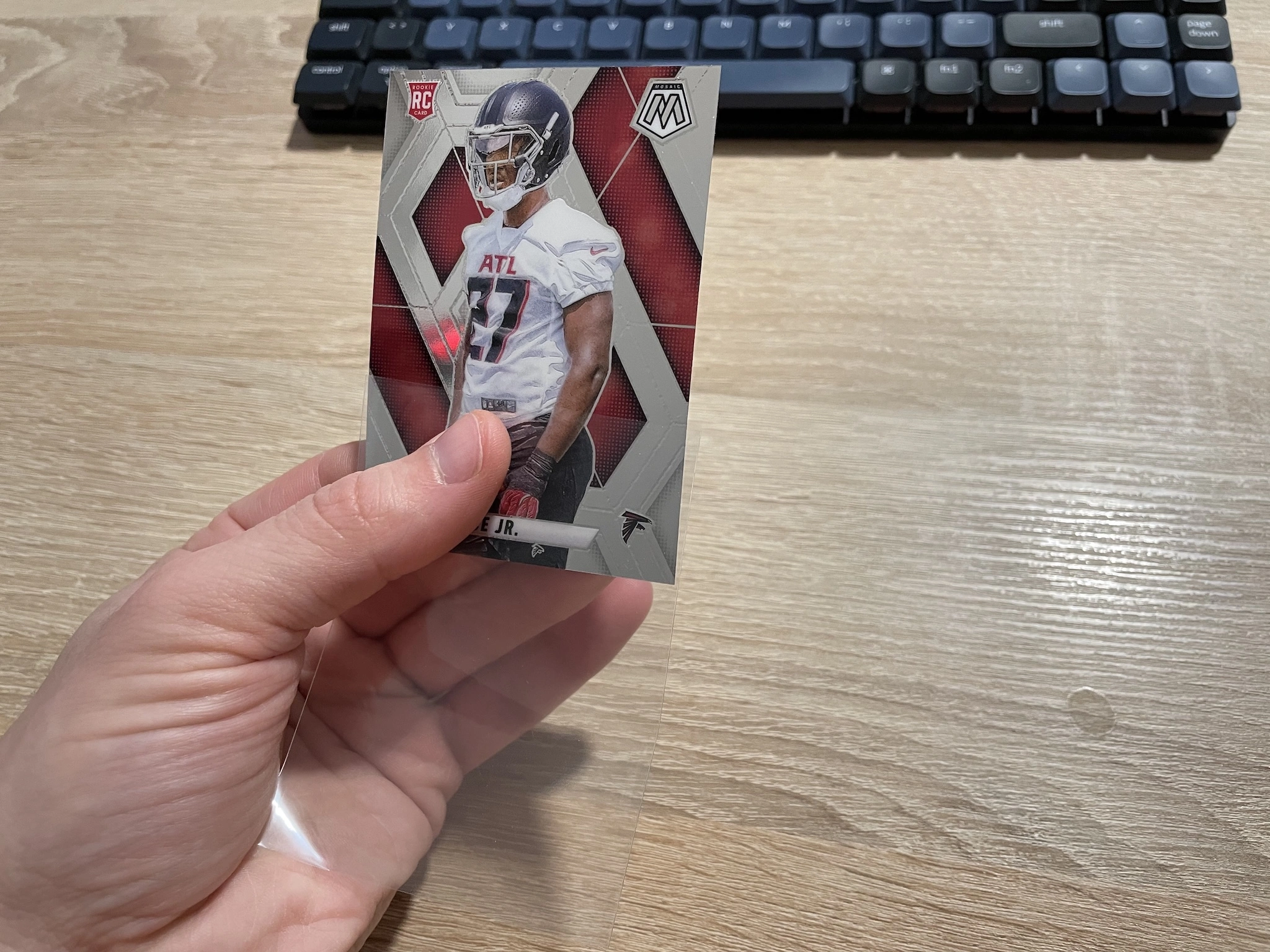
TL;DR
- Sleeve anything you do not want scratched: inserts, parallels, numbered cards, autographs, and rookies you care about.
- Sleeve shiny cards right away: foil and glossy cards scratch fast when they stack and slide.
- If you might grade it, sleeve it now: damage to the surface and corners is hard to undo (see PSA grades explained).
- Penny sleeve first, then add stronger protection if needed: top loaders and semi-rigid holders protect edges and corners better.
- If you are not sure, sleeve it: a penny sleeve is cheaper than a scratched card.
figoca extension
Get card comps on eBay in seconds
See comps directly on eBay listings and search results. Save time, avoid overpaying, and learn faster while you browse.
- Comps inline on item and search pages
- Automatic card detection and parsing
- Fast, privacy-first, and free
- Built for newcomers and hobbyists
Which cards should I put in a penny sleeve?
Put a card in a penny sleeve if it is rare, shiny, numbered, signed, a memorabilia card, a short print, or a rookie you might keep, trade, sell, or grade. Also sleeve any glossy or foil card, because small scratches can happen right away.
Ultra PRO Penny Sleeves Clear 500 Count
Clear, archival-safe polypropylene sleeves for standard 2.5" x 3.5" trading cards. Great for bulk cards, with a loose fit and easy handling.
7K+ bought in past month
The simple rule: sleeve anything you would regret scratching
The goal of a penny sleeve is not to make every card perfect. It is to stop damage in the first 30 seconds after you pull a card.
Think of it like this:
- If you would be annoyed to see a surface scratch tomorrow, sleeve it now.
- If the card can be worth a lot more in a high grade, sleeve it now and treat it like a grading card (use the figoca EV grading calculator if you are deciding whether to grade).
What to sleeve and what not to sleeve
Use this table when you are opening packs and want a quick answer.
| If the card is... | Penny sleeve now? | Put it in a top loader later? | Why |
|---|---|---|---|
| Autograph card | ✅ Yes | ✅ Yes: top loader or one-touch | Signature and surface are easy to damage |
| Memorabilia or patch card | ✅ Yes | ✅ Often yes: thick toploader | Thick cards can ding corners easily |
| Serial-numbered card | ✅ Yes | ✅ Often yes | Low supply and high demand for clean copies |
| Foil or glossy parallel | ✅ Yes | 🆗 Sometimes | Foil scratches and print lines show quickly |
| Short print or big “chase” insert | ✅ Yes | 🆗 Sometimes | These are often the cards people chase (case hits explained) |
| Rookie you would sell, trade, or grade | ✅ Yes | 🆗 Sometimes | Condition drives value more for rookies |
| Chrome-style card you want to keep | ✅ Yes | 🆗 Optional | Surfaces can scuff from stacking |
| Base card of a star you collect | 🆗 Optional | ❌ No | Sleeve if it matters to you personally |
| Common base cards you will store or donate | ❌ No | ❌ No | Save sleeves for the cards that matter more |
10 cards you should always sleeve when opening packs
If you want a simple “always” list, use this.
- Autographs
- Memorabilia cards (jersey, patch, bat, and similar)
- Any serial-numbered card
- Any card with a shiny foil surface
- Any short print you can spot (photo variations, special backs)
- Big “chase” inserts
- Rookies of players you follow
- First-year cards and rookies you might grade
- Anything you plan to sell or trade
- Any card that looks clean and centered enough to be a grading candidate
If you are not sure if a rookie is worth protecting, you can quickly check prices on figoca comps.
Penny sleeves, top loaders, and semi-rigid holders: what each one does
You do not need a big setup. You just need the right thing at the right time.
- Penny sleeve: the first layer. It prevents most surface scratches from handling and stacking.
- Top loader: rigid plastic protection. Great for storing higher-value cards and for trade nights.
- Semi-rigid holder: a stiffer sleeve-like holder that protects well and is commonly used for submissions and shipping.
- Binder (with sleeves): great for long-term organization. For most binders, sleeve the card first, then place it into the binder pocket.
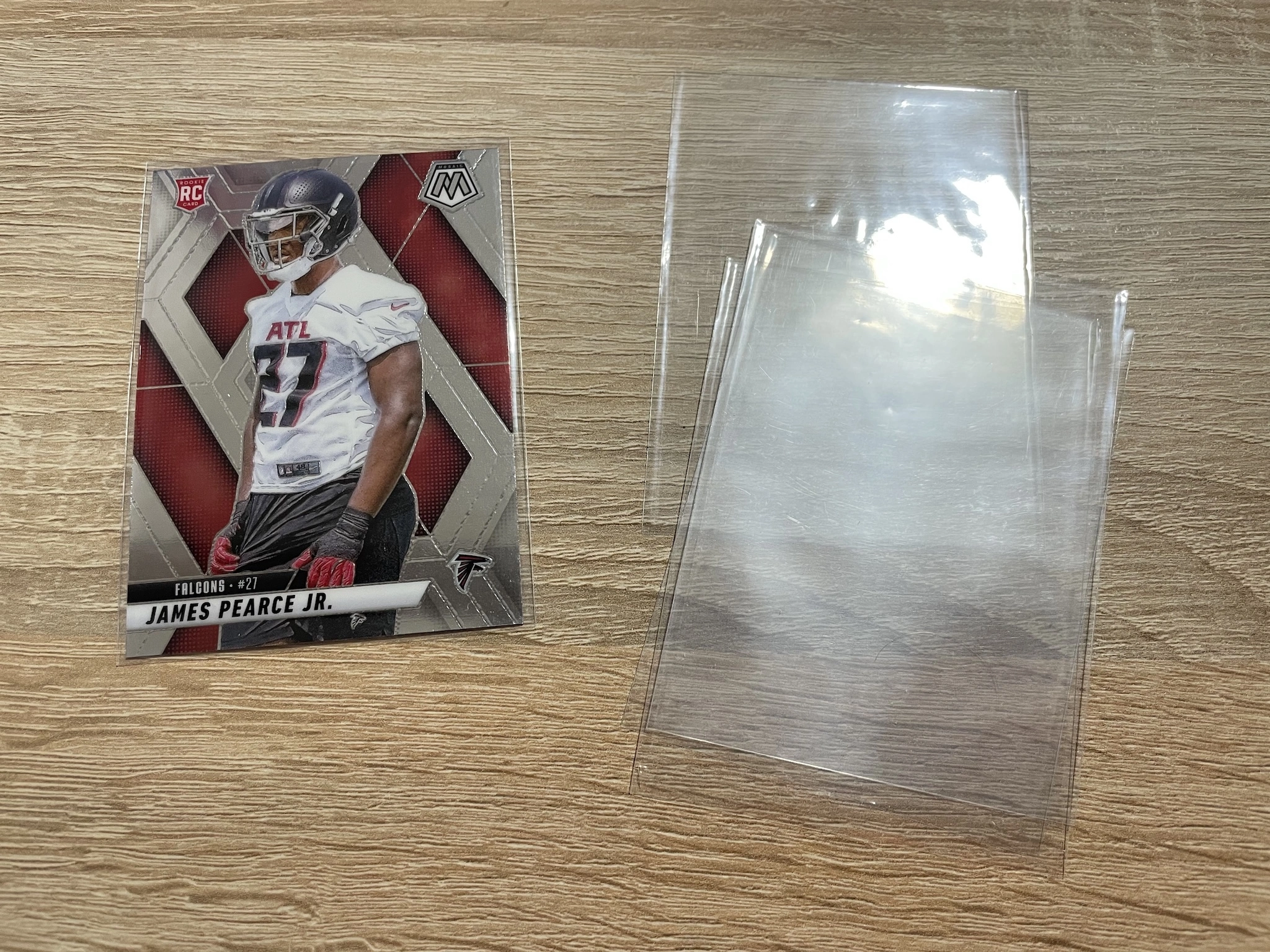
35pt 3x4 Top Loaders, 100 Count
Rigid clear holders for standard 2.5" x 3.5" cards up to 35 pt. Acid-free PVC helps protect against scratches, bends, and wear.
500+ bought in past month
If you are planning to sell cards online, learn the buying side too so you know what condition buyers expect: How to buy sports cards on eBay. If you want faster pricing context while browsing listings, the figoca extension surfaces comps directly on eBay.
Simple steps when opening packs
This is a simple routine you can do every time.
- Use a clean surface: a playmat or clean desk helps protect corners and edges.
- Make three piles: sleeve now, keep, and bulk.
- Do not stack shiny cards without sleeves: the first scratch often comes from sliding.
- Sleeve the best cards right away: penny sleeve first, then set the card aside.
- Add stronger protection for your best cards: top loader or semi-rigid, especially if you might sell.
If you want to know why modern cards scratch and chip more easily than older cards, this guide explains it in simple words: How trading cards are made.
Common mistakes (and how to avoid them)
- Pushing the card into the sleeve by the corners: guide the card gently and avoid forcing it.
- Letting your best cards sit without a sleeve “just for a minute”: that minute is when damage happens.
- Stacking foils and glossy cards in one pile: they slide and scuff.
- Using the wrong size sleeve: a too-tight sleeve increases corner pressure; a too-loose sleeve can let the card shift.
- Storing in a ring binder without care: use side-loading pages and avoid overstuffing.
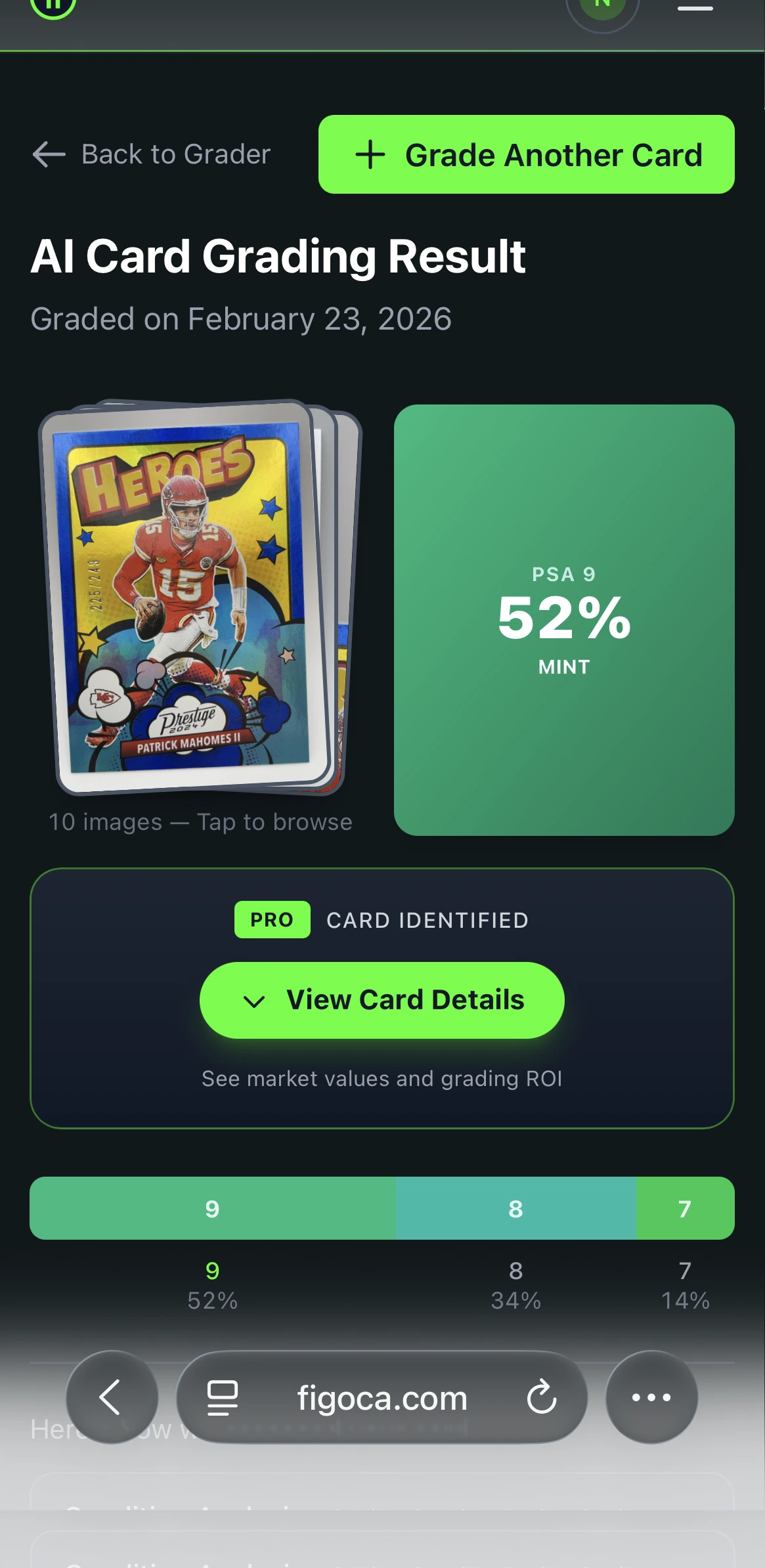
AI Card Grader
Know your card's grade before you submit
Snap a photo with your phone and get an instant AI-powered grade estimate. Check centering, corners, edges, and surface — just like the pros.
- Instant grade estimate
- Sub-grades for all 4 pillars
- Built-in ROI calculator
- Free to use
If you collect, sell, or grade
If you collect for fun
- Sleeve the cards you like.
- Put your personal collection into a binder (sleeved first).
- Store bulk in a box and keep your desk clear so you do not accidentally bend a card.
If you sell or trade
- Sleeve any card you might list.
- Use top loaders for cards you will ship or take to a trade night.
- Check sold prices so you do not waste supplies on very common cards (figoca comps makes this fast).
If you might grade
If you are thinking about grading, sleeving is step one. Small scratches, corner dings, and dents can lower the grade fast (see PSA grades explained).
Before you spend money, run the decision with expected value: Should you grade that card? The EV method.
Questions people ask
Should I sleeve every card I pull?
No. Sleeve the cards that are rare, shiny, numbered, signed, short print, or personally important. Keep common cards unsleeved to save time and supplies.
Should I sleeve base rookies?
If it is a rookie you care about, might trade, might sell, or might grade, yes. Otherwise, you can treat base rookies like normal base.
Should I sleeve inserts even if they are not numbered?
Usually yes, especially if the insert has a glossy or foil finish. Inserts are also easier to sell when they stay clean.
Should I sleeve parallels?
Yes. Parallels are often foil-heavy and surface-sensitive, and they usually carry more value than base.
What about thick cards?
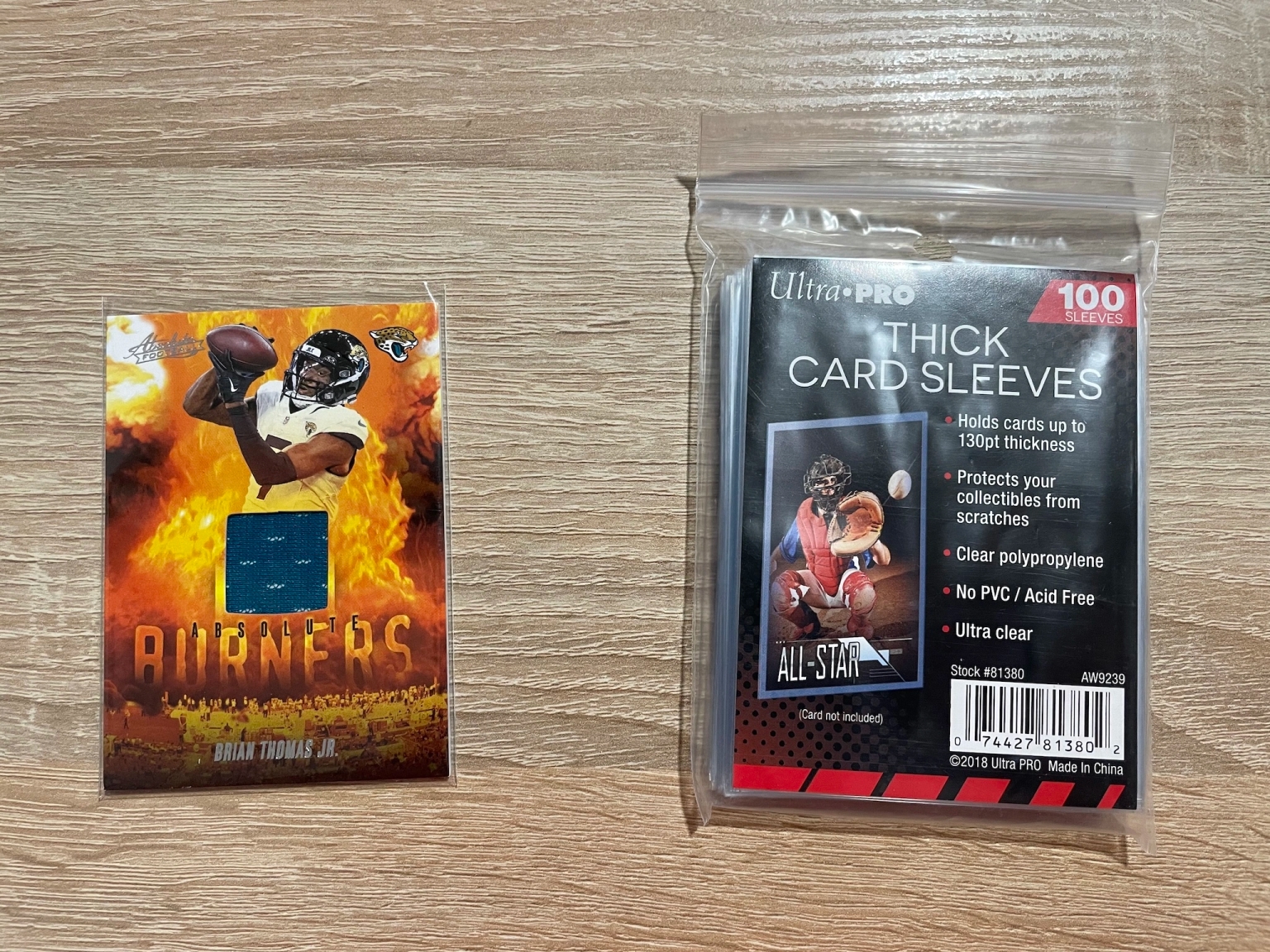
Sleeve them, then use a holder designed for thick cards so the corners are not under pressure.
Are penny sleeves enough for long-term storage?
They are a good first layer, but for higher-value cards, add rigid protection (top loader, semi-rigid holder, or a good binder setup).
Should I put a sleeved card directly into a binder?
Yes, for most collections. The sleeve reduces friction against the binder pocket and helps prevent surface scratches.
Do I need to top load every sleeved card?
No. Top load the cards you would ship, display, or treat as higher value. Keep the rest sleeved and boxed or binder-stored.
What is the fastest way to avoid scratches while ripping packs?
Do not stack shiny cards without sleeves, and sleeve your best card before you move to the next pack.
Can I reuse penny sleeves?
You can, but many collectors avoid reusing them for cards they might grade, because sleeves can pick up dust and micro-scratches over time.
Should I sleeve damaged cards?
If the card is still collectible to you, or if it is vintage, yes. If it is modern bulk with heavy damage, it is optional.
Should kids sleeve cards?
Yes, if they are opening packs. A simple “hits go in sleeves” rule saves a lot of heartbreak.
What if I do not know whether a card is valuable?
If it looks like a hit, sleeve it first, then look it up. Price checks are easy once damage is prevented.
How many penny sleeves should I buy?
Buy enough so you never hesitate to use them. If you open packs regularly, keep a large box and restock before you run out.
Are penny sleeves the same for sports cards and trading card games?
The core idea is the same. Any glossy or foil surface and any rare pull is a sleeving candidate.
Which cards should I sleeve first when I open a pack?
Start with the cards most likely to scratch or spike in value with condition: foils, parallels, inserts, numbered cards, autographs, and the rookies you care about.
Sources and further reading
- figoca: PSA grades explained
- figoca: Should you grade that card? The EV method
- figoca: How trading cards are made
- figoca: What is a case hit?
- figoca: How to buy sports cards on eBay
- figoca: figoca extension: comps on eBay
Last updated: 2025-12-31

Card enthusiast, figoca founder, and independent software developer
Nico is a card enthusiast who built figoca after running into the same problems many collectors face: uncertain pre-grading decisions, too much tab switching for comps, and no fast way to price cards on the go. He is also a big Kansas City Chiefs fan (❤️💛), follows the Kansas City Royals (💙), and enjoys Formula 1 and Golf.
- Sports Card enthusiast
- Founder of figoca
- Independent software developer with a TypeScript and AWS background