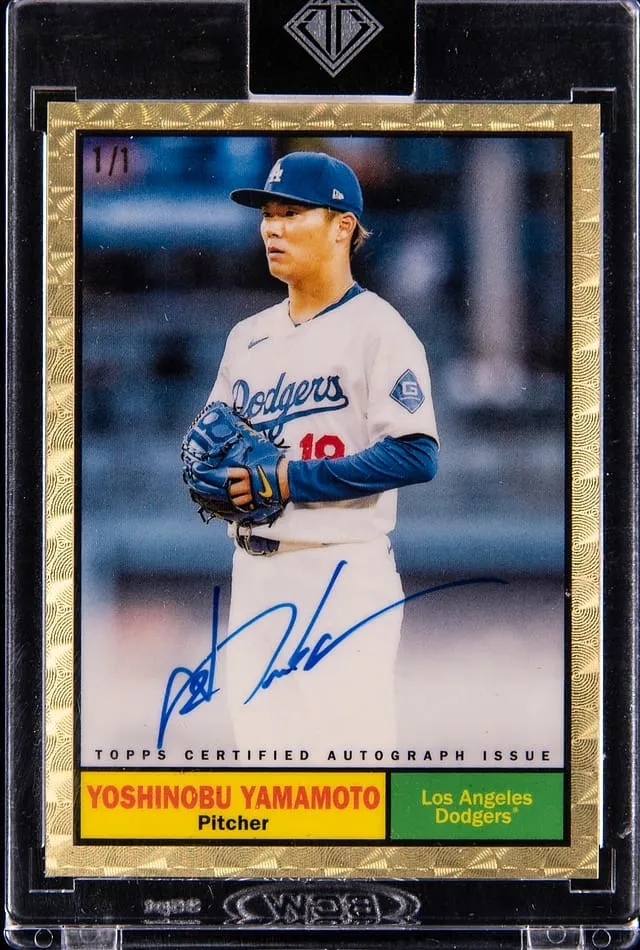
Yoshinobu Yamamoto 1/1 Transcendent Auto Sells for $27K
Goldin sold a 2025 Topps Transcendent 1961 SuperFractor 1/1 Yoshinobu Yamamoto autograph for $27,145. A calm look at the card and its market context.
Sold Card
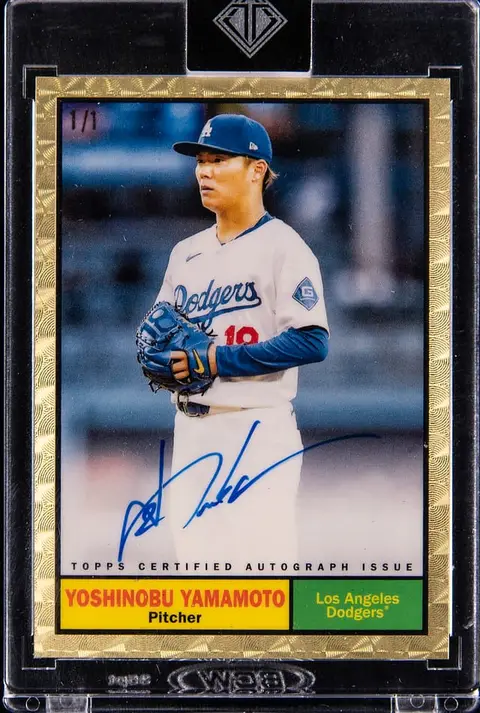
2025 Topps Transcendent 1961 Topps Autographs SuperFractor #61S-YY Yoshinobu Yamamoto Signed Card (#1/1) - Topps Encased
Sale Price
Platform
Goldin2025 Topps Transcendent 1961 Topps Autographs SuperFractor #61S-YY Yoshinobu Yamamoto Signed Card (#1/1) – Market Breakdown
On April 17, 2026, Goldin closed a notable ultra‑modern baseball auction: a 2025 Topps Transcendent 1961 Topps Autographs SuperFractor #61S-YY Yoshinobu Yamamoto signed card, serial‑numbered 1/1 and sold in Topps’ factory encasing, realized $27,145.
For a still‑new MLB arm, this is a meaningful data point for high‑end Yamamoto collecting and a good case study in how modern one‑of‑one autograph cards are being valued.
Card overview
Let’s break down what this card actually is and why it matters.
- Player: Yoshinobu Yamamoto (RHP, Los Angeles Dodgers)
- Year: 2025
- Product: Topps Transcendent Baseball
- Subset / Design: 1961 Topps Autographs
- Card number: #61S-YY
- Parallel: SuperFractor (gold, spiral/“super” pattern), serial‑numbered 1/1
- Autograph: On‑card (signed directly on the card surface, not a sticker)
- Encasing: Topps‑sealed case (ungraded, but factory encased)
- Rookie status: Not a flagship RC. It’s a premium, low‑print‑run Transcendent auto from early in his MLB career.
Topps Transcendent is one of Topps’ highest‑end baseball releases: extremely limited, sold as ultra‑premium boxes/cases with guaranteed autographs, low‑serial parallels, and framed autos. Within that structure, a SuperFractor 1/1 on‑card autograph of a headlining international star is about as top‑tier as it gets for the product.
What makes this card important to collectors
1. Transcendent as a brand
Transcendent has a defined role in the hobby:
- Ultra‑premium: Very high MSRP, extremely limited production.
- Checklist quality: Focuses on stars, legends, and top rookies/prospects.
- Autograph first: The product is built around low‑numbered, on‑card autos and framed or special designs.
Because of that, many collectors see Transcendent cards as “event pieces.” They may not carry the same cultural weight as a player’s flagship Topps base rookie, but within the high‑end lane they’re often grail‑level cards.
2. The 1961 Topps tribute design
This specific card uses a 1961 Topps throwback design. Vintage tribute inserts matter because they:
- Connect modern stars to classic Topps eras.
- Offer a familiar, nostalgia‑driven look for collectors who grew up chasing or studying those original sets.
For Yamamoto, whose MLB story is just beginning, being placed on a 1961 design in a premium product helps frame him as a long‑term, franchise‑level talent rather than a short‑term phenom.
3. SuperFractor 1/1
In modern Topps language, a SuperFractor is usually the top chrome‑style parallel: gold, swirling/spiral pattern, and almost always serial‑numbered 1/1.
For collectors, that means:
- There is only one copy of this exact card.
- Any “comps” (comparable sales) have to look to other parallels or other sets, not the same exact card.
The one‑of‑one nature explains why prices can vary widely: when two or more collectors decide they want to be “the one” who owns the card, the ceiling is defined by that specific auction, not by a large sample of past sales.
4. Early MLB career window
Yamamoto entered MLB with a rare combination of:
- Dominant NPB track record.
- Big‑market signing (Dodgers).
- Heavy hobby attention even before his first MLB pitch.
Ultra‑modern markets tend to move quickly around debuts, award races, and postseason runs. High‑end cards like this Transcendent SuperFractor will often see interest influenced by:
- Health and durability.
- Early MLB performance vs. NPB expectations.
- Playoff appearances and big‑stage starts.
This sale in April 2026 captures a moment when the market is still actively forming long‑term opinions on his MLB career.
Market context: how does $27,145 fit in?
The realized price was $27,145 at Goldin on April 17, 2026.
Because this is a 1/1, there is no direct historical track record for this exact card. Instead, we look at:
- Other Yamamoto Transcendent autos with different serial numbers.
- Yamamoto 1/1s from other high‑end products (e.g., Definitive, Dynasty, Topps Chrome/Sapphire SuperFractors, Museum, etc.).
- Early‑career high‑end pitching comps in similar products.
Comps and neighboring cards
Based on available public auction and marketplace data for ultra‑modern high‑end baseball:
- Non‑Transcendent Yamamoto 1/1 autos (from more broadly produced sets) generally sell for less than this figure, especially in the early post‑release window.
- Lower‑tier Transcendent parallels (numbered /10, /15, /25) of comparable stars typically sit well below this sale, even with strong on‑field momentum.
- For elite young arms (and some position players), Transcendent 1/1 autos in the first couple of MLB seasons can reach into the mid‑five‑figure range when:
- The player is tied to a major market.
- The card is clearly a top variant (SuperFractor, iconic design, on‑card auto).
Within that context, $27,145 is a strong but not outlandish result for a premier Yamamoto Transcendent piece. It signals that high‑end collectors are willing to treat his top 1/1s in a similar tier to other heavily hyped international or big‑market stars in the first stages of their MLB careers.
Why the price lands where it does
Several factors likely help explain the realized price:
- Brand + set: Transcendent is widely recognized as a true ultra‑premium Topps release.
- Parallel: SuperFractor 1/1 is generally the top parallel tier for modern chrome‑style designs.
- On‑card autograph: Collectors tend to prefer on‑card autos over sticker autos, especially in this price range.
- Dodgers & international fanbase: A global following and large‑market team can extend bidder pools beyond a single region.
When you combine all of that, this sale is consistent with the idea that the market is already treating top Yamamoto pieces as serious, long‑term collector cards rather than short‑term speculation.
How collectors might think about this card
This is not financial advice, and it isn’t a prediction of where prices will go. Instead, here are some collecting lenses you can use when looking at a card like this:
1. Player‑focused collecting
If you are a Yamamoto collector, this is a true “top of the pyramid” card:
- Early‑career timeframe.
- Premium Topps brand.
- One‑of‑one SuperFractor.
- On‑card auto.
Collectors who build “player runs” (multiple key cards of the same player across years and products) will usually anchor their collection around a handful of cards like this and then fill in with more accessible rookies, parallels, and inserts.
2. Set‑ and theme‑focused collecting
Some collectors chase:
- Transcendent runs for a player or a year.
- 1961 Topps tribute autos across multiple players.
- SuperFractor 1/1s as a theme.
For those lanes, this card checks several boxes at once: Transcendent, 1961 tribute, SuperFractor, and an international star on a major team.
3. Market tracking and “comps”
“Comps” (comparable sales) are past sales collectors use as reference points for current pricing. With one‑of‑ones, there’s no perfect match, but you can:
- Track other Yamamoto 1/1 autos.
- Compare Transcendent 1/1s of similar pitchers or young stars.
- Look at how prices respond to performance milestones (e.g., Cy Young voting, postseason heroics).
This $27,145 Goldin result will likely be cited as a reference point whenever another top‑end Yamamoto 1/1 comes to market.
Encased but ungraded: what that means
This card is in a Topps‑encased holder, which typically includes:
- A factory‑sealed case.
- A Transcendent or Topps sticker or label.
It has not been graded by a third‑party grader like PSA, BGS, or SGC.
For many high‑end Transcendent collectors, factory sealing is a plus because it:
- Confirms direct origin from the product.
- Preserves the card in its original presentation.
On the other hand, some collectors prefer third‑party grading for standardized condition assessments and population reports ("pop reports"—counts of how many copies of a card have received each grade). With 1/1s, pop reports are less crucial for scarcity (we already know it’s unique) but still matter to some buyers in terms of condition transparency.
In this case, the strong price suggests that the market was comfortable valuing the card highly even in its original Topps case.
What this sale signals for the Yamamoto high‑end market
Grounded in the data we have now, a few reasonable takeaways:
- High‑end collectors are already willing to pay mid‑five figures for Yamamoto’s best early MLB cards.
- Brand and parallel matter: combining Transcendent + 1961 tribute + SuperFractor 1/1 + on‑card auto creates a tier above more routine 1/1s or lower‑end sets.
- This Goldin result from April 17, 2026 will likely function as a benchmark for future auction houses and sellers when another premier Yamamoto 1/1 surfaces.
For newcomers or returning collectors, you don’t need a five‑figure budget to participate in this lane. This sale simply marks the top of the pyramid. Below it, there are more accessible options:
- Standard Topps and Topps Chrome rookie‑era cards.
- Numbered parallels that aren’t 1/1s.
- Non‑Transcendent on‑card autos from more widely produced products.
Understanding a headline sale like this helps you calibrate the rest of the ladder—and decide where your own collecting style and budget fit.
Key details at a glance
- Card: 2025 Topps Transcendent 1961 Topps Autographs SuperFractor #61S-YY Yoshinobu Yamamoto
- Serial number: 1/1 (one‑of‑one)
- Autograph: On‑card
- Encasing: Topps factory‑sealed case (ungraded)
- Auction house: Goldin
- Sale date (UTC): April 17, 2026
- Realized price: $27,145
For figoca readers tracking modern and ultra‑modern baseball, this sale is a clear signal: the high‑end market is already treating Yoshinobu Yamamoto’s best cards as centerpiece‑level collectibles, with Transcendent SuperFractors sitting near the very top.