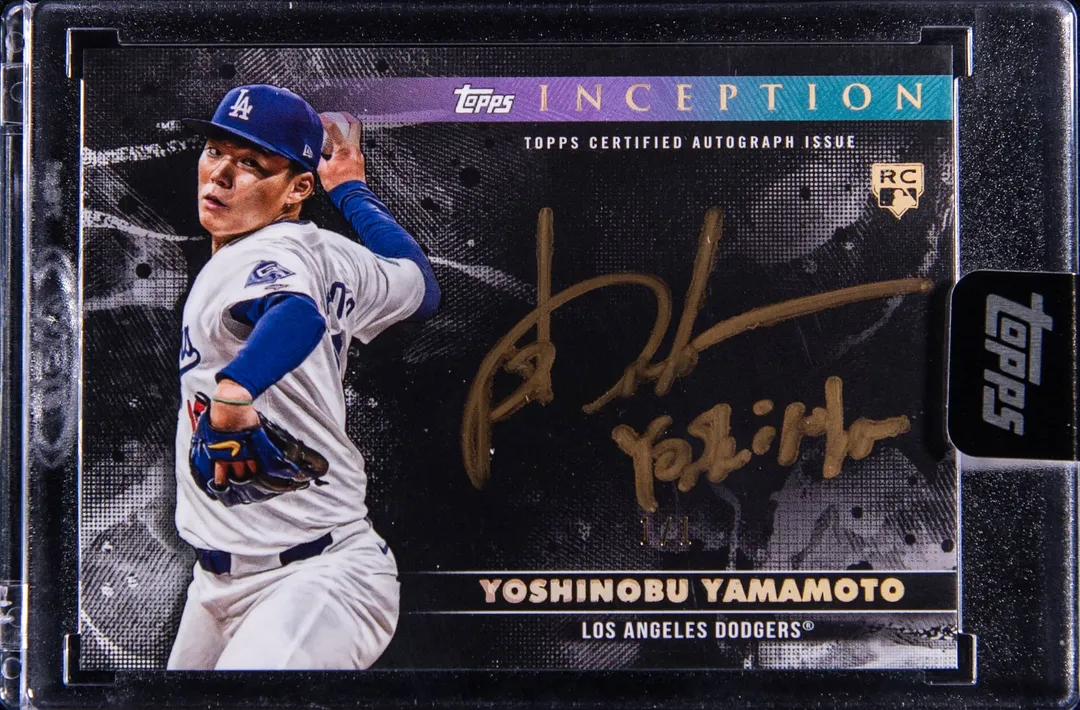
Yoshinobu Yamamoto 1/1 Inception Gold Ink RC Sale
Breakdown of the $18,422 Goldin sale of the 2024 Topps Inception Silver Signings Gold Ink Inscription 1/1 Yoshinobu Yamamoto rookie auto.
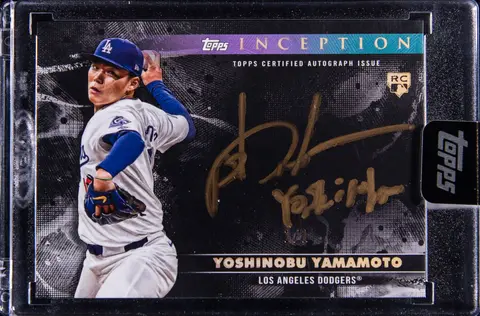
Sold Card
2024 Topps Inception Silver Signings Gold Ink Inscription #SS-YY Yoshinobu Yamamoto Signed, Inscribed Rookie Card (#1/1) - Topps Encased
Sale Price
Platform
Goldin2024 Topps Inception Silver Signings Gold Ink Inscription #SS-YY Yoshinobu Yamamoto Signed, Inscribed Rookie Card (#1/1) – Market Breakdown
On February 8, 2026, Goldin sold a 2024 Topps Inception Silver Signings Gold Ink Inscription #SS-YY Yoshinobu Yamamoto rookie autograph – a true 1-of-1 parallel, Topps-encased and featuring a gold ink on-card inscription – for $18,422.
For an early ultra-modern rookie of a high-profile pitcher, this is an important data point for both Yamamoto collectors and modern baseball prospectors who track high-end, low-serial ink.
In this post, we’ll walk through what the card is, why it matters, and how this sale fits into the broader market context.
- Card overview: what exactly sold?
Let’s start with the basics of the card itself.
- Year: 2024
- Product: Topps Inception Baseball
- Insert/Subset: Silver Signings
- Parallel: Gold Ink Inscription 1/1
- Card number: #SS-YY
- Player: Yoshinobu Yamamoto
- Team: Los Angeles Dodgers (rookie year MLB card)
- Serial numbering: 1/1 (one-of-one)
- Autograph: On-card, gold ink, with inscription
- Encapsulation: Topps encased (factory sealed)
- Rookie status: Considered a key rookie-year autograph, though not his flagship base RC
Topps Inception is a modern, thick-stock, premium line focused on bold designs and autographs rather than base cards. The Silver Signings subset typically features autographs in metallic ink (silver or gold) on a darker card stock. Gold ink versions, especially with inscriptions and 1/1 serial numbering, sit at the top of that hierarchy.
By hobby standards, this card checks several “chase” boxes:
- Rookie-year issue
- On-card signature (signed directly on the card, not on a sticker)
- Gold ink auto from a popular insert line
- Inscribed (the player adds extra writing beyond just the signature)
- One-of-one
- Factory encased by Topps
All of that combines to make this one of the more distinctive Yamamoto rookie autos in the 2024 product cycle.
- The player and timing: Yoshinobu Yamamoto’s hobby profile
Yoshinobu Yamamoto arrived in MLB with as much pitching hype as we’ve seen in years. Before coming over from NPB, he had already built a résumé that put him on the radar of collectors and investors long before his first pitch in Los Angeles:
- Multiple Sawamura Awards (Japan’s equivalent to a Cy Young)
- Repeated league dominance and big-game experience
- Massive free-agent contract with the Dodgers, instantly putting him in a major-market spotlight
For the hobby, that combination—elite pre-MLB performance, a top-tier market, and a highly publicized transition—often produces strong early demand for rookie-year autographs.
The sale date, February 8, 2026, sits after Yamamoto’s initial adjustment period in MLB and gives the market some real performance data to react to rather than pure speculation. That matters: early ultra-modern prices sometimes cool off if a player fails to meet expectations, and they can stabilize or rise if the player legitimately establishes himself.
Without overreaching into prediction, we can say this: by 2026, the market is no longer paying for mystery alone. A sale at this level reflects a mix of on-field performance, brand appeal, and scarcity.
- Set and insert: 2024 Topps Inception and Silver Signings
Understanding the product helps explain why this particular card draws attention.
- Product positioning: Inception is a mid-to-high-end line focused on hits (autographs and patches) rather than large base checklists. Boxes are compact, and most of the value comes from a small number of cards.
- Design: Thick stock, bold colors, and a more artistic, modern style. It tends to appeal to collectors who enjoy premium-feeling cards and on-card autos.
- Autograph focus: Many of the most chased cards in Inception are rookie autographs and low-numbered parallels.
The Silver Signings subset is one of the more recognizable Inception inserts:
- Dark background that makes metallic ink pop
- Silver and gold ink variations
- Often lower print runs than typical base autos
Within that subset, a 1/1 Gold Ink Inscription sits at the very top:
- 1/1 means there is only a single copy produced
- Inscription versions are generally scarcer and more desirable because they show extra effort and personality from the player
- Being Topps encased adds an extra layer of authenticity and presentation, similar in feel (though not the same function) as a third-party graded slab
For Yamamoto, this card occupies the high end of his non-flagship rookie auto landscape. It won’t replace his core Topps Chrome or Series 1/Update base rookies for mainstream recognition, but among collectors chasing his best ink, this is in that conversation.
- Market context and price: where does $18,422 sit?
The realized price at Goldin was $18,422.
To understand what that means, it helps to frame it in relative terms rather than treat it as an isolated number.
Because this card is a true 1/1 with an inscription, there are no direct, repeatable sales of the exact same piece. Instead, collectors tend to look at comps—short for “comparables,” meaning recent sales of similar cards—to triangulate value. Here, “similar” usually means:
- The same player
- Rookie-year issues
- Low-serial, premium autographs
- Comparable brand tier (Topps, Bowman, high-end inserts)
Based on the general behavior of the modern market for elite rookie 1/1s and high-end inscriptions:
- Inception 1/1 rookie autos of top pitching prospects or international stars often land well above their /10 or /25 counterparts, with inscription copies usually commanding a premium.
- For headlining talents, 1/1 rookie autos from recognizable lines (Inception, Topps Chrome Superfractors, Dynasty, etc.) frequently represent some of the highest non-logoman or non-booklet sales for that player.
While every player’s market is unique, this $18k+ result suggests the hobby currently views Yamamoto’s top-tier rookie autos on a level consistent with serious modern pitching prospects who have actually started to validate their hype at the MLB level.
It’s important to underline a few points:
- 1/1 pricing is inherently volatile because there is no true supply-side comparison. One motivated underbidder or a single missing bidder can swing results.
- Inscriptions are not standardized; desirability can vary depending on what the inscription actually says and how it presents.
- Market sentiment around pitchers is historically more cautious than around elite hitters, which makes strong realized prices for pitching 1/1s particularly noteworthy.
We don’t have a long, public history of this exact card trading, but this Goldin result helps anchor expectations for future high-end Yamamoto rookie autos.
- Collector significance: why this card matters
From a collector’s perspective, this card touches several important themes:
Key rookie autograph
- While flagship base rookies (like Topps base and Chrome) define a player’s mainstream RC identity, premium rookie autos from recognized lines form the “top shelf” of many PCs (personal collections).
- A 1/1 Inception Gold Ink Inscription is the type of card that ends up as a collection centerpiece rather than a filler.
1/1 scarcity in the ultra-modern era
- In ultra-modern (roughly mid-2010s to present), the market is flooded with parallels and serial numbers, but not all 1/1s are created equal.
- This is a 1/1 from a respected autograph-focused subset, not a fringe printing plate or obscure insert. That tends to matter for long-term collector relevance.
Pitcher-specific collecting
- Historically, position players have commanded more hobby attention, but dominant or highly anticipated pitchers can build strong followings—especially when they pitch in major markets and on competitive teams.
- Yamamoto fits the mold of a pitcher whose best cards collectors track closely: international star, big contract, high expectations.
Early-career storyline
- Early ultra-modern rookie autos are often viewed as snapshots of a player’s entry into MLB. Years from now, collectors may look back at this period as the beginning of Yamamoto’s MLB story—whatever arc it ultimately follows.
Takeaways for collectors and small sellers
Here are a few practical observations that this sale highlights:
Not all rookie autos are equal Even with the same player and year, there can be a wide gap between mass-printed stickers and premium, low-serial on-card autos. Understanding the product hierarchy (e.g., flagship vs. mid-end vs. high-end) is crucial.
Inscriptions can matter Inscribed autos—especially when they’re not overproduced—often hold a stronger appeal for player collectors because they feel more personal and more scarce. That can show up in pricing.
1/1s are more about matching the right buyer than about a fixed chart Because each 1/1 is unique, realized prices can vary. A sale like this at Goldin on February 8, 2026, is an important marker, but it’s still just one match between a specific buyer and seller at a specific time.
Auction house setting High-end player-specific cards often surface at major houses like Goldin. That environment tends to bring out deep player collectors and serious modern buyers, which can help establish credible reference points for future negotiations and private deals.
- How this fits into Yamamoto’s broader rookie card landscape
For collectors building a Yamamoto run, this Inception Silver Signings Gold Ink Inscription 1/1 sits alongside, not instead of, other key cards such as:
- Core Topps flagship rookies
- Topps Chrome parallels and autos
- High-end brands (e.g., Dynasty, Definitive) with patches and on-card ink
Think of it as a premium branch on the same tree. It is particularly relevant to:
- Player collectors aiming for “best possible” examples
- Dodgers collectors focusing on standout rookies and imports
- Modern auto enthusiasts who prioritize on-card, low-serial pieces over base RCs
- Final thoughts
The $18,422 sale of the 2024 Topps Inception Silver Signings Gold Ink Inscription #SS-YY Yoshinobu Yamamoto 1/1 Rookie Autograph at Goldin on February 8, 2026, represents more than just a big number.
It’s a snapshot of how the hobby currently views:
- A premium, one-of-one rookie auto from a respected modern product
- An international ace transitioning into MLB under a bright spotlight
- The role of inscriptions and factory encased cards in the ultra-modern autograph market
For collectors and small sellers, this result is a useful reference point—not a promise. If you track high-end Yamamoto cards, or you’re studying how ultra-modern rookie autos are being priced in 2025–2026, this is a sale worth bookmarking.
As always, the most important question is not what the market thinks, but how much a card like this matters to your own collecting goals.