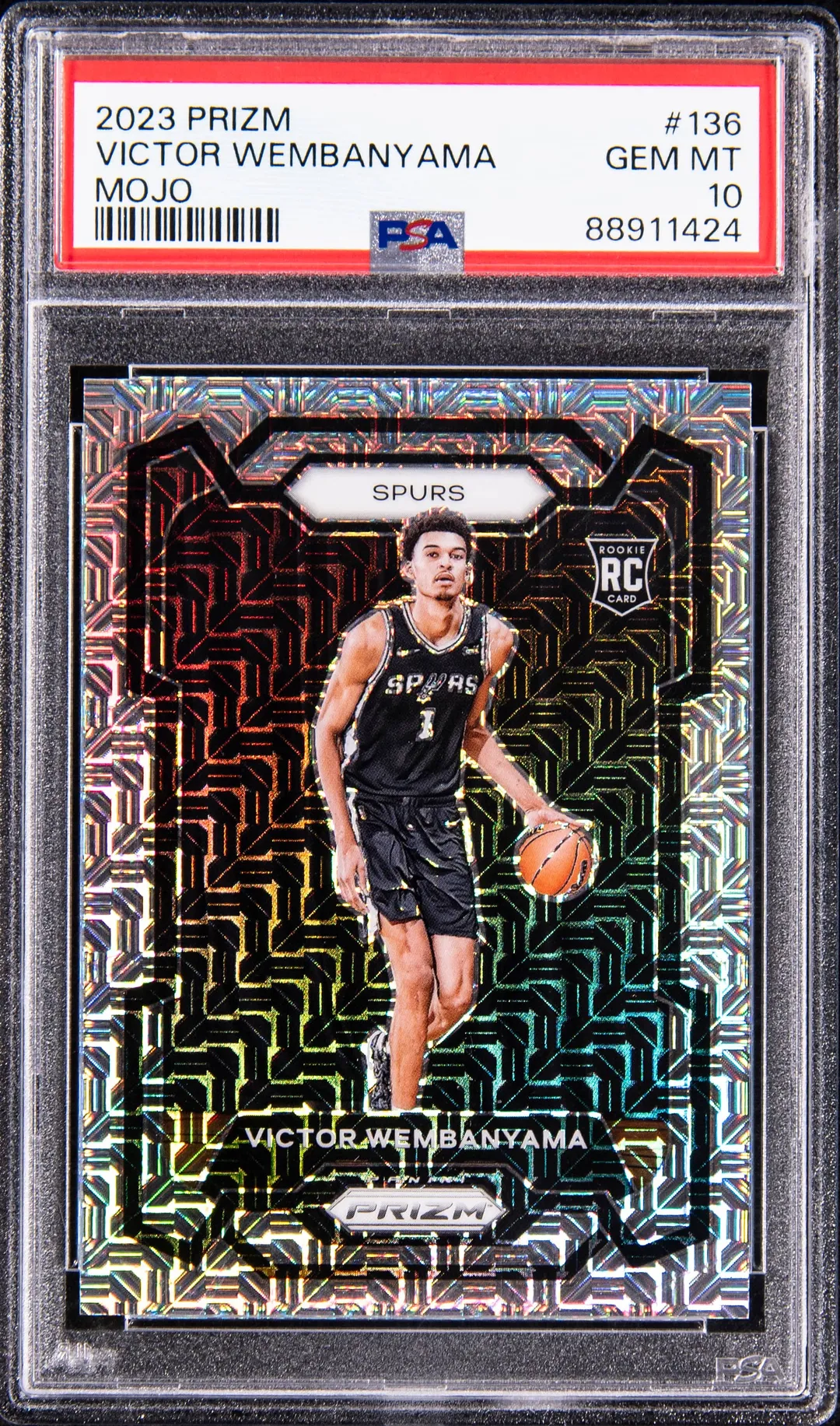
Victor Wembanyama Prizm Mojo PSA 10 Sells for $43K
Deep dive on the 2023-24 Prizm Mojo /25 Victor Wembanyama rookie, PSA 10, that sold for $43,920 at Goldin on February 8, 2026.
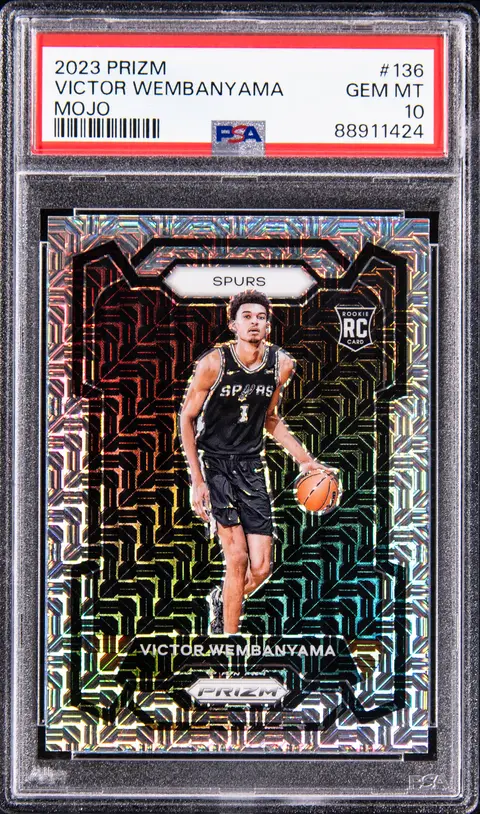
Sold Card
2023-24 Panini Prizm Mojo Prizm #136 Victor Wembanyama Rookie Card (#14/25) - PSA GEM MT 10
Sale Price
Platform
Goldin2023-24 Panini Prizm Mojo Prizm #136 Victor Wembanyama Rookie Card (#14/25) - PSA GEM MT 10 Sells for $43,920 at Goldin
On February 8, 2026, Goldin closed a notable ultra‑modern basketball sale: a 2023-24 Panini Prizm Mojo Prizm #136 Victor Wembanyama rookie card, serial numbered 14/25 and graded PSA GEM MT 10, realized $43,920.
For a card that sits in the intersection of a flagship chromium brand, a highly chased low‑numbered parallel, and a headline rookie, this result offers a useful datapoint for anyone trying to understand the emerging Wembanyama market.
The card at a glance
Let’s break down exactly what sold:
- Player: Victor Wembanyama (San Antonio Spurs)
- Year: 2023-24
- Product: Panini Prizm Basketball
- Card number: #136
- Parallel: Mojo Prizm
- Serial numbering: #14/25
- Rookie designation: Core Prizm rookie card
- Grading company: PSA (Professional Sports Authenticator)
- Grade: GEM MT 10 (PSA’s highest standard grade)
This is not a base Prizm rookie. It is the Mojo Prizm parallel, which is a low‑print, patterned foil version and is serial numbered to just 25 copies. Being both a short‑print parallel and a PSA 10 puts it into the higher tier of Wembanyama rookies, even without an autograph or patch.
Why this card matters to collectors
1. Prizm as a “flagship” chromium rookie
In modern and ultra‑modern basketball, Panini Prizm is widely treated as the main chromium flagship set for rookie cards. When collectors talk about a player’s “main” rookie, they usually mean:
- Base Prizm rookie
- Key color or serial‑numbered parallels of that base card
For Wembanyama, his 2023-24 Prizm #136 is that flagship chromium RC. The Mojo Prizm version is one of the more respected non‑1/1 serial‑numbered tiers within that hierarchy.
2. Mojo parallel: low print and recognizable
The Mojo pattern has become a hobby staple:
- Distinct swirling background pattern that is easy to spot
- Consistently serial numbered to 25 in most modern Prizm releases
- Considered meaningfully scarcer than common color parallels
Because the print run is known (25 copies), collectors can quickly understand relative scarcity compared to:
- Silver or unnumbered color parallels (higher supply)
- /75, /99, or /149 parallels (moderate supply)
- Gold /10, Green /5, or 1/1 versions (very low supply)
Mojo sits in a middle‑high rarity tier that many collectors see as a sweet spot: much rarer than the common color, but still attainable compared with gold or black 1/1s.
3. PSA GEM MT 10: condition ceiling
A PSA GEM MT 10 represents PSA’s highest regular grade. In practice, that means:
- Sharp corners
- Clean edges and surface
- Strong centering within PSA’s 10 tolerance
For a chromium card, surface issues and centering can limit gem rates. While specific population report numbers for this exact card will move over time, PSA 10s for serial‑numbered parallels out of 25 are naturally limited by both total print run and grading outcomes.
For collectors who prefer a “set it and forget it” copy of a key Wembanyama rookie parallel, a PSA 10 tends to be the target grade.
Market context: where does $43,920 fit?
The hammer plus buyer’s premium for this copy came to $43,920 at Goldin on February 8, 2026.
Because this is still a relatively new card in an active ultra‑modern market, public sales data can be thin, especially for a serial‑numbered parallel with only 25 total copies.
Based on recent, publicly visible hobby patterns around Wembanyama and similar players:
- Exact‑card comps (same card, same grade, same numbering) are rare due to the low print run.
- Nearby comps instead tend to come from:
- The same card in different grades (PSA 9 or raw/ungraded)
- Other serial‑numbered Prizm parallels (e.g., /75, /49, /10)
- Higher‑end brands such as National Treasures or Flawless for a rough hierarchy reference
Across those reference points, this $43,920 result sits in a range that reflects:
- The combination of brand (Prizm), scarcity (/25), and grade (PSA 10)
- Ongoing interest in Wembanyama as a potential long‑term franchise cornerstone
Because ultra‑modern markets can move quickly with player performance, awards, injuries, or playoff runs, this price should be treated as a snapshot of where the market stood as of early February 2026, not a permanent benchmark.
Wembanyama’s broader hobby position
Victor Wembanyama entered the league under one of the biggest prospect spotlights the NBA has seen in the ultra‑modern era. For the hobby, that usually means:
- Heavy early release attention on his first licensed rookie cards
- Wide interest in both base and color Prizm RCs
- Strong demand for serial‑numbered parallels in key brands
Recent seasons have seen a pattern where:
- Early ultra‑modern rookies with significant hype often have sharp price reactions to on‑court performance swings
- High‑end, low‑serial, high‑grade examples tend to become the core reference points for a player’s market over time
A Prizm Mojo /25 PSA 10 fits naturally into that “reference point” category for Wembanyama’s rookie year.
Grading, population, and scarcity
A pop report (population report) is a count published by grading companies showing how many copies of a card they have graded at each grade level.
For a card like this, the scarcity is driven by multiple layers:
- Print run: Only 25 Mojo parallels exist by design.
- Submission behavior: Not all 25 will necessarily be pulled, kept clean, and submitted.
- Gem rate: Of those submitted, not all will reach PSA 10.
Even without exact population numbers, it’s reasonable to say that:
- The total pool of PSA 10 copies will be smaller than 25.
- Demand is spread across a limited number of high‑end collectors focused on Wembanyama, Prizm color, or low‑serial rookies broadly.
This layered scarcity is part of why sales like this draw attention: each public auction helps clarify how the market is valuing the combination of rarity, condition, and player trajectory.
How this sale fits into the Prizm Wembanyama ladder
Collectors often think about a player’s Prizm rookies in a loose “ladder” of desirability:
- Base Prizm RC (widest reach, most liquid)
- Silver and unnumbered color parallels
- Mid‑tier serial‑numbered parallels (e.g., /299, /199, /149)
- Low‑tier serial‑numbered parallels like Mojo /25
- Gold /10, Green /5, and 1/1 Black (and similar case‑hit or SSPs)
This Mojo /25 PSA 10 sale sits near the upper middle of that tier structure—clearly more scarce and chased than the everyday parallels, but still a step below the true top‑end gold and 1/1s.
For many collectors, that balance between visibility, scarcity, and price level makes Mojo an attractive target: rare and important, but not completely out of reach in relative terms.
What collectors and small sellers can take away
For newcomers, returning collectors, and small sellers, a few practical points from this sale:
- Brand and parallel matter. Not all rookies are equal. A Prizm Mojo /25 is fundamentally different from a base rookie or a non‑serial‑numbered parallel.
- Grade is a major driver. A PSA 10 can command a meaningful premium over PSA 9 or raw copies, especially when the raw pool is small.
- Low print plus high grade compresses supply. With only 25 printed and fewer than that reaching GEM MT 10, the number of potential high‑end transaction opportunities is small.
- Use auctions as reference points, not promises. This $43,920 Goldin result on February 8, 2026, is a useful reference, but market conditions can and do change.
Final thoughts
The 2023-24 Panini Prizm Mojo Prizm #136 Victor Wembanyama Rookie Card (#14/25) in PSA GEM MT 10 form is a clear example of how modern collecting priorities line up:
- Flagship chromium rookie brand
- Recognized low‑numbered parallel
- High grade from a major third‑party grader
Sales like this one at Goldin help outline where the hobby currently stands on one of the most closely watched ultra‑modern players. For anyone tracking Wembanyama or building a data‑aware approach to modern basketball rookies, this result is a key point to log and revisit as new comps emerge over time.