Tiger Woods 2001 SP SOTT Red BGS 9 Sells for $12K
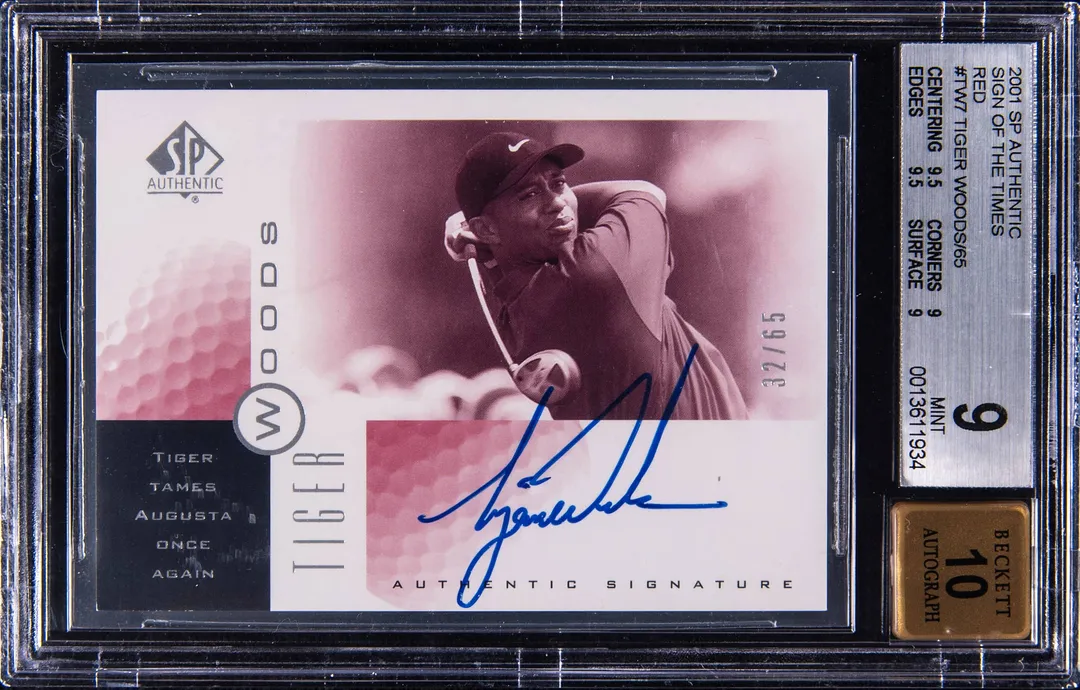
Goldin sold a 2001 SP Authentic Sign of The Times Red Tiger Woods BGS 9 /65 auto for $12,201 on Feb 8, 2026. Here’s what it means for the market.
Sold Card
2001 Upper Deck SP Authentic Sign of The Times Red #TW Tiger Woods Signed Rookie Card (#32/65) - BGS MINT 9, Beckett 10
Sale Price
Platform
Goldin2001 Upper Deck SP Authentic Sign of The Times Red #TW Tiger Woods Signed Rookie Card (#32/65) - BGS MINT 9, Beckett 10: Market Breakdown
On February 8, 2026, Goldin sold a 2001 Upper Deck SP Authentic Sign of The Times Red #TW Tiger Woods Signed Rookie Card, serial numbered 32/65, graded BGS MINT 9 with a Beckett 10 autograph, for $12,201. For golf card collectors and broader hobbyists, this is a meaningful data point for one of Tiger’s key early autograph issues.
In this post, we’ll walk through what this card is, why it matters, and how this sale fits into the recent market context.
Card Overview
Let’s start by clearly identifying the card:
- Player: Tiger Woods
- Year: 2001
- Set: Upper Deck SP Authentic
- Insert/Subset: Sign of The Times Red
- Card number: #TW
- Serial numbering: /65 (this copy is #32/65)
- Category: Early Tiger Woods autograph, treated by many collectors as a premium rookie-era auto
- Autograph: On-card (signed directly on the card)
- Grading company: Beckett Grading Services (BGS)
- Card grade: BGS MINT 9
- Autograph grade: Beckett 10 (gem-mint autograph grade)
The 2001 SP Authentic Sign of the Times cards are among Tiger’s most respected early certified autographs. While his 2001 Upper Deck Golf base rookie and its main parallels tend to get the “rookie card” label more often in strict terms, this Sign of the Times Red auto is commonly treated by collectors as a cornerstone rookie-era autograph.
The Red parallel is limited to just 65 copies, giving it a clear scarcity profile compared with more commonly seen Tiger autos from the same period.
Why This Card Matters to Collectors
For collectors who are newer to golf cards, it helps to place this card in context.
Key early Tiger Woods autograph
Certified, pack-inserted autographs of Tiger from his dominant early 2000s era are not especially plentiful. The SP Authentic line was already an established premium brand in basketball and football, and the Sign of the Times inserts were recognized as a high-end, on-card auto chase.
In golf, Tiger’s early autos fall into a few important buckets: base Upper Deck autos, SP Authentic Sign of the Times, and a small number of other premium inserts. The Sign of the Times Red /65 sits in the upper tier because it combines:
- On-card autograph
- Low serial numbering
- Recognized brand (SP Authentic)
- Early-career timing (rookie-era Tiger)
For many collectors building a focused Tiger run, a Sign of the Times Red auto is a target alongside his flagship rookies.
Era and scarcity
This card comes from the early 2000s, well past the true “vintage” era but long before the ultra-modern explosion of parallels and mass-produced autographs. Print runs were controlled, and golf did not have the same production volume as mainstream sports like basketball or football.
A serial number of 65 already makes the raw card scarce. Once you filter down to:
- Copies that are graded,
- Copies that hit BGS 9 or better,
- Copies with a perfect 10 autograph grade,
you end up with a relatively small pool of high-end examples that regularly come to market.
Collector perception
Among Tiger collectors, a short-printed, on-card auto from SP Authentic tends to be treated as a long-term cornerstone rather than a speculative play. It is a card that shows up in long-held personal collections and in curated golf or cross-sport “GOAT” collections.
Market Context and Recent Sales
When collectors talk about “comps” (short for comparables), they mean recent, confirmed sale prices for the same card or very close versions—ideally in the same grade. These comps help frame expectations, without promising that the next sale will match them.
For this specific card, here is the general context from recent hobby data through early 2026:
- Tiger’s 2001 SP Authentic Sign of the Times cards have consistently been among his stronger-performing early autographs.
- Lower grades and non-graded copies of the Red /65 version typically sell for less, depending on eye appeal and autograph quality.
- Premium grades (BGS 9, BGS 9.5, and strong PSA equivalents) tend to draw a noticeable premium, especially when paired with a 10 auto grade.
The $12,201 result at Goldin on February 8, 2026 positions this BGS 9 / Beckett 10 auto example toward the higher end of the range seen for mid-to-high grade copies of this card over the last couple of years, particularly when compared to:
- Raw or lower-grade Red /65 examples
- Non-Red Sign of the Times Tiger autos from similar years
This is consistent with broader hobby behavior: strong auction houses, clear listing titles, and high-quality scans often help top-tier examples realize the upper end of current market ranges.
Grade and Pop Considerations
Collectors often reference a “pop report” (population report), which is the grading company’s count of how many copies have been graded at each grade level.
For this card:
- BGS 9 is considered a premium grade for an early-2000s, foil-finish autograph card, where surface and edges can be sensitive.
- A 10 auto grade is particularly important for autograph-driven cards, as streaks, smudges, or fading can hurt both demand and pricing.
While population data can shift over time as more cards are submitted, the general takeaway is that there are relatively few BGS 9 or better copies of this exact Red /65 auto with a 10 autograph on the market at any given moment. That supply dynamic tends to support stronger auction outcomes when motivated bidders meet a high-end copy.
Why This Sale Matters
For collectors watching Tiger’s market or considering adding a high-end golf card, this sale provides a recent reference point:
- It reinforces that early, low-serial, on-card Tiger autos remain in steady demand.
- It shows that strong examples in respected holders (here BGS with a 10 auto) can command a premium.
- It offers a concrete comp at $12,201 for this specific configuration (Red /65, BGS 9, 10 auto) from a major auction house.
This result should not be treated as a guarantee of future value, but it is a useful data point for anyone tracking the long-term market for Tiger’s iconic early autographs.
Takeaways for Different Types of Collectors
New or returning collectors
- This card is a good example of how scarcity, brand, and autograph quality work together.
- When you see terms like “Sign of the Times” or “SP Authentic,” know that these are historically respected insert and set names in the hobby.
- A serial number like “/65” means there are only 65 copies of this parallel, which is very low by modern standards.
Active hobbyists and small sellers
- Use sales like this to calibrate your expectations when pricing or negotiating on similar Tiger autos.
- Pay attention not just to the card and grade, but also to the autograph grade and the auction platform. The same card in a private sale, or with a 9 auto instead of 10, may reasonably land at a different price point.
- If you own a similar card, this sale offers a recent reference number, but it is still only one data point among many.
Long-term Tiger collectors
- This Goldin result underscores that the 2001 SP Authentic Sign of the Times Red /65 continues to be recognized as a premium Tiger piece.
- If you are building a focused Tiger run, this sale confirms that the market is still assigning meaningful value to early, low-serial, on-card autos.
Final Thoughts
The February 8, 2026 Goldin sale of the 2001 Upper Deck SP Authentic Sign of The Times Red #TW Tiger Woods Signed Rookie Card (#32/65) in BGS MINT 9 with a Beckett 10 autograph, at $12,201, fits the profile of a strong but defensible auction result for a key Tiger autograph.
For the broader hobby, it’s another reminder that cornerstone cards of historically important athletes—especially those combining scarcity, brand strength, and on-card autos—continue to be closely watched and actively collected.
As always, any single sale is just one chapter in the card’s ongoing market story, but this one is an important data point for anyone tracking high-end Tiger Woods cards in 2026.