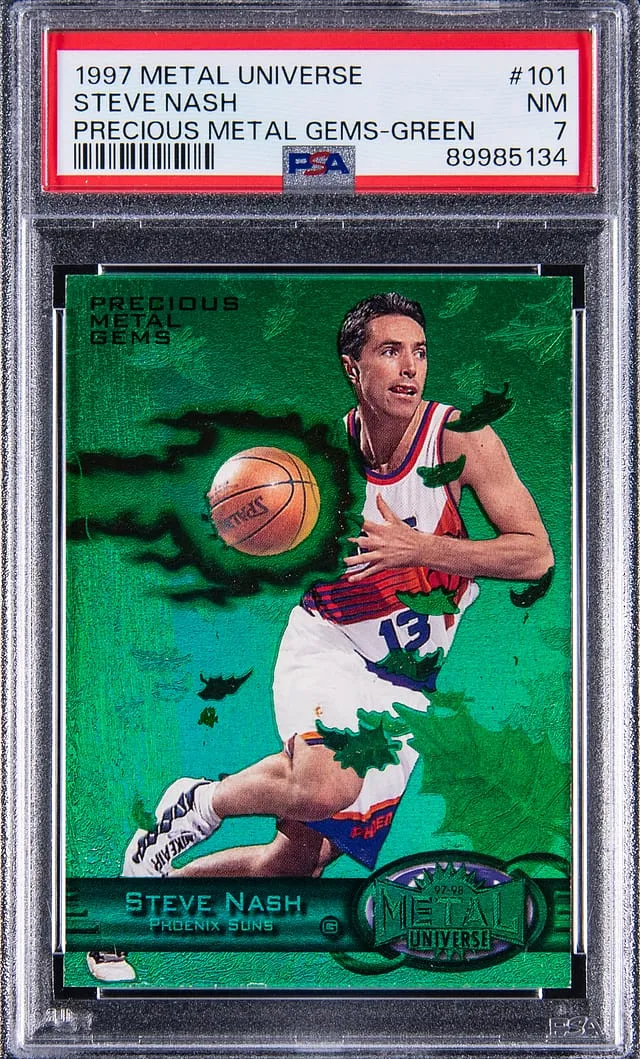
Steve Nash 1997-98 PMG Green PSA 7 Sells for $54,900
A 1997-98 SkyBox Metal Universe PMG Green Steve Nash PSA 7 (pop 2) sold for $54,900 at goldin. Here’s the card’s context, scarcity, and market impact.
Sold Card
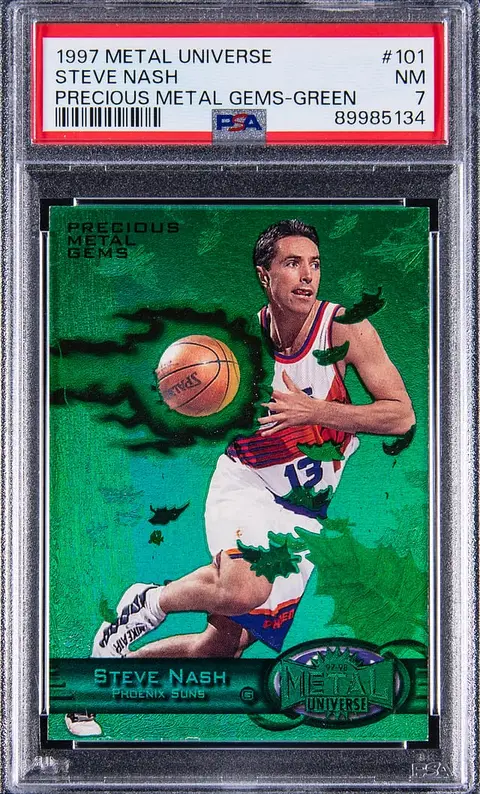
1997-98 SkyBox Metal Universe Precious Metal Gems (PMG) Green #101 Steve Nash (#005/100) - PSA NM 7 - Pop 2
Sale Price
Platform
Goldin1997-98 Metal Universe Precious Metal Gems (PMG) Green cards sit at the intersection of 90s basketball nostalgia, true scarcity, and modern hobby focus. A recent sale at goldin on 2026-03-08 put a spotlight on one of the set’s most elusive point guards:
1997-98 SkyBox Metal Universe Precious Metal Gems Green #101 Steve Nash (#005/100) – PSA NM 7 – Pop 2
Final price: $54,900 (USD) Auction house: goldin Sale date: 2026-03-08 (UTC)
Below, we’ll walk through what this card is, why it matters to collectors, and how this sale fits into the broader PMG and Steve Nash market.
The Card at a Glance
Set: 1997-98 SkyBox Metal Universe
Parallel: Precious Metal Gems Green
Player: Steve Nash
Team: Phoenix Suns
Card number: #101
Serial numbering: #005/100
Grade: PSA NM 7 (Near Mint)
Population (“pop”): Pop 2 in PSA 7
This is not a Nash rookie card (his rookies are from 1996-97), but it is widely treated as a key early-issue premium parallel. The 1997-98 Metal Universe PMG Green run is one of the true pillars of 90s basketball inserts.
How PMG Greens Are Numbered
For 1997-98 Metal Universe PMGs:
- The Green portion is limited to 10 copies per card number.
- The Red portion runs from 11 to 100.
- All 100 copies share a single serial run /100, with the first 10 traditionally viewed as Green.
This Steve Nash is stamped #005/100, placing it within the Green portion of the run and making it one of only ten Greens.
Grading and Scarcity
This copy is graded PSA NM 7, which in PSA’s scale means Near Mint. For a 90s foil, chipping- and edge-prone insert like PMG, a 7 can still be very respectable.
Key points for this specific card:
- PSA grade: 7 (NM)
- PSA pop in this grade: Pop 2 (only two in PSA 7)
- PMG Greens in general tend to have very low total populations across all grades, mainly due to:
- Extremely low print run (effectively /10 for Greens)
- Condition sensitivity (foil front, colored edges, easy chipping)
- Many copies likely sitting raw in collections or lost over time
Even without exact cross-grading data, we can say that any graded 1997-98 PMG Green Steve Nash is a true rarity, not just a tough grade.
Why Collectors Care About This Card
1. Steve Nash’s Hobby Profile
Steve Nash is a 2x NBA MVP, Hall of Famer, and one of the defining point guards of the 2000s. While his flagship rookies are in 1996-97 products (notably Topps Chrome), high-end collectors often chase:
- Low-numbered parallels
- Iconic 90s inserts
- Early-career premium issues
A 1997-98 PMG Green fits squarely into that chase as one of Nash’s most important non-rookie cards.
2. The Historical Weight of PMG Greens
The 1997-98 Metal Universe Precious Metal Gems line is arguably the most influential 90s basketball parallel design. Collectors value it for:
- Distinctive foil and colored design
- Extremely low serial numbering
- Strong crossover appeal between player collectors, 90s insert collectors, and high-end investors
Within that ecosystem, Green > Red, simply because Greens are effectively /10. Player collectors and set builders both target Greens as the pinnacle.
3. Era and Aesthetic
The card comes from what’s often called the late-90s insert boom – a period when card companies experimented heavily with designs, textures, and serial-numbered parallels.
Compared to the “junk wax” era (late 80s to early 90s) where print runs were very high, sets like 1997-98 Metal Universe introduced genuine scarcity and a distinct visual style. That combination keeps demand strong even among newer collectors.
Market Context and Recent Sales
When we talk about “comps” (short for comparable sales), we’re usually looking at:
- The same card and grade where possible
- Same card in nearby grades
- Closely related versions (for PMGs, that usually means the Red version or other star players from the same parallel)
For a card this rare (Green /10, early Nash, pop 2 in PSA 7), exact comps are often limited. Many copies are locked into long-term collections and only surface occasionally.
How $54,900 Fits In
While exact recent public sales of this exact card/grade can be scarce, we can frame the $54,900 result by looking at:
General PMG Green hierarchy:
- All-time greats (Jordan, Kobe, key rookies) can command very high six- or even seven-figure prices in top condition.
- Tier-two Hall of Famers and stars typically fall into the mid five- to low six-figure range, depending on grade and hobby demand.
Positional and player demand:
- Point guards, even elite ones, often sit a step below volume scorers in hobby pricing.
- Nash is still firmly in Hall of Fame and “PC” (personal collection) territory for many collectors, and his best cards now tend to be treated as long-term cornerstone pieces.
Within that framework, a $54,900 result at goldin for a PSA 7 Green suggests:
- Strong recognition of the set’s pedigree and the scarcity of PMG Greens.
- Solid, but not speculative, pricing relative to more globally collected superstars.
Because public sales for Nash PMG Greens are few and far between, this auction helps reset or at least clarify a reference point for future sales of:
- This exact copy (if it ever reappears)
- Other Nash PMG Greens in different grades
- High-end Nash inserts from the same era
Comparing to Related Versions
Even when data is thin, looking at related versions helps frame expectations:
PMG Red versions (/100, effectively #011–100):
Reds are more plentiful but still very rare. For Steve Nash, Reds will typically sell meaningfully lower than Greens, sometimes at a fraction of Green pricing depending on grade.Other early Nash parallels and inserts (e.g., 1996-97 refractors, other late-90s serial-numbered inserts):
These usually trade well below PMG Greens. The PMG brand and ultra-low numbering place Greens in a separate tier.
For sellers and collectors, this gap between PMG Green and Red prices is part of what defines the PMG market structure.
What This Sale Might Mean for Collectors
A single auction doesn’t rewrite an entire market, but it can:
- Provide a fresh data point for Nash’s top-tier cards.
- Reinforce the perception of PMG Greens as long-term key pieces for 90s stars.
- Encourage owners of similar-era, high-end inserts to re-evaluate their own cards’ place in the market.
For Nash collectors, this sale:
- Underscores that his very best cards compete in the same general arena as other Hall of Famers’ high-end 90s inserts.
- Highlights how tough it is to acquire a PMG Green at any grade.
For newer collectors, it’s a reminder that:
- Not all 90s inserts are created equal. PMG Greens occupy a very specific, very thin layer at the top.
- Condition, serial number, and set history all matter when trying to understand pricing.
Key Takeaways
- Card: 1997-98 SkyBox Metal Universe PMG Green #101 Steve Nash, serial #005/100, PSA NM 7, pop 2.
- Sale: Closed at $54,900 via goldin on 2026-03-08 (UTC).
- Significance: One of Nash’s most important early-career premium parallels, from a landmark 90s insert set.
- Market context: Limited direct comps, but pricing aligns with a Hall of Fame point guard’s premier low-numbered parallel in a historically important insert line.
As always, this sale is best viewed not as a guarantee of future performance, but as one more data point in the evolving story of 1990s basketball inserts and Steve Nash’s place within that history.
Collectors watching the PMG space – or building focused Steve Nash PCs – will likely keep this goldin result in mind as they evaluate future opportunities around high-end 90s parallels.