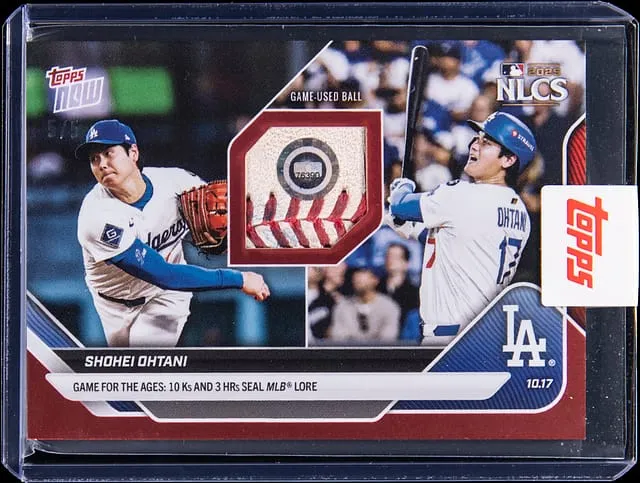
Shohei Ohtani 2025 Topps Now Red Foil Relic /5 Sale
Goldin sold a 2025 Topps Now Red Foil Shohei Ohtani game-used relic /5 for $24,705. See why this ultra-rare MLB Authenticated card matters to collectors.
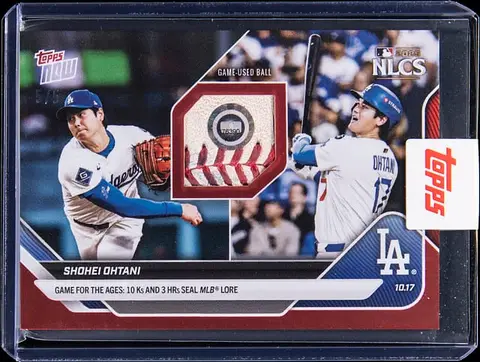
Sold Card
2025 Topps Now Relics Red Foil #884A Shohei Ohtani Game-Used Relic Card (#5/5) - Topps Sealed - MLB Authenticated
Sale Price
Platform
Goldin2025 Topps Now Relics Red Foil #884A Shohei Ohtani Game-Used Relic Card (#5/5) - Topps Sealed - MLB Authenticated Sells for $24,705
On May 8, 2026, Goldin auctioned a 2025 Topps Now Relics Red Foil #884A Shohei Ohtani Game-Used Relic Card, serial numbered 5/5, for $24,705. For an ultra-modern (roughly 2018–present) baseball card, this is a notable data point, especially for collectors who track Ohtani’s game-used and low-serial cards.
In this breakdown, we’ll walk through what this card is, why it matters, and how the sale fits into the current Shohei Ohtani market.
Card Overview: What Exactly Sold?
Here’s how the card breaks down in hobby terms:
- Year: 2025
- Brand / Line: Topps Now Relics
- Player: Shohei Ohtani
- Team: Los Angeles Dodgers (Topps Now follows current MLB rosters; this card reflects his Dodgers era)
- Card Number: #884A
- Parallel: Red Foil
- Serial Numbering: Hand/foil numbered 5/5 (only five copies produced)
- Type: Game-used relic (memorabilia card containing a piece of game-used material)
- Authentication: MLB Authenticated relic, Topps sealed in original holder
- Autograph: None indicated (this is a relic card, not labeled as an auto relic)
- Grading: Not graded; still in Topps’ sealed, original packaging
This is not a rookie card—Ohtani’s true rookies are from 2018—but it is a low-serial, game-used memorabilia card from a real-time, event-driven product line.
What is Topps Now Relics?
Topps Now is an on-demand product: cards are created quickly to commemorate specific moments, then sold online for a limited window. Production quantities are tied to how many collectors order during that window.
Within that line, Topps Now Relics introduce game-used memorabilia pieces tied to specific games or achievements. The Red Foil parallel at /5 sits near the top of the rarity ladder, usually just below one-of-one versions.
Because this card is MLB Authenticated, collectors know the relic piece can be traced back to actual game use via MLB’s tracking system, which boosts confidence and desirability.
Market Context: How Does $24,705 Fit In?
We’ll refer to a few key terms as we go:
- Comps (comparable sales): Recent sales of the same card, or very similar cards, used as reference points.
- Pop report (population report): Counts from grading companies that show how many copies of a card have been graded and at what grades. For ungraded, Topps-sealed relics like this, pop reports are less central.
For a very specific card like a 2025 Topps Now Relics Red Foil #884A Ohtani /5, exact comps can be thin. Ultra-modern, low-serial, on-demand issues often trade less frequently than flagship rookies.
From recent Ohtani sales across major auction houses and marketplaces, a few patterns help frame this result:
High-end Ohtani relic and patch cards (especially with game-used material and strong visual appeal) frequently land in the low-five-figure range when they are:
- Low serial numbered (e.g., /5, /10)
- Tied to a popular brand or well-known subset
- Connected to key career moments or milestones
Topps Now relics and parallels typically price below Ohtani’s most iconic rookies and flagship issues (e.g., 2018 Topps Chrome, Bowman Chrome autographs), but the combination of MLB-authenticated game-used material and a print run of only five elevates them well beyond standard Topps Now base cards.
Earlier-year Ohtani Topps Now relics and parallels have shown:
- Healthy demand from player collectors who chase every key Ohtani card
- A tendency to outperform more common inserts, particularly when tied to big games or historical firsts
Within that context, $24,705 for this 2025 Topps Now Red Foil relic /5 is:
- Aggressive but plausible for a premium, ultra-limited Ohtani memorabilia card in the current environment
- In line with what we see for top-end, non-rookie, low-serial Ohtani cards that combine scarcity, game-used material, and a current, headline-driven narrative
Exact one-to-one comps for this specific card number and parallel are not widely reported yet, which is typical for newly released, ultra-low print run issues. That means this sale likely acts as an early reference point for future pricing.
Why Collectors Care About This Card
Several factors converge to make this a notable piece for both Ohtani enthusiasts and broader modern-card collectors.
1. Shohei Ohtani’s Unique Profile
Ohtani is a two-way star—elite both as a hitter and (when healthy) a pitcher—in a way the modern game has rarely seen. Even when you strip away the hype, his combination of:
- MVP-level hitting
- Front-of-rotation pitching (when active on the mound)
- Global fanbase (Japan, U.S., and worldwide)
creates sustained demand across multiple segments of the hobby.
2. Dodgers Era, Early-Run Card
This is a 2025 card, meaning it reflects his high-profile tenure with the Los Angeles Dodgers. Big-market teams like the Dodgers often amplify interest:
- More national coverage and playoff exposure
- Stronger local and international collector base
- Increased attention to memorabilia tied to key games and seasons
For collectors who specifically want Ohtani-in-Dodgers-blue pieces, this kind of early-run relic provides a clear snapshot of that era.
3. Game-Used and MLB Authenticated
There is a meaningful difference between:
- Player-worn or event-worn pieces (used in a photo shoot or non-game setting), and
- Game-used, which has actually seen in-game action.
This card is explicitly labeled as a game-used relic with MLB Authentication. That verification is important:
- MLB’s program logs each item (jersey, bat, etc.) with a unique hologram that can be checked against a database.
- Collectors can often see the exact game or event the material is tied to.
For serious memorabilia-focused collectors, that extra layer of certainty can justify a premium versus generic “relic” cards.
4. Scarcity: Red Foil /5
Ultra-modern cards often have a complex parallel structure. In this case:
- Red Foil is a clearly defined, very low-serial parallel
- Only five copies exist of this version
While there may be a one-of-one or other parallel tiers, /5 is firmly in true scarcity territory. That matters because:
- Player collectors competing for master sets have very few shots at acquiring a copy
- High-end buyers often prioritize low-serial parallels as centerpieces of Ohtani PCs (personal collections)
5. Topps Now as a Historical Record
Topps Now has become a running archive of specific plays, debuts, records, and milestones. While traditional base sets tell a season-long story, Topps Now often focuses on:
- Debut games
- Record-setting performances
- Historic achievements
Depending on the exact moment tied to card #884A (not always captured in public auction descriptions), this card could also commemorate a particular Dodgers-era highlight. Even without that detail, it situates the relic in a real-time, event-driven product line rather than a generic insert.
Condition and Sealed Status
This card is described as Topps Sealed, meaning it remains in the original factory holder, often with a hologram or Topps sticker.
Collectors sometimes weigh two paths:
- Keep it sealed as originally issued, preserving the direct chain from Topps and MLB Authentication.
- Crack and grade with a third-party grading company (PSA, BGS, SGC) to gain a numerical grade and slabbed label.
For modern relics, surface and edge chipping can impact grades. Some buyers prefer sealed status because:
- It preserves provenance
- It avoids the risks of handling and shipping to a grading company
In the absence of a pop report for this exact card (since it’s ungraded), scarcity is driven by print run (5 copies) rather than graded population.
What This Sale Signals for the Ohtani Market
A single auction doesn’t define a market, but a $24,705 result at a major auction house like Goldin on May 8, 2026 tells us a few things:
- High-end demand for Ohtani remains strong. Even outside his flagship rookie and core autograph lines, serious money is chasing premium pieces.
- Game-used, authenticated memorabilia is a key differentiator. Among a sea of parallels and inserts, relics tied to actual game use and backed by MLB data stand out.
- Dodgers-era Ohtani cards are already carving out their lane. This is not just nostalgia for his early MLB years; collectors are willing to pay serious prices for newer, big-market, big-moment material.
For newcomers or returning collectors, this doesn’t mean every Ohtani card is worth five figures—far from it. But it does highlight how the hobby currently values:
- Player stature
- Authentic game-used material
- Extremely low print runs
- Recognized auction platforms
Takeaways for Collectors and Small Sellers
A few practical lessons you can draw from this sale, whether you’re collecting or reselling:
- Know your print runs. A card numbered /5, especially of a superstar, exists in an entirely different market tier than unnumbered or high-serial inserts.
- Understand authentication. “Game-used” with MLB Authentication carries more weight than generic relic wording. When listing or buying, call out that detail clearly.
- Track comps over time. For ultra-rare cards, you may only see a handful of sales. Each one becomes a reference point, so saving auction results and data helps build your own internal price history.
- Separate player hype from card specifics. Ohtani is a major driver of demand, but within his catalog, there’s a big gap between mass-produced cards and ultra-short-print, authenticated relics.
As more 2025 Topps Now Relics Ohtani cards surface—and as future parallels or one-of-ones sell—this Goldin May 8, 2026 result will likely serve as an early milestone in the pricing history of his Dodgers-era game-used cards.
For now, it stands as a clear reminder: when you combine a generational player, true scarcity, and verifiable game-used memorabilia, the modern market is willing to pay up.