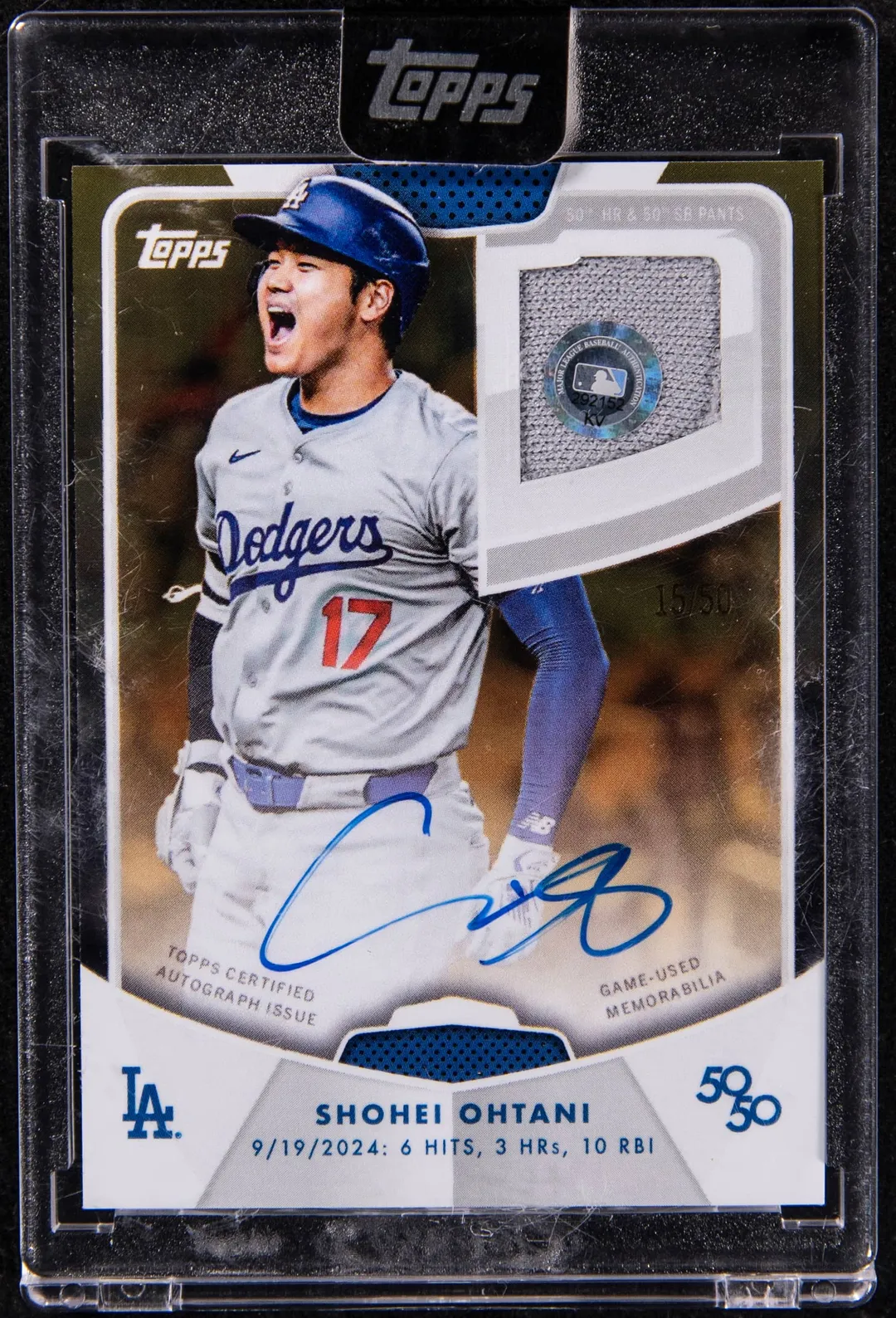
Shohei Ohtani 2024 Topps 50/50 Gold Foil Sale
Breaking down the $24,406 Goldin sale of the 2024 Topps 50/50 Shohei Ohtani Autograph Relic Gold Foil #SOAR-1 and what it means for collectors.
Sold Card
2024 Topps 50/50 Shohei Ohtani Autograph Relic Gold Foil #SOAR-1 Shohei Ohtani Signed Game-Used Pants Relic Card (#15/50) - Used in Historic 50/50 Game on Sept. 19, 2024 - 3 HR, 2 Doubles, 2 SB, 10 RBI - Topps Encased, MLB Authenticated
Sale Price
Platform
Goldin2024 Topps 50/50 Shohei Ohtani Autograph Relic Gold Foil #SOAR-1: What This $24,406 Sale Tells Us About the Modern Market
On February 8, 2026, Goldin closed a notable modern baseball auction: a 2024 Topps 50/50 Shohei Ohtani Autograph Relic Gold Foil #SOAR-1, numbered 15/50, featuring a signed game-used pants relic from Ohtani’s historic “50/50 game” on September 19, 2024. The card realized $24,406.
For collectors trying to understand where this piece fits in today’s market, it’s worth unpacking the card itself, the moment it commemorates, and how this sale lines up with recent high-end Ohtani activity.
Card overview: 2024 Topps 50/50 Ohtani Gold Foil #SOAR-1
Key details:
- Player: Shohei Ohtani
- Team: Los Angeles (MLB; card imagery and branding tied to his 2024 squad)
- Year: 2024
- Product: Topps 50/50
- Card: Autograph Relic Gold Foil
- Card number: #SOAR-1
- Serial numbering: 15/50 (only 50 Gold Foil copies produced)
- Autograph: On-card (signed directly on the card surface, not a sticker)
- Relic: Game-used pants swatch
- Event tie-in: Pants worn in the September 19, 2024 game
- Game stat line noted: 3 HR, 2 doubles, 2 stolen bases, 10 RBI
- Encapsulation: Topps-encased, MLB Authenticated relic
This is not a rookie card—Ohtani’s true rookies are from 2018—but it is a key ultra-modern issue because it connects directly to one of the most statistically outrageous single-game performances of his career.
The set and concept: Topps 50/50
Topps 50/50 is designed around a specific milestone theme. In this case, the Ohtani card is centered on what collectors have started to call his “50/50 game,” referring to the stacked combination of power, extra-base hits, and speed in a single night:
- 3 home runs
- 2 doubles
- 2 stolen bases
- 10 runs batted in
For modern collectors, this is the kind of performance that often becomes a hobby reference point—similar to how vintage and early modern cards sometimes anchor around no-hitters, postseason heroics, or record-setting games.
Because the relic piece is MLB Authenticated and specifically tied to that game-used pair of pants, the card moves from being a general memorabilia card to a very targeted, moment-specific piece. That typically matters to serious player collectors and to modern buyers who prioritize narrative and provenance.
Attributes that matter to collectors
Several features of this card line up with what the high-end modern market tends to reward:
Low serial numbering
- Numbered to 50: In hobby shorthand, this is a “low-numbered” parallel—scarcer than mass-release cards.
- Being 15/50 doesn’t add a premium by itself (the jersey number multiplier is usually strongest when the serial matches the player’s uniform number), but it does clearly identify the card within a tight print run.
On-card autograph
- On-card autos are signed directly on the card before production is finished. Many collectors prefer this over sticker autographs, viewing it as more premium and more personal.
Event-specific, MLB Authenticated relic
- The pants swatch comes from a documented game, with authentication and a clear date: September 19, 2024.
- MLB Authentication is important because it ties the relic to a verifiable item and event, reducing the uncertainty that sometimes surrounds generic “game-used” labels.
Topps-encased presentation
- Factory encasing from Topps is not the same as third-party grading, but it signals a premium, limited release. The card is sealed in a tamper-evident holder with Topps branding, which some collectors like to leave intact.
Market context: how does $24,406 fit in?
The realized price here was $24,406 through Goldin on February 8, 2026.
Because this is a relatively new, moment-specific 2024 issue, the comp data ("comps" meaning comparable recent sales used as reference points) is still forming. At this stage, the closest context comes from adjacent categories:
- Other 2024 Topps 50/50 Ohtani cards with different parallels or without relics/auto
- High-end Ohtani autograph relics from earlier flagship brands (e.g., Topps Chrome, Five Star, Museum Collection, Dynasty, and Bowman’s Best / Bowman Chrome prospects)
- Game-dated Ohtani memorabilia cards from other modern sets
Across major marketplaces and auction platforms, the pattern for Ohtani’s high-end cards has been:
- True rookies and pre-MLB prospect autos (2017–2018 Bowman/Topps) sit at the center of his long-term market.
- Premium, low-serial autograph relics from later years form a second ring of demand, with pricing shaped heavily by brand, patch quality, moment relevance, and serial number.
This $24,406 sale places the 2024 Topps 50/50 Gold Foil auto relic in that second ring—below the record-setting numbers of his top rookie autographs and ultra-elite logoman or 1-of-1 cards, but clearly in high-end territory for a non-rookie, modern, event-focused card.
Within its own lane—2024, non-rookie, game-tied memorabilia with on-card auto and low serial—this result sits at the strong end of the spectrum. It reflects how Ohtani’s market has matured: collectors are now distinguishing between “generic star auto relic” and “specific, documented performance card” when deciding what to chase.
Why this card matters beyond the price
It captures a definable Ohtani milestone This card doesn’t just show Ohtani; it documents a historically loud single-game box score, combining power and speed in a way that feels unique even in a stat-rich era.
For long-term collectors, that matters because:
- It gives the card a built-in story that doesn’t rely on future outcomes.
- If that game becomes a reference point in Ohtani’s career retrospectives, cards like this will always have a narrative hook.
It’s from the ultra-modern era Ultra-modern (roughly 2016–present) is characterized by:
- Multiple product lines and parallels each year
- Clear tiering between mass-release and premium, low-print-run cards
- A sharper focus on on-card autographs and better memorabilia authentication
In this environment, a numbered-to-50, on-card auto relic tied to a specific historic performance stands out from the sea of generic hits.
It shows how game-dated memorabilia is evolving Earlier memorabilia cards often just said “game-used” or “player-worn” with minimal detail. By contrast, this card:
- Calls out the exact game
- Clearly connects stats and narrative to the relic
- Uses MLB Authentication to support that connection
That shift is important for newer collectors who are already used to transparent data in other hobbies. Clearer provenance usually means more confidence.
Recent Ohtani and hobby factors that likely influenced interest
A few broader trends help explain the strength of a sale like this:
Ohtani’s dual-threat status: Even as the pitching side of his career has gone through phases of injury and recovery, his offensive production has remained elite. That consistency supports demand for his autos and key memorabilia.
Ongoing attention from both US and international buyers: Ohtani’s global fan base has been one of the most significant demand drivers in modern baseball cards. Auction results for his standout pieces often show strong cross-border bidding.
Modern collectors prioritizing “story cards”: There is a growing niche of buyers who focus less on flagship rookies and more on specific moments—debut games, record-breaking nights, or playoff heroics. This 50/50 game relic sits squarely in that lane.
How collectors might think about this card
For different types of collectors, this sale can mean different things:
Player collectors: If you primarily PC (personal collect) Ohtani, this is a top-tier, moment-focused entry—especially appealing if you care about game-dated memorabilia.
Set or theme builders: If you chase event-based cards or performance-themed inserts, Topps 50/50 provides a defined framework, and this Gold Foil auto relic is one of the more premium examples.
Casual and returning collectors: This sale helps illustrate why some modern cards command a five-figure result while others with the same player and signature do not. The difference often lies in scarcity, story, and authentication, not just the name on the front.
The role of the auction house and timing
Goldin has become a consistent venue for high-end modern baseball cards, especially multi-thousand-dollar and five-figure Ohtani pieces. The February 8, 2026 sale date situates this result in a period when:
- The hobby has already had several years to evaluate Ohtani’s impact.
- Collectors have grown more comfortable with the idea that ultra-modern event cards can sit alongside classic rookies as serious collection centerpieces.
By moving through a venue known for premium modern items, this card reached an audience already calibrated to weigh player, moment, and card attributes together.
What this might signal for similar cards
Without forecasting or giving advice, it’s fair to say this sale highlights a few broader lessons:
Not all non-rookie cards are equal: When the card documents a specific, memorable performance and has verified game-used material, it can behave very differently from generic veteran autos.
Provenance and storytelling are becoming more important: As checklists get deeper every year, cards that clearly explain why they matter—through design, back text, or authentication—tend to stand out.
Data-aware collecting is now normal: Collectors routinely reference recent sales, population reports (a “pop report” is the count of how many copies a grading company has encapsulated at each grade), and auction history when making decisions. A $24,406 sale like this one becomes another data point in that ongoing conversation.
In short, the 2024 Topps 50/50 Shohei Ohtani Autograph Relic Gold Foil #SOAR-1 (15/50), sold by Goldin on February 8, 2026, is a snapshot of where the ultra-modern, moment-driven segment of the hobby is heading: fewer generic hits, more game-specific storytelling, and sustained interest in the sport’s most singular active talents.
For figoca users tracking the modern baseball landscape, it’s a useful reference piece—part market datapoint, part case study in how storytelling and authentication can shape the trajectory of a card that isn’t a rookie, but still feels central to a player’s hobby story.