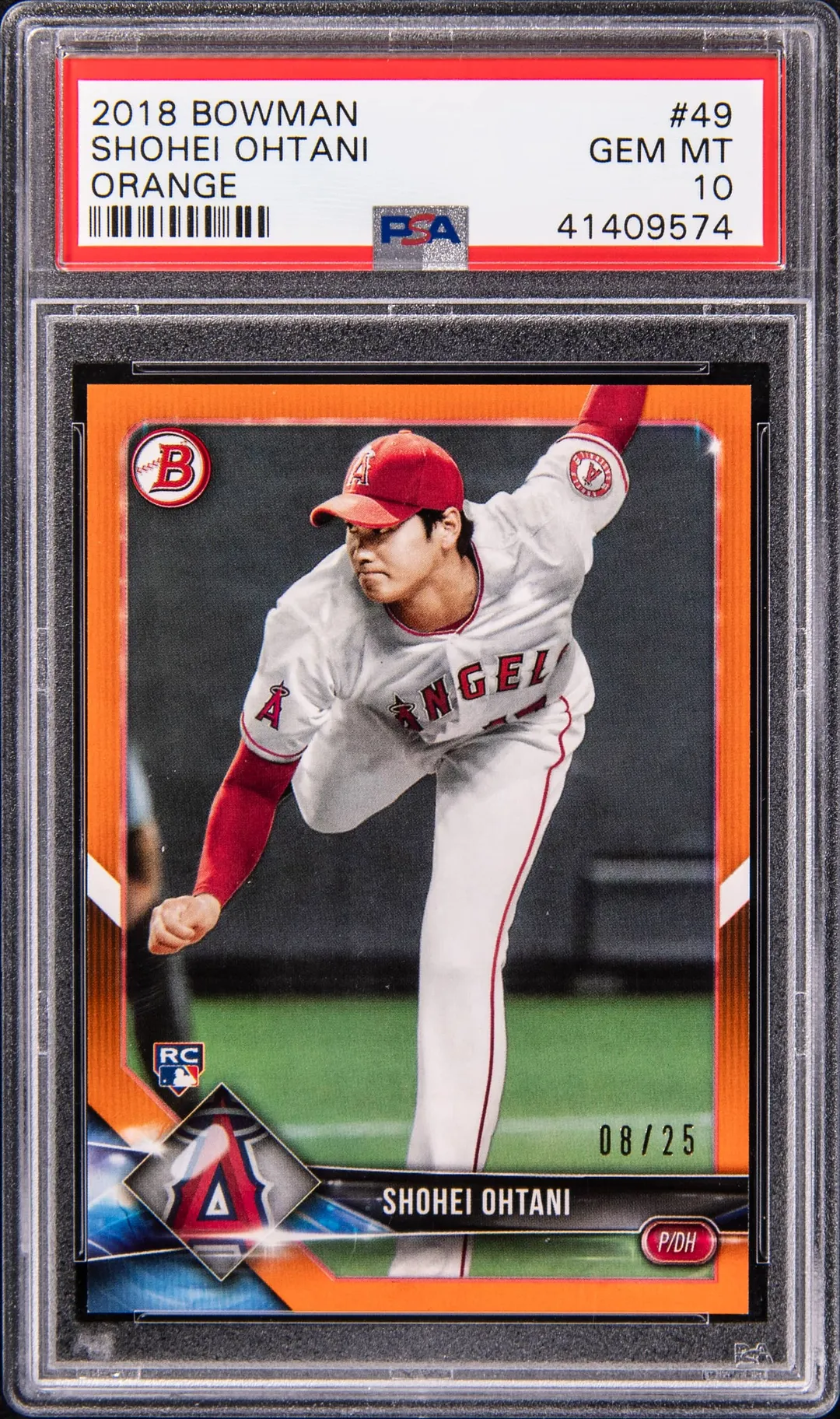
Shohei Ohtani 2018 Bowman Orange PSA 10 Sells for $34K
Goldin sold a 2018 Bowman Orange #49 Shohei Ohtani Rookie /25 PSA 10 (Pop 2) for $34,770 on Feb 8, 2026. figoca breaks down the sale and market context.
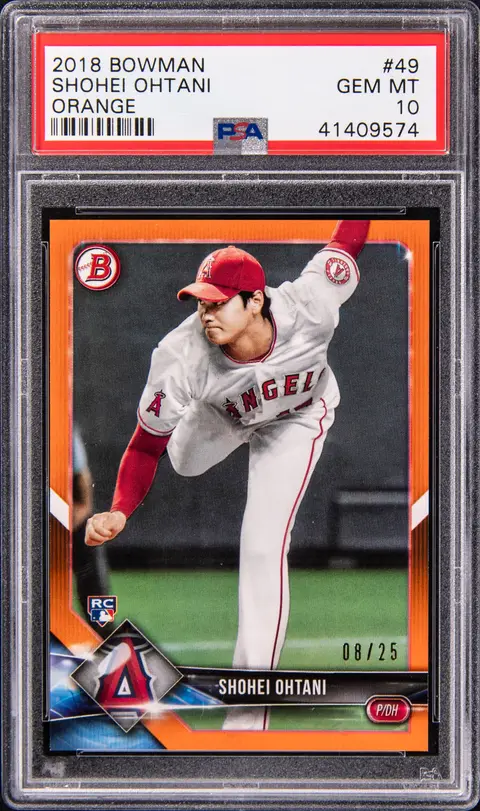
Sold Card
2018 Bowman Orange #49 Shohei Ohtani Rookie Card (#08/25) - PSA GEM MT 10 - Pop 2
Sale Price
Platform
Goldin2018 Bowman Orange #49 Shohei Ohtani Rookie Card (#08/25) - PSA GEM MT 10 - Pop 2 Sells for $34,770
On February 8, 2026, Goldin sold a key modern baseball rookie: a 2018 Bowman Orange #49 Shohei Ohtani Rookie Card, serial numbered 08/25 and graded PSA GEM MT 10, for $34,770. For collectors tracking Ohtani’s earliest MLB cardboard, this is a meaningful data point in a maturing high‑end market.
Card overview
Let’s break down exactly what this card is:
- Player: Shohei Ohtani
- Team: Los Angeles Angels (rookie season)
- Year: 2018
- Set: 2018 Bowman Baseball
- Card number: #49
- Parallel: Orange, serial numbered to 25 copies (this one is 08/25)
- Rookie status: Recognized rookie card from Ohtani’s first MLB season
- Grading company: PSA (Professional Sports Authenticator)
- Grade: GEM MT 10 (PSA’s highest standard grade for modern cards)
- Population (“Pop”): 2 in PSA 10, according to the population report
This is not the autograph prospect card from Bowman Chrome or Bowman Draft, but a color parallel from regular 2018 Bowman—a core early MLB issue with strong recognition among Bowman and Ohtani collectors.
Why this card matters to collectors
1. Early Bowman Ohtani with true scarcity
2018 Bowman is widely viewed as one of Ohtani’s foundational early MLB issues. While many collectors chase his prospect autographs, color parallels like this Orange /25 offer:
- Built‑in scarcity: Only 25 copies exist by design.
- Color match appeal: The Orange parallel visually pairs well with the Angels’ red/orange tones, which some collectors specifically seek out.
- Non‑auto focus: For collectors who prefer clean, non‑autographed cards, this is a high‑end option from a respected set.
2. PSA 10 with a population of 2
A “pop report” (population report) is a grading company’s count of how many copies of a card exist in each grade. For this card in PSA 10, the pop is only 2.
That means:
- You’re dealing with a card already capped at 25 total copies.
- Within that, only two have achieved PSA’s highest standard grade.
- Any sale of a PSA 10 becomes a useful reference point, because there simply aren’t many data points to work with.
In ultra‑modern cards (roughly mid‑2010s to today), PSA 10s are often plentiful. Here, the combination of a /25 print run and a pop 2 grade level creates a more traditional scarcity profile than many modern base rookies.
3. Ohtani’s ongoing relevance
Shohei Ohtani remains one of the defining players of the modern era. His two‑way profile, awards, and continued visibility keep his early cards firmly in the spotlight. Even as hobby attention shifts between players and sets over time, Ohtani’s early Bowman and Topps rookies have remained central to many PC (personal collection) and investment‑minded strategies.
This sale fits into that broader pattern: collectors assigning a premium to cards that combine early career timing, strong aesthetics, and genuine scarcity.
Market context and recent sales
In the modern hobby, “comps” (comparable sales) are recent realized prices for the same or very similar cards. For a card this rare—Orange /25 with a PSA 10 pop of 2—the comp data set tends to be thin.
Publicly visible sales for this exact card/grade are limited, and timing, auction venue, and market conditions can all move results around. What we can say from available information and broader Ohtani market behavior:
- Lower parallels (higher serial‑numbered colors) of Ohtani from 2018 Bowman—such as Blue, Purple, and non‑numbered refractors—typically trade below this Orange tier, especially in mixed PSA 9/10 populations.
- Higher parallels (rarer colors) like Red /5 or 1/1s (if and when they appear) tend to attract much stronger attention and prices, as you’d expect from the top of the parallel ladder.
- Autographed Ohtani Bowman cards—particularly 1st Bowman Chrome autos—sit in a different price and demand universe altogether, so they are best treated as a separate category when thinking about comps.
Within that structure, a $34,770 result for a color, non‑auto, low‑pop PSA 10 rookie parallel is a meaningful but not out‑of‑line data point for a premier modern star.
Because this is a pop 2 card, even a single strong or weak result can skew the perceived “market price.” Collectors usually look at:
- Nearby parallels (e.g., Gold /50, other color /25 Ohtani rookies from comparable sets).
- Different grades (PSA 9 or BGS 9.5) and adjust expectations upward or downward for PSA 10 scarcity.
- Timing: in‑season vs. off‑season, recent news, or broader macro trends in high‑end modern cards.
From that angle, this Goldin sale feels like a solid, data‑point‑building result rather than an outlier record designed to reset an entire segment of the Ohtani market.
How this sale fits into the broader Ohtani market
Ohtani’s card market has gone through several phases: early discovery, rapid escalation, corrections, and then more selective strength centered on his best and scarcest issues. This 2018 Bowman Orange /25 PSA 10 checks several boxes hobbyists tend to favor:
- Early MLB issue from a respected brand.
- Serial‑numbered color with real scarcity.
- Top grade with an extremely low population.
For newcomers and returning collectors, this is a clear example of how modern “high‑end” non‑auto rookies can behave more like numbered inserts and parallels from older eras: the print runs are known, grading populations are trackable, and a small number of serious buyers can have a big influence on realized prices.
Takeaways for collectors and small sellers
A few practical observations from this sale:
Scarcity multiplies impact. A serial‑numbered card capped at 25 copies, combined with a PSA 10 population of just 2, means each sale carries more weight than a base card that’s been graded thousands of times.
Grade matters more when population is tight. The price gap between PSA 9 and PSA 10 can be significant when only a couple of 10s exist. For an ultra‑scarce parallel, a small bump in grade can translate into a large difference in realized price.
Auction house visibility still counts. A result at a major venue like Goldin tends to be more visible and more likely to be used as a benchmark when collectors talk about comps.
Context is key. One strong sale does not guarantee a trend. Tracking similar Ohtani parallels across sets and grades over time gives a clearer picture of where the market is headed.
Final thoughts
The February 8, 2026 Goldin sale of the 2018 Bowman Orange #49 Shohei Ohtani Rookie Card (#08/25) in PSA GEM MT 10 for $34,770 is a useful marker for where high‑end, non‑auto Ohtani rookies currently sit.
For collectors who focus on color, scarcity, and early career timing, this card highlights how modern Bowman parallels can function as true centerpieces in a Shohei Ohtani collection—even without ink or patches. And for anyone tracking the data side of the hobby, it’s another important comp in a small but meaningful population of top‑grade Ohtani color rookies.
As always, this information is best used as context rather than a price guarantee. The hobby continues to evolve, and watching how cards like this move over the next few years will tell us a lot about the long‑term place of ultra‑modern stars in the graded, serial‑numbered era.