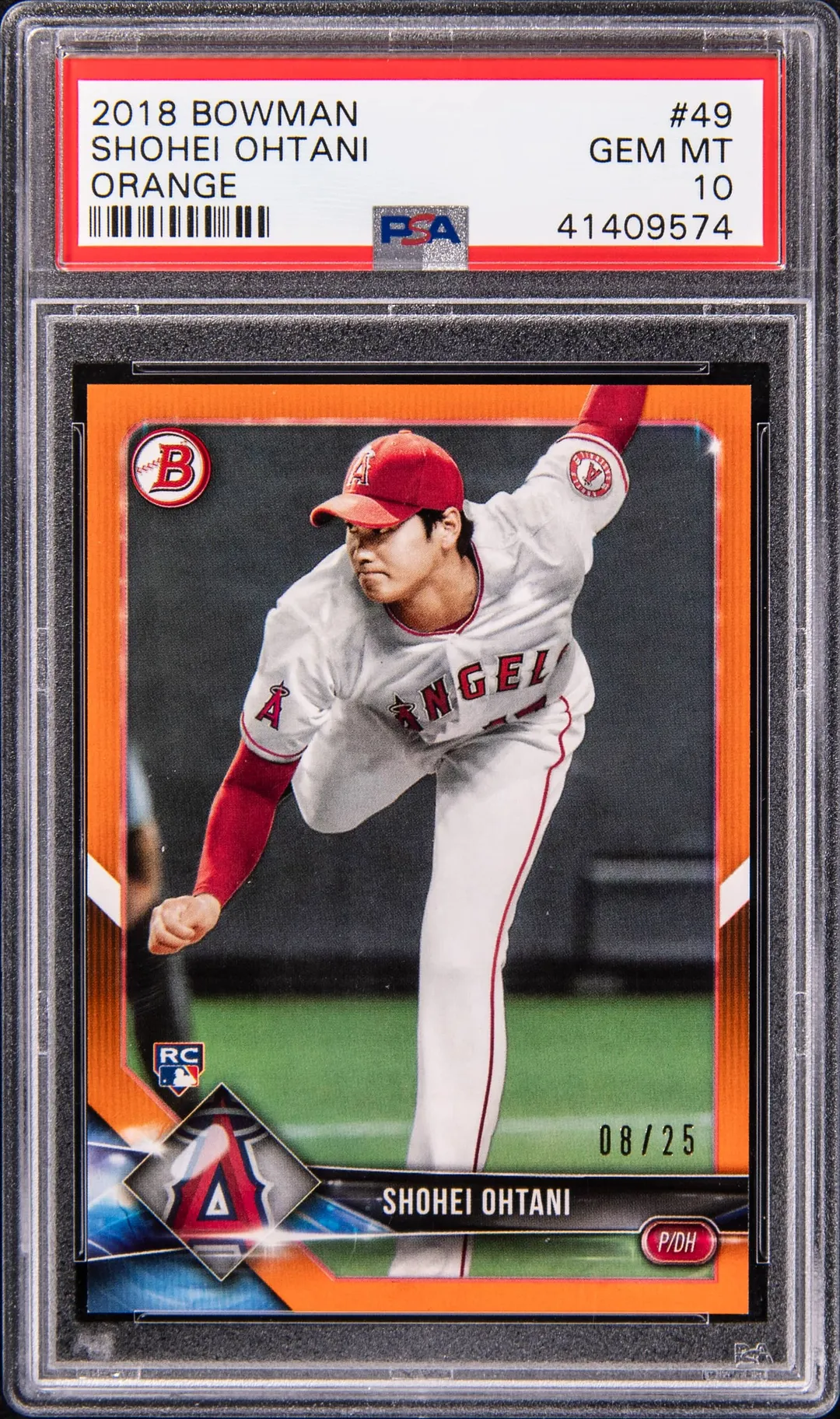
Shohei Ohtani 2018 Bowman Orange /25 PSA 10 Sale
Goldin sold a 2018 Bowman Orange #49 Shohei Ohtani /25 PSA 10 (Pop 2) for $34,770 on Feb 8, 2026. See how this rare rookie parallel fits the market.
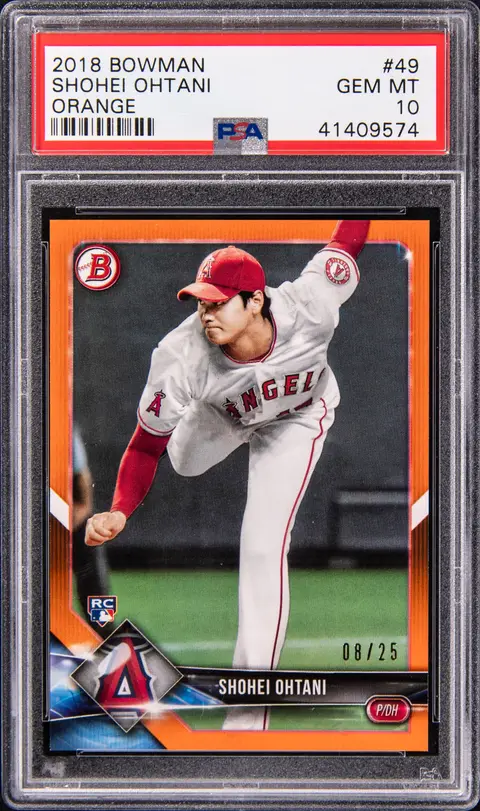
Sold Card
2018 Bowman Orange #49 Shohei Ohtani Rookie Card (#08/25) - PSA GEM MT 10 - Pop 2
Sale Price
Platform
Goldin2018 Bowman Orange #49 Shohei Ohtani Rookie Card (#08/25) - PSA GEM MT 10 - Pop 2 Sells for $34,770
On February 8, 2026, Goldin sold a premium Shohei Ohtani rookie parallel that quietly says a lot about how the modern baseball card market values true scarcity and top-tier condition.
The card: 2018 Bowman Orange #49 Shohei Ohtani Rookie Card, serial numbered 08/25, graded PSA GEM MT 10. According to the PSA population report, there are only 2 copies of this card in a PSA 10 (“Pop 2”), making this one of the highest-end non-autographed Ohtani rookies from his first Bowman-branded MLB season.
Goldin’s final price: $34,770.
Below, we’ll walk through what this card is, why it matters to collectors, and how this sale fits into recent market data.
Card breakdown: what exactly sold?
Let’s start with a clear ID of the card:
- Player: Shohei Ohtani
- Team: Los Angeles Angels (rookie year)
- Year: 2018
- Set: 2018 Bowman (MLB)
- Card number: #49
- Parallel: Orange refractor-style parallel, serial numbered to 25 (this copy is 08/25)
- Rookie status: Key early Bowman-branded Ohtani rookie card
- Grading company: PSA (Professional Sports Authenticator)
- Grade: GEM MT 10 (Gem Mint)
- Population: Pop 2 in PSA 10 at the time of sale
This is not his first Bowman Chrome prospect autograph from Nippon Professional Baseball, and it’s not a Topps base “flagship” RC with the RC logo, but it sits in the core group of early MLB Ohtani rookies that many collectors chase.
The Orange /25 parallel matters because, in modern card terms, it is both:
- Low-serial numbered: Only 25 copies made.
- Color match appeal (partial): The orange borders and refractor finish play off the Angels’ red/orange palette, which often adds eye appeal and demand.
With only 2 copies graded PSA 10, this auction essentially represents one half of the best-graded supply in the market for this exact parallel.
Market context: how does $34,770 fit in?
Whenever we talk about a sale like this, we look at comps—short for comparables, meaning similar cards that have sold recently—to understand whether a price is typical, high, or low.
For this specific card (2018 Bowman Orange #49 Ohtani /25, PSA 10 Pop 2), direct public comps are limited because:
- There are only 25 copies total
- Only 2 are PSA 10s
- High-end owners of low-pop Ohtani parallels tend to hold for longer periods
As a result, exact PSA 10 sales may be few and far between. Instead, collectors often triangulate using:
- Same card, lower grades (PSA 9, BGS 9.5)
- Same year, different parallels (Gold /50, Red /5, or non-color parallels)
- Comparable Ohtani rookies in different sets (Topps Chrome colors, Bowman Chrome autos, etc.)
Across major marketplaces (Goldin, PWCC, eBay, and other auction platforms), recent data for Ohtani’s premium color rookies shows a few consistent patterns:
Color and print run matter more than ever.
Oranges (/25), Golds (/50), and especially Reds (/5) and 1/1s command outsized premiums versus non-numbered refractors.Top grades amplify already-scarce cards.
A PSA 10 on a low-serial card often multiplies value more sharply than it does on a high-print-run card. That’s the effect of combining scarcity (only 25 made) with condition scarcity (only 2 gem copies recorded).Ohtani’s dual-way narrative continues to support the top of his market.
While prices can fluctuate with performance, injuries, and broader hobby cycles, his rare, graded cards have generally remained among the most watched in modern baseball.
Within that broader framework, a $34,770 result for this card at Goldin is consistent with how the market has been treating:
- Low-pop color rookies of Ohtani, and
- Other ultra-modern superstars whose key parallels have separated from base and lower-tier inserts in price.
Because public, same-card/same-grade comps are scarce, it’s difficult to define this sale as definitively high or low relative to a long history of transactions. But in the context of:
- A Pop 2 PSA 10,
- A true color parallel /25 from a major 2018 release, and
- A leading auction house with a deep bidder pool,
this result fits the current pattern for serious Ohtani collectors focusing on rarity and condition.
Why this card matters to collectors
To understand why a 2018 Bowman Ohtani parallel can attract this level of attention, it helps to look at three angles: era, set, and player.
1. Era: the ultra-modern, low-serial era
2018 sits firmly in the ultra-modern category—an era defined by:
- Larger print runs in base products
- A deep parallel structure (different colors/serial numbers)
- A heavy emphasis on grading
In this environment, collectors have increasingly moved away from stacking large quantities of base rookies and toward:
- Scarce parallels (especially serial numbered)
- High grades from major graders
An Orange /25 PSA 10 is exactly the type of card that stands out in this era: rare in print, rarer still at the top of the grading scale.
2. Set: 2018 Bowman
Bowman has long branded itself as “Home of the Rookie Card,” and for modern players, it’s often where collectors first focus their attention. While some will debate which Ohtani issue is the single “true rookie,” the 2018 Bowman line is widely seen as a core, collectible run of his early MLB cards.
Within that set, color parallels like Orange become the natural targets for:
- Player collectors building Ohtani rainbows
- Investors and high-end hobbyists seeking condition-sensitive, low-pop pieces
- Set and parallel chasers focusing on Bowman color across multiple players
3. Player: Shohei Ohtani’s unique lane
Shohei Ohtani’s dual-threat profile—impact pitcher and impact hitter—has been one of the most significant hobby stories of the last several years. Awards, milestones, and team changes can all move short-term sentiment, but his broader narrative has kept him at the center of the modern baseball market.
In that context, this card represents:
- A rookie-year, color parallel from a major brand
- A low-pop, top-grade example that can act as a centerpiece in a focused Ohtani collection
Grading, population, and why Pop 2 matters
A pop report (population report) is essentially a census of how many copies of a card have been graded at each grade level by a grading company.
For this card:
- PSA 10 population: 2
- Total PSA-graded population: higher, but concentrated in lower grades
The combination of:
- Low serial number (/25), and
- Low gem population (2 PSA 10s)
means that even small changes in demand—say, one or two serious Ohtani collectors entering or exiting the chase for Orange parallels—can move prices more sharply than they might on a more common card.
This is typical of thinly traded, high-end cards: fewer transactions, but each sale can reset expectations for the next.
Takeaways for collectors and small sellers
A single sale is not a price guarantee, but this Goldin result offers some useful reference points if you’re collecting or selling Ohtani, or modern baseball in general:
Rarity plus grade is where the separation happens.
Color /25 + PSA 10 + low pop = a distinctly different market than unnumbered refractors or base rookies.Population reports matter.
Knowing that there are only 2 PSA 10s changes how you frame negotiations, trades, or offers on similar cards.Auction context counts.
A sale at a major auction house like Goldin on February 8, 2026 reflects bidding behavior from a wide audience of engaged collectors. It’s a data point worth noting alongside smaller-platform sales.Think in tiers.
When reviewing your own Ohtani cards, it can be helpful to group them into tiers:- Ultra-rare color (Orange, Red, 1/1)
- Mid-tier serials (Gold /50, /99, etc.)
- Non-numbered refractors and base
Each tier tends to behave differently in the market, and this sale sits near the top of that structure.
How this sale fits into Ohtani’s broader card market
The Ohtani market isn’t defined by any single card, but by a cluster of key issues:
- Bowman and Bowman Chrome rookies and parallels
- Topps Chrome color parallels
- On-card autographs, especially early issues
- True 1/1s and low-numbered inserts from major brands
This 2018 Bowman Orange #49 PSA 10 Pop 2 sale at $34,770 doesn’t rewrite the entire Ohtani price structure on its own. Instead, it:
- Confirms ongoing demand for rare, graded color in his rookie catalog
- Adds a fresh, public data point for one of his scarcer Bowman parallels
- Helps collectors benchmark where other, closely related Ohtani cards might reasonably trade
For Ohtani-focused collectors, it’s another signal that the highest-end, lowest-pop pieces continue to be tightly held and strongly contested when they do surface.
Final thoughts
The February 8, 2026 Goldin sale of the 2018 Bowman Orange #49 Shohei Ohtani Rookie Card (#08/25) – PSA GEM MT 10 – Pop 2 at $34,770 underlines a few themes:
- Modern Bowman color remains a central lane for serious player collectors.
- True scarcity and top grades are where modern prices tend to stretch.
- Thinly traded, ultra-modern grails can move in large steps from sale to sale.
For newcomers and returning collectors, this card is a clear example of how a specific combination—rookie year, respected brand, low serial number, and a top grade—can place a card in a very different part of the hobby map than its base or non-numbered counterparts.
As always, use this as one data point among many. Track recent sales, check pop reports, and build a collection that makes sense for your own budget and goals.