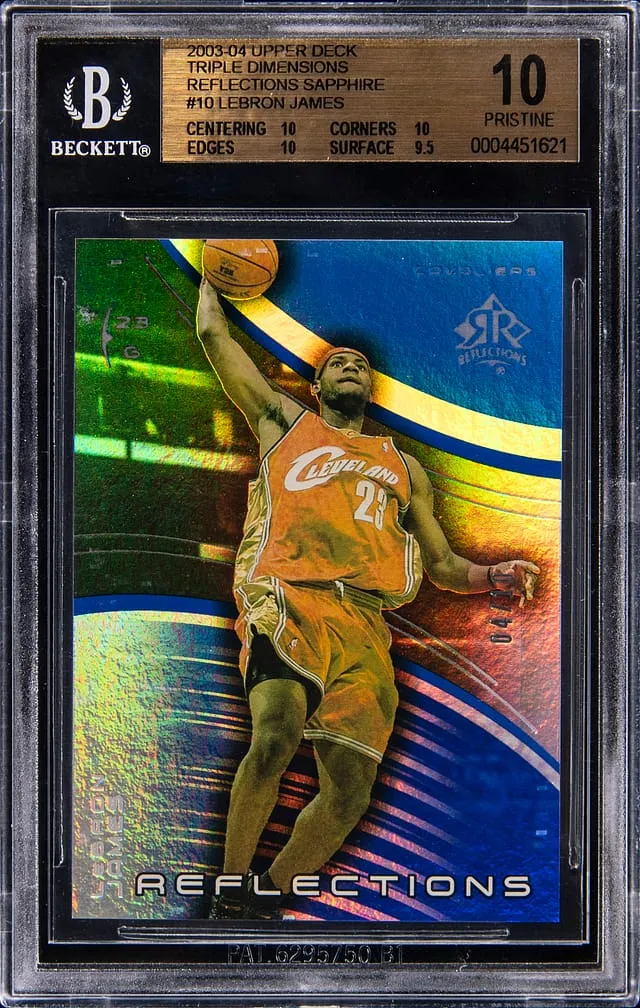
Pop 1 LeBron Reflections Sapphire Rookie Sells at Goldin
Breakdown of the $20,130 Goldin sale of a pop 1 BGS Pristine 10 2003-04 Reflections Sapphire LeBron James rookie card (#04/10).
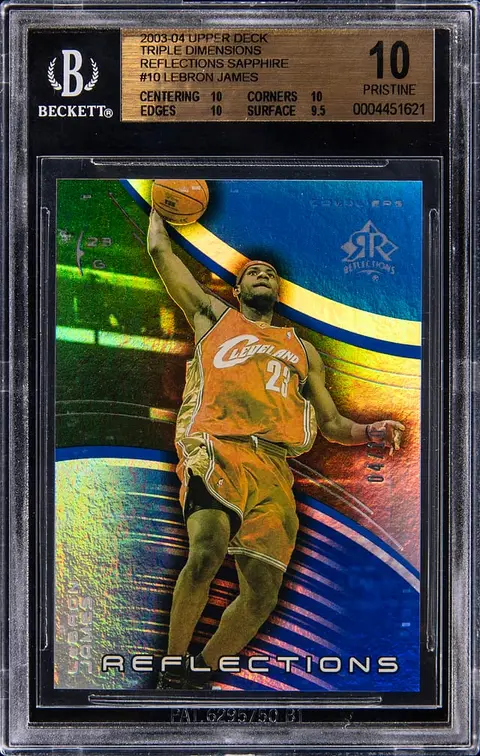
Sold Card
2003-04 Upper Deck Triple Dimensions Reflections Sapphire #10 LeBron James Rookie Card (#04/10) - BGS PRISTINE 10 - Pop 1
Sale Price
Platform
Goldin2003-04 Upper Deck Triple Dimensions Reflections Sapphire #10 LeBron James Rookie Card (#04/10) - BGS PRISTINE 10 - Pop 1
On April 12, 2026, Goldin sold a 2003-04 Upper Deck Triple Dimensions Reflections Sapphire #10 LeBron James rookie card, serial numbered 04/10, graded BGS Pristine 10, for $20,130.
For a niche but highly respected LeBron parallel from his rookie season, this is a noteworthy data point—especially because this particular card is a population 1 (“pop 1”) in BGS Pristine 10. In other words, it’s the only copy Beckett has ever graded at this level.
In this breakdown, we’ll look at what this card is, why it matters to collectors, and how this sale fits into the broader LeBron rookie market.
Card overview: what exactly sold?
Here’s how this card breaks down in hobby terms:
- Player: LeBron James (Cleveland Cavaliers)
- Year: 2003-04 (rookie season)
- Product: Upper Deck Triple Dimensions
- Subset: Reflections
- Parallel: Sapphire
- Card number: #10
- Serial number: 04/10 (only ten copies printed)
- Rookie status: Yes, it’s a true 2003-04 LeBron rookie card
- Grading company: Beckett Grading Services (BGS)
- Grade: BGS Pristine 10
- Population: Pop 1 at this grade
The Sapphire parallel is a low-serial-numbered version of the Reflections design. With only ten copies made, all condition-sensitive foil, and a non-flagship product, it sits in that middle ground of:
- Extremely tough to find in top condition
- Recognized by seasoned LeBron collectors
- Less “casual-hobby-famous” than his Topps Chrome or SP Authentic rookies, but a serious niche card for advanced collections
Grading and population: why BGS Pristine 10 matters
BGS Pristine 10 is one of the strictest modern grades in the hobby. To get there, a card typically needs three 10 subgrades and one 9.5 (or four 10s for a Black Label). That’s difficult for:
- Foil-heavy designs like Triple Dimensions
- Early-2000s printing and handling, which often led to edge and surface flaws
A pop report is the grading company’s census of how many copies of a card they’ve graded at each grade level. With this card listed as Pop 1 in BGS Pristine 10, it currently sits at the top of the BGS pyramid for this parallel.
For collectors who focus on “best available examples” rather than just owning the card in any grade, that population edge can be a major driver of demand.
Market context: how does $20,130 fit in?
For a card like this—ultra-low serial, niche parallel, pop 1 in a top grade—sales don’t happen often. That means you rarely get a long list of exact recent comparables (“comps,” hobby shorthand for comparable recent sales of the same or very similar card).
Direct comps
Public, verifiable sales of this exact card—2003-04 Triple Dimensions Reflections Sapphire #10 /10 in BGS Pristine 10—are extremely limited or non-existent prior to this Goldin result. That’s typical when:
- The print run is only 10 copies
- The top grade is pop 1
- High-end examples go into long-term collections
So, instead of a neat row of identical sales, we have to look at nearby landmarks in the LeBron rookie market.
Nearby market landmarks
Within the broader LeBron rookie landscape, we can look to a few categories for context:
- Other 2003-04 LeBron numbered rookies from mid- to high-end sets (e.g., Upper Deck, SPx, and other numbered parallels). These often range from high four figures to mid five figures, depending heavily on brand, numbering, and grade.
- Non-flagship but respected parallels / inserts in low serials (out of 50, 25, or 10) from 2003-04, especially in BGS 9.5 or PSA 10, which commonly land in the thousands to low tens of thousands.
- Truly elite rookies like Topps Chrome Refractors, SP Authentic autos, and Exquisite patches can reach far above this realized price, but they occupy a different “tier” of recognition.
Within that ecosystem, $20,130 for a /10, pop 1 BGS Pristine 10 from a respected Upper Deck product sits as:
- A strong but not outlandish result for a high-end, non-flagship LeBron rookie
- In line with the idea that collectors are willing to pay a notable premium for true scarcity plus best-in-grade status
Because this specific card doesn’t trade often, this Goldin sale is likely to be used as a new price reference the next time a similar copy (or a lower grade) appears.
Why this card matters to collectors
1. Rookie-year LeBron in a tough parallel
LeBron’s 2003-04 rookie year is one of the most studied modern seasons in the hobby. The key reasons:
- It marks the start of a career that now includes multiple championships, MVPs, and major records
- 2003-04 products introduced a wide range of rookie cards—from mass-produced base to ultra-premium patch autos
Within that year, numbered parallels like Reflections Sapphire help collectors target:
- True scarcity (only 10 copies)
- A distinct look separate from the more commonly discussed rookie sets
2. Ultra-modern but not mass printed
Early-2000s basketball is considered modern/ultra-modern, but it doesn’t have the same full-on “print explosion” seen in some later years.
For this card, that means:
- There’s a clear, controlled print run of 10
- There isn’t a massive supply of high-grade copies flooding the market
That dynamic often appeals to collectors who like modern players but want some of the built-in scarcity that vintage collectors are used to.
3. Condition scarcity on foil stocks
Foil cards from this era are notoriously sensitive to:
- Edge chipping
- Surface scratches
- Print lines
That’s a big part of why a BGS Pristine 10 matters here. It’s not just rare because the serial number says “04/10”—it’s rare because finding one of those ten in this condition is extremely difficult.
What could be influencing demand right now?
LeBron’s career context at this point in the mid-2020s includes:
- Active status with ongoing counting-stat records and milestones
- A well-established legacy as one of the top players of all time
- Continuous media attention around his late-career achievements and potential future Hall of Fame induction
In general, that combination keeps steady interest in his rookie cards. While short-term news (playoff runs, awards, or headlines) can nudge demand, cards at this rarity level are more often guided by:
- Long-term views of LeBron’s legacy
- High-end collectors consolidating into rare, high-grade examples
How to read this sale as a collector
A few takeaways for different types of collectors:
If you’re new or returning to the hobby
- This sale shows how low-serial, high-grade rookie cards of Hall of Fame-level players can command serious attention, even when they’re not the absolute “headline” rookies everyone knows.
- Terms like pop 1 (only one graded that high) and comps (recent comparable sales) are central to how advanced collectors evaluate rarity and price.
If you’re an active hobbyist or small seller
- This Goldin result can serve as a reference point when pricing or trading other 2003-04 LeBron numbered parallels, especially in strong grades.
- Remember that ultra-rare, pop 1 cards don’t always follow neat pricing ladders. Their value often reflects timing, who’s bidding, and how many serious collectors are currently chasing the card.
If you’re targeting high-end LeBron rookies
- This sale reinforces the idea that there is real demand for non-flagship, truly scarce rookie parallels when they surface in top slabs.
- For similar cards—say, another /10 rookie parallel in BGS 9.5 or PSA 10—this result can inform your expectations, while keeping in mind brand prestige and eye appeal.
Final thoughts
The $20,130 sale of the 2003-04 Upper Deck Triple Dimensions Reflections Sapphire #10 LeBron James Rookie Card (#04/10) in BGS Pristine 10 (Pop 1) at Goldin on April 12, 2026 highlights a few core themes in today’s basketball card market:
- True scarcity (only ten copies) still matters
- Top-of-the-pop grades can meaningfully distinguish a card
- Non-flagship, high-quality rookie parallels have a real lane with serious collectors
For LeBron collectors and modern basketball enthusiasts, this card is a reminder that some of the most interesting pieces aren’t always the loudest names—but the ones that quietly combine rarity, condition, and a historic rookie year into one tough-to-find package.