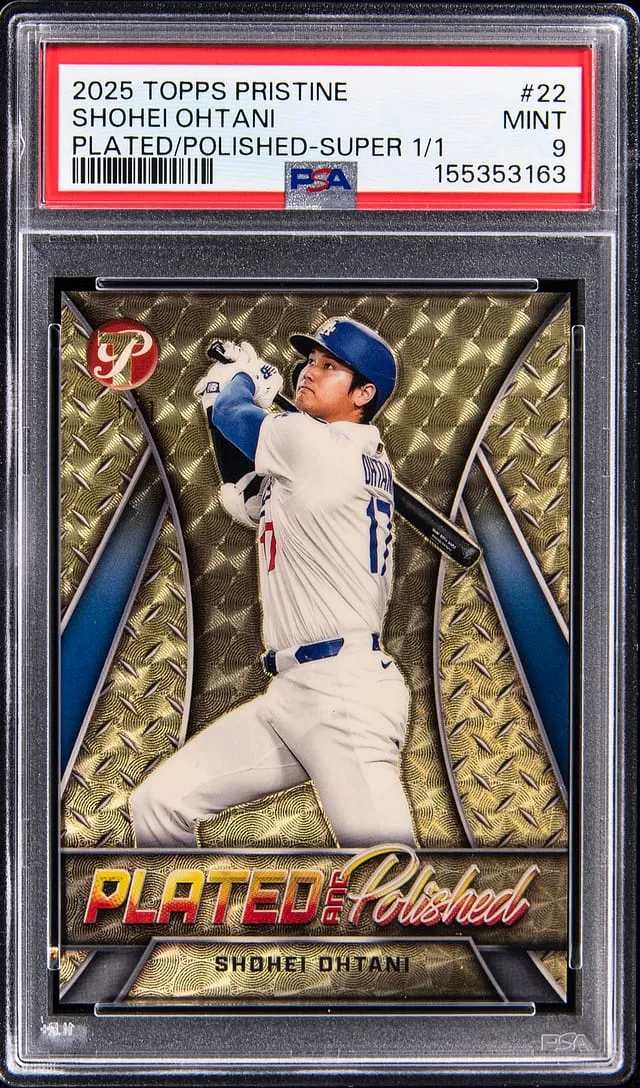
Ohtani 2025 Pristine SuperFractor 1/1 Sells for $21.9K
Goldin sold a 2025 Topps Pristine Plated and Polished Shohei Ohtani SuperFractor 1/1 PSA 9 for $21,960. Here’s what it means for modern Ohtani cards.
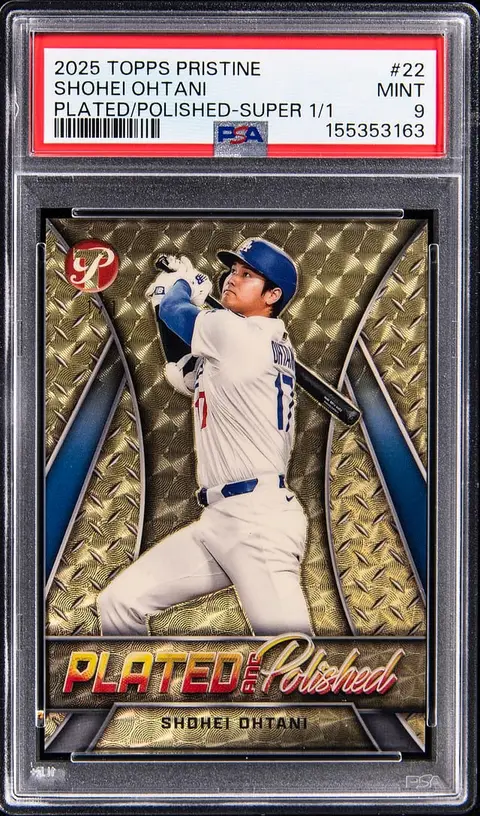
Sold Card
2025 Topps Pristine Plated and Polished SuperFractor #PP-22 Shohei Ohtani (#1/1) - PSA MINT 9
Sale Price
Platform
Goldin2025 Topps Pristine Ohtani SuperFractor: What This $21,960 Sale Tells Us
On May 10, 2026, Goldin closed a notable ultra‑modern baseball auction: a 2025 Topps Pristine Plated and Polished SuperFractor #PP-22 Shohei Ohtani (#1/1), graded PSA MINT 9, sold for $21,960.
For a card that didn’t exist in checklists a short time ago, this result already gives us some useful signals about how collectors value high‑end, non‑rookie Shohei Ohtani pieces in 2025‑era products.
In this breakdown, we’ll walk through what the card is, why it matters, and how this sale fits into the broader Ohtani market.
Card snapshot: what exactly sold?
• Player: Shohei Ohtani
• Team: Los Angeles Dodgers (2025 season context), though card branding may still reflect recent team transitions depending on Topps’ pipeline
• Year: 2025
• Product: 2025 Topps Pristine
• Insert/Subset: Plated and Polished
• Parallel: SuperFractor (traditionally the 1/1 gold, spiral‑pattern chromium parallel in Topps chrome‑style releases)
• Card number: #PP-22
• Serial numbering: 1/1 (the only copy produced)
• Rookie status: Not a rookie card – this is an ultra‑modern star‑era issue
• Grading: PSA MINT 9 by Professional Sports Authenticator (PSA), one of the hobby’s two largest grading companies
The headline here is simple: you are looking at the lone SuperFractor copy of this specific Ohtani insert from 2025 Topps Pristine, encapsulated in a PSA 9 holder.
While it isn’t a rookie, it does combine three hobby levers that generally matter to advanced collectors:
- Superstar player (Ohtani)
- True 1/1 parallel
- Recognized brand and chromium‑style technology (Topps Pristine)
About the set: 2025 Topps Pristine and “Plated and Polished”
Topps Pristine occupies an interesting lane in the modern Topps lineup.
• Chromium construction: Like Topps Chrome and Finest, Pristine uses a chrome stock that emphasizes shine and refractor parallels.
• Limited configuration: Pristine is typically not printed at the same mass scale as base flagship Topps, which can keep certain parallels relatively scarce.
• Hit‑driven: Products like Pristine are often bought specifically for autographs, patches, and low‑serial refractors.
Within that structure, “Plated and Polished” functions as a themed insert. While every year’s design and exact checklist can shift, inserts like these usually highlight star players on more stylized, premium card designs. The SuperFractor version is the pinnacle parallel within that insert.
So even though this is not the cornerstone rookie from a flagship release, it does sit at the top of its specific lane: the best possible version of this particular insert card.
Grading: what a PSA MINT 9 means here
PSA’s 1–10 scale is now standard hobby language. PSA 10 represents a “Gem Mint” card with very minor, if any, visible flaws. PSA 9 “Mint” allows for a tick more imperfection: slightly off‑center, a small factory print line, or a tiny edge or corner touch.
In ultra‑modern chromium cards like this Ohtani, raw copies often grade well because:
• The card stock is durable.
• These are pulled and sleeved quickly by most collectors.
However, with a 1/1, there is no option to “pick the best copy” to submit. This is the only one that exists. A PSA 9 is therefore less about relative population and more about giving the card a recognized condition label and a secure, authentic holder.
Collectors in this lane typically see a PSA 9 on a chromium 1/1 as perfectly acceptable, especially for a star of Ohtani’s caliber.
The sale: $21,960 at Goldin on May 10, 2026
• Auction house: Goldin
• Sale date (UTC): May 10, 2026
• Final price: $21,960 (reported price of 2,196,000 cents, rounded to whole dollars)
Goldin regularly handles high‑end baseball and multi‑sport auctions, so this card sold in a context where most bidders are already comfortable with premium Ohtani, Julio Rodríguez, Elly De La Cruz, and similar modern stars.
The realized price puts this card firmly in the high‑end Ohtani non‑rookie, non‑auto tier. It’s nowhere near his record rookie or autograph prices, but it’s also not a mid‑tier insert sale. This is what the market, at that moment, was willing to pay for a 2025‑issue 1/1 SuperFractor from a respected, but not flagship, product.
Market context: how does this result fit Ohtani’s card landscape?
Because 2025 Topps Pristine is a very new release, there is not a deep sales history for this exact card. There are no years of graded population data or a long trail of public comps.
Instead, we can position this sale against a few comparable categories:
- Other Ohtani 1/1 non‑rookie refractors
Across prior seasons, Ohtani’s 1/1 parallels from chromium products (Topps Chrome, Finest, Stadium Club Chrome, and higher‑end brands) have:
• Varied significantly in price depending on whether they were autographed, game‑used, or simple parallels.
• Generally attracted strong bidding when tied to premium brands or distinctive designs.
While exact dollar figures differ card to card, a low‑five‑figure result for a newer, non‑rookie 1/1 of Ohtani from a recognizable Topps product sits in a reasonable range for a popular, actively collected superstar.
- Ultra‑modern star 1/1s in similar products
Looking beyond Ohtani, other elite modern hitters and two‑way stars in recent years have seen:
• 1/1s from products below the “true flagship rookie” tier often landing from the high four figures into the low–mid five figures.
• Autographs, patches, or rookies commanding higher premiums.
This 2025 Pristine SuperFractor checks the 1/1 superstar box, but not the rookie or autograph box. The $21,960 landing zone is consistent with that hierarchy.
- PSA 9 vs. raw vs. PSA 10 for 1/1s
For serial‑numbered cards with more copies (for example, /50 or /99), condition can move prices noticeably: PSA 10 premiums over raw or PSA 9 are easy to see when there are enough sales.
For true 1/1s like this card:
• There is no direct same‑card PSA 10 to compare to yet.
• Buyers often treat the grade more as assurance and presentation than as a lever for major price separation.
So this result should be read less as “a PSA 9 is worth exactly X% of a PSA 10” and more as “this is the current open‑market clearing price for the only graded copy of this specific 1/1.”
Why collectors care: beyond the price tag
Shohei Ohtani is a unique player in modern baseball history: an MVP‑level hitter and pitcher in the same body. That narrative drives collector interest even when a card isn’t a rookie or an autograph.
A few factors behind the significance of this particular card:
• Ultra‑modern, but not speculative prospecting: Ohtani is already an established superstar, not a prospect. High‑end Ohtani cards are about capturing a generational career rather than betting on a breakout.
• SuperFractor mystique: In the Topps ecosystem, “SuperFractor” has become hobby shorthand for the most desirable non‑autographed parallel in many chromium releases. The gold, swirling design and 1/1 stamp are instantly recognizable.
• Top‑of‑insert ladder: Within Plated and Polished, this is the best version possible. Some collectors like to “player chase” specific inserts, building rainbows (one of each parallel) or targeting only the top rung.
The card also lives in what’s often called the “ultra‑modern” era: roughly mid‑2010s onward, when print runs, parallels, and grading all accelerated. In that environment, truly unique cards—especially of established stars—stand out even more, because so much of the surrounding product is mass‑produced.
Recent player and hobby context
By May 2026, the Ohtani market has been shaped by several ongoing narratives:
• Awards and milestones: Ohtani has already accumulated MVP hardware and historic two‑way seasons. Any continued success, especially deep playoff runs with the Dodgers, tends to keep interest high.
• Injury and workload questions: Pitching workloads, injuries, and role changes (for example, time away from the mound) can create short‑term price swings. High‑end cards, however, often react more to the long‑term career arc than any single season.
• Hobby maturation: Collectors have become more selective about which parallels they treat as “core” long‑term pieces. True 1/1s from respected brands and inserts usually remain on the desirable list.
This sale fits that environment: measured, data‑driven bidding on a non‑rookie but undeniably special Ohtani card.
How to think about comps for a unique 1/1
“Comps” (comparable sales) are past sale prices that collectors use as a rough reference point for current value. With a 1/1 like this, exact comps don’t exist. Instead, collectors look at:
• Other Ohtani 1/1 parallels from similar‑tier products.
• High‑end inserts of the same player from adjacent years.
• The broader landscape of what collectors have been willing to pay for non‑rookie, non‑auto, 1/1 star cards.
This Goldin sale effectively becomes a primary reference point for this exact card going forward. Future private deals or public auctions will likely look back at this $21,960 result as a starting piece of context, adjusted for whatever Ohtani and the hobby look like at that time.
That doesn’t mean this price is a floor or a ceiling. It’s simply a documented data point at a specific moment in his career and the market.
Takeaways for different types of collectors
If you’re newer to the hobby:
• This sale is a good example of how non‑rookie cards can still command strong prices when they check the right boxes: superstar, 1/1, and a respected brand.
• Don’t assume every numbered card behaves the same. A /199 parallel is common; a 1/1 SuperFractor is unique.
If you’re a returning collector from earlier eras:
• The parallel and insert infrastructure in today’s products can look overwhelming compared to 1980s–1990s releases. Focus on understanding a product’s hierarchy: base > inserts > low‑serial parallels > 1/1s, and where autographs and patches fit into that ladder.
• Think of this Ohtani as the ultra‑scarce, top‑tier chase card within a specific 2025 insert, not as a direct counterpart to a flagship rookie.
If you’re an active hobbyist or small seller:
• This sale adds another data point to the “high‑end non‑rookie Ohtani” category. It can inform how you price or evaluate other 1/1s and low‑serial inserts from neighboring products.
• When listing similar cards, anchoring your descriptions in clear facts—serial numbering, product tier, insert name, and grading—helps everyone understand what they’re evaluating.
Where this card sits in the Ohtani hierarchy
In the broad Ohtani catalog, you can think of this 2025 Topps Pristine Plated and Polished SuperFractor (#PP-22, 1/1, PSA 9) as:
• Not at the very top (that space is reserved for his key rookie issues, major on‑card autographs, and landmark 1/1s from flagship brands).
• Clearly above routine inserts, base parallels, and non‑1/1 refractors.
• A meaningful, high‑end entry in the growing category of premium Ohtani cards from his star years.
As the only copy of its kind, its long‑term story will be defined by a mix of factors: Ohtani’s continued performance, how collectors eventually rank 2025 Pristine in his overall portfolio, and the evolving tastes of the ultra‑modern market.
For now, the $21,960 Goldin sale on May 10, 2026, gives collectors a concrete benchmark: this is what the hobby was willing to pay for a PSA 9 example of the lone SuperFractor from the 2025 Topps Pristine Plated and Polished insert run of Shohei Ohtani.
At figoca, we track these kinds of results because they help everyone—from new collectors to seasoned sellers—navigate a complex, fast‑moving market with clearer expectations and better data.