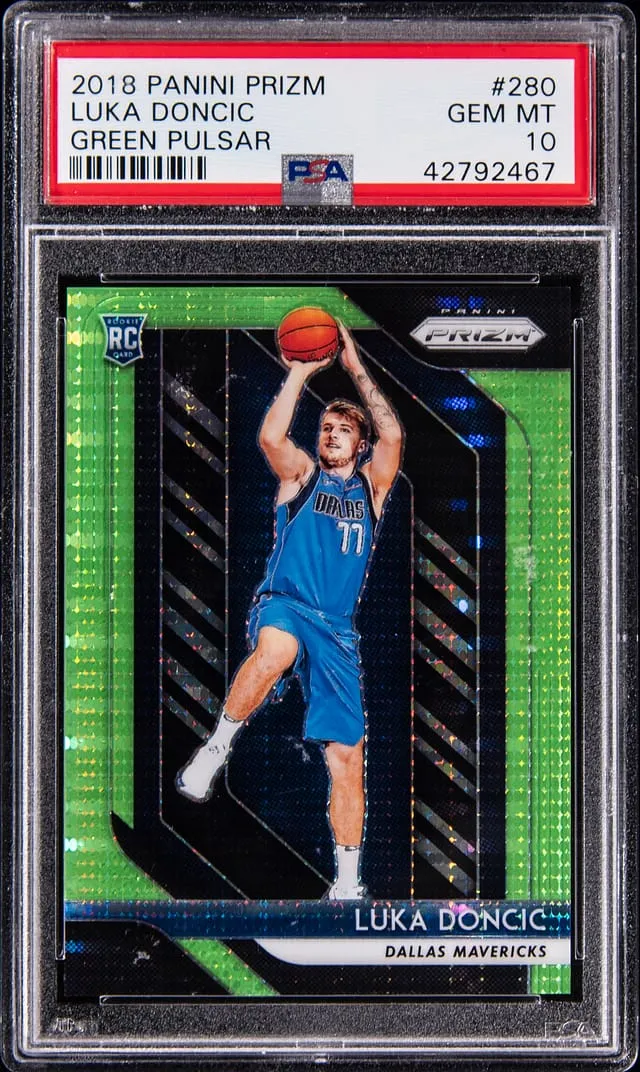
Luka Doncic 2018 Prizm Green Pulsar PSA 10 Sale
Goldin sold a 2018-19 Prizm Green Pulsar /25 Luka Doncic rookie PSA 10 for $12,200 on March 15, 2026. See the market context and collector takeaways.
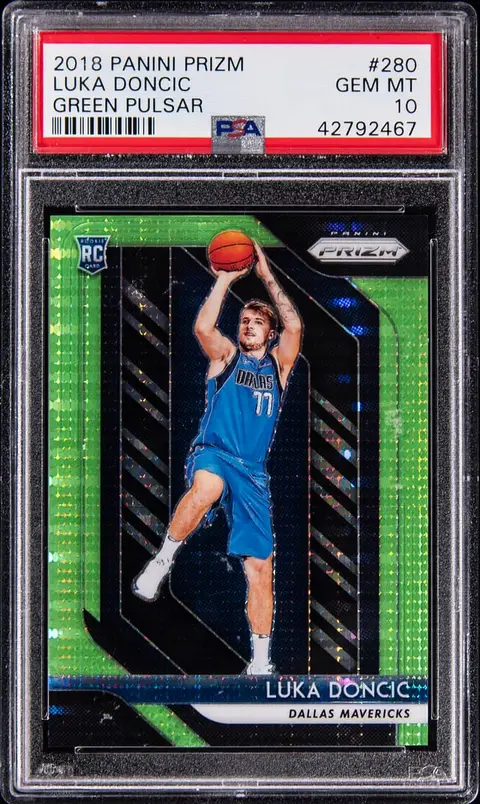
Sold Card
2018-19 Panini Prizm Green Pulsar Prizm #280 Luka Doncic Rookie Card (#07/25) - PSA GEM MT 10
Sale Price
Platform
Goldin2018-19 Prizm Green Pulsar Luka Doncic PSA 10 Sells for $12,200
On March 15, 2026, Goldin closed a notable ultra‑modern basketball sale: a 2018-19 Panini Prizm Green Pulsar Prizm #280 Luka Doncic Rookie Card, serial-numbered 07/25, graded PSA GEM MT 10, sold for $12,200.
For collectors tracking Luka’s key rookies and low-numbered Prizm parallels, this is a useful data point in a maturing market.
The card at a glance
- Player: Luka Doncic
- Team: Dallas Mavericks
- Season: 2018-19
- Set: Panini Prizm Basketball
- Card #: #280
- Parallel: Green Pulsar Prizm
- Serial numbering: 07/25 (only 25 copies produced)
- Rookie card: Yes, true Prizm base rookie parallel
- Grading company: PSA (Professional Sports Authenticator)
- Grade: GEM MT 10 (their highest standard grade)
- Special attributes: Short-printed parallel with a distinctive pulsar pattern and green colorway
2018-19 Panini Prizm is widely treated as Luka Doncic’s flagship chromium rookie in basketball. The base #280 is the entry point; color parallels like Silver, Blue, Green, and numbered versions such as Green Pulsar are where collectors typically focus for scarcity.
Why the Green Pulsar parallel matters
Within 2018-19 Prizm, the Green Pulsar is a short-printed retail-exclusive style parallel that is serial-numbered to 25 copies. It is significantly tougher than:
- Base Prizm (not numbered, mass produced)
- Silver Prizm (un-numbered but more chased than base)
- Standard Green Prizm (un-numbered retail parallel)
Numbered color parallels often sit in a middle ground between un-numbered retail color and very low-numbered or gold parallels. A /25 print run strikes a balance of:
- Visibility: Collectors see them often enough to establish a market.
- Scarcity: 25 copies, and only a fraction will grade as PSA 10.
For modern basketball, these kinds of short‑printed color parallels are often treated as core long-term cards for star players: more special than a Silver, less extreme than a 1/1.
The significance of the PSA 10 grade
PSA’s GEM MT 10 grade indicates a card that is, by their standard, virtually flawless: sharp corners, clean edges, strong centering, and a clean surface.
A few things this implies for a numbered card like this:
- Out of only 25 copies produced, not all will survive in gem condition.
- Some copies are still raw (ungraded), and some will grade lower than 10.
- The PSA 10 population (often called the pop, short for population report) is typically a small subset of the total 25.
Because of this, condition scarcity sits on top of print-run scarcity. Collectors often pay a premium for a PSA 10 in low-serial cards, since upgrading later can be difficult.
Market context: where does $12,200 fit?
The Goldin sale closed at $12,200. To understand that number, it helps to compare it to:
- Other Green Pulsar #280 Luka sales (same card, different grades)
- Neighboring Prizm parallels (similar scarcity tier, e.g., /25–/50)
- Luka’s broader rookie market (Silvers, base color, and high-end autos)
Recent public sales data (on major marketplaces and auction houses) suggest:
- Lower-grade Green Pulsar copies (BGS/PSA 9 range) have generally sold for materially less than PSA 10s, reflecting the usual gem premium.
- Comparable serial-numbered Luka Prizm parallels (in the /25–/50 range, but different colors) have also tended to cluster below top-tier color such as Gold /10 or Black Gold /5.
Within that framework, a PSA 10 Green Pulsar /25 result in this price range is broadly consistent with how the market often tiers Luka’s Prizm color:
- Top tier: ultra-low-numbered gold/black parallels and true 1/1s.
- Strong tier: numbered color in the /10–/99 range in gem grades (including /25).
- Foundation tier: Silver Prizm and un-numbered color.
The exact Green Pulsar PSA 10 population and every individual comp can move around over time as new sales appear and more cards are graded. But taken as one data point, $12,200 on March 15, 2026 at Goldin sits comfortably in what you’d expect for a short-printed Luka Prizm rookie parallel with a gem grade.
How this sale fits into Luka’s hobby story
Luka’s status in the ultra-modern era
2018-19 falls into what many collectors call the ultra-modern era:
- High interest in parallels and grading.
- Large overall print runs, but meaningful scarcity in low-numbered color.
- Heavy hobby and media attention on star rookies.
Luka quickly established himself as one of the key faces of this era, which means:
- His Prizm rookie line (base plus color) is one of the main ways people "index" his market.
- Numbered Prizm parallels from 2018-19 are often used as reference points when people compare him to other stars.
Why collectors gravitate to this specific card
Collectors tend to care about this card for several overlapping reasons:
- Flagship rookie parallel – It’s tied to Luka’s main chromium rookie, not an off-brand issue.
- True serial numbering – /25 gives a concrete cap on supply, which helps when talking about scarcity in a market where many parallels are un-numbered.
- Visually distinctive – The pulsar pattern and green colorway are very recognizable within 2018-19 Prizm.
- High grade in a key year – PSA 10s from Luka’s rookie season remain a focus for many collectors and small sellers.
What could influence interest over time
Without speculating on the future, a few themes regularly show up in conversations around this type of card:
- On-court performance – Awards, playoff runs, and major milestones tend to bring more attention to a player’s rookie cards.
- Set reputation – 2018-19 Prizm has settled in as one of the most important modern basketball releases.
- Grading trends – If more Green Pulsars are graded over time and the PSA 10 population changes, that can influence how collectors view scarcity.
Takeaways for collectors and small sellers
Here are a few practical observations you can draw from this Goldin sale:
- Serial numbering matters. A Green Pulsar /25 lives in a different lane from an un-numbered Green Prizm, even though they share a color family.
- Condition premium is real. PSA 10 vs PSA 9 can mean a sizable difference, especially on low-numbered parallels.
- Context is key. Looking at one sale in isolation can be misleading. It’s helpful to look at:
- Other Luka Prizm parallels in similar scarcity ranges.
- Other recent auctions at the same house (Goldin) around the same time.
- Population reports are worth checking. Before making big decisions, many collectors check PSA’s pop report to see exactly how many Green Pulsar PSA 10s exist.
How to use this data point
If you’re a newcomer or returning collector:
- This sale is a good example of how numbered, graded color parallels sit well above base cards in the modern market.
- You don’t need to chase a /25 parallel to participate; tracking sales like this can help you understand the overall structure of Luka’s rookie market.
If you’re an active hobbyist or small seller:
- Use this Goldin result as one line in your notes, not the whole story. Combine it with recent comps for Silver, other numbered color, and different grading companies.
- Pay attention to how auction timing, platform, and card presentation can impact results for similar cards.
Final thoughts
The March 15, 2026 Goldin sale of the 2018-19 Panini Prizm Green Pulsar Prizm #280 Luka Doncic Rookie Card (#07/25) in PSA GEM MT 10 for $12,200 underscores how:
- Flagship Prizm rookies still anchor ultra-modern basketball.
- Short-printed color parallels remain an important tier between mass-market base and ultra-premium 1/1s and golds.
- Condition and true scarcity work together to shape demand.
For collectors tracking Luka’s long-term hobby footprint, this Green Pulsar PSA 10 result is another clear marker in the evolving price map of his 2018-19 Prizm rookies.