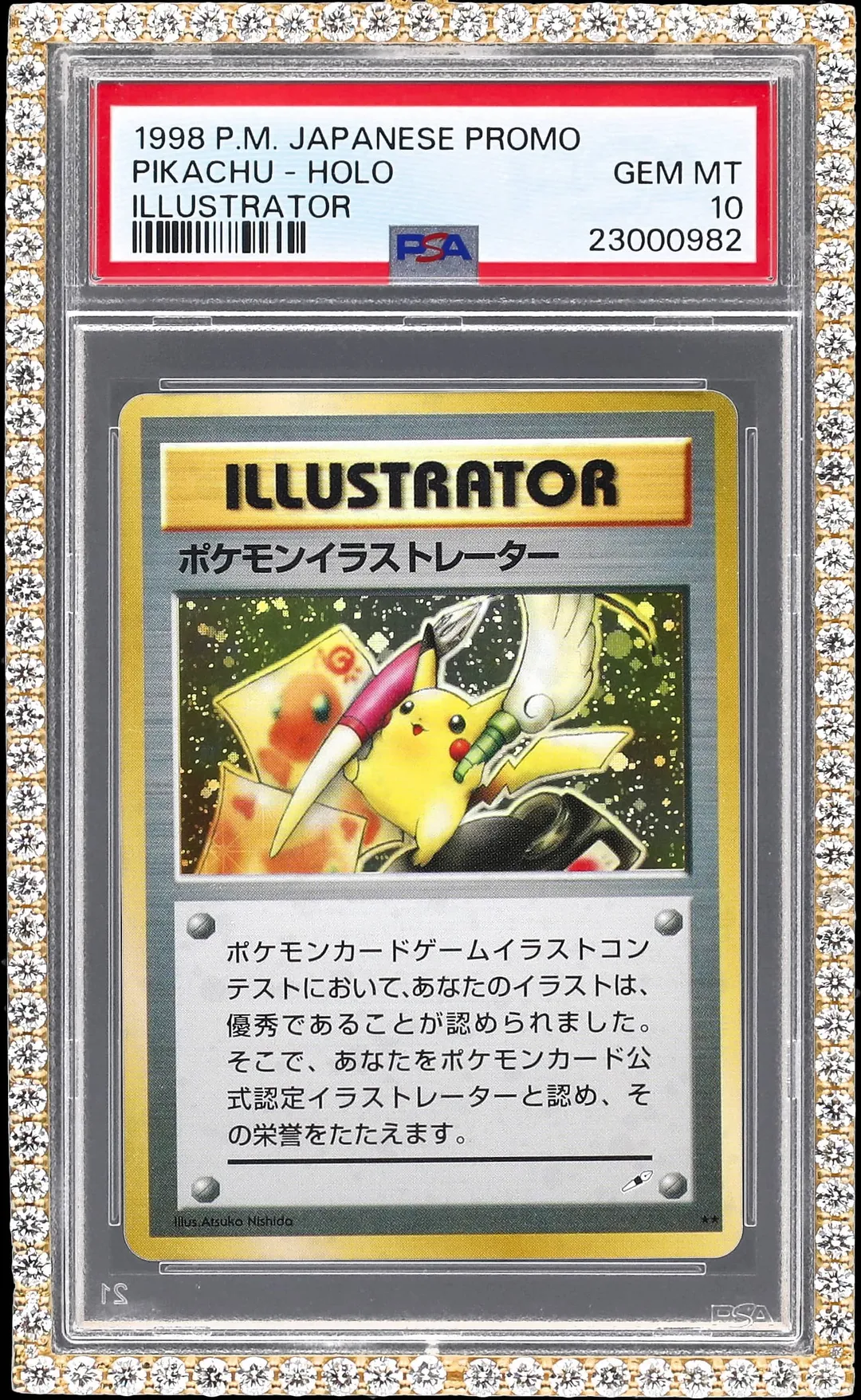
Logan Paul’s PSA 10 Pikachu Illustrator Sale at Goldin
Inside Logan Paul’s $16,492,000 Pikachu Illustrator PSA 10 (Pop 1) sale at Goldin on Feb 16, 2026, and what it means for high-end Pokémon collectors.
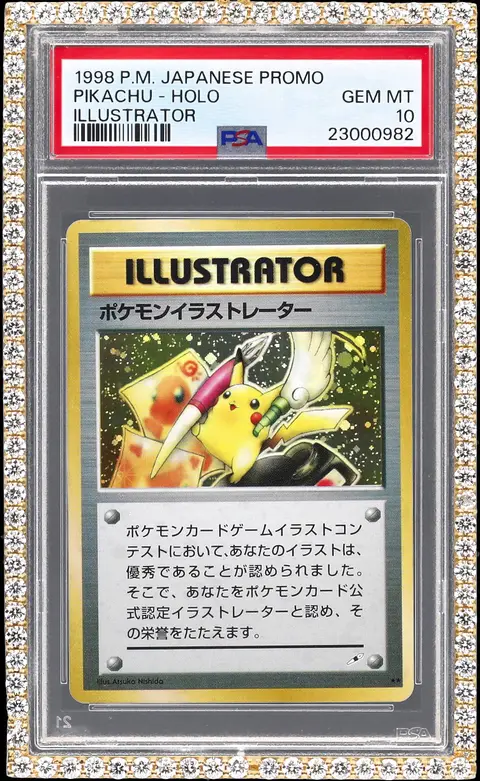
Sold Card
Logan Paul's World-Record-Holding Pikachu Illustrator as Seen on King of Collectibles: The Goldin Touch - PSA GEM MT 10 - Pop 1
Sale Price
Platform
GoldinLogan Paul’s World-Record Pikachu Illustrator: What This PSA 10 Sale Really Means
On February 16, 2026, Goldin closed one of the most talked‑about Pokémon sales in hobby history: Logan Paul’s world‑record‑holding Pikachu Illustrator card, graded PSA GEM MT 10 (population 1), sold for $16,492,000.
For collectors, this isn’t just a celebrity headline. It’s a useful data point for understanding how truly top‑end, historically significant Pokémon pieces are being valued in today’s market.
In this breakdown, we’ll walk through what this card is, why it matters, and how this sale fits into the broader price history of the Pikachu Illustrator.
Card overview: what exactly sold?
• Character: Pikachu (Pikachu Illustrator) • Series: Pokémon TCG (Japanese) • Origin: 1998 CoroCoro Comic Illustration Contest prize card • Card type: Trophy / prize card, often treated as a “grail” issue rather than a normal set card • Set: Not part of a regular set; issued specifically as a contest prize • Quantity originally issued: Common estimates in the hobby are in the few‑dozen range (often cited around 39 copies awarded), with fewer known to survive • Grading company: PSA (Professional Sports Authenticator) • Grade: PSA GEM MT 10 (Gem Mint) – the highest possible grade on PSA’s standard scale • Population: Pop 1 (only one copy in the world graded PSA 10 at the time of sale) • Special attributes: No autograph or patch – the importance is entirely in rarity, condition, and historical significance
This is the same copy that gained mainstream attention when Logan Paul wore it on a chain to WrestleMania and later showcased it on the Netflix series “King of Collectibles: The Goldin Touch.” PSA formally recognized it with a descriptor noting its world‑record private sale status when it last changed hands.
Why the Pikachu Illustrator is such a key card
The Pikachu Illustrator occupies a unique lane in the Pokémon hobby:
Trophy / prize origin Unlike pack‑pulled cards, the Illustrator was awarded to winners of an illustration contest run by Japan’s CoroCoro Comic in 1998. That context matters: trophy and prize cards are distributed in tiny numbers to a narrow group of recipients, which naturally limits supply.
Historical timing This card comes from the early era of Pokémon, right around the franchise’s initial explosion in Japan. For many collectors, that places it in a “vintage Pokémon” window, where low surviving populations and nostalgia overlap.
Artwork and creator connection The card features art by Atsuko Nishida, one of the original designers of Pikachu. The card itself actually references the illustration contest and “Illustrator” role in its text, reinforcing its identity as a celebration of artists in the Pokémon universe.
Non‑set flagship grail In sports cards, collectors talk about “flagship rookies” as the main, most chased rookie card for a player. Pikachu Illustrator is not a rookie card or a normal set issue, but functionally it fills a similar “flagship grail” role for high‑end Pokémon collectors: it’s the emblematic, hardest‑to‑get card for those chasing the very top tier.
Grading, condition, and population
PSA’s GEM MT 10 grade signals a card that is, by their standards, virtually flawless: sharp corners, clean edges, strong centering, and minimal if any visible imperfections even under magnification.
For a 1990s trophy card that was never pack‑fresh in the usual sense and likely passed through multiple hands before being understood as a six‑, then seven‑, then eight‑figure collectible, a PSA 10 is particularly difficult to achieve.
A “pop report” (population report) is a public tally by grading companies showing how many copies of a given card have been graded at each grade level. For this Pikachu Illustrator:
• PSA 10 population: 1 (the card in this Goldin sale) • Known graded copies overall: very low relative to mainstream set cards, with most examples in lower grades or held raw / ungraded
That combination of ultra‑low total population and a single copy at the top grade underpins why this particular slab is treated differently from other Illustrators.
Market context: how $16,492,000 fits into past sales
This sale closed at $16,492,000 via Goldin on 02/16/26.
To understand what that means, it helps to look at a few key reference points and the broader pattern of Illustrator sales.
Previous Logan Paul Illustrator acquisition When Logan Paul publicly acquired this PSA 10 Illustrator in a private transaction, the reported value was in the multi‑million‑dollar range and was recognized by Guinness World Records as a record for a Pokémon card at that time. That transaction helped establish a new high‑end baseline for the Illustrator as a cultural asset, not just a hobby item.
Prior Illustrator sales in other grades While exact numbers vary by date and venue, public comps (short for “comparables,” meaning similar recent sales used for context) for lower‑graded Illustrators have historically come in well below this PSA 10 figure, even at the peak of Pokémon’s 2020–2021 surge. For example: • PSA 9 and PSA 8 copies have sold for high six‑figure to low‑seven‑figure prices at various points in the last several years. • Raw or lower‑grade copies have generally traded at a significant discount to those.
The spread between this PSA 10 pop 1 and lower‑grade copies reflects the hobby’s usual pattern: the only perfect‑grade example of a truly scarce, historically important card often behaves as a category of one.
Broader ultra‑high‑end context When compared with record sales of other game and sports cards: • This sale places the Pikachu Illustrator into the same general conversation as top‑tier sports grails (for example, the most expensive T206 Honus Wagner, 1952 Topps Mickey Mantle, or modern 1/1 rookie patch autos) in terms of headline price. • It underlines that truly scarce, culturally significant gaming cards can sit alongside blue‑chip sports pieces on major auction stages.
Based on available public information, $16,492,000 is well above previous public Illustrator comps, aligning with its status as both a PSA 10 pop 1 and a card already associated with a prior “world record” transaction.
Why collectors care beyond the headline price
For many collectors, the real importance of this sale is not about chasing the next million‑dollar card. It’s about what the market is signaling around the very top tier of the hobby.
Trophy and prize cards are firmly established The ongoing attention around Pikachu Illustrator reinforces that non‑pack‑pulled, event‑based cards (trophies, prizes, staff promos) have a secure place in the Pokémon hierarchy. Scarcity created by distribution, rather than by serial numbering, continues to be recognized and valued.
Condition still matters, even at the highest levels This PSA 10 result illustrates how strongly the market distinguishes between “very rare” and “very rare and in the best known condition.” For collectors working in more modest price ranges, the same principle applies: understanding how condition tiers affect demand and price is essential.
Pop 1 dynamics A population‑1 top grade is a special case. With only a single copy available at that tier, there is no real concept of a price “ceiling” based on direct competition. Any sale becomes the reference point for the next negotiation.
Cultural crossover Logan Paul’s involvement, plus visibility through King of Collectibles: The Goldin Touch, continues the trend of trading cards crossing into mainstream entertainment. For the hobby, this can bring in new entrants, but it also means record prices often move in tandem with public interest cycles.
What this does—and doesn’t—mean for the average collector
It’s worth separating this result from everyday collecting and selling.
• This sale sits at the extreme tip of the market, where individual cards can behave more like fine art or memorabilia than like standard trading cards. • Comps at this level aren’t direct guidance for more common cards or modern releases; they mostly inform how the hobby values historically unique assets over time. • The key lessons for most collectors are conceptual: – Understand card origin (pack‑pulled vs prize vs promo). – Pay attention to population reports, not just print runs. – Condition tiers can create outsized price gaps for truly important cards.
About the auction
• Auction house: Goldin • Sale date (UTC): February 16, 2026 • Card: Pikachu Illustrator, PSA GEM MT 10, population 1 • Final price: $16,492,000
Goldin’s handling of this sale, including its tie‑in to King of Collectibles: The Goldin Touch, underscores how central large, specialty auction platforms have become for trading cards at the very top of the market.
Key takeaways for collectors
• Pikachu Illustrator remains one of the hobby’s definitive Pokémon grails, with the PSA 10 pop 1 example now firmly established as a multi‑eight‑figure piece. • Trophy and prize cards, especially from the late 1990s Pokémon era, continue to command strong attention when they appear publicly. • For most collectors, this sale is less a benchmark to chase and more a reminder that understanding rarity, condition, and provenance is central to long‑term collecting.
As more information emerges and additional trophy‑level cards surface at auction, figoca will keep tracking how these top‑end results shape the broader trading card landscape—quietly, data‑first, and collector‑focused.