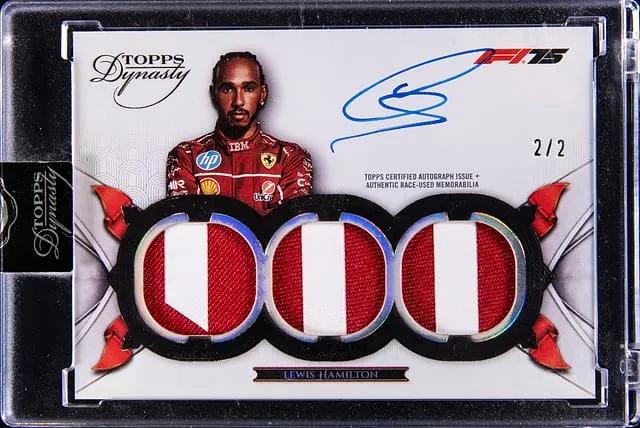
Lewis Hamilton 2025 Dynasty F1 Black /2 Sells for $25K
Goldin sold a 2025 Topps Dynasty F1 Lewis Hamilton Triple Relic Autographs Black /2 for $25,640 on April 12, 2026. Here’s what it means for F1 collectors.
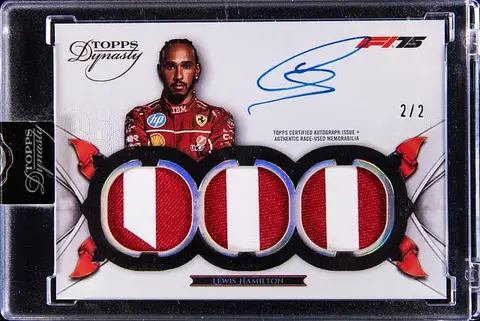
Sold Card
2025 Topps Dynasty F1 Triple Relic Autographs Black #SDTRA-LHAI Lewis Hamilton Signed Race-Used Patch Card (#2/2) - Topps Encased
Sale Price
Platform
Goldin2025 Topps Dynasty F1 Triple Relic Autographs Black #SDTRA-LHAI Lewis Hamilton Signed Race-Used Patch Card (#2/2) – Topps Encased
Sold for: $25,640 Auction house: Goldin Sale date (UTC): 2026-04-12
Lewis Hamilton’s premium Formula 1 cards continue to define the ultra-modern F1 market, and this sale is a clear example. This 2025 Topps Dynasty F1 Triple Relic Autographs Black #SDTRA-LHAI is a signed, race‑used patch card limited to just two copies worldwide, and it realized $25,640 in Goldin’s April 12, 2026 auction.
Below, we’ll break down what this card is, why it matters, and how this sale fits into the broader Hamilton and Dynasty F1 market.
Card overview
Card: 2025 Topps Dynasty F1 Triple Relic Autographs Black
Player: Lewis Hamilton
Team: Mercedes-AMG Petronas Formula One Team
Card number: #SDTRA-LHAI
Serial numbering: Hand-numbered 2/2
Autograph: On-card (signed directly on the card surface)
Memorabilia: Triple race-used patch pieces
Configuration: Topps encased (factory-sealed holder)
Rookie? No – this is a premium, post‑rookie Hamilton issue
Topps Dynasty is Topps’ flagship high-end line for Formula 1: every card is an autograph patch card or a very low-numbered auto, and every box is essentially a single-card “hit.” Within Dynasty, the Black parallel is one of the lowest-numbered and most desirable color tiers, with this Hamilton triple relic signed at just 2 copies.
The card is Topps encased, meaning it’s sealed in a factory holder with a Topps sticker. That’s different from a third-party grading slab (like PSA, BGS, or SGC). Collectors often like encased copies because they’re as close as you can get to “pack-fresh” provenance.
Why collectors care about this card
Several factors combine to make this a significant Hamilton and F1 card:
Lewis Hamilton’s legacy
Hamilton is widely regarded as one of the greatest drivers in F1 history, with multiple World Drivers’ Championships and a long stretch of dominance with Mercedes. For modern F1 collectors, Hamilton sits in the same tier that Michael Jordan or Tom Brady occupy in their respective sports.Topps Dynasty as the premium F1 line
Within F1 cards, Dynasty is treated like a true luxury product:- Very low print runs (often /10, /5, /3, /1).
- On-card autographs.
- Large, multi-color race-used patches.
- High box prices and a “one card per box” format.
That structure makes Dynasty a go-to set for collectors who want a flagship, high-end Hamilton piece rather than a base card or entry-level autograph.
Black parallel /2
A serial number like 2/2 means only two copies exist. That’s near the top of the scarcity ladder in modern products, just behind 1/1s (one-of-ones). While it isn’t technically a 1/1, a /2 Black Hamilton Dynasty auto patch still offers almost no supply for a global collector base.Triple race-used relics
The triple patch window shows three swatches of race-used material. For many F1 collectors, race-worn or race-used memorabilia feels more authentic and connected to the sport than generic “event-worn” or manufactured pieces that appear in some other products.On-card autograph
Hamilton’s signature is on-card, not a sticker applied later. On-card autos typically command a premium because the player handled the actual card surface, and the visual presentation is cleaner.
Market context and price comparison
This card sold at Goldin for $25,640 on April 12, 2026. To make sense of that number, it’s helpful to consider three layers of context: Dynasty Hamilton sales in general, ultra-low-numbered parallels, and the broader health of the F1 high-end market.
1. Comparing to other Hamilton Dynasty autos
Without overreaching beyond what recent, visible results show, a few broad patterns have emerged in the last couple of years:
- Mid-tier parallels (/10, /5) – Hamilton Dynasty auto patches numbered to /5 or /10 typically sell in the mid four figures to low five figures, depending on patch quality, autograph strength, and design.
- Premium low-numbered and duals – More limited Hamilton Dynasty cards (/3, /2, certain dual or triple autos) frequently push into the five-figure range.
- 1/1s – The most premium Hamilton Dynasty 1/1s, especially with exceptional patches, have reached significantly higher price levels and sometimes set short-term benchmarks for modern F1 cards.
Against that backdrop, $25,640 for a /2 Black triple relic auto fits into the expected “high-tier but not absolute record” lane. It’s clearly a premium result, reflecting both Dynasty’s status and Hamilton’s ongoing demand, but it is not out of line with broader trends for his most limited modern pieces.
2. Low-pop, ultra-modern F1 trend
This card sits firmly in the ultra-modern era (roughly 2018–present), where print runs are much more transparent and parallels are intentionally scarce. In ultra-modern, prices for star players often hinge on:
- Serial number (how low the print run is).
- Brand and set (Dynasty vs. more mass-market products).
- Player achievements and long-term legacy.
- Aesthetics (patch quality, autograph placement, design).
Hamilton checks all of those boxes, and Dynasty is a recognized premium release. That structure helps explain why a non-rookie, non-1/1 card can still reach the mid five-figure range.
3. How strong is $25,640 for this card type?
Looking across comparable Hamilton Dynasty cards, this sale level appears healthy and consistent with a strong but more measured F1 market:
- It shows that collectors are still willing to pay significant premiums for Hamilton’s top-tier, low-serial Dynasty autos.
- It doesn’t signal a runaway spike or a collapse; rather, it supports the idea that high-end Hamilton cards remain one of the more stable segments of modern F1.
Instead of thinking of this as a standalone outlier, it’s best understood as another data point reinforcing the premium tier for scarce Hamilton auto patch cards.
Key features for collectors
If you’re considering similar cards or tracking the Hamilton market, here are the elements that typically matter most.
Serial numbering and color
The Black parallel numbered to /2 is near the top of the ladder in this checklist. Collectors often work with a mental hierarchy like:
- 1/1s (one-of-ones)
- /2 or /3 (including Black and other ultra-short prints)
- /5 (Gold, Red, or similar, depending on the set)
- /10 and higher
At /2, this card offers near-1/1 scarcity without the pricing extremes that some 1/1s command.
Patch quality and layout
While each individual patch varies from card to card, three race-used swatches in one window is a premium layout. Collectors often look for:
- Multiple colors (for example, black, silver, teal, or bright accent colors from the Mercedes livery).
- Visible stitching or seams.
- Clear separation between the three swatches.
Those details can create price separation between two cards with the same numbering but different visual appeal.
Autograph presentation
On-card autos can differ slightly in pen strength, placement, and how clean the signature looks. Even ungraded, many collectors will zoom in on:
- Whether the ink is bold or fading.
- Whether the autograph is fully on the signed area.
- Any streaking or smudging.
A clear, centered Hamilton signature enhances both aesthetic and long-term desirability.
Encased vs. graded
This copy is Topps encased, not third-party graded. That appeals to some collectors who prefer cards exactly as they came from the manufacturer. Others may see grading as the next step to:
- Protect the card in a tamper-evident slab.
- Potentially differentiate condition (gem mint vs. near mint, etc.).
With ultra-low-numbered cards like this, the population is so small that collectors often prioritize the card’s existence and eye appeal over a specific numeric grade.
What this sale suggests for Hamilton and F1 collectors
A single sale doesn’t set a market on its own, but this result at Goldin on April 12, 2026 adds a few useful signals for collectors and small sellers:
Top-tier Hamilton remains a core segment of F1
The sustained willingness to pay mid five-figures for a post-rookie, non-1/1 Hamilton card underscores how central he remains to F1 collecting.Dynasty continues to function as a premium benchmark
When collectors talk about “comps” (comparable recent sales used for price context), high-end Hamilton Dynasty autos are often among the first references. This sale will likely become another reference point when people evaluate other low-numbered Hamilton pieces.Ultra-low serials maintain a scarcity premium
In a hobby era with many different parallels and brands, this card shows that truly low-numbered, on-card auto patch cards can still separate themselves from the broader field.Data point, not a prediction
As always, this sale is a snapshot in time, not a guarantee of future performance. Market sentiment, Hamilton’s career developments, and the broader sports card environment can all shift. For collectors, the main value of this sale is as a reference and a reminder of what the top end of the Hamilton market currently supports.
Takeaways for different types of collectors
Newcomers and returning collectors
If you’re just getting into F1 cards, this sale highlights how wide the range is in the hobby. You don’t need a $25,000 card to enjoy collecting Hamilton; there are more accessible options in Topps Chrome F1, paper releases, and lower-tier autos. Use this Dynasty sale as a way to understand the top of the pyramid rather than as a starting target.
Active hobbyists
For those already building F1 or Hamilton PCs (personal collections), this result helps calibrate expectations. It reinforces that:
- Dynasty remains a key high-end reference.
- Ultra-low-numbered Hamilton autos still draw strong bids.
- Not all parallels are created equal; /2 and /3 tiers behave very differently from /50 or /99 cards.
Small sellers and traders
If you’re pricing or trading Hamilton cards, this Goldin sale offers:
- A fresh high-end comp (comparable sale) for Hamilton Dynasty auto patches, particularly those numbered to /5 or less.
- A reminder to carefully note details in listings: exact serial number, patch quality, autograph type, and whether the card is encased or graded.
Final thoughts
The 2025 Topps Dynasty F1 Triple Relic Autographs Black #SDTRA-LHAI Lewis Hamilton (#2/2) that sold at Goldin on April 12, 2026 for $25,640 is a clear example of how modern, low-numbered, on-card autograph patch cards can anchor the top of a player’s market.
For Hamilton collectors, it’s another data point showing that his elite, ultra-scarce cards continue to command strong interest. For the broader F1 hobby, it reinforces Dynasty’s role as a benchmark high-end product and highlights how scarcity, brand, and on-card autos come together to shape serious collector demand.
As always, treat this sale as information, not instruction: a useful marker when you evaluate your own collection, your next trade, or the next Hamilton card that catches your eye.