LeBron 2007-08 Chronology Patch Auto Sells for $21.9K
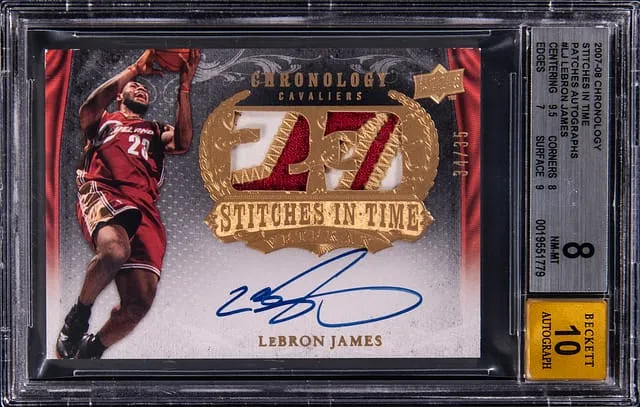
Goldin sold a 2007-08 UD Chronology LeBron Stitches In Time patch auto /35 (BGS 8, 10 auto) for $21,960. Here’s what it means for the LeBron card market.
Sold Card
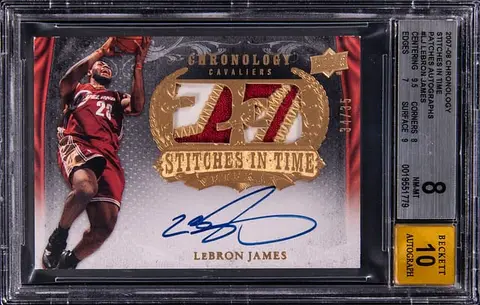
2007-08 Upper Deck Chronology Stitches In Time Patches Autographs #SIT-LJ LeBron James Signed Game-Used Patch Card (#34/35) - BGS NM-MT 8, Beckett 10
Sale Price
Platform
GoldinLeBron’s 2007-08 Chronology Patch Auto Sells for $21,960: What It Signals for High-End Inserts
On March 15, 2026, Goldin closed the sale of a key mid-2000s LeBron James insert: a 2007-08 Upper Deck Chronology Stitches In Time Patches Autographs #SIT-LJ. The card is serial-numbered 34/35, features an on-card autograph with a game-used patch, and is graded BGS NM-MT 8 with a Beckett 10 autograph grade. The final price was $21,960.
For collectors who track high-end LeBron cards and mid-2000s patch autos, this sale offers a useful data point in an increasingly selective market.
Card breakdown: what exactly sold?
Let’s start with the basics of the card:
- Player: LeBron James
- Team: Cleveland Cavaliers
- Year: 2007-08
- Product: Upper Deck Chronology Basketball
- Insert/Subset: Stitches In Time Patches Autographs
- Card number: #SIT-LJ
- Serial numbering: 34/35 (only 35 copies produced)
- Autograph: On-card (signed directly on the card)
- Memorabilia: Game-used patch
- Grading: BGS 8 (Near Mint-Mint) with a Beckett 10 autograph grade
This is not a rookie card (LeBron’s rookie year is 2003-04), but it is a premium, low-serial-number autograph patch from a respected Upper Deck era. For many LeBron collectors, this type of card sits in the “key issue” category for non-rookie, high-end inserts.
Why Upper Deck Chronology matters
Upper Deck Chronology (2007-08) has a strong reputation among basketball collectors for a few reasons:
- Era and brand: Mid-2000s Upper Deck products are widely viewed as a peak period for design, on-card autographs, and quality memorabilia. Chronology is often grouped with Exquisite and other premium UD offerings of the time, even if it sits a step below Exquisite in overall prestige.
- Design: Chronology is known for clean layouts, strong photography, and inserts that feel deliberately designed rather than overstuffed.
- Autograph focus: Many of the chase cards are on-card autos, which collectors tend to prefer over sticker autographs (where the player signs a sticker that’s later applied to the card).
The Stitches In Time Patches Autographs subset blends two popular features—game-used patch pieces and autographs—into a low-serial run. For superstars like LeBron, these become anchor pieces for player-collectors who focus on mid-2000s Upper Deck.
Grading and condition context
This particular copy received a BGS 8 for the card and a 10 for the autograph. A quick grading refresher:
- BGS 8 (NM-MT): Typically indicates light corner or edge wear, minor surface issues, or slight centering problems, but still a clean card overall.
- Beckett 10 auto: The autograph is graded separately, and a 10 suggests a bold, complete signature with no noticeable streaks or smudges.
For thick patch cards from the 2000s, high grades are harder to achieve. Chipping along edges, soft corners, and manufacturing quirks are common. As a result, even NM-MT (8) and NM-MT+ (8.5) copies can be viewed as strong examples, especially when paired with a 10-grade signature.
Market context: how does $21,960 fit in?
In the hobby, “comps” (short for comparables) are recent, similar sales used to estimate current market value. For a narrowly traded card like this, you often need to look at:
- Same card, different copies (raw vs graded, different serial numbers)
- Same set and subset, but different players
- Similar LeBron patch autos from the same era and brand tier
Public sales of 2007-08 Chronology Stitches In Time Patches Autographs #SIT-LJ are relatively infrequent. The combination of low print run (/35), on-card auto, and game-used patch means the card doesn’t appear at auction very often, and when it does, it’s typically in the hands of LeBron-focused or high-end modern collectors.
While exact recent comps for this exact BGS 8 /35 copy are limited, the $21,960 realized price sits in a range that makes sense when you consider:
- The premium placed on mid-2000s Upper Deck LeBron autos with patches.
- The low serial numbering—only 35 copies exist, regardless of grade.
- The on-card signature and game-used patch, both key demand drivers.
More broadly, similar mid-2000s LeBron patch autos from Upper Deck—especially ones featuring on-card ink and limited numbering—have generally stabilized into the mid–five-figure range for solid but not gem-mint copies, with top-tier examples and grail-level Exquisite cards pushing far higher.
Within that ecosystem, this sale looks like a reasonable, data-supported outcome rather than an outlier spike. It reinforces the idea that well-regarded, short-printed, on-card LeBron autos continue to hold collector interest even when the broader market is selective.
Why collectors care about this card
Several factors combine to give this card weight in a LeBron or high-end insert collection:
LeBron’s legacy
By 2007-08, LeBron was already a superstar and well on his way to all-time-great status. Cards from this period capture him before his move to Miami, still in the Cavaliers era that many collectors feel nostalgic about.
Mid-2000s Upper Deck as a “golden era”
Many hobbyists view 2003–2010 Upper Deck basketball as a kind of golden era for premium cards—before print runs expanded significantly and while game-used memorabilia and on-card signatures were more consistently strong.
Patch + on-card auto + low serial
In modern and ultra-modern basketball, there are many insert, parallel, and autograph combinations. This particular blend—legit game-used patch, clean on-card auto, and a print run of just 35—ticks several of the boxes that advanced collectors prioritize.
Set prestige without Exquisite pricing
Chronology doesn’t have quite the mythos of Exquisite, but that can be a feature, not a bug. It’s often seen as a way to access premium Upper Deck LeBron content at a level below the true top-tier Exquisite grails, while still benefiting from similar design sensibilities.
Era and scarcity considerations
This card sits in the “modern” to “early ultra-modern” overlap for basketball. That matters for a few reasons:
- Print discipline: Compared to later ultra-modern sets, the overall number of true, low-serial LeBron patch autos from this era is modest.
- Surviving quality: Thick, patch-based cards from this time rarely surface in gem-mint condition. Many were handled, stored in basic toploaders, or pulled before grading became as central as it is today.
Because of that, a BGS 8 with a 10 autograph on a /35 LeBron patch auto is often viewed more through a scarcity lens than a pure condition lens. There simply are not many opportunities to land a copy, and upgrading to a significantly higher grade can be difficult and expensive.
Recent hobby and player context
LeBron’s ongoing career milestones—passing scoring marks, playoff appearances, and continued relevance deep into his career—serve as a steady background driver of interest. However, this particular sale feels more tied to:
- A maturing LeBron collector base that is now highly focused on quality over quantity.
- A hobby-wide emphasis on low-serial, on-card autos from respected brands and eras.
Rather than reflecting a sudden spike in LeBron demand, this Goldin sale looks like a continuation of a trend: solid, sustained interest in key LeBron pieces that combine scarcity, strong design, and on-card signatures.
What this sale might signal for the market
It’s important not to overinterpret a single auction result, especially when public comps are thin. That said, a few reasonable takeaways emerge:
Premium insert stability
High-end, low-serial LeBron autos from the mid-2000s continue to clear meaningful five-figure prices when they surface at major auction houses. That consistency, across different sets and grades, suggests ongoing collector conviction.
Respect for non-rookie key issues
While rookie cards get most of the spotlight, this sale reinforces that premium non-rookie issues—including strong patch autos—carry real weight for advanced collectors.
Brand and era still matter
Being an Upper Deck card from 2007-08 Chronology is not just a line in the description—it is a big part of why this card draws interest. Collectors are clearly separating out cards by brand tier and era, not just by player name and autograph presence.
How collectors and small sellers can use this data point
For collectors:
- If you’re building a LeBron PC (personal collection) with a focus on long-term significance, this sale reinforces the appeal of low-serial, on-card autos from premium 2000s products.
- If you already own a 2007-08 Chronology LeBron, this auction provides a fresh reference point—even if your card differs in grade or exact subset.
For small sellers and hobbyists:
- When assessing your own LeBron inventory, try grouping cards by era, brand tier, and feature set (on-card vs sticker auto, patch vs plain jersey vs no memorabilia). This helps you understand where a card might sit relative to sales like this one.
- Use sales like this as directional context, not as a promise. Condition differences, patch quality, autograph strength, and auction exposure (major house vs smaller platform) can all shift realized prices.
Final thoughts
The March 15, 2026 Goldin sale of the 2007-08 Upper Deck Chronology Stitches In Time Patches Autographs #SIT-LJ LeBron James—serial-numbered 34/35 and graded BGS 8 with a Beckett 10 autograph—at $21,960 is a clear reminder of how collectors now prioritize scarcity, quality era, and on-card signatures.
It’s not a record-breaking result, but it is a strong, measured confirmation that well-chosen, mid-2000s LeBron patch autos remain central targets for serious basketball collectors. For anyone tracking the high-end insert lane, this is exactly the sort of sale that helps define the current market landscape.