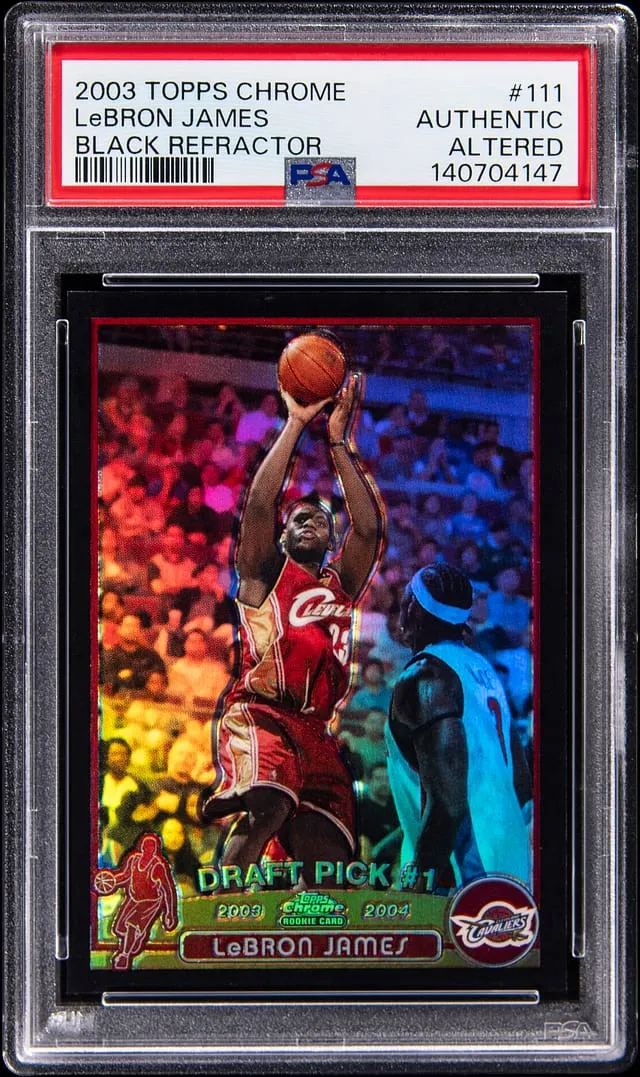
LeBron 2003 Topps Chrome Black Refractor Sale
A PSA Authentic/Altered 2003-04 Topps Chrome Black Refractor LeBron James RC #111 /500 sold for $29,280 at Goldin on June 7, 2026. Here’s the context.
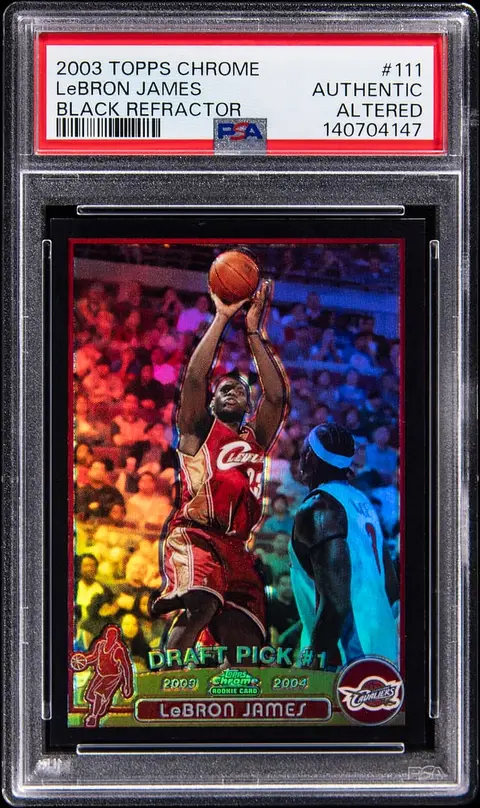
Sold Card
2003-04 Topps Chrome Black Refractor #111 LeBron James Rookie Card (#164/500) - PSA Authentic/Altered
Sale Price
Platform
Goldin2003-04 Topps Chrome Black Refractor #111 LeBron James Rookie Card (#164/500) - PSA Authentic/Altered Sells for $29,280
On June 7, 2026, a key LeBron James rookie parallel changed hands at Goldin: a 2003-04 Topps Chrome Black Refractor #111, serial-numbered #164/500, authenticated by PSA with an “Authentic/Altered” designation, closed at $29,280.
For collectors who are newer to the hobby, or those returning after a break, this sale offers a useful snapshot of how high-end 2000s chromium rookies behave across different conditions, grades, and labels.
The Card at a Glance
Let’s break down exactly what this card is:
- Player: LeBron James
- Team: Cleveland Cavaliers
- Year: 2003-04
- Set: Topps Chrome
- Card Number: #111
- Parallel: Black Refractor, serial-numbered to 500 copies
- Serial Number on this copy: #164/500
- Rookie Card: Yes – this is one of LeBron’s flagship chromium rookies
- Grading Company: PSA (Professional Sports Authenticator)
- Label: PSA Authentic/Altered (no numeric grade)
The 2003-04 Topps Chrome LeBron #111 is one of the core modern rookie cards in the hobby. The Black Refractor parallel—limited to just 500 copies—is widely viewed as one of his most important color parallels from his true rookie year.
PSA’s “Authentic/Altered” designation means PSA has verified that the card itself is genuine, but it has also detected some form of alteration. Common reasons include trimming, recoloring, surface work, or other modifications that affect the original state of the card. Instead of assigning a 1–10 grade, PSA encapsulates it as authentic but not numerically gradeable.
Why This Card Matters to Collectors
A flagship chromium rookie
Topps Chrome has long been considered one of the “flagship” chromium sets for basketball. When collectors say a card is part of a flagship set, they usually mean it’s from one of the main, widely collected releases that define an era. For 2000s NBA rookies, Topps Chrome and Exquisite are often at the center of the conversation.
LeBron’s base Topps Chrome rookie (#111) is one of the most recognizable modern basketball cards. The Black Refractor parallel takes that same design and adds:
- A black refractor finish
- Serial numbering to 500
- A clearly defined scarcity that collectors can track
Within LeBron’s rookie-year Topps Chrome rainbow, the Black Refractor is regarded as a premium, but still somewhat “trackable,” parallel—rarer than base and regular Refractors, yet more available than extremely low-serial chase cards.
Early-2000s chromium and real-world scarcity
The early- to mid-2000s sit in an interesting middle ground between vintage and the ultra-modern, high-print-run era. Production was higher than in the 1980s, but the market had not yet reached today’s volume and parallel complexity.
For a numbered parallel like the Black Refractor:
- There are exactly 500 copies produced.
- A portion of those are lost, damaged, or locked away in collections.
- Only a subset has been graded, and an even smaller subset sits in high-grade holders.
That combination of fixed supply and strong, long-term demand for LeBron rookies is a big part of why this card is closely watched whenever a notable copy sells.
Understanding the PSA Authentic/Altered Label
For many buyers and sellers, the PSA label is almost as important as the card itself. A few key points about an Authentic/Altered designation:
- Authentic confirms the card is not counterfeit.
- Altered means PSA has observed something that changes the original state – possibly trimming, color touch, surface manipulation, or other work.
- Because of that alteration, the card does not receive a numeric grade like PSA 7, PSA 8, etc.
In price terms, cards labeled Altered are typically valued below numerically graded copies of the same card with similar eye appeal. However, for scarce or iconic issues, there is still meaningful demand because:
- The card is real and encapsulated.
- The underlying card is still a rare, high-profile rookie.
- Some collectors prioritize owning the card itself over grade purity.
This creates a distinct market lane for altered but authenticated examples, especially when true high-grade copies reach price levels that are out of reach for many collectors.
Recent Market Context for This Card
To understand what the $29,280 sale at Goldin represents, it helps to look at comps—short for “comparables,” meaning recent sales of the same or very similar cards, usually by grade and condition.
Because this is a PSA Authentic/Altered copy, direct one-to-one comps can be limited. However, the market has established a general structure for 2003-04 Topps Chrome Black Refractor LeBron rookies:
- High-grade PSA copies (e.g., PSA 9, PSA 10): These are historically among the strongest performers for this card, reflecting both condition rarity and demand from registry-focused collectors.
- Mid-grade PSA/BGS copies (e.g., PSA 7–8, BGS 8–8.5): These still command strong prices but tend to trade at notable discounts to gem-mint tiers.
- Authenticated-only or Altered copies: These typically sit below the graded tiers in price, but they provide an entry point for collectors who want the card itself without paying a premium for confirmed unaltered condition.
While precise, up-to-the-day comp data can shift quickly, the key takeaway is that $29,280 for an Authentic/Altered example sits well below premium, high-grade results, yet still reflects the underlying strength of demand for this specific LeBron rookie parallel.
In other words:
- The market is still willing to pay a substantial amount for a genuine, altered copy.
- Grade-sensitive buyers may remain focused on numerically graded examples, but the altered lane supports its own pricing tier.
How This Sale Fits into the Broader LeBron Market
LeBron James remains one of the central pillars of the modern basketball card market. A few ongoing factors shape demand:
- Career legacy: Multiple championships, MVPs, and all-time records position him among the consensus top players in NBA history.
- Long-term relevance: As he nears or reaches the final stretch of his career, collectors increasingly view his key rookie issues as long-term historical pieces, not just speculative items.
- Set and card recognition: The 2003-04 Topps Chrome rookie is widely recognizable, making the Black Refractor variant easier to understand for both newer and advanced collectors.
Sales like this one at Goldin on June 7, 2026, help define the pricing tiers across the condition spectrum—from gem-mint, to solid mid-grade, to altered or authenticated-only examples.
Takeaways for Collectors and Small Sellers
If you’re evaluating this card—or cards like it—here are some practical observations:
Label language matters. “PSA 9” and “PSA Authentic/Altered” are not interchangeable. The market treats these as very different items, even when the card looks strong to the naked eye.
Altered can still be liquid for key issues. On less important cards, an altered designation can severely limit interest. For a marquee LeBron rookie parallel like the 2003-04 Topps Chrome Black Refractor, there is still a defined buyer pool.
Rarity plus recognition is a powerful combination. A numbered rookie parallel from a recognized flagship set, featuring a historically important player, tends to retain hobby attention even as short-term sentiment shifts.
Use comps as a guide, not a promise. Recent sales—including this $29,280 result at Goldin—provide helpful context, but they do not guarantee future prices. Condition nuances, eye appeal, auction timing, and broader market trends all play a role.
Final Thoughts
The June 7, 2026 sale of the 2003-04 Topps Chrome Black Refractor #111 LeBron James Rookie Card (#164/500) in a PSA Authentic/Altered holder at Goldin underscores how deep the market is for cornerstone early-2000s rookies.
Even with an alteration designation, the card commanded a five-figure result, reinforcing the long-term significance of this parallel within LeBron’s rookie landscape.
For collectors, it’s a clear reminder to:
- Look closely at labels and condition notes.
- Understand where altered examples typically sit relative to graded copies.
- Use these high-profile auctions as reference points when evaluating your own buying or selling decisions.
As always, none of this is financial advice. It’s simply one more data point in the evolving story of one of modern basketball’s most important rookie cards.