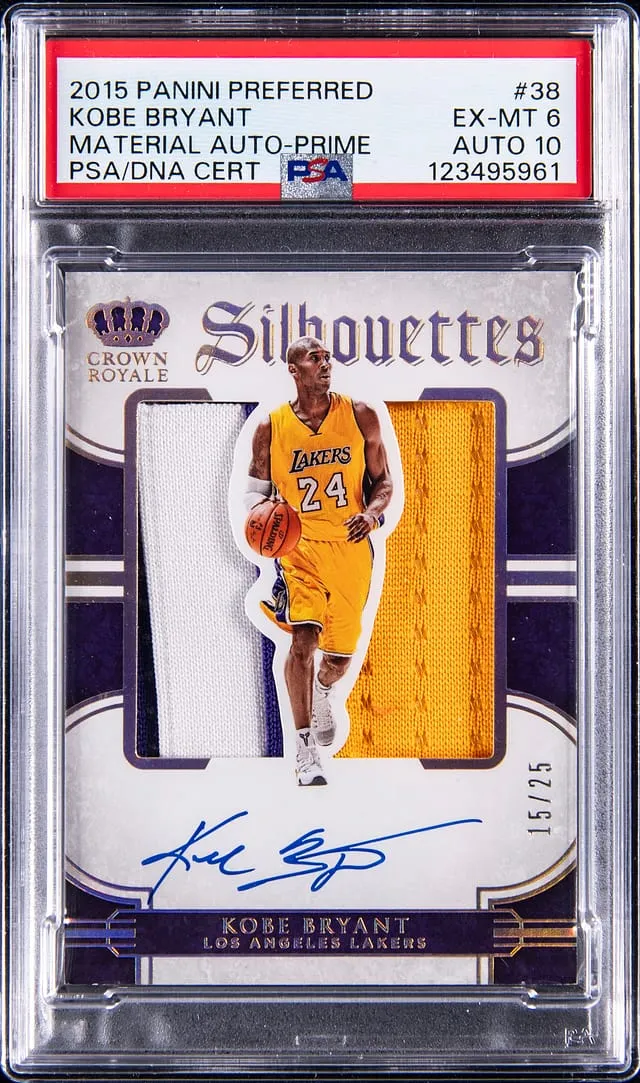
Kobe 2015-16 Preferred Patch Auto /25 Sells for $20K
Goldin sold a 2015-16 Panini Preferred Kobe Bryant Material Autographs Prime /25 PSA 6, Auto 10 for $20,802. Here’s what it means for Kobe collectors.
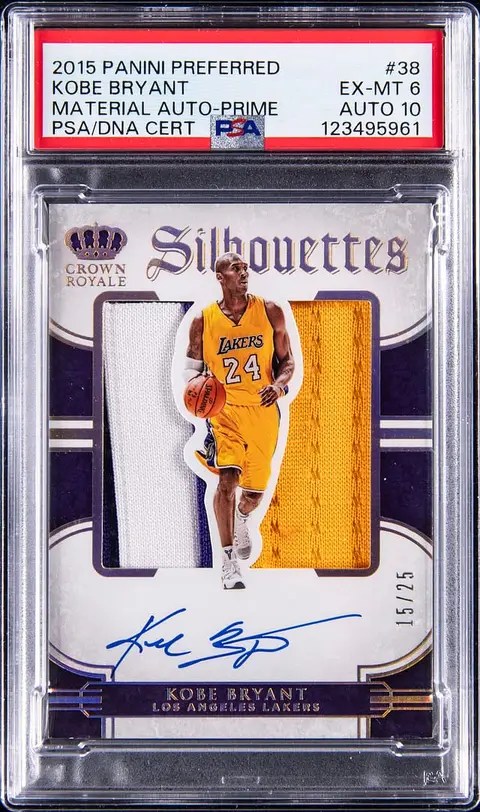
Sold Card
2015-16 Panini Preferred Material Autographs Prime #38 Kobe Bryant Signed Patch Card (#15/25) - PSA EX-MT 6, PSA/DNA GEM MT 10 - Pop 1
Sale Price
Platform
Goldin2015-16 Panini Preferred Material Autographs Prime #38 Kobe Bryant Signed Patch Card (#15/25) - PSA EX-MT 6, PSA/DNA GEM MT 10 - Pop 1
On March 15, 2026, Goldin sold a 2015-16 Panini Preferred Material Autographs Prime #38 Kobe Bryant patch autograph, numbered 15/25, for $20,802. The card was graded PSA EX-MT 6 with a PSA/DNA GEM MT 10 autograph, and is currently a population 1 (the only example in the PSA population report with this exact card/grade combination).
For Kobe collectors and high-end basketball buyers, this sale is a useful data point in understanding how modern, low-serial, on-card autographed patch cards are behaving in a market that has become more selective, especially around condition.
Card overview
Here’s what defines this specific card:
- Player: Kobe Bryant, Los Angeles Lakers
- Year: 2015-16
- Set: Panini Preferred – Material Autographs Prime
- Card number: #38
- Serial numbering: 15/25 (only 25 copies produced)
- Autograph: On-card auto (signed directly on the card)
- Memorabilia: Prime patch (multi-color, premium jersey swatch)
- Grading:
- Card grade: PSA EX-MT 6 (Excellent-Mint)
- Autograph grade: PSA/DNA GEM MT 10
- Population (PSA): Pop 1 in this exact configuration at the time of sale
- Era: Modern/ultra-modern Kobe (late playing career, post-Topps era)
This is not a rookie card (Kobe’s rookies are from 1996-97), but it is a low-serial, on-card, jersey-patch autograph from one of Panini’s more respected mid-2010s premium basketball lines.
Why this card matters to collectors
A few traits make this card especially interesting:
On-card autograph + prime patch
Many collectors place a premium on cards signed directly on the card (on-card autos) rather than on stickers. Combined with a prime patch—usually a multi-color or logo piece from the jersey—that puts this firmly in the “high-end modern” category.Short print: /25
With only 25 copies, this is a relatively scarce Kobe auto/patch, especially compared to mass-produced inserts and memorabilia cards. Low serial numbering often translates into tighter supply, which can matter more than the numeric condition grade for many player-focused collectors.Late-career Panini Preferred
Panini Preferred was known for its booklet cards, silhouettes, and premium autograph-memorabilia content. While it doesn’t have the universal name recognition of National Treasures or Flawless, many player collectors quietly target Preferred for its strong designs and on-card signatures.Kobe’s ongoing market role
Kobe Bryant remains one of the most collected basketball players. Since his passing, demand has tended to consolidate around:- Key rookies (especially high-grade Topps Chrome)
- Premium low-numbered autos and patches
- Iconic inserts and parallels
This card sits squarely in that second category: a premium, low-serial, on-card auto with a patch.
Grading context: PSA 6 with GEM MT 10 auto
A PSA 6 (EX-MT) is a mid-grade result for a modern premium card like this. That usually implies noticeable wear, edge or corner issues, or a surface flaw.
However, the PSA/DNA GEM MT 10 autograph grade signals that the signature itself is essentially flawless in terms of boldness, placement, and completeness. For many Kobe auto collectors, the auto and patch are the main attractions, and the card grade becomes a secondary factor as long as it presents well in the slab.
The Pop 1 label simply means that in PSA’s records, this is the only copy graded exactly PSA 6 with a GEM MT 10 auto at the time of sale. Population ("pop") data doesn’t guarantee rarity in the absolute sense, but it tells you how many copies have been graded at each level by that grading company.
Market context and recent sales
Because this is a very specific card—2015-16 Panini Preferred Material Autographs Prime #38, numbered to 25, with this particular grade—publicly available sales data is limited. Low-serial, on-card Kobe patch autos do not surface frequently, and when they do, they often differ by:
- Set (Preferred vs National Treasures vs Immaculate, etc.)
- Year
- Serial numbering (/10, /25, /49, etc.)
- Patch quality (color breaks, logos)
- Grading company and grade
Based on available market behavior for similar Kobe auto-patch cards from mid-2010s Panini products, a few patterns are visible:
- Higher-end brands like National Treasures and Flawless typically command a clear premium over mid-tier brands.
- Low-numbered patches (/25 or less) with on-card autos often sell at a noticeable premium to sticker autos or higher-serial memorabilia cards.
- Mid-grade slabs with strong autos can still perform well when the card is scarce and visually appealing, especially in a player’s more limited late-career Panini releases.
At $20,802, this result places the card in the mid-to-high tier for non-rookie Kobe patch autos from secondary Panini brands. It sits below the elite National Treasures and Flawless Kobe autos that sometimes reach significantly higher levels, but it is well above common Panini sticker autos or non-patch signatures.
Given the limited available data for this exact card and grade, it’s more accurate to say this sale is a strong, but contextually reasonable, result for a scarce Kobe on-card patch auto than to call it a clear record or an outlier.
How condition and scarcity interact here
For modern premium cards, collectors often weigh three main axes:
- Player – Kobe is a historically important, highly collected player.
- Card type – On-card autograph and prime patch, low serial, from a reputable premium set.
- Condition – Mid-grade (PSA 6), but with a perfect 10 auto.
When a card checks the first two boxes strongly, the market can sometimes be more forgiving on the numeric card grade, especially when:
- The card is already scarce by print run (/25).
- The card rarely appears for sale.
- The autograph is high grade and visually appealing.
This sale suggests that for certain Kobe cards, the combination of on-card auto, patch, and scarcity can offset a less-than-ideal card grade.
Takeaways for collectors and small sellers
If you collect Kobe or similar high-end autos, here are a few practical observations:
Autograph quality matters
A GEM MT 10 auto grade can help support value, even when the card grade is in the mid range. For autograph-focused cards, many buyers will prioritize ink quality and placement.Low serial numbering supports long-term demand
Cards numbered to 25 or less often have thin supply. That doesn’t mean prices only move one way, but it does mean that comparable sales can be sparse, and each auction can carry more weight in shaping expectations.Brand hierarchy is real, but not absolute
National Treasures, Flawless, and Immaculate often lead in prestige, but strong designs and on-card autos from sets like Panini Preferred can still command serious attention when the player and card attributes line up.Comps need nuance
"Comps" (comparable sales) are recent sales used as reference points. With a card like this, very few comps are truly apples-to-apples. When looking at comps, it helps to adjust mentally for:- Brand tier differences
- Serial numbering
- Patch quality
- Auto grade versus card grade
Slabbed mid-grade isn’t the end of the story
A PSA 6 is not ideal for a modern premium card, but this sale illustrates that rarity, eye appeal, and autograph quality can still support strong results.
What this means within the broader Kobe market
As of the Goldin sale on March 15, 2026, Kobe’s market continues to show a pattern that has been developing for several years:
- Core, high-quality pieces tend to remain in demand.
- Buyers are more selective about what they stretch for, focusing on:
- True rookies
- Scarce on-card autos
- Strong patches and low serials
This 2015-16 Panini Preferred Material Autographs Prime #38 fits the modern, premium, low-pop Kobe lane well. The $20,802 result reinforces that collectors are still willing to pay a meaningful premium for:
- Scarcity (/25)
- On-card ink with a GEM MT 10 grade
- A recognizable, established brand from Kobe’s Panini years
For player collectors, this sale is a useful benchmark for where high-end but non-rookie Kobe auto-patch cards can trade in today’s environment. For small sellers, it’s a reminder to look beyond just the numeric card grade when assessing potential value—especially on rare, autograph-driven pieces.
As always, these observations are about understanding recent sales and context, not predictions. Markets change, supply appears and disappears, and individual auctions can vary widely. But taken together, this Goldin sale offers a clear signal: well-presenting, low-serial Kobe on-card patch autos remain firmly on the radar for serious collectors.