Kobe 2014-15 Immaculate Team Numbers PSA 9 Sale
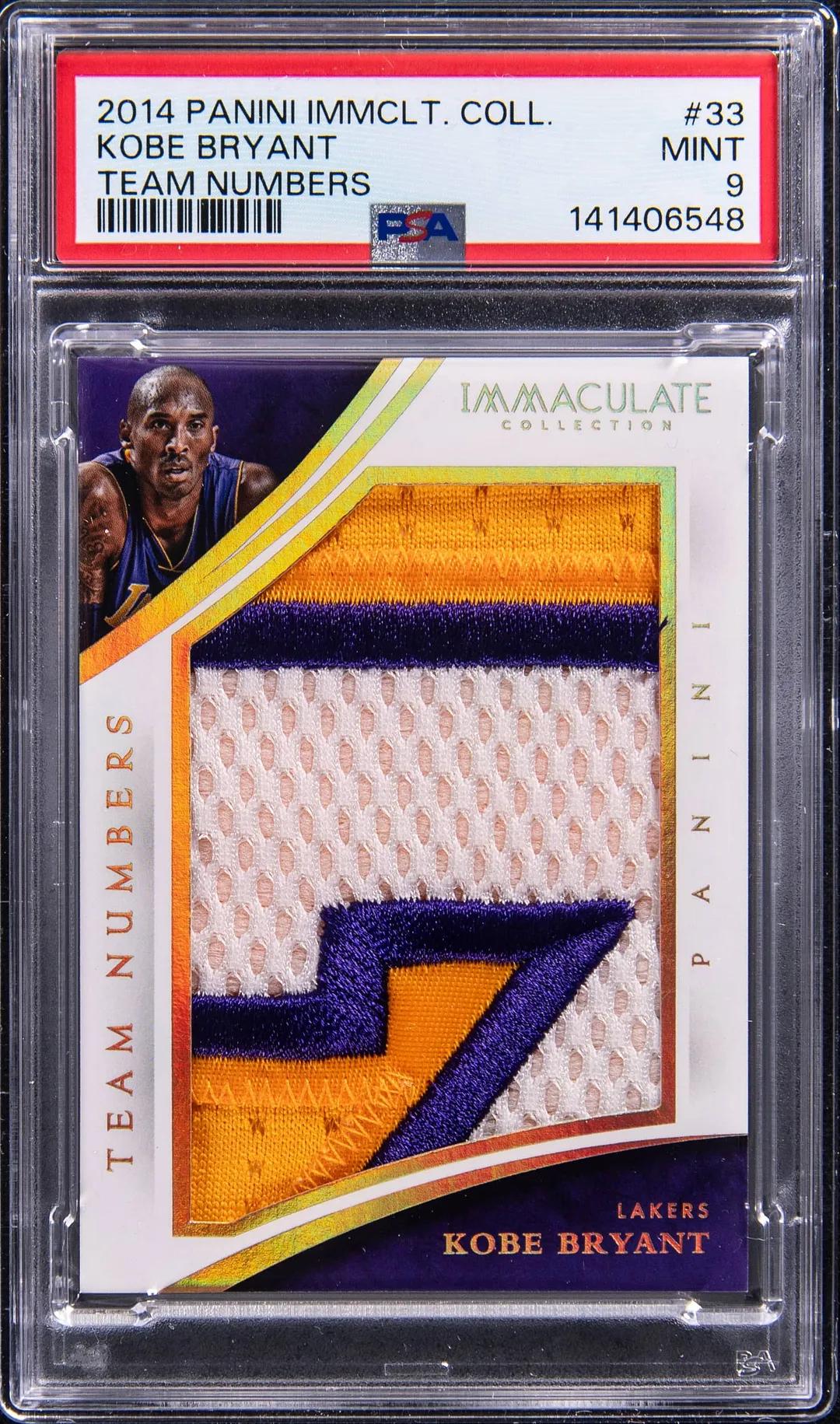
Goldin sold a 2014-15 Immaculate Team Numbers Kobe Bryant game-used patch /25 PSA 9 for $12,229 on Feb 6, 2026. Here’s the market context for this card.
Sold Card
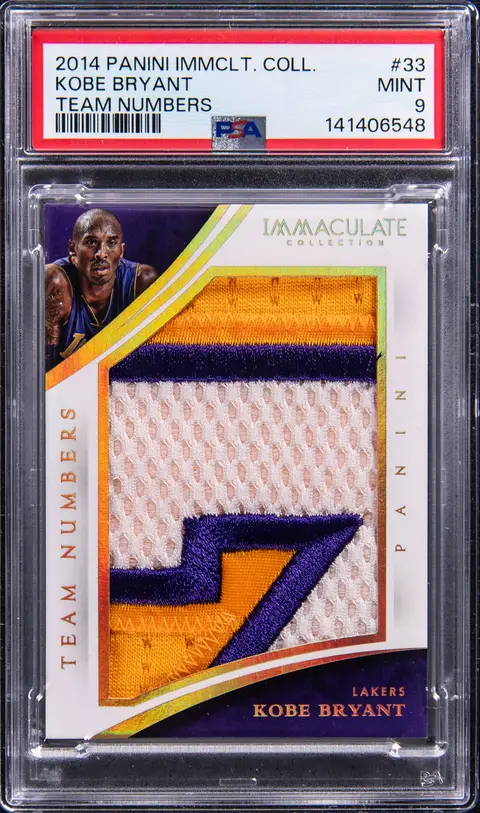
2014-15 Panini Immaculate Collection Team Numbers #33 Kobe Bryant Game-Used Patch Card (#03/25) - PSA MINT 9
Sale Price
Platform
Goldin2014-15 Immaculate Team Numbers Kobe Bryant Patch PSA 9 Sells for $12,229
On February 6, 2026, Goldin closed a notable modern Kobe Bryant sale: a 2014-15 Panini Immaculate Collection Team Numbers #33 Kobe Bryant Game-Used Patch card, serial-numbered 03/25, graded PSA MINT 9, realized $12,229.
For a non-rookie, non-autograph Kobe, this is a meaningful data point for collectors who track high-end game-used patches and the broader Immaculate market.
Card Breakdown: What Exactly Sold?
Let’s start by identifying the card clearly:
- Player: Kobe Bryant
- Team: Los Angeles Lakers
- Year: 2014-15
- Set: Panini Immaculate Collection
- Insert / Subset: Team Numbers
- Card Number: #33
- Serial Numbering: 03/25 (only 25 copies produced)
- Memorabilia: Game-used patch (multi-color patches are typical in this subset)
- Autograph: None (this is a memorabilia-only card)
- Rookie Status: Not a rookie card (Kobe’s rookie year cards are 1996-97)
- Grading Company: PSA
- Grade: PSA MINT 9
The Team Numbers subset in Immaculate focuses on patches themed around a player’s jersey number, with very low print runs. For Kobe, this means a small, tightly held population of high-end, game-used patch cards from a premium brand.
Why the 2014-15 Immaculate Team Numbers Matters
2014-15 Immaculate sits firmly in the modern / early ultra-modern era of basketball cards. It’s not as mass-produced as late-90s base products, and it’s positioned as a premium, low-print-run line.
Collectors value this card for a few key reasons:
Game-Used Patch from a Hall of Famer
This is not “player-worn” or “event-worn” material; it’s a game-used Kobe patch, which has more weight with long-term collectors, especially from a higher-end brand.Low Serial Numbering (/25)
Only 25 copies exist. In modern high-end products, a print run of 25 is considered scarce, especially for a global star like Kobe.Immaculate as a Premium Brand
Immaculate is one of Panini’s headline premium basketball releases, alongside National Treasures and Flawless. Within that ecosystem, Team Numbers is a respected patch-based subset.Kobe’s Last Active Years Era
The 2014-15 season sits close to Kobe’s retirement (2015-16). Cards from his final playing years have become a defined collecting lane for some Kobe-focused collectors.High Grade (PSA 9)
For thick, patch-style cards, condition is often tricky: chipping, corner wear, and edge issues are common. A PSA 9 (Mint) is a strong, collector-grade result for a thick Immaculate patch card.
Market Context: How Does $12,229 Fit In?
The Goldin sale closed at $12,229 USD, converted from the provided cents.
To understand whether this is high, low, or typical, it helps to look at comps—recent comparable sales of the same card or closely related versions. (In hobby language, “comps” are simply recent market results used as reference points.)
For this specific card – 2014-15 Immaculate Team Numbers #33 Kobe Bryant /25 – public sales data are relatively thin. That’s normal for a card numbered to just 25 copies, where many examples sit in permanent collections.
From broader market patterns for similar cards, we can outline some context:
Similar Kobe Immaculate Patch Cards (Non-Auto, /25 to /35)
Recent sales of comparable Kobe game-used Immaculate patches (same era, non-auto, low serial numbered) have often landed in the mid-four-figures to low-five-figures depending on patch quality, grade, and specific subset.Impact of Patches and Eye Appeal
Multi-color, logo, or number-piece patches tend to command a premium over plain-color or one-color swatches. The exact eye appeal of this specific copy influences perceived value, even within the same grade.PSA 9 vs. Raw or Lower Grades
For thick patch cards, a PSA 9 often sells at a noticeable premium over raw (ungraded) copies and mid-grade slabs due to condition concerns and the cost/risk of grading.
Within that framework, a $12,229 sale for a scarce, game-used Kobe Immaculate Team Numbers card in PSA 9 lines up with what we’d expect for:
- A high-end, but not autograph, Kobe patch from a marquee brand.
- A very low serial-numbered card with long-term collector appeal.
Because public comps for this exact serial-numbered card in PSA 9 are limited, it’s better to view this as part of a cluster of high-end Kobe patch sales rather than a single data point that “sets” the market.
What This Sale Suggests About the Kobe High-End Market
A single auction never tells the whole story, but this Goldin result underlines several ongoing themes in the hobby:
Sustained Demand for True Game-Used Memorabilia
Collectors continue to differentiate between game-used and other types of memorabilia. Premium, clearly labeled game-used Kobe cards from strong brands remain in demand.Non-Rookie, Non-Auto Star Cards Can Still Be Significant
While rookies and autographs often dominate attention, this sale shows there is real money and attention flowing toward memorable, non-rookie, non-auto issues—when they combine scarcity, strong design, and a Hall of Fame player.Immaculate’s Role in the Panini Era
National Treasures and Flawless often get top billing, but high-end Kobe Immaculate patches have been steadily carving out their own lane among serious collectors.Limited Supply = Lumpy Price Action
With only 25 copies, each auction can look a bit different. A motivated bidder or two can materially change the final price. That’s typical for ultra-low-print-run cards.
For Collectors: How to Think About a Card Like This
If you’re a newcomer or a returning collector and you’re looking at this sale to understand the hobby, a few practical takeaways:
Know the Set and Subset
Learn the hierarchy of Panini’s premium lines (Immaculate, National Treasures, Flawless, etc.). Within each, certain subsets—like Team Numbers—have more staying power than others.Check the Details: Game-Used vs. Player-Worn
Read the back of the card or the listing description. “Game-used” has a different level of significance than “player-worn” or “event-worn.”Understand Serial Numbering
A card numbered /25 means only 25 copies were produced. That sort of scarcity can drive strong prices, especially for global icons like Kobe.Use Comps as a Range, Not a Promise
Recent sales (comps) help you see where the market has been, not where it must go. Condition, timing, auction format, and visibility can all move final prices.Focus on Eye Appeal
For patch cards, the specific patch—colors, stitching, and how it fits the window—matters a lot. Two cards with the same serial number and grade can have very different market interest.
Summary
The February 6, 2026 Goldin sale of the 2014-15 Panini Immaculate Collection Team Numbers #33 Kobe Bryant Game-Used Patch #03/25 – PSA MINT 9 at $12,229 is another data point in the ongoing story of high-end Kobe collecting.
It reinforces a few key ideas:
- True game-used Kobe patches from premium Panini sets remain important to collectors.
- Ultra-low serial-numbered, non-rookie, non-autograph cards can still command strong prices when design, brand, and player all align.
- In thin, low-population markets, each auction helps define, but does not fix, what the card can be worth.
For collectors and small sellers, tracking sales like this—alongside pop reports, parallel versions, and adjacent comps—helps build a clearer picture of where modern Kobe memorabilia fits in the broader basketball card landscape.