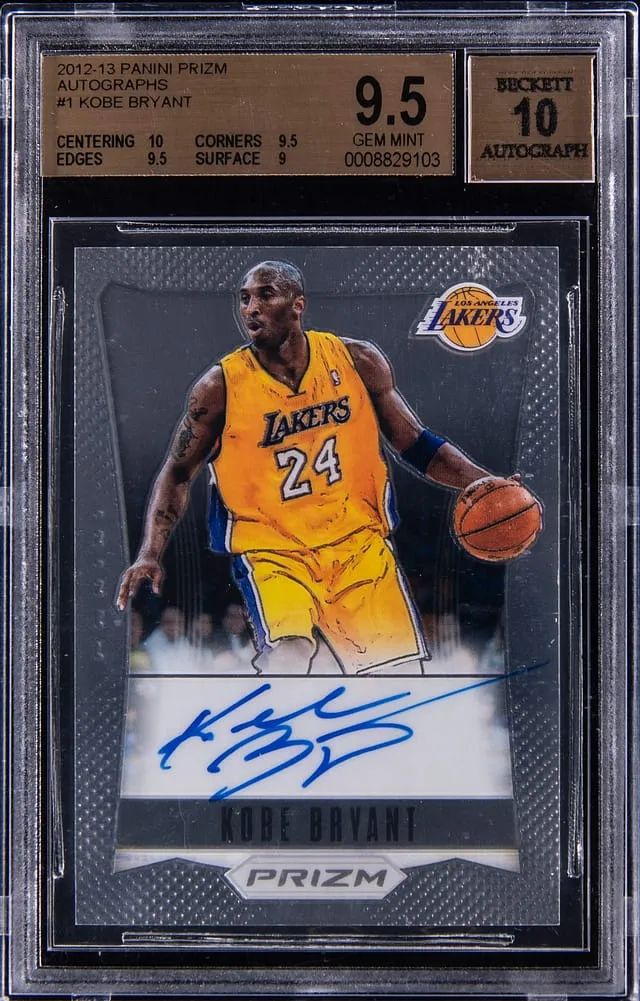
Kobe 2012-13 Prizm Auto BGS 9.5 Sells for $12.4K
Goldin sold a 2012-13 Panini Prizm Autographs #1 Kobe Bryant BGS 9.5/10 auto for $12,444. A key first-year Prizm on-card Kobe auto in GEM MINT.
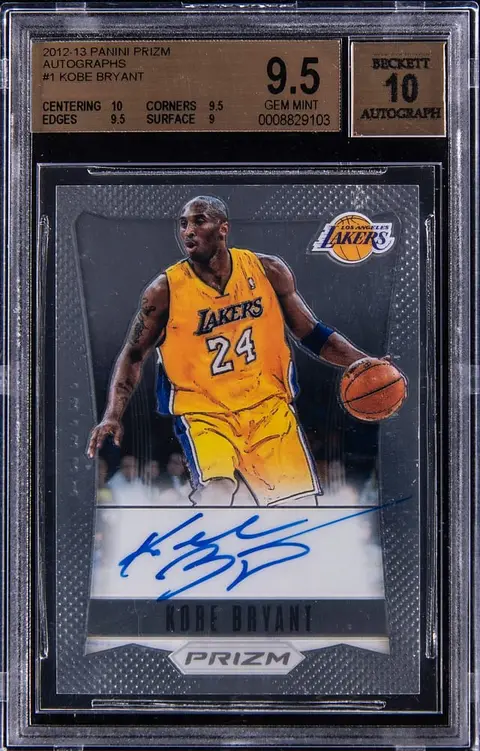
Sold Card
2012-13 Panini Prizm Autographs #1 Kobe Bryant Signed Card - BGS GEM MINT 9.5, Beckett 10
Sale Price
Platform
Goldin2012-13 Panini Prizm Autographs Kobe Bryant BGS 9.5 Sells for $12,444
On March 15, 2026, Goldin closed a quiet but important sale for Kobe Bryant collectors and Prizm fans: a 2012-13 Panini Prizm Autographs #1 Kobe Bryant, graded BGS GEM MINT 9.5 with a Beckett 10 autograph, sold for $12,444.
For a card that isn’t a rookie, this result matters. It sits at the intersection of three powerful hobby stories: early Panini Prizm, on-card Kobe autos, and high-grade 2010s chromium.
The card at a glance
- Player: Kobe Bryant
- Team: Los Angeles Lakers
- Year: 2012-13
- Set: Panini Prizm (1st year / inaugural Prizm set)
- Subset: Prizm Autographs
- Card number: #1
- Autograph: On-card (signed directly on the card, not on a sticker)
- Rookie card? No – this is a key veteran autograph from the first Prizm release, not a rookie
- Grading company: Beckett Grading Services (BGS)
- Grade: GEM MINT 9.5 overall with a 10 autograph grade
While this isn’t serial-numbered, it’s part of one of the most important modern basketball releases: the inaugural 2012-13 Panini Prizm set. For many collectors, first-year Prizm has become a sort of “modern chrome baseline,” similar to how 1986-87 Fleer or 1993 SP are touchstones for their eras.
Why this 2012-13 Prizm Kobe auto matters
1. First-year Prizm
2012-13 Prizm is Panini’s first chromium NBA release under the Prizm brand. Over the last decade, Prizm has effectively become the “flagship” chrome line for basketball collectors:
- Widely chased base and parallels (Silvers, Golds, etc.)
- Deep rookie checklists
- Recognizable design language across years
Having Kobe as card #1 in the Prizm Autographs checklist, in the first year of the product, gives this card a built-in historical appeal. It’s not his most expensive card, but it is one of the clearer ways to collect “Kobe + first-year Prizm + on-card auto” all in one place.
2. On-card autograph
In this set, Kobe’s signature is on the card surface, not on a sticker that’s later attached. On-card autos are generally preferred because:
- The signing interaction is more direct: player signs the actual card.
- The autograph often presents better visually and can be positioned to match the design.
- Long term, collectors tend to treat on-card autos as more “premium” than sticker versions.
Layer that on top of Kobe’s passing in 2020, which permanently capped the supply of authentic pack-pulled Kobe autos. That combination—on-card, early Prizm, hall-of-fame legend—helps explain why this card keeps a steady collector base.
3. BGS 9.5 with a 10 auto
Beckett’s GEM MINT 9.5 / 10 auto combo is a well-understood standard in the hobby. BGS gives subgrades (centering, corners, edges, surface), and:
- 9.5 GEM MINT means the card is essentially near-perfect to the eye.
- 10 autograph confirms the signature is clean, bold, and unmarred.
For autograph-focused collectors, that 10 auto label matters almost as much as the card grade. It signals that the signature itself—arguably the centerpiece of this card—meets the top standard Beckett applies.
Market context: how does $12,444 fit in?
To understand this sale, it helps to frame it against what collectors call “comps”—recent comparable sales of the same card or close variants.
Because auction and marketplace data is fragmented and can change quickly, the specific numbers below are directional, not promises. They’re meant to give a range and context, not precise pricing guidance.
Recent and related sales
For the 2012-13 Panini Prizm Autographs #1 Kobe Bryant in high grade, the market over the last couple of years has generally looked like this:
- Ungraded or lower-grade copies tend to sell for significantly less, with a wide range depending on condition and autograph quality.
- BGS 9 / 10 auto and PSA 9 copies typically land below top-tier GEM MINT examples.
- Population ("pop") reports from grading companies—how many copies exist in each grade—suggest that true GEM MINT plus 10 auto examples are a much smaller slice of the total.
Where this BGS 9.5 / 10 auto at $12,444 sits:
- It is squarely in premium territory for this card, reflecting both grade and current demand.
- Against other Kobe on-card autos from the 2010s, it usually trades at a premium to less significant sets but below his absolute grail issues (key rookies, ultra-low serial parallels, or iconic Topps Chrome refractors).
- Compared to Kobe’s signed cards from less historically important products, the first-year Prizm tie-in appears to support firmer pricing.
In other words, this sale is not a record-breaking moonshot, but it is healthy, strong pricing that reinforces the card’s status as a desirable mid- to upper-tier modern Kobe auto.
Collector significance: how people fit this card into a Kobe PC
For many Kobe collectors, this card checks specific boxes:
- Era and aesthetic – 2012-13 is “modern,” not ultra-modern. Print runs were higher than early 2000s but far lower than some later mass-printed years. The design is simple chromium, which has aged well compared with busier later layouts.
- Set story – First-year Prizm has become foundational for basketball collectors. Owning a key autograph from that debut year is a way to collect the history of the product line, not just the player.
- Non-rookie but “first” in another sense – It’s not Kobe’s first card, but it’s his first Prizm on-card auto in the inaugural set. Collectors increasingly organize their PCs (personal collections) around “firsts”: first Prizm, first Topps Chrome, first on-card auto from a key manufacturer, and so on.
- Post-career stability – Kobe is no longer active, and his legacy within the hobby is relatively settled. That doesn’t make pricing predictable, but it does mean that demand is driven more by long-term collecting interest than weekly performance swings.
Why a sale like this at Goldin matters
Goldin is one of the best-known auction houses for higher-end sports cards and memorabilia. Having a sale like this close at $12,444 on March 15, 2026 does a few things for the market:
- Anchors expectations: It gives buyers and sellers a fresh reference point for what a GEM MINT, on-card, first-year Prizm Kobe auto can realistically bring at a major auction house.
- Differentiates grades: The result underlines the spread between lower-grade or ungraded copies and a vetted BGS 9.5 / 10 auto.
- Supports the first-year Prizm narrative: Continued strong results for 2012-13 Prizm inserts and autos help maintain the set’s perception as more than just a rookie playground.
How small sellers and returning collectors can use this info
If you’re sorting through your own boxes or considering a submission to grading, here are a few practical takeaways:
Check for on-card vs sticker
When evaluating autographs, note whether the signature is directly on the card. For Kobe and other established legends, on-card autos from important sets tend to draw the most consistent interest.Look closely at condition before grading
BGS 9.5 / PSA 10 type grades bring a sharp premium. Cards with noticeable edge, surface, or centering issues might not justify grading fees in the same way. Use strong light, a magnifier, and, if possible, compare to images of known GEM copies.Use recent sales as a range, not a target
“Comps” are snapshots. Auction timing, exposure, and even payment terms can move results up or down. Treat this $12,444 sale as one strong data point among many, not a guaranteed outcome for any copy of the card.Think about set importance, not just the player
Kobe will always have demand, but set context matters. First-year or historically notable products—like 2012-13 Prizm—often age more gracefully than one-off or forgotten releases.
Final thoughts
The 2012-13 Panini Prizm Autographs #1 Kobe Bryant isn’t his rarest or most expensive card, but it occupies a clear niche: a first-year Prizm, on-card auto of a top-5 all-time hobby icon, here in a BGS GEM MINT 9.5 with a Beckett 10 autograph.
The $12,444 Goldin sale on March 15, 2026 doesn’t rewrite record books, but it does quietly reinforce what many collectors already believed: high-grade, on-card Kobe autos from important modern sets continue to find willing, informed buyers—and they continue to serve as reference points for how the broader Kobe and modern basketball auto market is evolving.
For collectors building a focused Kobe PC or a first-year Prizm run, this card sits comfortably in the “cornerstone” category: not unreachable, but clearly special.