Kobe 2007 Chronology Patch Auto Sells for $16,470
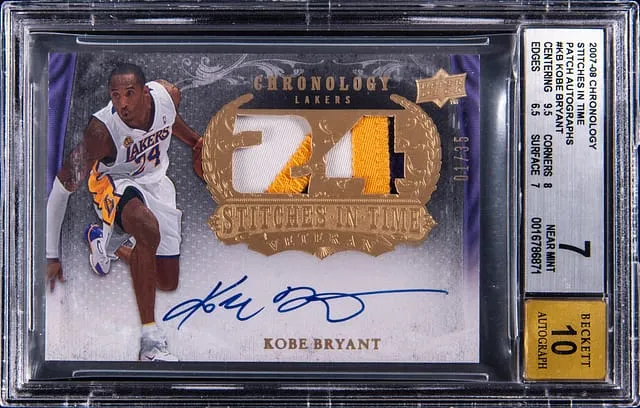
Goldin sold a 2007 Upper Deck Chronology Stitches In Time Kobe Bryant patch autograph /35 (BGS 7, 10 auto) for $16,470. Here’s the collector context.
Sold Card
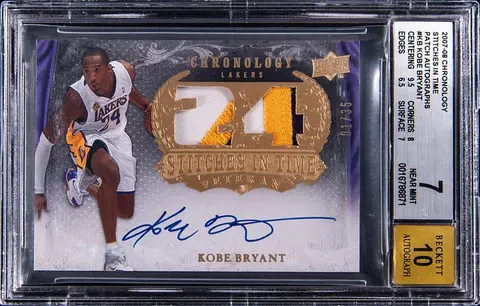
2007 Upper Deck Chronology Stitches In Time Patch Autographs #SIT-KB Kobe Bryant Signed Game-Used Patch Card (#10/35) - BGS NM 7, Beckett 10
Sale Price
Platform
Goldin2007 Upper Deck Chronology has built a quiet but serious following among Kobe Bryant collectors, and this recent sale at Goldin is a good example of why.
On March 15, 2026, Goldin sold a 2007 Upper Deck Chronology Stitches In Time Patch Autographs #SIT-KB Kobe Bryant for $16,470. The card is serial-numbered 10/35, features a signed, game-used patch, and received a BGS NM 7 grade with a Beckett 10 autograph grade.
Below, we’ll walk through what this card is, why the set matters, and how this sale fits into the broader Kobe market.
Card overview
Card details
- Player: Kobe Bryant (Los Angeles Lakers)
- Year: 2007–08 season
- Set: 2007 Upper Deck Chronology
- Insert: Stitches In Time Patch Autographs
- Card number: #SIT-KB
- Serial number: 10/35 (only 35 copies produced)
- Attributes: On-card autograph, game-used multi-color patch, low-serial print run
- Grading: BGS NM 7 for the card, Beckett 10 for the autograph
This is not a rookie card. Instead, it’s a mid-career, premium autograph patch issue from a set that has gained respect over time as a high-end, concept-driven Upper Deck release. Stitches In Time is one of the key autograph-patch inserts in Chronology, especially for Hall of Fame level players like Kobe.
The on-card autograph (signed directly on the card, not on a sticker) and game-used patch are important points for collectors who focus on quality of memorabilia and signature.
Why 2007 Upper Deck Chronology matters
2007 Upper Deck Chronology is often discussed as a “collector’s set” rather than a mass-market flagship. It’s known for:
- Shorter print runs compared to many mid-2000s products
- On-card autographs across many key inserts
- Creative inserts and themes, including timeline and era-focused content
For Kobe, Chronology provides mid- to late-2000s autos that are notably scarcer than some contemporary releases. While it doesn’t have the same mainstream recognition as his Topps and Topps Chrome issues, Chronology has become a target for collectors who like:
- Low-serial, patch-autograph combinations
- Mid-2000s Upper Deck design
- Cards that feel more curated than mass produced
Stitches In Time Patch Autographs sits in that sweet spot: a numbered patch auto with a print run of just 35, from a respected high-end set, featuring a clean, on-card signature.
Grading and condition: BGS 7 / 10 auto
Beckett Grading Services (BGS) graded the card NM 7, with a separate autograph grade of 10. In hobby terms:
- Card grade (BGS 7): Near Mint, but well below the high-end thresholds (BGS 9 and above) that investors and condition-focused collectors often chase.
- Autograph grade (10): The signature is considered gem mint—strong, clean, and without issues like streaking or smudging.
For patch autograph cards, especially from mid-2000s products, lower grades are not unusual. Thick-stock cards and patch windows can introduce:
- Edge and corner wear
- Surface issues around the patch window
- Chipping on colored borders
Collectors who focus on eye appeal often care more about patch quality and autograph presentation than the numerical grade alone, especially for cards that are already quite scarce.
Market context and price positioning
This sale closed at $16,470 on March 15, 2026 at Goldin.
In hobby language, collectors often talk about “comps”, meaning comparable recent sales that help frame a card’s current price range. For a low-population, serial-numbered patch autograph like this, comps can be thin, but a few themes stand out when looking at recent Kobe autograph and patch-autograph markets:
- Kobe patch autos from respected 2000s sets (Exquisite, SP Authentic, Chronology, Limited Logos–style cards, etc.) tend to anchor the mid- to high-end of his market.
- Chronology Stitches In Time Kobe autos with patches and similar serial numbering (out of 35) have typically sold below his most iconic Exquisite patches, but above many non-patch autograph issues.
- Grade gaps matter more at the top: large premiums often appear for BGS 9.5 / PSA 10 examples, while mid-grade copies (BGS 7–8 range) can sell primarily on patch quality, autograph strength, and eye appeal.
Given that this example is a BGS 7 with a perfect 10 auto, the $16K+ result suggests a healthy level of demand for:
- True game-used, multi-color patch content
- On-card Kobe autographs
- Scarcer mid-2000s Upper Deck inserts outside of Exquisite
Without making any price predictions, it’s reasonable to view this sale as consistent with the trend of collectors placing a premium on authentic, limited Kobe memorabilia autos with strong visual appeal.
Why collectors care about this card
Several factors make this card meaningful in a Kobe-focused collection:
Game-used patch + on-card auto combination
This is one of the core combinations that serious modern and 2000s collectors chase: a real game-used patch paired with a clean, on-card signature.Low serial numbering (35 copies)
Even before condition filters, there are only 35 of these. Once you account for:- Cards locked long-term in collections
- Copies that may be in weaker condition or with weaker autos each high-quality example becomes more important.
Mid-2000s Kobe era
2007 places Kobe in his veteran, championship-contending phase with the Lakers. Many collectors enjoy owning pieces from this part of his career because it represents his fully realized, Hall of Fame résumé.Chronology’s place in the hobby
Chronology sits in a niche between mass-produced sets and ultra-premium Exquisite. It appeals to:- Collectors who prefer Upper Deck-era NBA aesthetics
- Sets with curated checklists and themed inserts
This particular Stitches In Time Patch Autograph is therefore both a set piece (important within Chronology) and a player piece (important within Kobe’s mid-2000s catalog).
How the BGS 7 grade impacts collectibility
A common question for newer or returning collectors is how much a BGS 7 hurts a card like this.
Some context:
- For mainstream base or rookie cards, a drop from BGS 9.5 to BGS 7 can be massive.
- For thick, patch-autograph cards with small print runs, the market often shows more flexibility.
Collectors and small sellers may weigh:
- Patch quality: number of colors, visible stitching, and overall visual impact.
- Autograph strength: here, a perfect Beckett 10 is a strong plus.
- Centering and eye appeal: how the card looks in hand, beyond the label.
In practice, a strong patch and 10-grade autograph can help support the price of a mid-grade slab, especially when total supply is as low as 35.
Takeaways for collectors and small sellers
For those watching the Kobe market or considering similar cards:
- Chronology deserves a look if you prefer on-card autos and creative set design over mass-population issues.
- Patch-autograph serial-numbered cards from the mid-2000s continue to show steady collector demand, especially for established legends.
- Comps may be sparse for cards like this, so evaluating eye appeal, autograph quality, and patch configuration becomes as important as the numerical grade.
The March 15, 2026 Goldin result at $16,470 won’t rewrite Kobe price history on its own, but it reinforces a broader theme: truly limited, game-used, on-card autograph pieces from respected 2000s sets remain central targets for serious Kobe collectors.
As always, it’s helpful to track multiple recent sales, not just one, and to focus on the specific attributes—set, serial number, patch, auto, and overall presentation—that matter most to you as a collector.