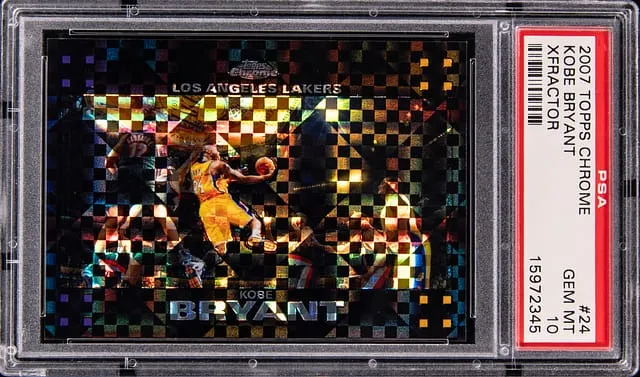
Kobe 2007-08 Topps Chrome XFractor PSA 10 sale
A pop 3 PSA 10 2007-08 Topps Chrome XFractor Kobe Bryant /50 sold for $32,247 at Goldin on 2026-03-15. Here’s what it means for Kobe and Chrome collectors.
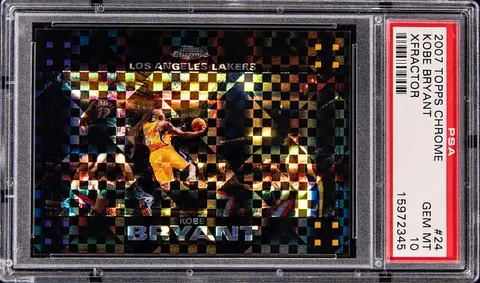
Sold Card
2007-08 Topps Chrome XFractor #24 Kobe Bryant (#48/50) - PSA GEM MT 10 - Pop 3
Sale Price
Platform
GoldinA serial-numbered Topps Chrome parallel of Kobe Bryant quietly set a meaningful mark at Goldin on 2026-03-15: a 2007-08 Topps Chrome XFractor #24 Kobe Bryant, numbered 48/50 and graded PSA GEM MT 10 (population 3), closed at $32,247.
For figoca readers, this sale is a useful case study in how collectors value low-population, mid-career Kobe parallels and where 2000s Topps Chrome fits in the broader Kobe market.
The card at a glance
- Player: Kobe Bryant, Los Angeles Lakers
- Year / Set: 2007-08 Topps Chrome Basketball
- Card number: #24
- Parallel: XFractor, serial numbered 48/50
- Rookie or not? Not a rookie card (Kobe’s rookies are 1996-97), but a desirable mid-career Chrome parallel.
- Grading: PSA GEM MT 10
- Population: Pop 3 in PSA 10 (only three copies in this grade at the time of the sale)
The XFractor treatment gives the typical Topps Chrome refractor shine a more pronounced, checkerboard-style pattern. Combined with a print run of just 50, this pushes the card out of the “typical insert” category into true short-print territory.
Why 2007-08 Topps Chrome matters for Kobe collectors
2007-08 sits firmly in Kobe’s mid-career championship window. It’s not an early “kid Kobe” or a rookie, but it captures him as an established, title-chasing superstar.
From a set perspective:
- Topps Chrome was still a flagship chromium brand before Topps lost the NBA license. For many basketball collectors, Chrome parallels (refractors, XFractors, Golds, etc.) are a central lane for player-focused PCs (personal collections).
- Numbered refractor-style parallels from this era remain relatively scarce compared to the explosion of parallels in the ultra-modern Panini years.
- Kobe’s jersey number switch to #24 had already taken place, which adds a small layer of identity significance for some collectors who prefer “No. 24 era” cards.
So while this is not a rookie, it is a numbered Chrome parallel from a historically important brand, in a stretch of Kobe’s career that many fans remember vividly.
Population report and scarcity
When collectors say “pop report,” they’re referring to the grading company’s population data: how many copies in each grade exist in their holders.
For this card:
- PSA 10 population is 3.
- Total PSA-graded population is low relative to the 50-card print run, which is typical for mid-2000s numbered parallels that often stayed in raw collections.
A pop 3 in PSA 10 doesn’t mean only three copies exist—it means only three have been graded and achieved a GEM MT 10. For a chromium card from 2007, surface and centering issues can keep many examples in the PSA 8–9 range.
Market context and recent sales
Public sales data for this exact card in PSA 10 is extremely thin because there are only three graded at that level, and they don’t come to market often. When supply is this limited, even one sale can reset expectations.
To understand this Goldin result, it helps to look at:
- Lower grades and raw copies of the same card
- Other 2007-08 Kobe Topps Chrome parallels (standard Refractors, higher-numbered or non-numbered versions)
- Comparable low-serial Kobe Topps Chrome parallels from adjacent years
Across major marketplaces and auction houses, recent patterns generally show:
- PSA 9 or BGS 9.5 copies (or similar high-grade equivalents) of short-printed Kobe Chrome parallels from the mid-2000s selling meaningfully below true gem-level sales, especially when pops are higher in those grades.
- Non-numbered or higher-serial refractors trading in a much lower band, with pricing driven as much by eye appeal as by strict serial numbering.
Within that context, the $32,247 price realized at Goldin for a pop 3 PSA 10 XFractor /50 sits at the high end of what we typically see for 2007-era, non-rookie Kobe Chromium parallels, but it aligns with the pattern that:
- True rarity + gem condition + a major auction house can produce outsized results for iconic players.
There are more famous high-water marks in the Kobe Chrome lane—most notably for rookie-year Refractors and low-serial golds from the late 1990s. Those still headline the record lists. This 2007-08 XFractor isn’t trying to compete with those; instead, it shows how collectors are now distinguishing and paying up for later-career, low-print Chrome pieces in elite grades.
Why collectors care about this specific card
Several factors stack in favor of this card’s appeal:
Kobe Bryant’s sustained hobby importance
Kobe remains one of the most collected basketball players across eras. His market is broad: rookies, autos, game-used, rare inserts, and serial-numbered parallels all have established followings.Topps Chrome heritage
Before the Panini Prizm era, Topps Chrome was the core chromium line for basketball. Many collectors who grew up in the 1990s and 2000s still gravitate toward Chrome for long-term PC pieces.Low serial numbering (48/50)
A print run of 50 keeps this firmly in the “true scarcity” category rather than short-printed-in-name-only. Even if every copy were graded (which is unlikely), each grade would remain thin.GEM MT 10, Pop 3
With only three PSA 10s, any time one surfaces on a major platform like Goldin, it effectively acts as a reference point for the entire population. That scarcity of supply in top grade is often more impactful than the raw print run.Mid-career image and narrative
For some collectors, there’s a preference for cards that show Kobe as the fully realized superstar—no longer the “prospect,” but the centerpiece of the Lakers. 2007-08 captures that reality.
How this sale fits into the Kobe and Chrome markets
When you zoom out beyond this single card, you see a few broader themes:
- Rookie cards still anchor the market, but collectors are increasingly segmenting Kobe’s career into eras and assigning meaningful value to low-serial, high-grade pieces from later years.
- 2000s Topps Chrome parallels are aging into a quasi-modern / semi-vintage sweet spot—old enough that supply is genuinely limited, but modern enough that print quality and chromium aesthetics remain strong.
- Collectors are differentiating between “rare” and “truly scarce.” A numbered /50 XFractor that rarely appears in PSA 10 behaves differently from more plentiful parallels.
The $32,247 result does not mean every Kobe XFractor from this era will chase that number. Instead, it reinforces a pattern: when you combine a globally collected player, a respected chromium brand, a tight serial number, and a top grade with a tiny population, the market is willing to push for standout results—especially in a curated auction environment.
Takeaways for collectors and small sellers
For newcomers, returning collectors, and small sellers, here are a few practical lessons that emerge from this sale:
Understand the parallel hierarchy.
Within a given set, not all parallels are created equal. XFractors, Golds, and other low-serial variants usually sit toward the top of the ladder.Check the population report.
A pop 3 PSA 10 has a very different supply story than a pop 200 card, even if both are serial numbered. Pop reports are free to look up on PSA’s site and should be part of your research.Condition separation matters.
With chromium cards, the gap between PSA 9 and PSA 10 can be wide when population is tight. This sale shows how that separation can impact final prices.Use major auction results as reference points, not guarantees.
A Goldin or similar auction house result provides context but not a promise of future pricing. Liquidity, timing, and bidder interest can all shift.Mid-career cards can matter.
You don’t have to chase only rookies. For iconic players with deep collector bases, key parallels from their prime years can hold meaningful demand.
Final thoughts
The 2007-08 Topps Chrome XFractor #24 Kobe Bryant (#48/50) PSA GEM MT 10 sale at Goldin on 2026-03-15 stands out less as a headline record and more as a clear signal: serious collectors are paying close attention to low-pop, mid-2000s Chrome parallels of Kobe Bryant.
For anyone building a Kobe PC or considering what to submit for grading, this result is a reminder to look closely at numbered Chrome and refractor-style cards from his prime seasons. While every card and sale is unique, understanding how scarcity, condition, and brand reputation interact—as they did here—can help you navigate the Kobe market with a bit more clarity.