Kimi Antonelli 2025 Topps Dynasty F1 Black /2 Sale
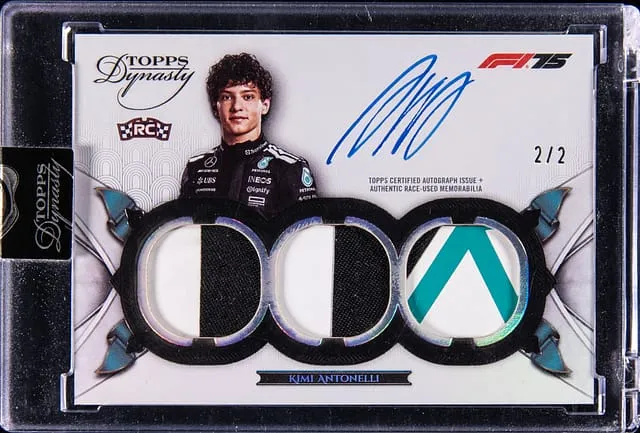
Breaking down the $40,870 Goldin sale of the 2025 Topps Dynasty F1 Kimi Antonelli Triple Relic Autograph Black /2 rookie card.
Sold Card
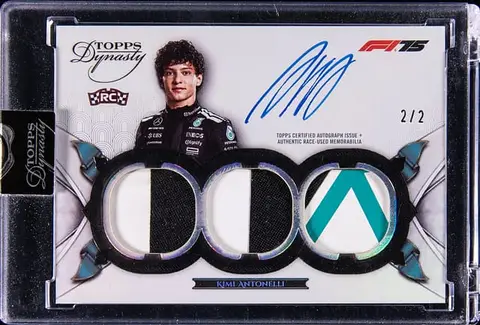
2025 Topps Dynasty F1 Triple Relic Autograph Black #SDTRA-ANNI Kimi Antonelli Signed Race-Used Patch Rookie Card (#2/2) - Topps Encased
Sale Price
Platform
GoldinKimi Antonelli’s earliest high-end Formula 1 cards are starting to surface, and the market is paying close attention.
On April 24, 2026, Goldin closed a major modern F1 auction: a 2025 Topps Dynasty F1 Triple Relic Autograph Black #SDTRA-ANNI Kimi Antonelli Signed Race‑Used Patch Rookie Card, serial numbered 2/2, Topps‑encased, sold for $40,870.
For a prospect who has only just begun to step into the senior F1 spotlight, this kind of result is an important data point for collectors, prospectors, and small sellers.
The card at a glance
Let’s break down what this card actually is, in hobby terms:
- Year / Product: 2025 Topps Dynasty Formula 1
- Player: Kimi Antonelli
- Card: Triple Relic Autograph Black
- Card number: #SDTRA-ANNI
- Serial numbering: 2/2 (only two copies produced)
- Autograph: On‑card (signed directly on the card surface)
- Relics: Triple race‑used patch pieces
- Rookie status: Early high‑end rookie patch autograph (RPA‑style) for Antonelli
- Encapsulation: Topps factory encased with sticker seal (not a third‑party grading slab)
Dynasty is Topps’ premium F1 line: hard-signed autos, multi‑color patches, and extremely low print runs. In basketball or football terms, this is the closest F1 equivalent to an ultra‑premium RPA from a product like National Treasures or Flawless.
Because this card is numbered to just two copies, there is no real population report (or “pop report”) the way there would be for a mass‑produced base card that’s heavily graded by PSA, BGS, or SGC. Supply is fixed at two, and not every copy will hit the open market.
Why this card matters
1. Ultra‑short print plus on‑card auto
A serial number of /2 makes this card effectively a true scarce chase piece. “Low‑serial” means the card’s print run is very small, usually under 25; here we’re at the extreme end of that range.
Combine that with:
- An on‑card autograph (preferred by many collectors over sticker autos)
- Triple race‑used patches, which carry stronger story and memorabilia appeal than generic event‑worn materials
…and you get one of the most desirable formats Topps can produce for a young F1 driver.
2. Early premium rookie for a headline prospect
Kimi Antonelli’s rise through the junior formulas has been heavily tracked by teams and fans. Cards like this are among the earliest ultra‑premium, licensed, hard‑signed, patch autos to hit the market.
In other sports, the hobby tends to identify a few “key issues” for each star:
- Their main rookie cards from flagship or Chrome products
- Their top‑tier RPAs and patch autos from premium brands
For Antonelli, 2025 Dynasty autos and patch autos are strong candidates to fill that second category.
3. Dynasty’s track record in F1
Although detailed sale histories for every 2025 Dynasty card aren’t yet fully visible, we can look at patterns from earlier years:
- Lewis Hamilton and Max Verstappen low‑serial Dynasty autos (especially /10 and below, with multi‑color patches) have consistently anchored the modern F1 high end.
- Key rookies like George Russell, Lando Norris, and Charles Leclerc saw their Dynasty prices move with on‑track performance and broader hobby interest in F1.
Antonelli slots into that same product line, but earlier in his F1 journey. That combination of pedigree (Dynasty) and uncertainty (prospect) is part of what makes this result noteworthy.
Market context and price range
This particular copy sold for $40,870 at Goldin on April 24, 2026.
Because it is:
- A Black parallel
- Numbered 2/2
- A triple race‑used patch with on‑card auto
…there are no direct one‑to‑one comps ("comps" are comparable recent sales used as reference) for this exact card in a different color or higher print run. When a card is this scarce, the market has to triangulate using nearby data instead:
- Other 2025 Topps Dynasty F1 Antonelli autos (for example, higher‑serial color parallels like /10 or /5) can help show what collectors are willing to pay for his signature within the same product.
- Earlier years’ Dynasty rookie autos of other drivers give a structural baseline: what does the market historically pay for a top prospect’s first premium patch auto in Dynasty?
From the partial data visible so far:
- Antonelli’s Dynasty autos with higher print runs have been trading materially lower than $40k, as expected given their greater supply.
- Established F1 champions in low‑serial Dynasty formats (Hamilton, Verstappen) still generally sit above this level for their best pieces, which is consistent with their proven status.
Within that spectrum, $40,870 represents:
- A strong but not unprecedented result for a modern F1 ultra‑premium card
- A clear signal that the market already places Antonelli closer to the “blue‑chip prospect” bucket than to a typical rookie
Because the card is ungraded and Topps‑encased, the price is primarily driven by scarcity, brand, and player outlook, rather than numeric condition grades.
How collectors might read this sale
This result doesn’t predict future prices, but it does offer useful information:
Confidence in Antonelli’s upside
The willingness to commit nearly $41,000 to a two‑copy card signals strong belief in Antonelli’s long‑term relevance in F1.Confirmation of Dynasty as the F1 premium lane
For modern F1, Dynasty continues to occupy the role that high‑end RPAs play in other sports: extremely low serial numbers, patches, and on‑card autos driving the top of the market.Benchmark for other Antonelli issues
Lower‑tier Antonelli cards (Chrome, Sapphire, base autos) won’t mirror this price, but this sale provides a reference anchor when evaluating relative pricing across his card ladder.Illustration of supply risk
With only two copies, one strong auction result can meaningfully shape perceived value. But the flip side is that there may be long stretches with no sales at all. Collectors who like stable, data‑rich price histories may focus more on cards with higher populations and more frequent trades.
What this means for different types of collectors
New or returning collectors
This sale is a reminder that not all rookie cards are created equal.
A base Chrome rookie might be readily available and relatively affordable. A Dynasty Black triple patch auto /2 is at the opposite end: ultra‑scarce, high entry point, and more sensitive to news and performance.When you see big auction headlines, it often involves cards with multiple advantages stacked together: low serial, on‑card auto, premium brand, and early or rookie‑year status.
Active hobbyists
- For collectors already in F1, this sale helps update the Antonelli pricing curve relative to his peers and to earlier prospects when they first hit Dynasty.
- It may also encourage closer tracking of non‑Dynasty Antonelli issues (Chrome autos, numbered refractors) to see whether interest filters down.
Small sellers
If you’re listing Antonelli cards, it’s useful to:
- Mention this Goldin result as context, without overstating what it implies for other formats.
- Clearly identify your card’s tier: flagship rookies, Chrome parallels, sticker autos vs. on‑card, etc.
For buyers, be aware that ultra‑short‑print results like this can temporarily raise expectations across a player’s entire card ecosystem. Having a few solid comps—ideally from more frequently traded cards—helps keep pricing grounded.
Final thoughts
The 2025 Topps Dynasty F1 Triple Relic Autograph Black #SDTRA-ANNI Kimi Antonelli, numbered 2/2 and Topps‑encased, selling for $40,870 at Goldin on April 24, 2026, is an early marker in how the hobby is valuing one of the most closely watched young drivers.
It reinforces three big trends in modern F1 cards:
- Dynasty remains the premium reference point for ultra‑high‑end F1 pieces.
- True scarcity (like /2) can command a significant premium, even before a career is fully written.
- Market data for prospects will stay thin at the very top end, making context from comparable sets, players, and configurations essential.
For collectors, the takeaway isn’t to chase every headline sale, but to understand how these results fit into the broader structure of the F1 card market—and then decide where, along that structure, your own collecting and selling style is most comfortable.