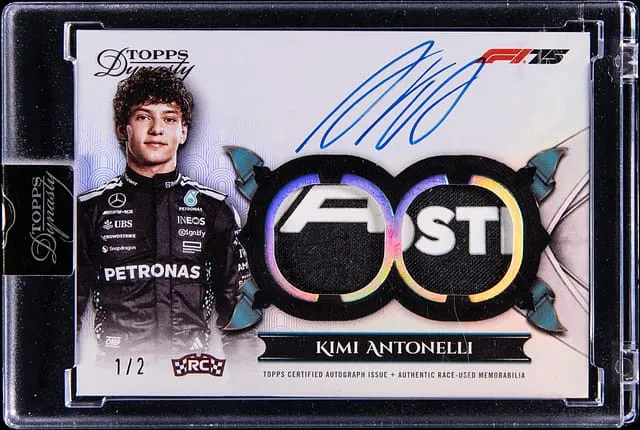
Kimi Antonelli 2025 Dynasty F1 Black /2 Rookie Sale
Breakdown of the 2025 Topps Dynasty F1 Kimi Antonelli Black /2 rookie dual patch auto that sold for $23,912 at Goldin on May 10, 2026.
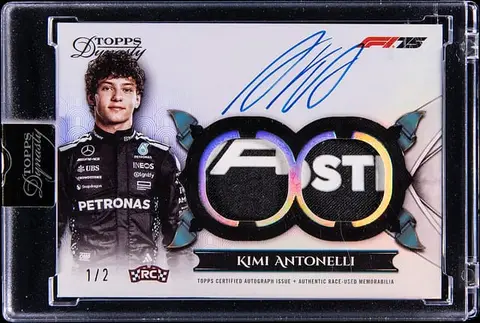
Sold Card
2025 Topps Dynasty F1 Dual Relic Autograph Black #SDDRA-AAN Kimi Antonelli Signed Race-Used Patch Rookie Card (#1/2) - Topps Encased
Sale Price
Platform
GoldinA $23,912 sale for an ultra-modern Formula 1 card is going to get noticed, especially when it combines a rookie, a serial number out of 2, and an on-card autograph.
In this breakdown, we’ll walk through what sold, why it matters, and how it fits into the emerging high-end F1 market.
What exactly sold?
- Player: Kimi Antonelli
- Team (2025 season context): Young Mercedes-backed prospect (long viewed as a potential future Mercedes F1 driver)
- Year: 2025
- Set: Topps Dynasty Formula 1
- Card: Dual Relic Autograph – Black parallel
- Card Number: #SDDRA-AAN
- Serial Numbering: #1/2 (only 2 copies produced, this is the first)
- Attributes:
- On-card autograph (signed directly on the card, not a sticker)
- Dual race-used patch relics
- Rookie card designation
- Factory Topps encased (sealed in a tamper-evident holder from Topps)
The card sold at Goldin on May 10, 2026 (UTC) for $23,912.
No third-party grade (PSA, BGS, SGC, etc.) is listed, so this is best understood as a high-end, ungraded but Topps-encased copy. For ultra-modern patch autos, especially ones issued in a one-touch with a Topps seal, many collectors are comfortable keeping them in the original manufacturer case.
Why Topps Dynasty F1 matters
Topps Dynasty is the high-end, low-print-run Formula 1 release in the Topps line. In baseball and F1, Dynasty is known for:
- Extremely low serial numbering: many cards are numbered to 10 or fewer.
- On-card autos and premium patches: usually race-used or event-used materials.
- Small checklists with star-heavy lineups: focused on key drivers and prospects.
In modern hobby terms, this is an ultra-premium, ultra-modern F1 card. It sits in the same conversation as National Treasures / Flawless in other sports: very low supply, thick patch autos, and more of a “showpiece” feel.
Rookie, dual patch, and a print run of 2
A few things line up here that matter to collectors:
Rookie card
In the modern hobby, a player’s first key release (especially in a premium product like Dynasty) is treated as a rookie or cornerstone issue. For F1, true rookies can be a bit messy across Chrome, Sapphire, and Dynasty, but a first-year Dynasty autograph patch of a highly watched young driver is widely viewed as a long-term reference point for that collector.Dual race-used relics
Relic cards include pieces of race-used or event-used material. Dual relics feature two separate swatches, which can add visual and collector appeal—especially if the patches have multiple colors or stitching. Dynasty relics have a reputation for strong patch quality relative to many other products.Black parallel / #1/2
The Black parallel here is limited to 2 copies total, and this particular card is serial number 1/2.In the hobby, low serial numbering is a simple, measurable form of scarcity. When the print run gets to 5 or fewer, you’re dealing with a card that most collectors will never see in person. A copy numbered 1/2 (the first in the run) sometimes carries a small aesthetic or psychological premium with certain buyers, though that isn’t universally priced in.
On-card autograph
On-card signatures, where the athlete signs directly on the card, are generally preferred to sticker autos. In high-end products like Dynasty, on-card autos are a big part of the appeal.
Market context and recent sales
For a card this specific—2025 Topps Dynasty F1 Dual Relic Autograph Black #SDDRA-AAN Kimi Antonelli, #1/2, Topps encased—available public sales data is naturally thin. With only two copies in existence, there simply isn’t enough turnover for a long price history.
To build context, collectors typically look at:
- Other parallels of the same card (e.g., /10, /5, 1/1).
- Other Dynasty Antonelli rookie autos (single relic, different color parallels).
- Comparable young-driver Dynasty rookies from previous years.
Across major auction houses and marketplaces, recent high-end F1 rookie patch autos from flagship talents and elite prospects have shown a wide range, shaped heavily by:
- Driver’s perceived long-term ceiling.
- Team affiliation and narrative (backing from top teams matters).
- Serial number and patch quality.
- Whether the card is a key early or rookie issue.
Within that broader pattern, a $23,912 result places this Antonelli Black /2 card firmly in the upper tier of modern F1 prospect cards, but it’s not out of line with what we’ve seen for premium, low-serial, on-card rookie patch autos in other sports when the player is surrounded by significant expectations.
Because this specific Black /2 parallel has almost no public transaction history, this Goldin sale on May 10, 2026 effectively sets a fresh reference point for the card.
How this compares to related cards
For ultra-low print run cards, we often have to build a picture out of nearby data:
Non-Black parallels of the same card: Higher-serial versions (for example /5, /10 if they exist in the checklist) tend to trade more frequently. Those sales can outline a range, but we have to be careful not to apply a simple multiplier to estimate a /2 price. Patch quality, signature quality, and timing of the sale (offseason vs peak attention) all matter.
Other Antonelli Dynasty autos: If there are single-patch or non-Black parallels with public comps (short for comparables—recent sales used as reference), those can help frame this sale. Typically, the hierarchy runs: 1/1 and ultra-low serial color parallels at the top, then mid-range serials. This Black /2 sits very close to the top of that stack.
Historical high-end F1 rookies: The F1 card market is still young compared with baseball or basketball, but we’ve already seen notable prices for early cards of drivers like Lewis Hamilton, Max Verstappen, Charles Leclerc, and Lando Norris. Those sales have helped normalize the idea that premium, low-serial F1 rookies can reach substantial price levels when the driver’s performance backs it up.
This Antonelli sale doesn’t rewrite the F1 record books, but it does continue a pattern: serious collectors are willing to allocate five figures to ultra-rare, high-end rookie patch autos of drivers they consider potential long-term stars.
Why collectors care about this card
Several elements make this a notable piece for F1 and modern collectors:
Ultra-modern, ultra-low print run
This is not a mass-produced insert. With only two copies, it behaves more like a piece of memorabilia than a typical trading card in terms of scarcity.Rookie status and narrative
In modern collecting, rookies are often the long-term anchors of a player’s market. For a prospect like Antonelli who has been on collectors’ radars early, his first premium autos carry narrative weight: they’re the cards many collectors mentally associate with “the beginning.”Dynasty as a prestige brand
Within F1, Dynasty has quickly taken on the role of the premium patch-auto product. Owning a top-tier rookie from that line, especially in a rare color like Black, fits into how many hobbyists structure PC (personal collection) builds around a player.Auction visibility
A sale at Goldin on May 10, 2026 (UTC) means the result is widely visible and likely to be cited as a reference. Auction-house visibility matters because it shapes how future buyers and sellers think about ranges, even if the sample size is small.
What this sale tells us (and what it doesn’t)
This $23,912 result tells us that:
- There is active demand for top-tier Kimi Antonelli rookie content, especially in premium products.
- Ultra-low serial, on-card autograph patch cards in Dynasty continue to command strong attention in the F1 segment.
- Auction-house exposure can surface committed bidders even for very thinly traded, almost one-of-a-kind pieces.
At the same time, with only two copies of this card and very few public sales of closely related parallels, it’s important not to treat this as a firm “price chart” for every Antonelli card. Ultra-rare cards can be sensitive to who happens to show up and bid on a particular night.
For collectors, the takeaway is mostly qualitative:
- This card has now established itself as a recognized high-end Antonelli rookie piece.
- Dynasty F1 continues to be a central product for anyone building serious F1 player collections.
- Thin supply and strong bidding can produce standout results without necessarily implying a broad market move across all of a player’s cards.
How different types of collectors might view this card
New or returning collectors might see this as:
- A clear example of how premium F1 cards can reach five-figure prices.
- A reminder that rookie status, low serial numbering, and recognizable brands (like Dynasty) really matter at the high end.
Active hobbyists and small sellers might view this as:
- A useful data point when pricing or trading other Antonelli rookies and parallels—especially when explaining narrative and scarcity to buyers.
- Confirmation that it can be worth consigning true premium pieces to an established auction house when the timing feels right.
Player or team-focused collectors might simply see this as:
- One of the top cards in any serious Kimi Antonelli collection.
- A card that may not come to market frequently, making this Goldin sale a notable event.
Final thoughts
The 2025 Topps Dynasty F1 Dual Relic Autograph Black #SDDRA-AAN Kimi Antonelli Rookie (#1/2, Topps encased) that sold for $23,912 at Goldin on May 10, 2026 (UTC) captures a lot of what defines the current ultra-modern F1 card landscape:
- Ultra-low print runs.
- Premium on-card autographs and meaningful memorabilia.
- Strong interest in emerging drivers with compelling trajectories.
For collectors watching the intersection of F1, prospects, and high-end patch autos, this sale is a clear marker of where the market currently values one of Antonelli’s premier rookie issues—without making any promises about what comes next.