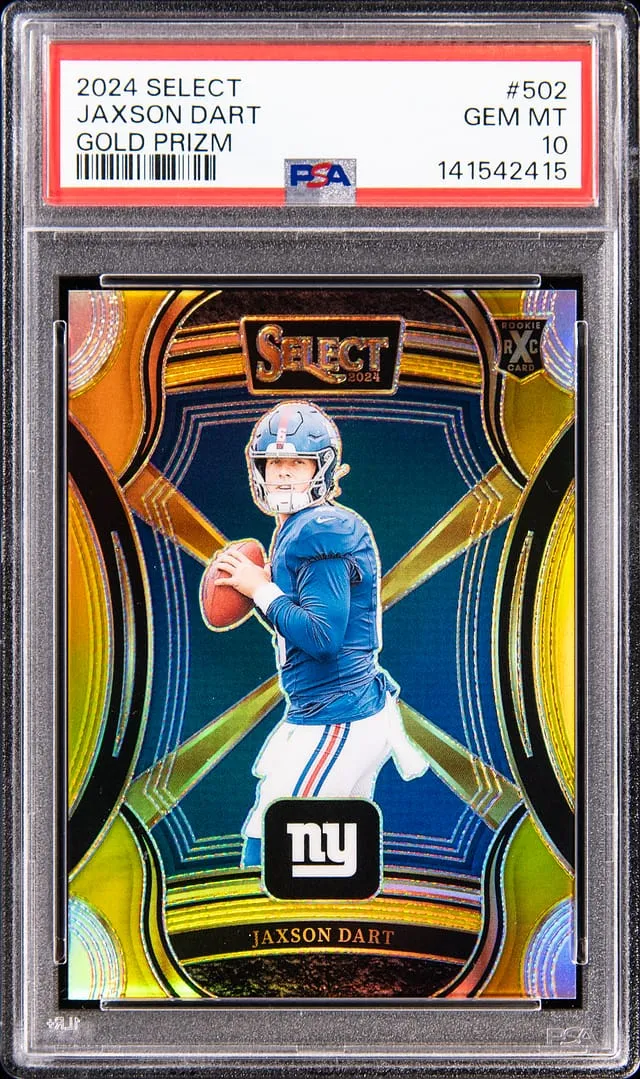
Jaxson Dart 2024 Select XRC Gold Prizm PSA 10 Sale
Goldin sold a 2024 Panini Select XRC Gold Prizm Jaxson Dart #502 PSA 10 /10 for $14,165. See context on pop, scarcity, and market significance.
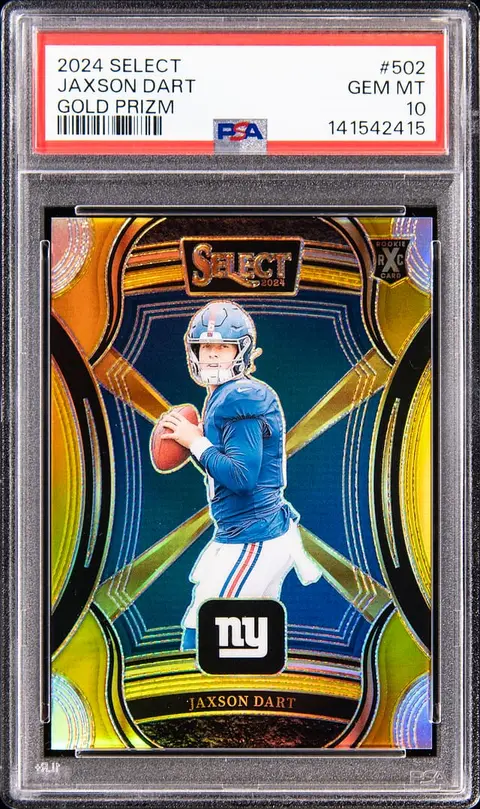
Sold Card
2024 Panini Select XRC Gold Prizm #502 Jaxson Dart Rookie Card (#09/10) - PSA GEM MT 10 - Pop 3
Sale Price
Platform
Goldin2024 Panini Select XRC Gold Prizm #502 Jaxson Dart Rookie Card (#09/10) - PSA GEM MT 10 - Pop 3 Sells for $14,165
On April 3, 2026, Goldin closed a notable ultra‑modern football sale: a 2024 Panini Select XRC Gold Prizm #502 Jaxson Dart Rookie Card, serial‑numbered 09/10 and graded PSA GEM MT 10 (population 3), sold for $14,165.
For a quarterback who is still early in his career arc, this result is a useful case study in how the modern football market prices scarce, high‑grade pre‑rookie issues.
Card overview
Let’s break down exactly what this card is:
- Year: 2024
- Product: Panini Select Football
- Subset: XRC (Mystery Rookie Redemption)
- Player: Jaxson Dart (quarterback)
- Card number: #502
- Parallel: Gold Prizm
- Serial numbering: #09/10
- Card type: XRC rookie (a pre‑NFL jersey rookie issue tied to his pro debut season)
- Grading company: PSA
- Grade: GEM MT 10
- Population: 3 in PSA 10 at the time of sale (Pop 3)
XRCs in Select are issued as redemption cards during the player’s draft class year, then fulfilled once checklists are finalized. In practical hobby terms, most collectors treat these as key early rookie issues that sit alongside a player’s true in‑uniform rookie cards once those arrive.
The Gold Prizm parallel is typically one of the core low‑numbered colors in Panini’s chromium lines, and with only 10 copies made, scarcity is built in even before grading comes into play.
Why this sale matters
This card checks several boxes that tend to matter to modern football collectors:
- Ultra‑low print run – Only 10 copies exist, and not all will grade or surface for sale. That scarcity becomes even sharper at the PSA 10 level.
- High grade, small population – A PSA GEM MT 10 is PSA’s top standard grade. A population ("pop") of 3 means PSA has only graded three copies at a 10 so far, which can create concentrated demand when one reaches auction.
- XRC appeal – Select XRCs have developed into a recognized lane for collectors who like owning a player’s early appearance tied directly to their draft class, often considered a key companion card to their later NFL‑uniform rookies.
- Gold parallel focus – Across Select, Prizm, and similar chromium sets, Gold /10 parallels are generally treated as one of the “core” chase colors. Many player‑focused collectors target Gold as a centerpiece for their collection.
Market context and price positioning
The realized price at Goldin was $14,165. To understand what that means, it helps to look at typical pricing patterns for similar cards, rather than trying to read too much into a single hammer price.
Because this specific card is /10, pop 3, and still very new to the market, sale history is naturally thin. Instead, collectors usually reference:
- Other Jaxson Dart Select XRC parallels (Silvers, lower‑tier colors, or higher‑serial parallels)
- Different high‑end Dart rookies from other products (e.g., premium National Treasures / Flawless RPAs once those release)
- Comparable Gold /10 XRC cards for other quarterbacks at similar stages of their career
Public comps (short for “comparables,” or similar recent sales) for this exact Gold /10 PSA 10 are extremely limited so far, which is normal for a newly released, low‑print, high‑grade card. That lack of data is exactly why a result at this level is useful: it functions as an early reference point for both buyers and sellers.
In general, patterns we tend to see in this lane:
- Raw or lower‑grade Gold /10 XRCs of emerging quarterbacks usually sit well below the top‑graded copies.
- BGS/SGC 9.5 equivalents often trail a PSA 10, depending on the player and how strict the grading has been for that release.
- Color and serial hierarchy matters: for many collectors, Gold /10 ranks below 1/1s and some ultra‑short prints, but above most other colors and higher serial‑numbered parallels.
Without forcing a prediction, the $14,165 result suggests that the market is currently assigning strong but still cautious value to Dart’s top‑tier early issues: it recognizes the scarcity and upside, but also prices in the fact that his long‑term NFL track record is still being written.
Set and era significance
2024 Panini Select falls firmly into the ultra‑modern era of football cards: high print sophistication, a large mix of parallels, and a collector base that is very aware of grading, serial numbers, and color tiers.
A few things about Select and XRCs are worth highlighting:
- Select’s position: While Prizm is often treated as the flagship chromium line, Select has carved out a strong space just behind it, especially for collectors who enjoy more levels, die‑cuts, and color variety.
- XRC tradition: XRC redemptions have become a recurring chase within Select, especially for quarterbacks. Historically, key XRCs of top QBs have been well‑tracked in the high‑end market.
- Grading trends: Ultra‑modern chromium cards tend to grade well in raw‑to‑slab transitions, but true GEMs at very low serial numbers—and particularly in Gold—still draw premium attention.
Within this structure, a Gold /10 PSA 10 XRC of a starting‑caliber quarterback sits in the top tier of non‑autograph Select cards for that player.
Player and hobby sentiment
For a card like this, player performance is a key variable over time. Quarterback markets are especially sensitive to:
- Starting role and depth chart clarity
- Early NFL production and efficiency
- Playoff appearances or standout single‑game performances
- Long‑term durability and consistency
Those factors can tilt interest in either direction, but in the short term, high‑end cards like this Gold /10 PSA 10 tend to be held by collectors or investors who are willing to wait and see how the narrative develops.
At the same time, broader hobby factors—such as how many more premium Dart rookies arrive from other 2024 products, and how collectors rank Select XRCs relative to National Treasures, Flawless, and Prizm—will shape where this card sits in his overall rookie hierarchy.
What this means for collectors
A few practical takeaways for different types of collectors and small sellers:
For Dart collectors:
- This Gold /10 PSA 10 sale at $14,165 sets an early benchmark for the very top end of his Select XRC market.
- If you hold other Dart XRC colors or lower grades, this result gives you a directional sense of the premium assigned to the rarest, highest‑graded example.
For modern QB collectors generally:
- The sale reinforces that Gold /10 + PSA 10 + XRC remains a respected combination in Select.
- When evaluating similar cards, it helps to track: print run, parallel hierarchy, grade, and population report together rather than in isolation.
For small sellers:
- Very low‑print, gem‑mint chromium cards can justify the time and cost of grading, especially in established brands like Select.
- When listing, be precise: mention serial numbering, PSA population, and any relevant set‑level context (such as “XRC Gold Prizm /10”). Those details are part of why this card reached a five‑figure result.
How figoca looks at a sale like this
At figoca, we track:
- Auction outcomes like this one at Goldin on April 3, 2026
- Known populations from grading companies
- Parallel hierarchies within each set
That structured view helps collectors move beyond simple “comp hunting” and instead understand where a card truly sits in a player’s overall market.
This Jaxson Dart 2024 Panini Select XRC Gold Prizm #502, #09/10, PSA GEM MT 10 (Pop 3) is a clear example: a scarce, top‑graded, early‑career quarterback card establishing its first serious price reference at $14,165.
As more Dart rookies get pulled, graded, and sold, this sale will likely serve as one of the anchor data points collectors look back to when they ask: how did the market first price his very best early cards?