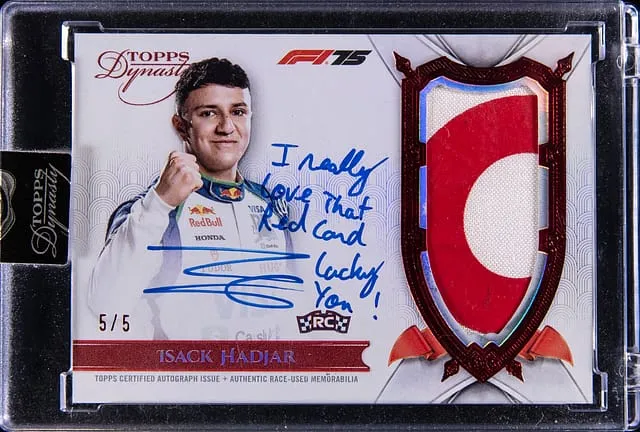
Isack Hadjar 2025 Dynasty F1 Red RPA /5 Sells for $17.9K
Breaking down the $17,940 Goldin sale of the 2025 Topps Dynasty F1 Isack Hadjar Red /5 rookie patch autograph and what it means for F1 collectors.
Sold Card
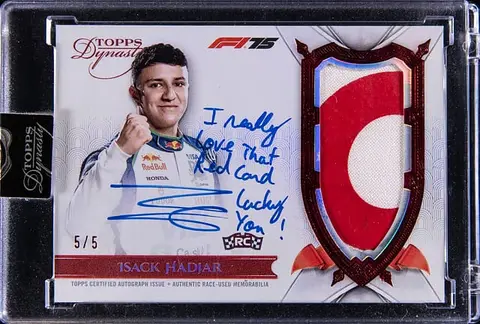
2025 Topps Dynasty F1 Autographed Patches Red #DAP-IHA Isack Hadjar Signed, Inscribed, Race-Used Patch Rookie Card (#5/5) - Topps Encased
Sale Price
Platform
GoldinWhen a modern Formula 1 prospect lands a flagship patch autograph in a super‑short print parallel, collectors take notice. That’s exactly what happened with the 2025 Topps Dynasty F1 Autographed Patches Red #DAP‑IHA Isack Hadjar Signed, Inscribed, Race‑Used Patch Rookie Card (#5/5), which sold at Goldin on March 20, 2026 for $17,940.
Below, we’ll break down what this card is, why it matters, and how this sale fits into the early market for Hadjar and high‑end modern F1 cards.
The card at a glance
Card: 2025 Topps Dynasty F1 Autographed Patches Red
Player: Isack Hadjar
Card number: #DAP‑IHA
Parallel: Red /5 (this copy is serial‑numbered 5/5)
Type: Rookie card (first Dynasty patch auto for Hadjar)
Autograph: On‑card, signed and inscribed
Memorabilia: Multi‑color race‑used patch
Serial numbering: 5 copies total; this is the final one, 5/5
Encapsulation: Topps‑encased from the factory
Topps Dynasty is positioned as Topps’ ultra‑premium Formula 1 release: every card in the product is a thick, encased autograph or autograph‑patch, and checklists are tightly curated. Within that structure, the Red parallel /5 usually sits near the top of the hierarchy for non‑1/1 cards.
For Hadjar, this card checks a lot of the boxes collectors look for in a modern cornerstone:
- It’s a rookie‑year premium autograph patch, not a secondary insert.
- The autograph is on‑card, meaning Hadjar signed directly on the card rather than on a sticker.
- The patch is race‑used, a step up in desirability from generic “event‑worn” language.
- The Red /5 parallel makes it one of only five copies, and this particular card is the bookend serial 5/5, a minor aesthetic bonus some collectors like.
Where this sale landed: $17,940 at Goldin
This copy closed at $17,940 on Goldin on March 20, 2026. For a prospect in modern F1, that’s a serious number and puts Hadjar in the conversation with other high‑expectation young drivers whose best cards started to trade well into five figures.
Market context and comps
For a card this specific – a Red /5 rookie patch autograph of a still‑developing driver – there are rarely many exact matches in the auction record at any one time. Instead, collectors and small sellers usually look at a mix of:
- Other 2025 Topps Dynasty Hadjar cards (different parallels like /10, /25, or non‑patch autos)
- Comparable Dynasty rookie patch autos of similar‑tier F1 prospects from previous years
- The player’s flagship rookie cards in Topps Chrome F1 or other widely opened sets
Based on recent public auction data around modern F1 prospects:
- Lower‑tier parallels of Dynasty F1 rookie patch autos (for example, /10 or /25) often land at a meaningful discount to the /5s and 1/1s, especially for drivers whose on‑track results aren’t fully proven yet.
- Established stars (and especially champions) can see their best Dynasty RPAs stretch far beyond this price level, but that’s generally after multiple seasons of results.
Within that broader pattern, $17,940 for a Hadjar Red /5 is aggressive but not out of step with how collectors have treated top‑end, low‑serial Dynasty rookies of drivers with real upside. It reflects:
- The strength of ultra‑modern F1 as a niche
- The reputation of Topps Dynasty F1 as a premier release
- The small supply of true top‑tier Hadjar rookies
Because the 2025 product cycle is still relatively fresh, there isn’t yet a deep trail of public comps for this exact card number and parallel. Instead of a long pricing history, what we see is a small number of high‑end results that outline a range for Hadjar’s best pieces.
Why collectors care about this card
A key rookie issue in a premium F1 set
In modern sports cards, collectors often separate rookies into two buckets:
- Mass‑market rookies: widely available cards like Topps Chrome F1 base and numbered parallels, where print runs are larger and price tiers are more accessible.
- Premium rookies: low‑print, autograph and patch cards from high‑end products like Dynasty, designed to be centerpieces.
This Hadjar card falls squarely in the second category. For collectors who like to build player‑focused collections, a Dynasty rookie patch autograph /5 can easily sit on the same shelf as a flagship Chrome superfractor or main parallel.
The importance of on‑card autos and inscriptions
The card features an on‑card autograph and an inscription. In practice, that means Hadjar handled and signed each card by hand, and added extra writing beyond his signature – often a number, short message, or personal note.
Why that matters:
- On‑card autographs tend to be viewed as more personal and more desirable than sticker autos.
- Inscriptions usually appear in smaller quantities and are time‑consuming for the athlete, so they often feel a bit more special to collectors.
Race‑used patch: why the wording matters
The patch window on this card features a race‑used piece of memorabilia. That specific wording is important. Over the years, collectors have learned to read the fine print on the back of patch cards – “player‑worn,” “event‑worn,” and “not from any specific event” all signal different levels of connection to real competition.
“Race‑used” indicates that the material came from gear that actually saw track action. It doesn’t guarantee a specific race or session, but it ties the patch more directly to Hadjar’s time in the car, which tends to support long‑term interest.
Ultra‑modern F1: supply, demand, and small sample sizes
This card lives squarely in the ultra‑modern era: low‑print, premium products, young drivers, and a fast news cycle.
Some things collectors and small sellers often keep in mind with cards like this:
- Very low print runs mean thin markets. With only five copies of this Red parallel, it doesn’t take many motivated buyers – or a single standout copy – to move prices.
- Public comps are scarce. When there are no recent sales of the exact card, people often reference other parallels, similar drivers, or different sets altogether.
- Player performance matters, but not always immediately. A big result on track can spike demand temporarily, while a quiet season can flatten things out until the narrative changes.
For Hadjar, this sale fits into a familiar pattern in modern F1: prospect‑level pricing for a driver whose future is still being written. The card’s structure – Red /5, on‑card auto, race‑used patch, rookie year – puts a lot of the emphasis on scarcity and the quality of the release itself.
How this sale fits into a broader Hadjar market
Even without a long pricing history for this exact card, we can still place it in context by looking at three layers of the Hadjar market:
High‑end Dynasty and similar patch autos
These are the cards most collectors would consider “centerpieces.” The $17,940 result at Goldin suggests that serious buyers are already treating Hadjar’s best material as worth competing for.Numbered rookies in broader products
Lower‑tier but still significant cards – such as numbered parallels in Topps Chrome F1 – typically show more volume and provide a sense of how wide the collector base is. Prices here are usually a fraction of a Dynasty /5, but movement in that mid‑range sometimes foreshadows what happens at the top.Base rookies and entry‑level inserts
For new or returning collectors, these cards are where many people start. While they don’t set high‑end prices, they do indicate general interest in a player.
This Goldin sale suggests there is already a defined top end for Hadjar’s market, anchored by ultra‑scarce, premium rookies like this one.
Takeaways for collectors and small sellers
Whether you’re holding Hadjar cards, thinking about picking some up, or simply tracking modern F1, a few practical notes from this sale:
- Scarcity is real at the top. With only five copies of this Red patch auto, the market can move quickly whenever one surfaces.
- Set quality matters. Dynasty F1 has established itself as a go‑to high‑end product; buyers are often comfortable stretching more for a known premium brand.
- Data points are early, not definitive. For ultra‑modern, low‑print cards, each sale is more like a marker than a long‑term average. Prices can adjust as more copies emerge or as a player’s on‑track story develops.
For now, the 2025 Topps Dynasty F1 Autographed Patches Red #DAP‑IHA stands out as one of the earliest and clearest signals of where the market is willing to value Isack Hadjar’s very best rookie‑year cardboard. And with this $17,940 result at Goldin on March 20, 2026, collectors have a concrete benchmark for what a top‑tier Hadjar Dynasty RPA can command in the current hobby landscape.