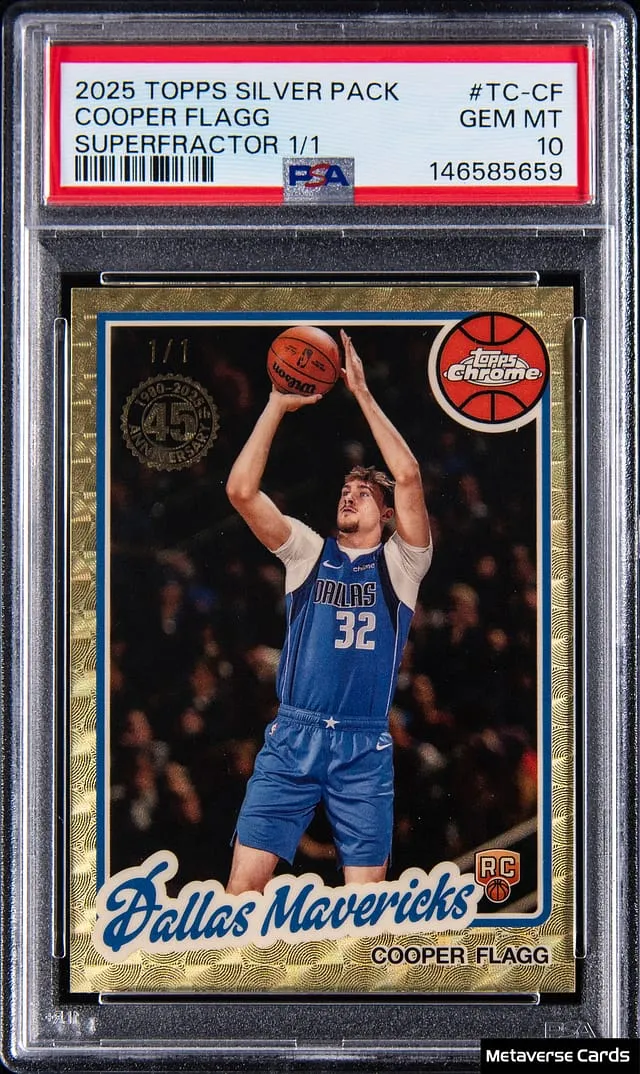
Cooper Flagg 1/1 SuperFractor Rookie Sells for $671K
Goldin sold a 2025-26 Topps Silver Pack ’80-81 Topps Chrome 1/1 Cooper Flagg SuperFractor Rookie PSA 10 for $671,000. Here’s what it means for collectors.
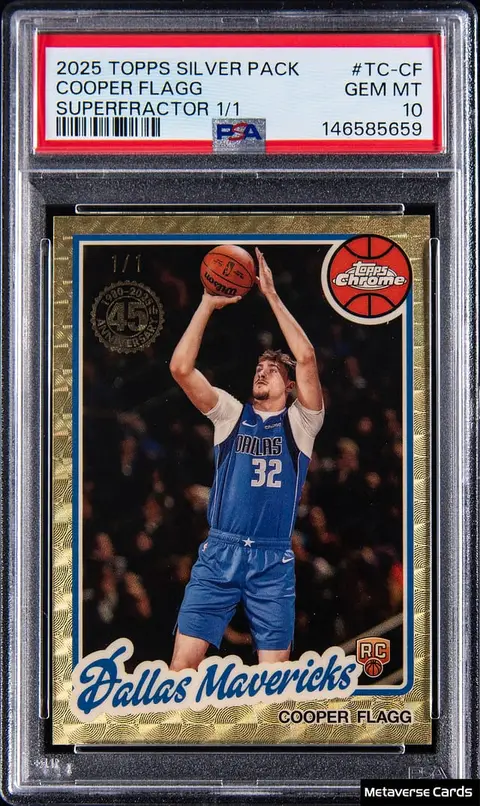
Sold Card
2025-26 Topps Silver Pack '80-81 Topps Chrome SuperFractor #TC-CF Cooper Flagg Rookie Card (#1/1) - PSA GEM MT 10
Sale Price
Platform
Goldin2025-26 Topps Silver Pack '80-81 Topps Chrome SuperFractor #TC-CF Cooper Flagg Rookie Card (#1/1) - PSA GEM MT 10 Sells for $671,000
On March 15, 2026, Goldin closed a notable ultra-modern basketball auction: a 2025-26 Topps Silver Pack ’80-81 Topps Chrome SuperFractor Cooper Flagg rookie card, serial-numbered 1/1 and graded PSA GEM MT 10, sold for $671,000.
For a market that is still feeling its way through the first true wave of Cooper Flagg cards, this sale gives collectors an early reference point for one of his most premium, non-autographed rookies.
Card breakdown: what exactly sold?
Let’s unpack the full title:
- Year: 2025-26
- Brand / Product: Topps (with a special Silver Pack promo-style parallel)
- Insert / Design Theme: ’80-81 Topps Chrome – a modern chrome treatment inspired by the 1980–81 Topps basketball design
- Player: Cooper Flagg
- Card number: #TC-CF
- Parallel: SuperFractor (typically a 1-of-1, gold spiral design widely recognized in the hobby)
- Serial number: #1/1 (the only copy produced)
- Rookie status: This is treated as a rookie card, from Flagg’s first mainstream NBA season products
- Grading company: PSA (Professional Sports Authenticator)
- Grade: GEM MT 10 (Gem Mint, PSA’s highest standard grade for a standard card)
- Key attributes: 1/1 SuperFractor, rookie, gem mint, from a special Silver Pack program
In hobby shorthand, this is the top-end parallel of an early Cooper Flagg Topps Chrome-style rookie, in the best possible grade, and it is literally unique.
Why this Cooper Flagg card matters
1. A premier rookie parallel
For modern and ultra-modern cards, collectors often focus on a player’s key rookie issues – the most important and desirable rookies from their first NBA season. Within that, low-serial or 1/1 parallels have become the prestige tier.
This Flagg SuperFractor checks several boxes:
- It’s from a licensed NBA-era product, not a high school or prep card.
- The ’80-81 Topps Chrome design ties into a recognizable vintage look while staying firmly in the modern chromium lane.
- Being a SuperFractor 1/1, there is only one copy, which tends to attract both player collectors and high-end speculative buyers.
- A PSA 10 grade removes many condition questions that sometimes linger around pack-issued chromium cards (surface scratches, edge chipping, print lines, centering, etc.).
2. The role of Silver Packs
Topps Silver Packs are usually special promo or bonus packs that contain exclusive parallels or designs not found in regular boxes. For many products, Silver Pack cards become sleeper chase cards because:
- They don’t flood the market like standard base parallels.
- They often feature distinct designs or chromium finishes.
- They sometimes hide key rookies or unique inserts collectors later circle back to.
With Cooper Flagg, whose mainstream NBA rookie portfolio is still forming, a Silver Pack SuperFractor like this becomes an early “premium parallel” benchmark.
3. Cooper Flagg’s hobby position
Cooper Flagg has been one of the most discussed prospects coming into the NBA in years. That attention means:
- Early-release and first-wave rookie cards tend to draw outsized interest.
- High-end, unique parallels can become reference points for how the market is valuing his long-term potential at a given moment.
Collectors are not just chasing stats here; they’re also responding to:
- Flagg’s large pre-NBA following
- Ongoing coverage across basketball media
- The hobby’s interest in finding the “next big ultra-modern star” while players are still at the beginning of their careers
Market context and price discussion
This card sold at Goldin on March 15, 2026 for $671,000.
Because this is a 1/1 SuperFractor in PSA 10, there are no direct, identical copies to compare. Instead, collectors typically look at:
- Sales of other key Cooper Flagg rookies (different brands or parallels)
- Sales of other 1/1 or low-serial Flagg cards from comparable products
- Historical sales of high-end rookie 1/1s for players in a similar hype range around their first or second NBA season
Within that framework, a few themes usually apply:
Unique assets define their own range
With 1/1s, a single sale can act as the de facto “comp.” In hobby slang, “comps” are comparable recent sales people use to help contextualize a card’s value. But with only one copy, every auction can reset expectations.Grading premium for PSA 10
A PSA GEM MT 10 often carries a substantial premium over raw or lower-grade examples, especially on chrome stock where surface flaws are common. For a 1/1, this is less about pop (population) comparison and more about removing doubts: the one existing copy has already been confirmed as top condition.Hype vs. results
At this stage in Flagg’s career, a lot of pricing is driven by expectations rather than a fully established NBA résumé. Historical patterns show that:- Some ultra-modern stars have seen early 1/1 rookie prices hold or rise if their careers match the anticipation.
- Others have seen high-water early sales become long-term outliers.
Because the Cooper Flagg market is still forming, this $671,000 result should be read as a snapshot of sentiment at this specific time rather than a stable, long-run benchmark.
How this sale fits into the ultra-modern landscape
Ultra-modern basketball (roughly the late 2010s onward) is characterized by:
- A wide range of parallel levels: base, numbered colors, case hits (rare cards you typically see about once per case of product), and unique 1/1s.
- Heavy use of chrome technology, which is especially popular among younger collectors.
- Shorter print runs for premium parallels, but more products overall.
Within that environment, a few factors help this card stand out:
Design linkage to 1980-81 Topps:
The ’80-81 Topps look is a nod to a classic vintage era. That kind of design throwback can appeal to collectors who prefer historical continuity over purely new aesthetics.Topps re-establishing its NBA presence:
As Topps re-enters and expands in NBA-licensed product, early flagship-style rookies and their top parallels often get a longer look from collectors. These can become key touchpoints when people look back and say, “What were the first big Topps rookies for this player?”Single-copy scarcity:
No matter how many total Cooper Flagg rookies exist across brands, there will only ever be one copy of this specific SuperFractor. For high-end player collectors and investors, that kind of exclusivity carries its own logic.
What collectors can take away from this sale
Even if a $671,000 card is far outside your buying range, it still offers useful information for everyday collectors and small sellers.
1. Tracking the Cooper Flagg “ladder”
Think of Flagg’s card market as a ladder of tiers:
- Ultra-elite 1/1s and premium autographed rookies
- Numbered parallels from flagship or flagship-adjacent sets
- Base rookies and more accessible inserts
When a high-end tier like this SuperFractor sells, it often sets a psychological ceiling for how people think about the tiers below, even if the math never lines up neatly. Watching these top-end moves helps you understand how the rest of the ladder might be perceived.
2. Importance of clear card identification
The full title here looks long, but every piece matters:
- Year and brand (2025-26 Topps)
- Program (Silver Pack)
- Insert theme (’80-81 Topps Chrome)
- Parallel level (SuperFractor)
- Serial numbering (#1/1)
- Grading company and grade (PSA GEM MT 10)
When you list your own cards – on marketplaces, social, or consignment – getting these details right makes it easier for buyers to:
- Search for your card
- Compare it with similar items
- Understand why your asking price might differ from a basic version
3. Reading comps carefully
For most cards, you can look up several comparable sales and build a rough range. With unique 1/1s, you can’t do that in the same way, so consider:
- Sales of nearby parallels (e.g., gold /10, orange /25, or key autographs)
- Sales of equivalent cards for other top rookies from the same year
- Overall auction environment (time of year, what else was in the same sale, broader market sentiment)
Rather than treating one big result as “the number,” it’s more practical to treat it as one datapoint in a wider story of how the hobby feels about a player.
Final thoughts
The $671,000 Goldin sale of the 2025-26 Topps Silver Pack ’80-81 Topps Chrome SuperFractor Cooper Flagg rookie (#TC-CF, #1/1, PSA GEM MT 10) is an early, high-profile marker in Flagg’s emerging card history.
It underscores a few ongoing themes in the modern hobby:
- Unique, gem-mint 1/1 rookie parallels still command strong attention.
- Design and brand choices, like a vintage-inspired Topps Chrome treatment, can add appeal beyond just the serial number.
- For highly anticipated players, the market is willing to set aggressive benchmarks long before a full career résumé takes shape.
For collectors and small sellers, the main value of this sale isn’t in chasing the same level, but in understanding how the top of the market behaves – and then applying that awareness when you evaluate more accessible Cooper Flagg cards, or any other ultra-modern rookie you’re interested in.
As more of Flagg’s 2025-26 rookies surface and additional high-end auctions close, this Goldin result will likely be one of the early reference points people look back on when they talk about how his market first took shape.