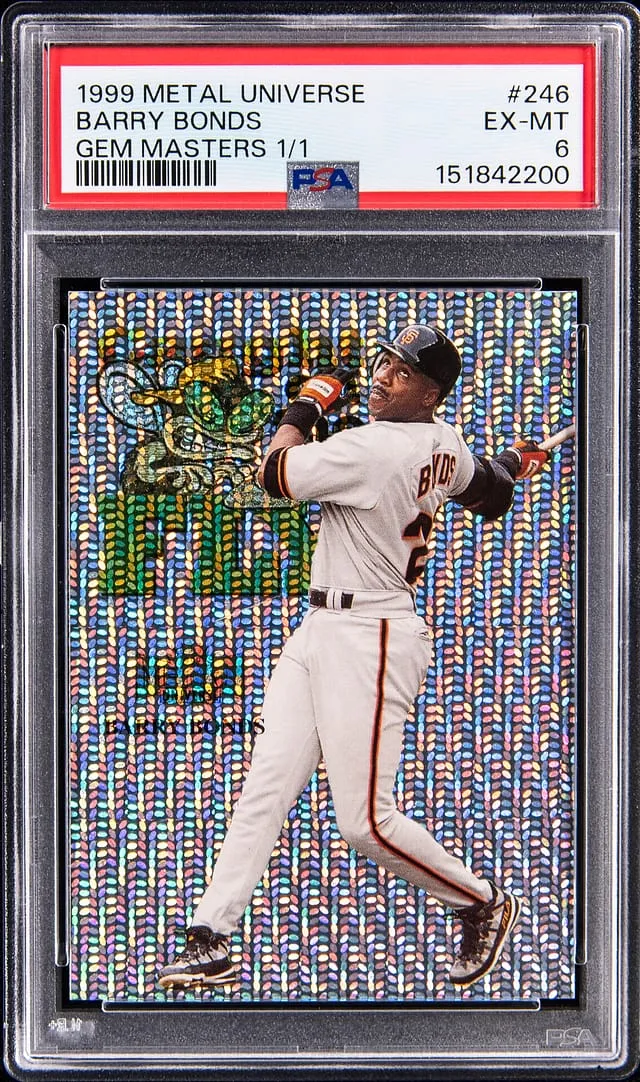
Barry Bonds 1999 Metal Gem Masters 1/1 Sells for $269K
Breaking down the $269,620 Goldin sale of the 1999 SkyBox Metal Universe Gem Masters Barry Bonds 1/1 in PSA 6 and what it means for collectors.
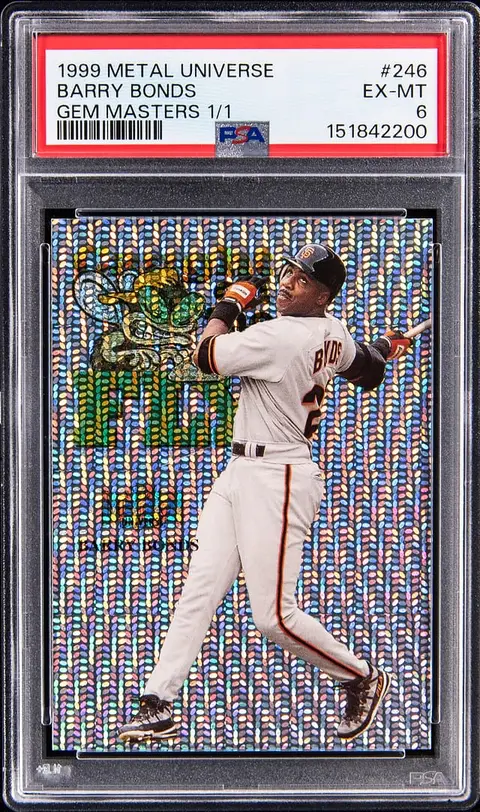
Sold Card
1999 SkyBox Metal Universe Gem Masters #246 Barry Bonds (#1/1) - PSA EX-MT 6
Sale Price
Platform
Goldin1999 SkyBox Metal Universe Gem Masters #246 Barry Bonds (#1/1) in a PSA EX‑MT 6 holder just changed hands at Goldin on April 12, 2026 for $269,620. For a late‑90s insert that was almost impossible to pull, this sale is an important data point for how the hobby values both Barry Bonds and the high‑end Metal Universe chase cards.
The card at a glance
- Player: Barry Bonds, San Francisco Giants (Hall of Fame‑caliber resume, though not inducted as of this writing)
- Year / Set: 1999 SkyBox Metal Universe
- Subset / Parallel: Gem Masters
- Card number: #246
- Serial numbering: Stated 1/1 (one‑of‑one)
- Grading company: PSA (Professional Sports Authenticator)
- Grade: EX‑MT 6 (Excellent‑Mint)
- Attributes: Ultra‑short‑print 1/1 parallel from a notoriously tough late‑90s insert run
- Card type: Not a rookie card, but a true “key issue” for Bonds collectors and 90s insert specialists
This is the top‑level chase version of Bonds’ card from 1999 Metal Universe. Within the Metal universe (no pun intended), Gem Masters cards are essentially the endgame parallel: super low production, wild foil designs, and strong brand recognition among 90s insert collectors.
Why the 1999 Metal Universe Gem Masters matters
The set and insert lineage
SkyBox Metal Universe is one of the defining products of the late 1990s, remembered for:
- High‑impact design: Full‑bleed metallic and sci‑fi themed artwork that stood out from traditional cardboard designs.
- Short‑printed inserts and parallels: Precious Metal Gems (PMG) in basketball and football are the best known, but baseball’s Metal line occupies the same design family.
- Low surviving population: These cards were condition‑sensitive, with chipping, surface scratching, and edge wear common right out of packs.
Within this ecosystem, Gem Masters represents the highest‑end, 1‑of‑1 level chase. For star players like Bonds, that makes the card arguably the most desirable non‑autograph, non‑memorabilia parallel from this release.
Player importance
Barry Bonds is one of the most statistically dominant hitters in baseball history, leading in:
- All‑time home run leader (762)
- Single‑season home run record (73)
- Multiple MVP Awards and major offensive categories
In the hobby, his market is shaped by ongoing Hall of Fame debates, but the interest in his rare, high‑end cards has remained steady. Collectors often distinguish between:
- Mass‑produced base and early‑2000s cards, which can be relatively affordable.
- True rarity pieces like 90s serial‑numbered inserts and 1/1s, which sit in a very different price tier.
This Gem Masters 1/1 is firmly in that second category.
Market context: where does $269,620 fit?
The Goldin sale closed at $269,620 on April 12, 2026. For a one‑of‑one, there are no direct, repeatable comps ("comps" are comparable recent sales that collectors use to gauge price ranges), but we can place this result in context by looking at:
- Other high‑end Bonds inserts and parallels
- Other players’ Metal Universe and Gem Masters cards
- How the grade interacts with the 1/1 status
1. Other premium Barry Bonds pieces
While there is no exact match for a 1999 Gem Masters 1/1 in PSA 6, we can compare it broadly with:
- Rare 90s serial‑numbered Bonds inserts and PMG‑style cards
- High‑grade, low‑print‑run Bonds parallels from the late 1990s and early 2000s
In those lanes, individual copies have sold from the mid‑five figures into six figures, depending on scarcity (print run, 1/1 vs /50 vs /100), brand (Metal, Flair, Finest, etc.), and visual appeal. This $269k result places the Gem Masters squarely toward the upper end of established Bonds pricing, which lines up with its status as a 1/1 from a core 90s brand.
2. Metal Universe & Gem Masters across the hobby
In basketball and football, Metal Universe inserts—especially PMGs—have set numerous record prices. Baseball’s Metal cards have historically lagged somewhat in price relative to basketball’s PMGs, but they share:
- The same distinctive design language
- The same late‑90s scarcity
- Similar condition sensitivity
Among baseball collectors who focus on the 1990s, Gem Masters represent the pinnacle within Metal issues. When a true star player’s Gem Masters hits the open market, it’s treated less like a routine sale and more like a significant event, simply because:
- A 1/1 can only trade hands when the current owner decides to sell.
- There is no way to "wait for another copy" in a different grade.
Compared to other star player Gem Masters and top‑tier 90s Metal parallels, a strong six‑figure sale is consistent with the way the hobby has been valuing the very best examples from this era.
3. Grade vs. 1/1 scarcity
PSA graded this card EX‑MT 6, which for modern cards would usually suggest noticeable wear—corner softness, edge chipping, or surface flaws. However, for:
- Late‑90s foil‑heavy cards, and
- True one‑of‑one pieces,
collectors often weigh card existence and visual appeal more heavily than numeric grade.
Key points:
- There is only one Gem Masters copy for this Bonds card. A higher‑grade example simply does not exist unless the card is crossed or regraded.
- Many 90s Metal cards come out of packs with issues that cap their grading ceiling from the start.
In other words, for this type of card, the market often prices the player + design + rarity first, and the grade becomes more of a secondary consideration, as long as the card still presents well.
How this sale fits into current hobby trends
A few broader trends help frame why this $269,620 result at Goldin matters:
Sustained demand for 90s inserts
Over the past several years, collectors have put increasing focus on:- Low‑print‑run inserts and parallels from the mid‑ to late‑90s
- Cards with strong aesthetics and brand recognition Metal Universe is near the top of that list, and Gem Masters lives at the top of Metal.
Focus on true scarcity over mass production
As more collectors learn about production numbers and print runs, there has been a gradual shift towards cards that are:- Serial‑numbered to very low quantities (like 1/1s)
- Part of recognized "grail" (top target) sets or insert runs
Ongoing interest in polarizing all‑time greats
Bonds, along with other era‑defining players, continues to draw hobby attention despite Hall of Fame debates. When extremely rare, visually striking Bonds cards surface, there’s usually a ready pool of advanced player collectors and 90s specialists paying attention.
This Goldin result reinforces the idea that the market continues to attach a serious premium to:
- Ultra‑rare 90s inserts
- Established star players
- One‑of‑one parallels from respected brands
without needing perfect grades as a condition of entry.
Takeaways for collectors and small sellers
Whether you’re just coming back to the hobby or you’re an active seller, a six‑figure result like this can feel distant from everyday collecting. It’s still useful as a reference point:
Card hierarchy matters
For players like Bonds, there is a clear ladder:- Common base and low‑end inserts
- Numbered parallels and mid‑tier inserts
- The true elite: 1/1s, iconic inserts, and key parallels from sets like Metal Universe
Set and insert knowledge is valuable
Understanding terms like:- Insert: a special card type inserted in packs at lower odds than base cards.
- Parallel: a variant of an existing card with different colors, foil, or serial numbering.
- Comps: comparable recent sales used to estimate value. helps you spot when a card is just another parallel vs. a genuinely significant chase piece.
Condition isn’t everything for the right card
A PSA 6 might be a concern on a widely available modern issue, but for a 1/1 late‑90s foil card, the market often accepts lower grades if the card is otherwise appealing.Not financial advice
This sale gives us data, not guarantees. It shows how one rare Bonds card performed at a specific moment with a specific group of bidders at Goldin on April 12, 2026. It doesn’t mean every Bonds insert—or every 1/1—will follow the same trajectory.
Where this Gem Masters sits in the Bonds landscape
If you think of Bonds’ card history as a pyramid:
- The base is made of his mass‑produced cards from the late 80s through the 2000s.
- The middle includes tougher inserts, serial‑numbered parallels, and key issues from premium brands.
- The tip of the pyramid is reserved for pieces like:
- Flagship rookie cards in elite grades
- Iconic 90s inserts
- True 1/1s from important sets like Metal Universe
This 1999 SkyBox Metal Universe Gem Masters #246 Barry Bonds (#1/1) – PSA EX‑MT 6 firmly occupies that top tier.
For collectors building a Bonds "master run" (a deep catalog of key cards) or 90s insert specialists who prioritize Metal Universe, this card checks nearly every box: brand, era, design, rarity, and player significance.
Final thoughts
The $269,620 sale of the 1999 SkyBox Metal Universe Gem Masters #246 Barry Bonds 1/1 in PSA EX‑MT 6 at Goldin on April 12, 2026 highlights a few things:
- The market continues to recognize the importance of late‑90s Metal Universe inserts.
- True 1/1s of historically significant players can command strong prices even at mid‑tier grades.
- Knowledge of sets, inserts, and era context remains a key edge for collectors and small sellers.
For most of us, this card will only ever be something we track in auction results rather than in our own showcases. But understanding why it sold the way it did can help us better evaluate the next rare 90s insert we come across—whether it’s a Bonds, another star, or a lesser‑known player from the same golden era of hobby design.