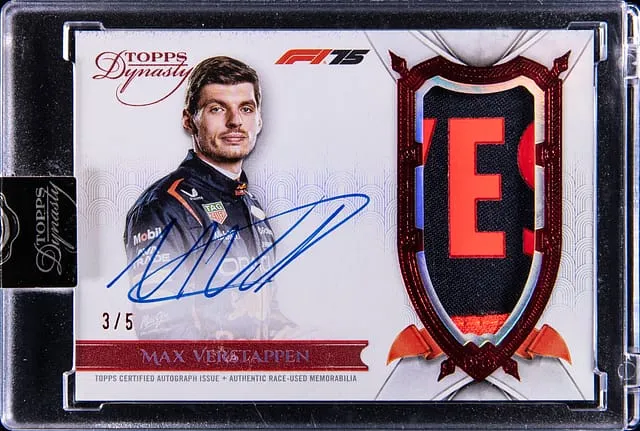
2025 Topps Dynasty F1 Max Verstappen Red /5 Sells
Breakdown of the 2025 Topps Dynasty F1 Max Verstappen Red /5 patch auto that sold for $14,930 at Goldin on April 12, 2026.
Sold Card
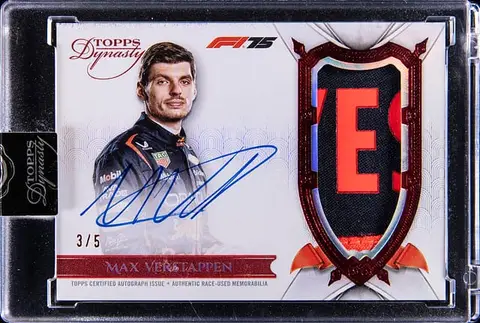
2025 Topps Dynasty F1 Autograph Patch Red #DAP-MVEI Max Verstappen Signed Race-Used Patch Card (#3/5) - Driver Number - Topps Encased
Sale Price
Platform
Goldin2025 Topps Dynasty F1 Max Verstappen Red Patch Auto #3/5 Sells for $14,930 at Goldin
Modern Formula 1 cards continue to carve out their own lane in the hobby, and a recent Goldin sale is a good snapshot of where the market sits for ultra‑premium Max Verstappen pieces.
On April 12, 2026 (UTC), Goldin sold a 2025 Topps Dynasty F1 Autograph Patch Red #DAP-MVEI Max Verstappen Signed Race-Used Patch Card, serial‑numbered #3/5 and Topps encased, for $14,930.
In this post, we’ll break down what this card is, why collectors care about it, and how this sale fits into the broader Verstappen and F1 card market.
Card overview: what exactly sold?
Card details
- Driver: Max Verstappen (Red Bull Racing)
- Year: 2025
- Product: Topps Dynasty Formula 1
- Card: Autograph Patch
- Parallel: Red
- Serial numbering: #3/5
- Designation: “Driver Number” (jersey/driver‑number match theme in the checklist)
- Autograph: On‑card (signed directly on the card, not a sticker)
- Memorabilia: Race‑used patch (piece of Verstappen race‑worn material)
- Encapsulation: Factory Topps case (Topps Dynasty seal, not third‑party graded)
Topps Dynasty is the high‑end, low‑print‑run F1 product, similar in positioning to Dynasty in baseball. Every card is essentially a hit: on‑card autos, premium patches, and extremely low serial numbers.
This particular card is a Red parallel numbered to only five copies. The “Driver Number” tag in the title highlights that Verstappen’s car number is 1; collectors often pay special attention to serials and themes that tie to a player’s number or identity, though this one is #3/5 rather than 1/5.
Even without a third‑party grade from PSA, BGS, or SGC, the key attributes are clear:
- Ultra‑low print run (only five red copies)
- On‑card autograph
- Race‑used patch
- Encased and authenticated by Topps from the factory
Where this card sits in the Verstappen hierarchy
Within Verstappen’s F1 portfolio, a few categories tend to command the most attention:
True rookies and early issues
- 2020 Topps Chrome F1 and high‑end 2020 Topps Dynasty are generally viewed as the core early cards.
Flagship premium autos and patches
- Dynasty autograph patch cards have become the go‑to high‑end Verstappen chase for many collectors.
Scarce, low‑serial parallels
- Reds (/5), Golds (/10), 1/1s, and “shield” or logo patches tend to be where record prices emerge.
This 2025 Dynasty Red /5 sits squarely in category 2 and 3: it’s not a rookie, but it is a premium, ultra‑scarce, autograph patch of a multiple‑time World Champion from Topps’ flagship high‑end F1 product.
For many modern F1 collectors, a Dynasty patch auto is considered a “pillar card” – a key, long‑term piece that represents the driver at a very high level, even if it’s not the first or earliest card.
Market context: how does $14,930 compare?
“Comps” (short for comparable sales) are recent sales of similar cards that collectors use as a rough price guide. Because 2025 Topps Dynasty F1 is still a relatively new release and this specific card is numbered to only five, the comp set is naturally thin.
Looking at the broader Verstappen market and closest parallels:
Earlier Dynasty years (2020–2023) Red /5 Verstappen patch autos have typically sold in the mid‑five‑figure range for top examples and lower for more routine patches or non‑marquee designs. Prices vary meaningfully based on:
- Year and perceived importance of the season
- Patch quality (logo or multi‑color vs. plain)
- Serial number and any special numbering ties
- Grading, when present
Non‑red parallels of recent Dynasty Verstappen autos (e.g., /10 or /15) tend to slot in below reds, with some strong sales but generally a clear hierarchy: 1/1 and shield patches at the top, Reds /5 next, then other colors.
Because this 2025 Red /5 is:
- Not graded,
- A newer‑year, non‑rookie issue,
- And part of a still‑developing product year,
…the $14,930 final price at Goldin fits comfortably in the range many collectors would expect for a high‑end, but not record‑chasing, Verstappen Dynasty card.
In other words, this result tracks with the established hierarchy:
- It’s well above typical Verstappen autos from mid‑tier products.
- It’s below the all‑time record Verstappen pieces (such as shield 1/1s or historically significant early‑year cards in gem grades).
Rather than being a shock result, this sale reads as a solid market confirmation of where 2025 Dynasty Verstappen reds currently sit.
Why collectors care about this card
1. Verstappen’s place in F1 history
Max Verstappen has already secured multiple World Championships and is building a statistical résumé that places him in conversations with modern F1 greats. That backdrop matters because high‑end cards of historically important drivers tend to draw consistent interest, especially:
- On‑card autographs
- Low‑serial parallels
- Cards tied to race‑used memorabilia
2. The Topps Dynasty brand
Topps Dynasty F1 is a premium, low‑print‑run product. Boxes are limited, and each box contains essentially one big card. That structure means every Verstappen Dynasty card starts with built‑in scarcity.
Among Dynasty collectors, Reds /5 are frequently treated as one of the key chase tiers, right behind 1/1s and any special logo or shield cards. For player collectors, owning any Dynasty Red /5 of their main PC (personal collection) driver is often a major milestone.
3. Race‑used patch and on‑card auto
There’s a difference between "event-worn" and race‑used memorabilia. Race‑used pieces are associated with actual competition use, which many collectors see as more meaningful.
Combining that with an on‑card autograph – Verstappen signing directly onto the card – creates a strong blend of:
- Visual appeal
- Authentic connection to the driver
- Limited supply
4. Ultra‑modern, low population environment
This card lives in the ultra‑modern era (roughly 2018‑present), where:
- Print runs on mass products can be higher,
- But true high‑end, low‑serial hits like this remain genuinely scarce.
Because only five copies of this exact Red parallel exist, the “population” (how many exist in total) is inherently capped, even before you factor in how many are graded or sitting in long‑term collections.
How the Goldin sale fits into the broader F1 card story
Goldin has become one of the main venues for high‑end F1 and multi‑thousand‑dollar sales, so seeing a card like this there is not surprising. The April 12, 2026 sale adds one more data point to an unfolding story:
- F1 card interest surged in the early 2020s as the sport gained new fans and Topps ramped up licensed products.
- After a period of rapid price moves, the market has become more selective. The strongest prices tend to cluster around:
- Iconic drivers (Verstappen, Hamilton, Schumacher, Senna where applicable)
- Clear “key” cards (rookies, Dynasty, Chrome color, and certified autos)
- Truly scarce parallels and patches.
In that environment, a 2025 Dynasty Red Verstappen at $14,930 signals that collectors still place meaningful value on:
- Topps’ high‑end F1 line,
- Verstappen’s established status at the top of the grid,
- And race‑used, on‑card auto content.
It’s not a record, and it doesn’t have to be. For many modern collectors, results like this are more useful than the outlier headlines, because they show where strong but “normal” demand is settling.
Takeaways for collectors, investors, and small sellers
Without offering financial advice, there are a few practical observations collectors and small sellers can draw from this sale:
Brand and tier matter.
High‑end lines like Topps Dynasty can maintain a separate price tier from even popular mid‑range sets, especially when they feature on‑card autos and game or race‑used pieces.Scarcity is real at the top.
With only five copies of this Red parallel, many Verstappen collectors simply won’t have a chance to own one. That scarcity can support prices even as the broader market moves up and down.Year and narrative still play a role.
Rookie and early‑career cards usually command the biggest spotlight, but strong later‑year, premium issues can still do well when the player’s career arc is compelling.Auction house choice shapes visibility.
A sale at Goldin on April 12, 2026 means this card was exposed to a wide group of high‑end buyers. That type of venue often sets the reference point other sellers and buyers will look back to when they talk about “comps.”
Final thoughts
The 2025 Topps Dynasty F1 Autograph Patch Red #DAP-MVEI Max Verstappen (#3/5) that sold for $14,930 at Goldin on April 12, 2026 is a textbook example of where modern high‑end F1 collecting is today:
- Ultra‑modern, but genuinely scarce.
- Not a rookie, but clearly important within the driver’s card portfolio.
- Driven by a combination of brand (Dynasty), format (on‑card auto with race‑used patch), and driver prestige.
For collectors tracking Verstappen, F1, or high‑end modern cards in general, this sale is a useful benchmark. It doesn’t reset the record books, but it reinforces a consistent theme: when a superstar driver meets a premium product and a low print run, the market tends to pay attention.
figoca will continue to track notable Formula 1 sales across auction houses like Goldin so you can see how prices for key drivers and sets evolve over time.