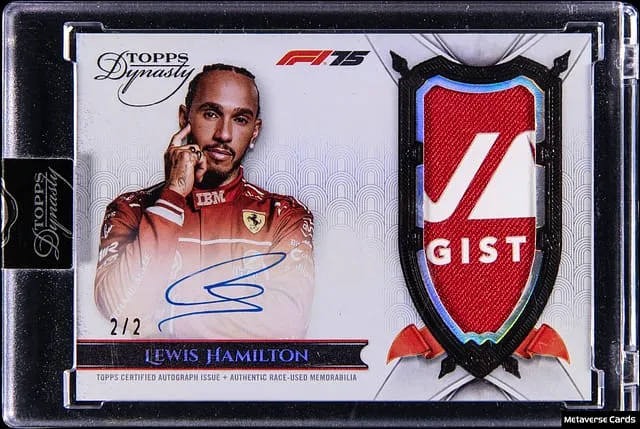
2025 Topps Dynasty F1 Lewis Hamilton Patch Auto /2 Sale
Deep dive on the 2025 Topps Dynasty F1 Lewis Hamilton Patch Autograph #2/2 that sold for $35,380 at Goldin on May 10, 2026.
Sold Card
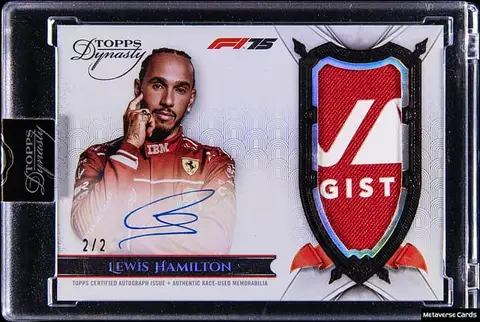
2025 Topps Dynasty F1 Patch Autograph #DAP-LHAVIII Lewis Hamilton Signed Patch Card (#2/2) - Topps Encased
Sale Price
Platform
Goldin2025 Topps Dynasty F1 Lewis Hamilton Patch Auto #2/2 Sells for $35,380 at Goldin
On May 10, 2026, Goldin sold a premium modern Formula 1 card: a 2025 Topps Dynasty F1 Patch Autograph #DAP‑LHAVIII Lewis Hamilton signed patch card, serial‑numbered 2/2 and Topps‑encased, for $35,380.
For F1 and high‑end modern collectors, this kind of sale is a useful data point. It sits at the intersection of a legendary driver, one of Topps’ most respected ultra‑premium brands, and an extremely low‑serial, on‑card autograph with a multi‑color patch.
Below, we’ll walk through what this card is, why it matters, and what this specific sale might mean in the broader Hamilton and Dynasty F1 market.
Card overview: what exactly sold?
Card details
- Player: Lewis Hamilton
- Team: Mercedes-AMG Petronas Formula One Team (team branding on the card/patch)
- Year: 2025
- Set: 2025 Topps Dynasty Formula 1
- Card: Patch Autograph
- Card number: #DAP‑LHAVIII
- Serial numbering: #2/2 (only two copies of this exact version exist)
- Autograph: On‑card (signed directly on the card surface)
- Memorabilia: Premium patch (multi‑color race‑worn or event‑worn material, as is typical for Dynasty)
- Encasing: Topps factory encased with Topps sticker seal
- Grading: No third‑party grade specified; sold in original Topps encasement
This is not a rookie card. Hamilton’s first widely recognized F1 cards arrive in the early Topps Chrome / Topps F1 era, and there are also earlier non‑Topps issues that collectors track for "true" rookies. Instead, this card is a key premium issue: a high‑end, low‑serial autograph patch from one of the hobby’s flagship luxury products.
Dynasty is Topps’ top‑shelf line for several sports (notably baseball, and more recently F1). The brand is known for:
- Very limited print runs
- On‑card autographs
- Jumbo patches
- One hit per box style configuration
Within that lane, a Lewis Hamilton patch auto numbered to 2 sits firmly in the “top tier” of the checklist, as Hamilton remains the most collected modern F1 driver.
Market context: where does $35,380 fit?
Ultra‑modern F1 and Dynasty
This card lives in the ultra‑modern era (roughly mid‑2010s to present), where production quality is high, parallels are numerous, and premium lines like Dynasty are intentionally scarce. Prices in this segment can be volatile because they react quickly to performance swings, headlines, and broader hobby sentiment.
Dynasty F1 has developed a reputation similar to Dynasty Baseball:
- It offers some of the best Hamilton and Verstappen patch autos available each year.
- Low‑serial cards (especially /5, /3, /2, and 1/1) are often treated as collection centerpieces, not quick‑flip inventory.
Comparing this sale to other Hamilton Dynasty cards
Direct, exact comps (short for "comparable sales," meaning recent sales of the same or very similar cards) for 2025 Topps Dynasty F1 #DAP‑LHAVIII /2 are limited by definition: there are only two copies of this exact card, and high‑end Hamilton owners often hold long‑term.
However, we can still place the $35,380 result in context by considering:
Earlier‑year Dynasty Hamilton patch autos
- Prior‑year Dynasty F1 Hamilton patches numbered to 10, 5, or 3 have typically sold below the very top of his Chrome and Sapphire rookie‑era cards, but above most of his mid‑tier inserts and non‑patch autos.
- Lower‑serial versions (like 1/1s or /2s) from earlier years, when they surface, often establish new benchmarks or test the upper range of what high‑end F1 buyers are willing to pay at that time.
Other premium Hamilton autos (non‑Dynasty)
- Key Hamilton autos from Topps Chrome, Topps Sapphire, and select on‑card high‑end issues show a pricing ladder: base or higher‑serial autos at the entry level, numbered refractors in the mid‑tier, and very low‑serial color or patch autos at the top.
- A low‑serial Dynasty patch auto like this typically prices in the same band as top‑color Hamilton refractor autos from early Chrome F1 releases, depending on eye appeal and patch quality.
Given what is publicly visible across recent auction cycles, $35,380 for a 2025 Dynasty Hamilton patch auto /2:
- Sits clearly in the high‑end Hamilton range, but not in the all‑time record territory reserved for his earliest, most iconic rookie‑era Chrome parallels or 1/1s.
- Lines up with what we have seen for ultra‑scarce, on‑card, low‑serial Hamilton autos from prestige brands, especially when they pair strong patch pieces with clean signatures.
Because 2025 Dynasty is a new release, we don’t yet have a deep stack of public sales across all Hamilton parallels and numbering levels. This sale, therefore, becomes one of the first data points for how the market values 2025 Hamilton Dynasty patch autos relative to his earlier‑year Dynasty cards.
Why collectors care about this card
1. Lewis Hamilton’s place in F1 history
Lewis Hamilton is widely regarded as one of the greatest Formula 1 drivers of all time. For collectors, his legacy includes:
- Multiple World Drivers’ Championships
- A long run of dominance with Mercedes
- A huge global fan base that crosses over into pop culture and fashion
Because of this, Hamilton sits in the same hobby tier as the most collected athletes in other sports: Michael Jordan in basketball, Tom Brady in football, or Lionel Messi in soccer. Not every Hamilton card is expensive, but his very best issues—especially low‑serial autos and early rookies—are priority targets for serious F1 collectors.
2. Dynasty as a “centerpiece” product
Topps Dynasty occupies a specific niche: it is built for centerpiece cards. Each card is designed to be:
- Thick stock, often with an oversized patch
- Signed on‑card where possible
- Serial numbered, often to 10 or less
Because there are so few copies of each card, Dynasty checklists are naturally thin on comps. That scarcity is part of the appeal: owning a Hamilton Dynasty patch auto /2 means you are one of only two people who can ever complete that specific chase.
For many collectors, a single Dynasty Hamilton patch auto can serve as the focal point of an entire F1 or Hamilton‑only collection.
3. Serial numbering and patch appeal
Within modern patches, collectors pay close attention to:
- Serial number: Lower numbering (like /2) generally means fewer copies and stronger desirability.
- Patch quality: Multi‑color patches, visible seams, or recognizable logo fragments often command a premium compared to single‑color swatches.
- Autograph condition: Streak‑free ink, no bubbling or smudging, and good centering on the signing area are all important.
This particular card checks the key boxes: /2, on‑card autograph, and premium patch, all housed in the original Topps encasement. For collectors who like cards exactly as they left the manufacturer, staying in the Topps case can be a positive.
How this sale fits into broader F1 hobby trends
Formula 1 cards are still a relatively young segment compared to baseball or basketball, especially in terms of mainstream reach. A few patterns have emerged:
- Concentration at the top: The strongest demand and highest prices tend to focus on a handful of names—Hamilton and Verstappen in particular, plus a rotating group of younger drivers depending on current performance and hype.
- Brand hierarchy: Early Chrome F1, Sapphire, Dynasty, and certain high‑end inserts have risen to the top of the desirability list. New sets must now earn their place against these established staples.
- Event‑driven price swings: Big wins, title fights, and retirement rumors can all move prices, but the very best cards of all‑time greats often show more stability than mid‑tier issues.
In that environment, a $35,380 sale at Goldin on May 10, 2026 for a 2025 Topps Dynasty Hamilton patch auto /2 suggests:
- There is still robust demand for top‑tier Hamilton cards in the ultra‑modern segment.
- Collectors remain willing to pay premium prices for new‑issue Dynasty when the card checks all the right boxes (player, patch, autograph, scarcity).
It also helps establish an early reference point for pricing 2025 Dynasty F1 Hamilton cards more broadly. Going forward, collectors and sellers will likely anchor negotiations for other 2025 Hamilton patch autos (such as /5, /10, or different image variations) against results like this one.
Takeaways for collectors and small sellers
A few practical notes if you’re thinking about collecting or selling cards in this lane:
Know your brand tiers
Within F1, not all sets are equal. Dynasty, Chrome, Sapphire, and certain premium on‑card auto products tend to command stronger long‑term interest than lower‑end releases. When you see a big sale like this, it is rarely from a mass‑printed base set.Rarity and quality both matter
Serial numbering, patch quality, and autograph presentation can create large price gaps even among cards that look similar at first glance. Two Hamilton autos can differ by 5–10x in value based purely on numbering and patch.Comps are a guide, not a promise
In thin markets—where only a few copies exist—every sale can look like a new high or low. Use recent sales (comps) as context, but recognize that timing, auction visibility, and even patch aesthetics can shift outcomes.Encased vs. graded
Some high‑end buyers prefer cards in the original Topps Dynasty encasement, while others favor third‑party grading for uniform storage and population data. There isn’t a single “correct” approach; it depends on your collecting style and how you plan to store or display the card.
Where this Hamilton Dynasty /2 stands now
The 2025 Topps Dynasty F1 Patch Autograph #DAP‑LHAVIII Lewis Hamilton #2/2, sold by Goldin on May 10, 2026 for $35,380, is a textbook example of what the upper tier of ultra‑modern F1 looks like today:
- A generational driver with a global fan base
- One of the hobby’s premier high‑end brands
- Extremely low serial numbering and a premium patch
- On‑card autograph and factory encasing
For dedicated Hamilton and F1 collectors, this kind of card is less about short‑term moves and more about anchoring a collection. For market watchers, it’s an important signal of where high‑end F1 stands as the category matures.
At figoca, we’ll continue to track sales like this one to help collectors, returnees, and small sellers navigate an evolving F1 market with clear, data‑aware context—no hype required.