2023 Topps Dynasty Max Verstappen Patch Auto #1/2 Sale
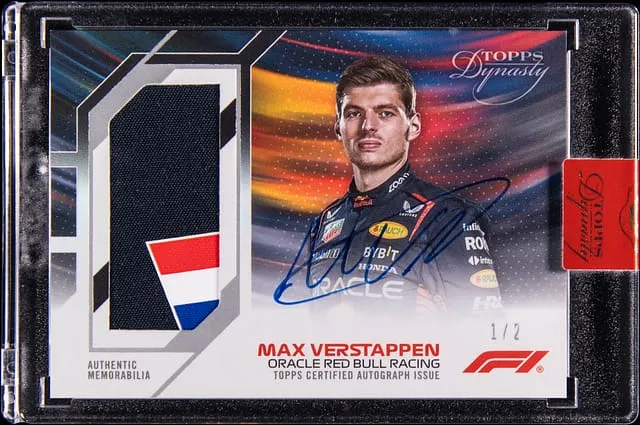
Goldin sold a 2023 Topps Dynasty F1 Max Verstappen autograph suit flag patch #1/2 for $22,997. We break down the card, comps, and collector context.
Sold Card
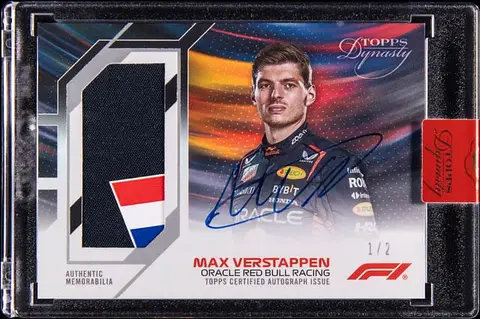
2023 Topps Dynasty F1 Autograph Suit Flag Patch #DAF-MV Max Verstappen Signed Patch Card (#1/2) - Driver Number - Topps Encased
Sale Price
Platform
Goldin2023 Topps Dynasty F1 Max Verstappen Suit Flag Patch Auto #1/2 Sells for $22,997
On May 15, 2026, Goldin closed the auction on a standout modern Formula 1 card: a 2023 Topps Dynasty F1 Autograph Suit Flag Patch #DAF‑MV Max Verstappen, serial‑numbered #1/2, with an on‑card autograph and a multi‑color race‑worn suit flag patch, still in its original Topps factory case.
The final price was $22,997.
In this breakdown, we’ll walk through what this card is, why it matters to F1 collectors, and how this sale fits into the broader Verstappen and Dynasty F1 market.
What exactly is this card?
Key details:
- Player: Max Verstappen (Red Bull Racing)
- Year: 2023
- Set: 2023 Topps Dynasty Formula 1
- Card: Autograph Suit Flag Patch
- Card number: #DAF‑MV
- Serial numbering: #1/2 (two copies exist; this is the first print)
- Autograph: On‑card (signed directly on the card surface)
- Memorabilia: Suit “flag” patch window, multi‑color
- Encapsulation: Topps factory sealed (Topps Encased), not third‑party graded
- Category: Ultra‑modern premium autograph patch, not a rookie card
Topps Dynasty is Topps’ high‑end F1 product. Each box typically delivers a single premium hit, often an on‑card autograph with a patch. Dynasty cards are known for:
- Low serial numbering (often /10 or lower)
- Game‑ or race‑worn memorabilia
- On‑card signatures
- High suggested box prices and strong chase appeal
This particular card combines several desirables in one place:
- Superstar driver (multi‑time World Drivers’ Champion)
- Very low print run (#1/2)
- Patch autograph format
- The “driver number” serial (1 of 2) which some collectors treat as an aesthetic or symbolic premium
It is not a rookie card—Verstappen’s first crowd‑recognized F1 cards came years earlier—but it is a flagship‑level premium from one of his key dominance seasons.
Why collectors care about Dynasty F1 Verstappen autos
Dynasty is to modern F1 what high‑end products like National Treasures or Exquisite are to basketball and football: a small, premium release where most of the hobby’s biggest chase cards live.
For Max Verstappen, Dynasty gives collectors:
- On‑card autos rather than stickers
- Large, visually strong patches from suits, gloves, or team gear
- Clear scarcity due to low serial numbering
The 2023 edition captures Verstappen in the middle of his dominant era with Red Bull. For many collectors, cards from these years will be seen as “prime” career pieces: not his earliest issues, but ones that directly represent a championship peak.
Within that context, a #1/2 autograph suit flag patch occupies an important niche:
- It’s a true centerpiece card for a Verstappen PC (personal collection).
- The #1 serial can matter to some collectors who like first‑off‑the‑line, jersey‑number, or driver‑number copies.
- There are only two copies in this exact configuration, which increases perceived scarcity even within an already low‑print set.
Market context and price comparison
This Goldin sale closed at $22,997 on May 15, 2026.
To understand that number, collectors typically look at “comps,” short for comparables—recent sales of the same card or closely related versions. For a card this scarce (#1/2), exact like‑for‑like comps can be thin, so we look at nearby markets:
Other Max Verstappen Dynasty autos
- Lower‑tier Dynasty Verstappen autos (higher serial numbering, smaller or single‑color patches) usually sell materially below this level, often in the low‑to‑mid four figures depending on numbering and design.
- Premium multi‑color patch autos numbered to 10 or fewer from earlier Dynasty years can reach mid‑four to low‑five figures when they combine strong patch windows, on‑card autos, and key numbering (like 1/10 or driver‑numbered copies).
Other ultra‑low‑serial Verstappen patch autos
- Verstappen Dynasty autograph logo or nameplate patches numbered to 5 or fewer tend to set the top of his F1 card market outside of true one‑of‑ones. Exact outcomes vary by auction house, timing within the season, and eye appeal of the patch.
Because this card is numbered to only 2 and is still Topps‑encased rather than graded, direct one‑to‑one comps are naturally limited. The realized price of $22,997 fits into the range where seasoned collectors typically place high‑end Verstappen Dynasty pieces that are just below his absolute grail tier (such as iconic 1/1 logo patches or earliest key rookies in BGS/PSA gem grades).
In other words, this sale is consistent with the idea that:
- Verstappen’s true top‑end card market remains healthy.
- Ultra‑low‑serial Dynasty patches with on‑card autos continue to command a meaningful premium over more common inserts or higher‑serial autograph cards.
Because reliable, public sales data for #1/2 copies of this exact card are limited, we should treat this as a strong data point rather than a definitive market ceiling or floor.
Verstappen, performance, and collector sentiment
For modern drivers, on‑track results can matter to hobby sentiment. Verstappen has stacked championships and wins in recent seasons, so many collectors now view him similarly to how modern basketball collectors view an all‑timer in the middle of their prime.
That has a few implications:
- His card market is relatively established compared to speculative rookies.
- High‑end pieces tend to be targeted more by long‑term collectors than short‑term flippers.
- Performance slumps or short‑term headlines can move lower‑end cards more visibly than these ultra‑scarce flagship autos.
The 2023 season in particular helped cement Verstappen’s dominance narrative. Cards from 2023 Topps Dynasty F1 can therefore be understood as part of a “prime years” cluster—appealing to collectors who want pieces that directly align with his championship peak.
Topps encased vs. third‑party graded
This card remains in the original Topps factory seal (Topps Encased) rather than being slabbed by a grading company such as PSA, BGS, or SGC.
Collectors weigh this differently:
- Some prefer original manufacturer seals, especially on very low‑serial patches, to avoid any concern about tampering or alterations.
- Others prefer third‑party grading because it provides:
- A standardized condition grade (e.g., PSA 9 or BGS 9.5)
- Encapsulation and a serial number that can be tracked in population reports (or “pop reports,” which list how many copies have been graded at each grade level).
For ultra‑short‑print cards like a #1/2, condition still matters, but the overwhelming driver of value tends to be: player, set, parallel, and serial numbering. Many buyers are comfortable paying at a high level for Topps‑encased copies and only later deciding whether to grade.
How this sale fits into the broader F1 card landscape
A few broader observations this sale helps illustrate:
F1’s high‑end tier has matured
- Early in the F1 card boom, pricing swung widely and comps were erratic.
- Today, ultra‑scarce Verstappen and Hamilton cards have a more defined band of realized prices, especially for premium brands like Dynasty and flagship Chrome.
- This sale fits that pattern rather than breaking it.
Scarcity and eye appeal still dominate
- Short print (low serial) plus a visually strong patch plus on‑card ink continues to sit at the top of the hierarchy.
- This card checks those boxes, explaining why it sits well above more common Verstappen autos or base parallels.
The gap between true grails and mid‑tier cards remains wide
- A $22,997 result underscores the spread between:
- Ultra‑scarce, top‑end Verstappen cards
- More accessible inserts, base rookies, and mid‑serial parallels that trade in the low hundreds or low thousands.
- A $22,997 result underscores the spread between:
Takeaways for collectors and small sellers
If you’re a collector or small seller watching this market, here are a few practical points:
For buyers and PC builders
- Cards like this are often long‑term centerpieces rather than trade bait.
- When comps are thin, focus on relative value against other known high‑end Verstappen cards: serial numbering, set pedigree, and patch/autograph quality.
For sellers
- Ultra‑scarce pieces typically do best at established auction houses like Goldin when you want broad exposure and a time‑boxed sale.
- Detailed listing information—clear photos of patch, autograph, and Topps seal—can matter more than usual because potential buyers have few direct comps and lean heavily on eye appeal.
For newcomers to F1 cards
- Start by learning the hierarchy: Chrome and Dynasty at the top, with flagship rookies and Dynasty premium autos near the peak.
- Use high‑end results like this as reference points, not as targets. You can collect Verstappen at many price levels without chasing a #1/2 patch auto.
Summary
The 2023 Topps Dynasty F1 Autograph Suit Flag Patch #DAF‑MV Max Verstappen #1/2, sold by Goldin on May 15, 2026 for $22,997, is a strong example of where the modern, ultra‑scarce F1 card market sits.
It isn’t a rookie card, but it is a premium, low‑print, on‑card autograph patch from the heart of Verstappen’s championship era. In the context of other high‑end Verstappen Dynasty autos, the realized price lines up with current expectations for a centerpiece‑level card, reinforcing the role of Topps Dynasty as one of the core destinations for serious F1 collectors.