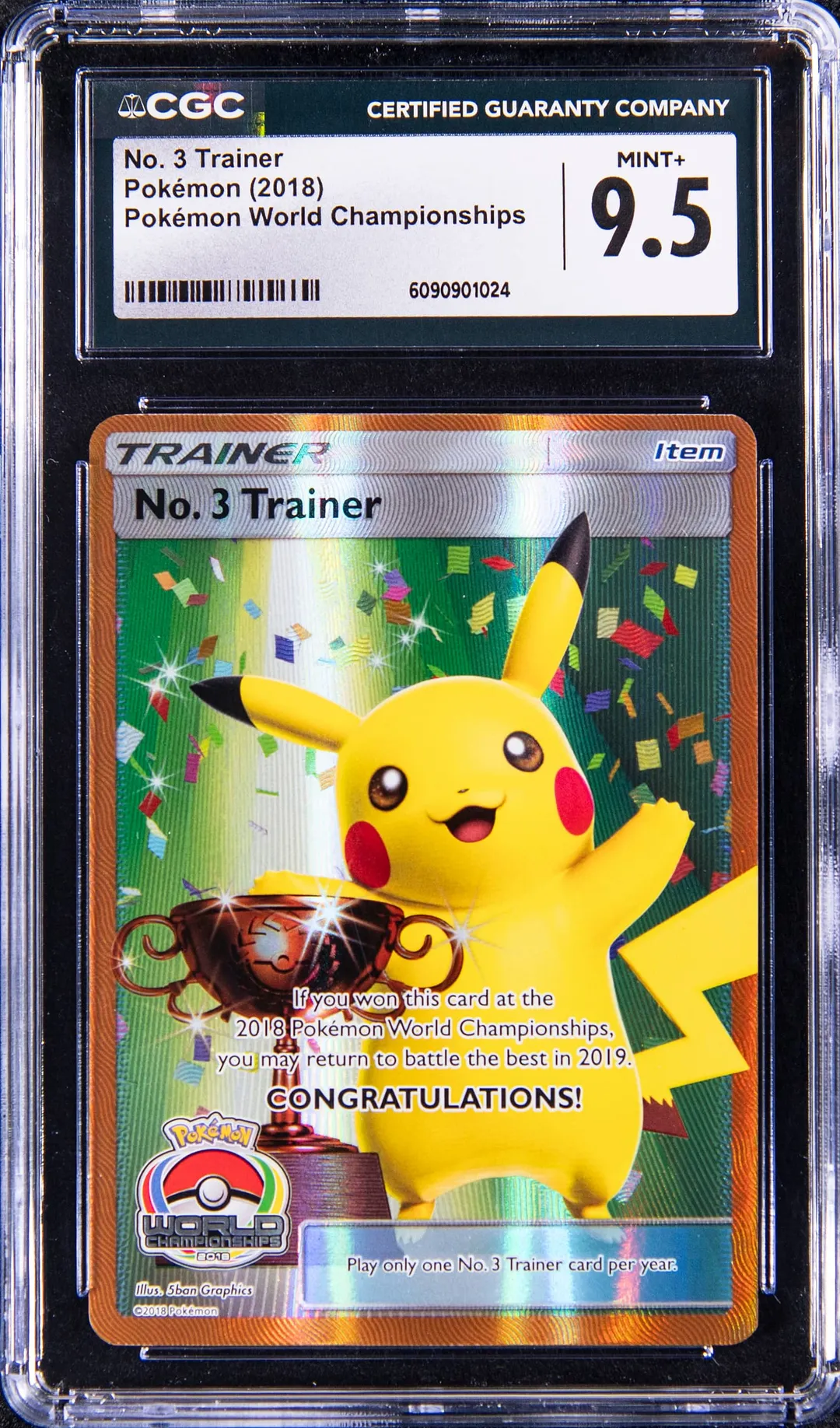
2018 No. 3 Trainer Pikachu Trophy CGC 9.5 Sale
Figoca looks at the $27,555 Goldin sale of a 2018 Pokémon World Championships No. 3 Trainer Pikachu trophy card graded CGC 9.5 Pop 1.
Sold Card
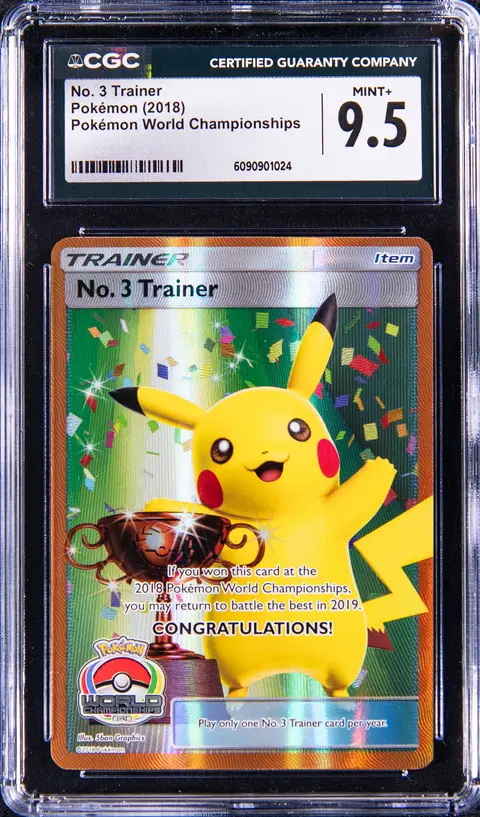
2018 Pokemon World Championships No. 3 Trainer Pikachu Trophy Card - CGC MINT+ 9.5 - Pop 1
Sale Price
Platform
Goldin2018 Pokémon World Championships No. 3 Trainer Pikachu Trophy Card (CGC 9.5) Sells for $27,555
On February 16, 2026, Goldin sold a 2018 Pokémon World Championships No. 3 Trainer Pikachu trophy card, graded CGC MINT+ 9.5, for $27,555. For a niche but highly respected slice of the Pokémon market—Worlds trophy cards—this is a meaningful data point for collectors who track rarity, grade scarcity, and long‑term significance.
Below is a breakdown of what this card is, why it matters, and how this sale fits into the broader market context.
The Card: 2018 No. 3 Trainer Pikachu Trophy Card
Key details
- Character: Pikachu (illustrated as a celebratory “Trainer” trophy card)
- Event: 2018 Pokémon World Championships
- Card type: No. 3 Trainer Trophy Card
- Year: 2018
- Set / Origin: Awarded at the official Pokémon World Championships (not a standard booster-set release)
- Distribution: Ultra‑limited prize card, given to top finishers in specific age divisions
- Grading company: CGC
- Grade: CGC MINT+ 9.5
- Population: Pop 1 at CGC in this grade at the time of sale (no higher)
World Championships trophy cards are not pulled from packs. They are awarded on site to top‑placing competitors at Worlds, making them both competitive trophies and trading cards. As a result, their print runs are extremely low and tightly controlled by Pokémon.
The No. 3 Trainer Pikachu from 2018 follows the long tradition of numbered Trainer trophies (No. 1, No. 2, No. 3, etc.) that have been part of the competitive scene since the early years of the game. While it is not a “rookie card” in the traditional sports sense, it is a key issue within the competitive trophy lane of Pokémon collecting.
Why Collectors Care About Worlds Trophy Cards
For context, the 2018 No. 3 Trainer sits in the broader category of World Championships trophy cards—cards given only to top finishers at Pokémon’s highest‑level annual tournament.
Collectors value them for several reasons:
True scarcity
Unlike mass‑printed set cards, Worlds trophies exist in very low quantities. Each age division gets only a handful of copies. While exact print numbers are not always publicly confirmed, the total population is generally understood to be in the single digits to very low double digits per year/placement.Direct tie to competitive history
These cards are literal trophies. Each one is tied to a specific Worlds year and its champions. Many high‑end collectors like that combination of game history and physical card scarcity.Pikachu as a flagship character
Pikachu remains the face of the Pokémon brand. Trophy cards that feature Pikachu often see stronger cross‑interest from both casual character collectors and dedicated trophy specialists.Era and condition
2018 falls into the ultra‑modern window for Pokémon—recent enough that surviving copies can be in strong condition, but still tied to the surge in interest leading into and during the 2020–2021 boom. High‑grade examples awarded in 2018 and submitted to grading services like CGC, PSA, or BGS help define the long‑term grade distribution for the card.
The Grade: CGC MINT+ 9.5 Pop 1
According to CGC’s population report (often called a pop report, which is a count of how many copies exist in each grade at a grading company), this copy sits as a Pop 1 in CGC MINT+ 9.5 as of the time it sold. That means:
- Only one example has been graded 9.5 by CGC.
- There are no higher‑graded copies at CGC at this time.
For a card that likely exists in very low raw numbers to begin with, a Pop 1 top‑grade adds a layer of scarcity on top of the already small award pool.
CGC’s 9.5 MINT+ is comparable to “gem mint” territory in hobby language, sitting just below perfect or pristine designations. For ultra‑modern cards, the difference between a strong 9, a 9.5, and a 10 can be material in price when the card is already rare and in demand.
The Sale: $27,555 at Goldin on February 16, 2026
- Sale price: $27,555 (converted from 2,755,500 cents)
- Auction house: Goldin
- Sale date (UTC): February 16, 2026
Goldin has become a common venue for higher‑end Pokémon pieces, including Worlds trophies, early Japanese promos, and major graded sets. The fact that this 2018 No. 3 Trainer Pikachu appeared there puts it in front of a buyer base that is familiar with both sports and TCG high‑end markets.
Market context and comparable sales
Because this is a niche trophy card with very few graded examples, direct comps (short for comparables, meaning recent sales of the same card that help frame value) are thin:
- Public sales databases show far fewer recorded transactions for 2018 No. 3 Trainer trophies than for mainstream chase cards like Charizards or alternate‑art full arts.
- Most of the available data for similar items tends to be:
- Earlier or later Worlds trophy years (e.g., 2016–2019 No. 1/2/3 Trainer variants).
- Different grading companies (PSA or BGS instead of CGC).
- Different placements (No. 1 vs No. 3) or different age divisions.
From those related examples, some general patterns stand out:
Earlier years and top placements command premiums
Earlier Worlds trophies (especially mid‑2000s) and No. 1 Trainer cards usually reach higher price ranges, sometimes by a wide margin.Grade and holder matter more as populations surface
As more copies of a given trophy card are graded, small differences—PSA vs CGC vs BGS, and a half‑grade difference—start to affect realized prices. For very small populations like this one, each new graded example can shift the perceived scarcity.2010s Worlds trophies have been building a track record
Sales across multiple auction houses and marketplaces show a slow but steady emergence of 2010s Worlds trophies into public auctions. Prices have fluctuated with the broader Pokémon market, but the overall takeaway is that the category has moved from obscure knowledge to a recognized niche.
Within this context, $27,555 for a CGC 9.5 Pop 1 copy of a 2018 No. 3 Trainer Pikachu fits into the established pattern where:
- Ultra‑modern Worlds trophies trade at a discount to the earliest trophy years.
- Pikachu‑centered and higher‑grade examples still command meaningful five‑figure results.
Without a dense trail of identical card/grade sales, it’s better to view this as one more data point in the developing price history rather than a definitive “market value.”
How This Sale Fits Into the Trophy Card Landscape
For collectors who track the long‑term story of trophy cards, this sale adds a few notable signals:
Confirmation of demand for recent‑era trophies
The fact that a 2018 trophy card can clear the mid–five‑figure range in a public auction reinforces that the trophy segment is not restricted to the oldest years.Continued recognition of CGC in high‑end Pokémon
While PSA has historically dominated high‑end Pokémon grading, CGC has carved out a position in TCG‑heavy segments. A Pop 1 CGC 9.5 trophy achieving $27,555 at Goldin will be of interest to collectors who watch grading‑company trends.Pikachu trophy appeal remains strong
Pikachu trophy cards have often been among the most watched listings whenever they appear, because they combine character collecting with competition history. This sale fits that pattern and gives newer collectors a benchmark when thinking about later‑era Pikachu trophies.
Takeaways for Different Types of Collectors
This sale can mean different things depending on where you sit in the hobby:
1. New or returning collectors
- Worlds trophies are not an entry‑level target in terms of price, but they’re useful to study if you want to understand the upper tier of the Pokémon market.
- Learning about event‑only promos, award cards, and how few of them exist can help you read rarity beyond just “PSA pop counts” on mass‑printed cards.
2. Active hobbyists
- This sale supports the idea that event‑tied rarity (Worlds trophies, staff promos, prize cards) can behave differently from the rest of the ultra‑modern market.
- Tracking multiple auction houses—not just single marketplaces—gives a better view of what serious buyers are willing to pay for hard‑to‑find items.
3. Small sellers and flippers
- Trophy cards are often illiquid: they can take time to sell and have fewer direct comps. That can be a positive or a negative depending on your approach.
- Monitoring sales like this CGC 9.5 Pop 1 example helps build a reference frame for when raw or lower‑grade trophies surface in private deals.
Final Thoughts
The February 16, 2026 Goldin sale of the 2018 Pokémon World Championships No. 3 Trainer Pikachu trophy card in CGC MINT+ 9.5 for $27,555 is another clear marker of where Worlds trophy cards currently sit in the Pokémon hierarchy.
Ultra‑modern trophies are still building their long‑term story. Each publicly recorded sale—especially in a top grade and at a major auction house—helps define that story a little more. For collectors who care about rarity rooted in real competition, this is exactly the kind of result worth bookmarking and revisiting as more 2010s trophy cards make their way from binders and safety deposit boxes into the public market.
As always, this sale is a data point, not a prediction. It shows what one serious buyer and seller agreed upon at a specific moment in time, under specific market conditions. For anyone following the high‑end Pokémon space, it’s a useful one.