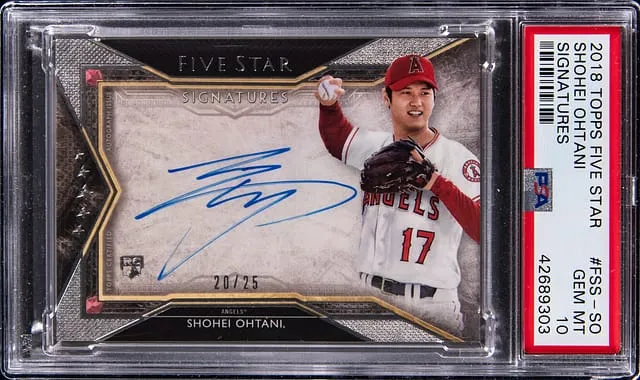
2018 Five Star Ohtani Auto /25 PSA 10 Sells for $29K
Inside the $29,282 Goldin sale of a 2018 Topps Five Star Signatures Shohei Ohtani rookie auto /25, graded PSA 10 with a pop of just 3.
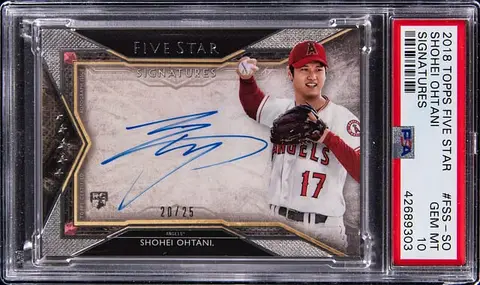
Sold Card
2018 Topps Five Star Signatures #FSS-SO Shohei Ohtani Signed Rookie Card (#20/25) - PSA GEM MT 10 - Pop 3
Sale Price
Platform
Goldin2018 Topps Five Star Shohei Ohtani Auto /25 Hits $29,282 at Goldin
On April 12, 2026, Goldin closed a notable ultra‑modern baseball sale: a 2018 Topps Five Star Signatures #FSS-SO Shohei Ohtani signed rookie card, serial‑numbered 20/25, graded PSA GEM MT 10. The final price landed at $29,282.
For a card with a population of just 3 in PSA 10, this result is an informative data point for anyone tracking high‑end Ohtani rookies and low‑serial on‑card autographs.
The Card: 2018 Topps Five Star Signatures Shohei Ohtani
Let’s break down exactly what this card is:
- Player: Shohei Ohtani
- Team (on card): Los Angeles Angels
- Year: 2018
- Set: Topps Five Star Baseball
- Subset: Five Star Signatures
- Card number: #FSS-SO
- Type: Rookie-year autograph card
- Autograph: On‑card (signed directly on the card surface)
- Serial numbering: Limited to 25 copies, this example is #20/25
- Grading company: PSA (Professional Sports Authenticator)
- Grade: PSA GEM MT 10
- Population: Pop 3 in PSA 10 (only three copies have received this grade)
Topps Five Star is known for its all‑hits format—every box is essentially a small pack of autographs or premium hits. Within that structure, the Five Star Signatures subset focuses on hard‑signed autographs of star players on thicker, premium card stock.
While many collectors think of Ohtani’s 2018 flagship Topps and Bowman issues as his “core” rookies, 2018 Five Star Signatures sits in the lane of high‑end, low‑print on‑card autographs—more comparable to National Treasures or Immaculate in basketball/football than to a standard base rookie card.
Why Collectors Care About This Card
Several factors make this a meaningful Ohtani piece:
Rookie‑year, on‑card autograph
This card was issued during Ohtani’s 2018 rookie season, when he arrived in MLB as a true two‑way player. Rookie‑year autographs—especially those signed directly on the card—tend to hold a special place in player‑focused collections.Low serial numbering (/25)
With only 25 copies produced, this isn’t a widely available card. When you then narrow that to just three PSA 10s, it becomes a genuinely tough card to target in top grade.PSA 10 with ultra‑low pop
A “pop report” (population report) is the grading company’s count of how many copies of a particular card exist at each grade level. Pop 3 in PSA 10 means there are only three examples at the highest PSA grade, which supports a premium relative to lower grades or raw (ungraded) copies.High‑end brand positioning
Within Topps’ lineup, Five Star is a premium, autograph‑driven product. Collectors who gravitate toward on‑card autos on thick, higher‑end stock often target Five Star, Triple Threads, Dynasty, and similar lines because they feel closer to memorabilia or art pieces than to mass‑produced base cards.Shohei Ohtani’s unique hobby status
By 2026, Ohtani is firmly established as one of the most important modern players in the hobby. His unique two‑way profile, awards, and global fan base have pushed a variety of his key rookie‑year cards into their own price tier. That demand flows into premium autos like this one, even if they are not the single most famous “flagship” rookie.
Market Context and Recent Sales
When collectors talk about “comps”, they mean comparable recent sales used to get a sense of current market value. For a card this scarce—only 25 copies total and pop 3 in PSA 10—direct comps can be thin. Instead, collectors usually triangulate from:
- The same card in different grades or raw
- Similar Ohtani rookie‑year autos from other premium sets
- Higher‑end Ohtani rookies of similar scarcity (e.g., other on‑card autos numbered to 25 or less)
Across major auction houses and marketplaces, the general pattern with premium Ohtani rookie autos has been:
- Raw or lower grades usually sell at a significant discount to PSA 10s, especially on thicker stock like Five Star where edge and corner wear are common.
- Population compression at the top: there may be a decent number of total graded copies, but often only a handful receive gem‑mint grades.
Within that context, the $29,282 result at Goldin on April 12, 2026, appears consistent with the broader trend: strong premiums for low‑serial, on‑card Ohtani rookie autos in top grade.
For this card specifically:
- The PSA 10 pop 3 status supports a top‑of‑the‑range result versus any known sales of raw or 9/9.5 equivalents, assuming those surface.
- The /25 serial and on‑card autograph place it in a tier collectors often view as long‑term “core” pieces for serious Ohtani collections, not just short‑term speculation.
Because the card is so scarce, sales do not happen frequently enough to create a clean price chart. Instead, each auction like this sets a new reference point that other buyers and sellers watch closely.
How This Sale Fits the Ohtani Market
The Ohtani market has a few distinct lanes:
Flagship and chrome rookies:
Cards like 2018 Topps Series 2, 2018 Topps Chrome, and especially variations and refractors where print runs are still relatively larger.Bowman and prospect issues:
Earlier prospect cards (including Bowman Chrome) that many collectors treat as the “first card” lane.High‑end autographs and patches:
Products like Five Star, Dynasty, Definitive, and similar sets that emphasize low‑print, on‑card autos and, in some cases, patches.
This Five Star Signatures Ohtani sits squarely in lane three. It doesn’t compete with base rookies on volume or accessibility. Instead, it’s more like a cornerstone piece that a smaller group of collectors targets very deliberately.
Within that lane, a roughly $30,000 sale at a major auction house like Goldin signals:
- Ongoing demand for low‑serial, rookie‑year Ohtani ink from serious collectors.
- Continued separation between true premium pieces and mid‑tier autos, even when both are numbered.
- The importance of grade + pop; a similar card with a materially lower grade would typically see a noticeable drop from this level.
Factors That Can Influence Interest Over Time
Without predicting the future, there are some recurring themes that tend to affect interest in this type of card:
- On‑field milestones and awards: Ohtani’s performance, health, and awards naturally influence how often collectors revisit his high‑end cards.
- Hobby cycles: Broader market cycles—periods when collectors rotate money between sports, eras, or players—can shift attention toward or away from ultra‑modern stars.
- Supply hitting the market: With only 25 copies, a single high‑profile sale like this can set the tone for months, especially if other owners of the card decide to hold rather than list.
Again, these are context points, not forecasts. They illustrate why collectors often track important sales like this Goldin result as part of their broader understanding of the Ohtani market.
Takeaways for Collectors and Small Sellers
For collectors and small sellers trying to position their own Ohtani cards, here are a few practical observations:
Grade and population matter more as print runs drop.
On a /25 card, every PSA 10 or BGS 9.5/10 can make a big difference in perceived scarcity. Checking pop reports is a simple habit that can clarify where your card sits.On‑card rookie‑year autos are a distinct lane.
Even if a sticker autograph or later‑year card has a similar serial number, the hobby often assigns an extra premium to rookie‑year, on‑card signatures.Auction results like this are reference points, not rules.
A $29,282 sale does not automatically reset every copy of a related card to that mark. Condition, eye appeal, timing, and venue (which auction house or marketplace) all matter.Venue visibility helps with thin‑supply cards.
When there are only a handful of copies, selling through a major auction house like Goldin can put the card in front of more targeted bidders, which can influence the final result.
Summary
- Card: 2018 Topps Five Star Signatures #FSS-SO Shohei Ohtani signed rookie card
- Serial: #20/25
- Attributes: On‑card autograph, rookie‑year issue, premium Five Star brand
- Grade: PSA GEM MT 10, Pop 3
- Sale price: $29,282
- Auction house: Goldin
- Sale date (UTC): April 12, 2026
For collectors following the high‑end Ohtani market, this sale is a clean, high‑visibility data point: a low‑print, on‑card rookie auto in top grade, changing hands publicly at a major auction house.
As always, it’s one result in a broader landscape, but it reinforces how carefully the hobby is watching premium Ohtani pieces and how much weight collectors continue to place on scarcity, grade, and on‑card ink.