2015-16 Poncho-Wearing Pikachu PSA 10 Set Sells Big
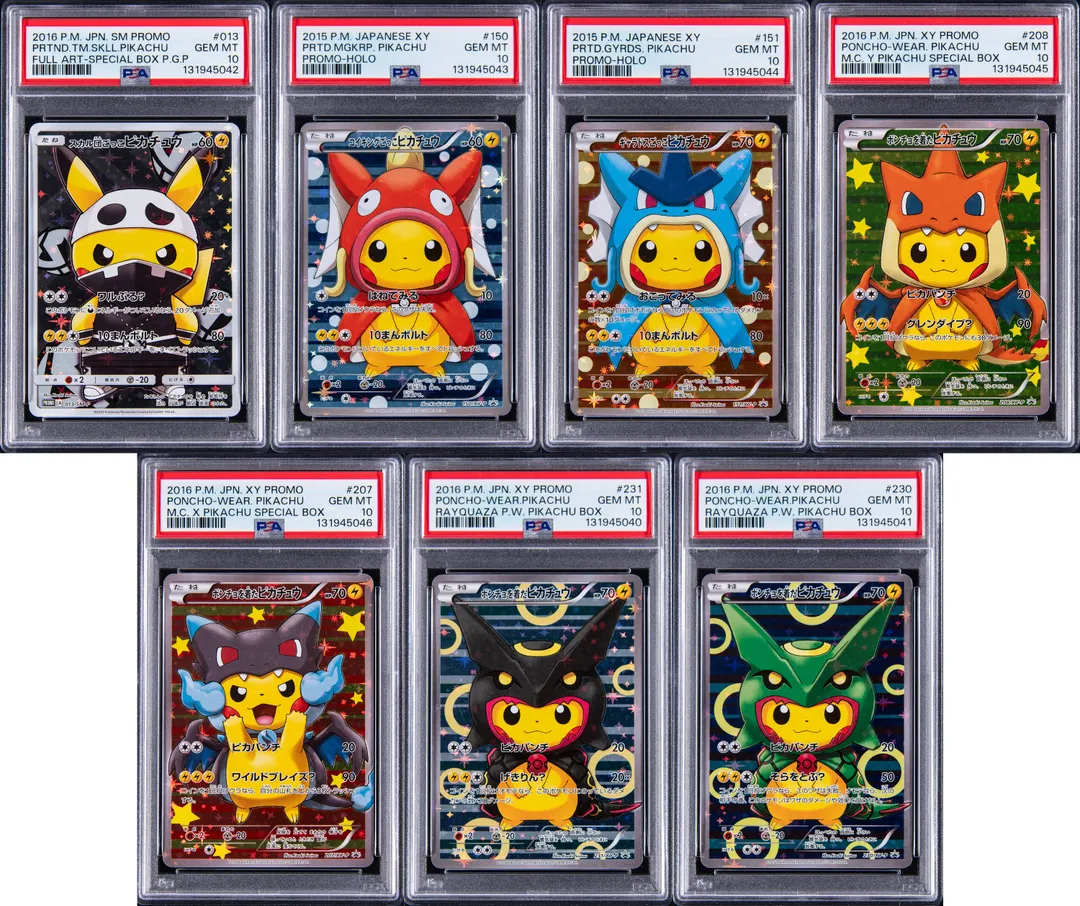
Goldin sold a 7-card 2015-16 Poncho-Wearing Pikachu / Pretend Pikachu PSA 10 promo set for $120,280. Here’s what that means for Pokémon collectors.
Sold Card
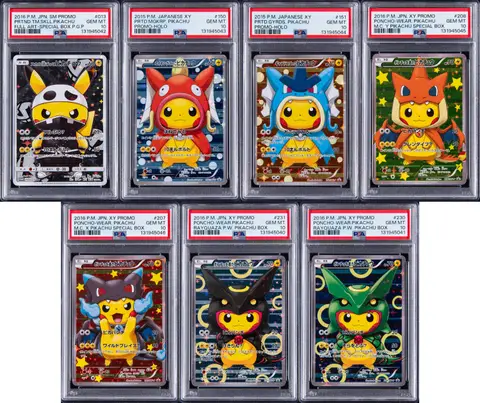
2015-16 Pokemon Japanese XY/Sun & Moon Promo Poncho-Wearing Pikachu/Pretend Pikachu PSA GEM MT 10 Collection (7 Different) - Sequential PSA Certification Numbers
Sale Price
Platform
Goldin2015-16 Poncho-Wearing Pikachu: A $120,280 PSA 10 Promo Milestone
On February 16, 2026, Goldin closed a headline-making Pokémon sale: a 2015-16 Pokémon Japanese XY/Sun & Moon Promo Poncho-Wearing Pikachu / Pretend Pikachu PSA GEM MT 10 collection of seven different cards, all with sequential PSA certification numbers, realized $120,280.
For a niche Japanese promo run from the mid-2010s, this is a meaningful result that highlights how far character-based Pokémon collecting has come—and how much collectors value complete, high-grade promo runs.
What Exactly Sold?
Title: 2015-16 Pokemon Japanese XY/Sun & Moon Promo Poncho-Wearing Pikachu/Pretend Pikachu PSA GEM MT 10 Collection (7 Different) - Sequential PSA Certification Numbers
Auction House: Goldin
Sale Date (UTC): 2026-02-16
Sale Price: $120,280
This was not a single card, but a collection of seven different Poncho-Wearing Pikachu / Pretend Pikachu promos, all graded PSA GEM MT 10 by PSA. The listing also notes sequential PSA certification numbers, meaning the seven slabs were graded together and labeled in a consecutive run.
Key attributes:
- Character: Pikachu in various cosplay/poncho forms (often mimicking other popular Pokémon)
- Years: 2015–2016
- Language/Region: Japanese
- Category: XY / early Sun & Moon-era Pokémon Center and related promos
- Grading company: PSA (Professional Sports Authenticator)
- Grade: GEM MT 10 (PSA’s highest standard grade for pack-issued cards)
- Special features:
- All seven cards are PSA 10s
- Sequential certification numbers
- Collectively present as a curated set
These Poncho-Wearing and Pretend Pikachu promos are known for their limited distribution and strong character appeal. They are not rookie cards in the sports sense, but in the Pokémon world they function as key character issues: recognizable artwork, themed promos, and a clear place in modern Pokémon promo history.
Why the Poncho-Wearing & Pretend Pikachu Promos Matter
For collectors who came back to the hobby during the recent Pokémon boom, the Poncho-Wearing Pikachu line often stands out for a few reasons:
Character plus costume appeal
These promos put Pikachu—already the franchise mascot—into costumes modeled after other popular Pokémon or themed ponchos. That combination of mascot plus cosplay creates crossover appeal: Pikachu collectors want them, but so do fans of the featured partner Pokémon.Japanese promo culture
In the XY and early Sun & Moon era, Japanese Pokémon Center and campaign promos became a core collecting lane. Many were tied to in-store events, special products, or limited-time campaigns. That history makes them feel more like souvenirs from a specific moment in the franchise.Ultra-modern but not overprinted
These are ultra-modern cards (roughly mid-2010s onward), but unlike mass-release English sets, many Japanese promos had more controlled distribution. They’re not vintage-rare, but clean, pack-fresh copies have to survive a decade and then grade a PSA 10.Strong graded demand
As more collectors focused on graded cards, specific promo lines like Poncho-Wearing Pikachu gained a reputation as high-end character targets. That means strong demand for PSA 10 examples, especially when presented as sets.
Grading and Population Context
When collectors talk about “pop reports”, they’re referring to population reports—a grading company’s count of how many copies of a card exist in each grade.
For Poncho-Wearing and Pretend Pikachu promos, pop reports typically show:
- A meaningful but not overwhelming number of total graded copies (these were well-known targets to send in).
- A finite supply of PSA 10s relative to demand, especially for certain art variations that have become fan favorites.
A single PSA 10 Poncho-Wearing Pikachu can already command a strong premium over raw (ungraded) copies. Multiplying that by seven different cards—and then adding the sequential cert factor—creates a premium “showpiece” collection.
Sequential certs don’t change the underlying scarcity of the cards, but they do matter to some advanced collectors. It’s a small signal that the cards were pulled, handled, and submitted as a curated group, which can make a multi-card lot feel more cohesive and collectible.
Recent Sales and Price Context
In hobby shorthand, “comps” are comparable sales—recent realized prices that give a rough idea of what similar items have sold for.
For this specific lot—a 7-card, all PSA 10, sequential-cert Poncho-Wearing / Pretend Pikachu collection—public, exact one-for-one comps are limited. Most recorded sales tend to be:
- Single Poncho-Wearing Pikachu promos in PSA 9 or PSA 10
- Smaller group lots (2–3 cards)
- Occasional full or near-full runs, but not always all 10s and not always with sequential certs
Across major marketplaces and auction houses in recent years:
- Single PSA 10 Poncho-Wearing Pikachu promos have often realized meaningful three- and sometimes low five-figure prices depending on art and scarcity.
- Complete or near-complete high-grade runs typically sell at a premium over the sum of individual cards, reflecting the time and effort required to assemble them.
Against that backdrop, the $120,280 result at Goldin positions this sale toward the high end of what collectors might expect for a curated, all-PSA-10, multi-card Pikachu promo showcase. The lack of identical comps makes it hard to call this definitively a “record” for the entire Poncho/Pretend Pikachu run, but the price clearly sits in premium territory within the character-based promo market.
Why This Sale Matters for the Market
1. Character-based collecting is still strong
This result reinforces a trend that’s been visible for several years: Pikachu and other mascot-driven cards can anchor serious, high-dollar collections, even when they’re not vintage or pack hits from main sets.
For newer collectors, this is a useful reminder that the hobby has multiple “lanes” beyond chase cards from booster boxes. Promo lines, especially those with distinctive artwork and distribution stories, can become long-term pillars in the market.
2. Complete, curated sets command premiums
Assembling seven different promos in PSA 10 isn’t trivial:
- You need to find clean raw copies or existing 10s.
- You need to navigate grading fees, wait times, and potential grade misses.
- You then have to decide whether to keep them or sell as a group.
The $120,280 Goldin sale shows that collectors are willing to pay for that work being done for them. For small sellers and hobbyists, this is a signal that:
- Completing mini-runs or themed groupings can add value.
- Sequential certs, while not essential, can make a set more visually and psychologically cohesive to a buyer.
3. Japanese promos have staying power
Even as attention shifts from one modern set to another, core Japanese promos like the Poncho-Wearing and Pretend Pikachu lines appear to have carved out a durable niche:
- They appeal to both Japanese and international collectors.
- They fit well into display cases and graded card walls due to distinctive, cohesive artwork.
- They represent a specific era in Pokémon Center and campaign promo history.
This Goldin result suggests ongoing respect for that niche, even in a broader market that has cooled from peak frenzy.
What Collectors Can Take Away
If you are:
A newer or returning collector
- Learn the promo stories. For sets like Poncho-Wearing and Pretend Pikachu, understanding how and where the cards were distributed can help you appreciate why they matter.
- Start small. You don’t need a seven-card PSA 10 run. One or two favorite artworks in raw or PSA 9 can be a good entry point.
An active hobbyist
- Track single-card comps. While this seven-card sale doesn’t easily break down into clean per-card numbers, watching single PSA 10 and PSA 9 sales for individual Poncho/Pretend Pikachu cards will give you better ongoing context.
- Consider themed lots. When selling, grouping related promos (same character line, same era, similar grades) can attract a different type of buyer than single cards alone.
A small seller
- Quality matters. High-grade promos, especially in PSA 10, continue to separate themselves from the rest of the population. Strong centering, clean surfaces, and sharp corners still rule.
- Documentation helps. When you have mini-runs or sequential certs, noting that clearly in your listing title and description can make a difference.
Final Thoughts
The February 16, 2026 Goldin sale of a 2015-16 Japanese XY/Sun & Moon Poncho-Wearing Pikachu / Pretend Pikachu 7-card PSA GEM MT 10 collection at $120,280 is a meaningful marker for Pokémon promos:
- It underscores the long-term appeal of Pikachu and character-based collecting.
- It highlights the premium that complete, high-grade, curated sets can command.
- It confirms that even in a more measured market, top-tier Japanese promos still attract serious competition.
As always, individual card values can move over time, and no single sale tells the whole story. But for collectors who love promos, Pikachu art, and graded sets, this result is a useful data point—and a reminder that thoughtful, focused collecting can yield both enjoyment and enduring hobby relevance.