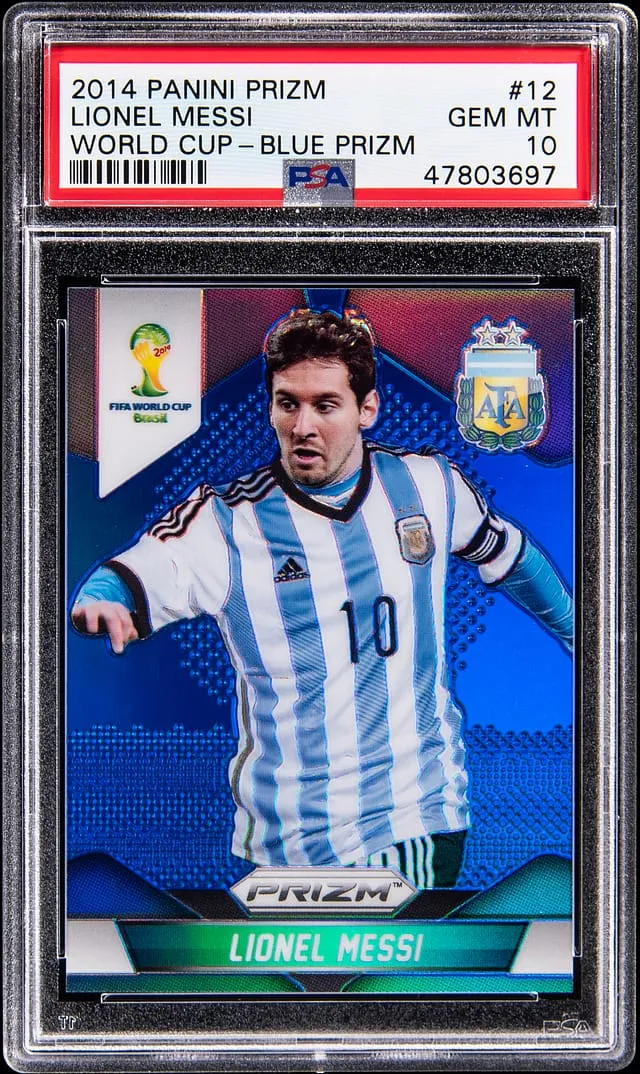
2014 Prizm Blue Messi PSA 10 sells for $50,020
Breaking down Goldin’s $50,020 sale of the 2014 Panini Prizm World Cup Blue Prizm Lionel Messi #12 /199 in PSA 10, and what it means for collectors.
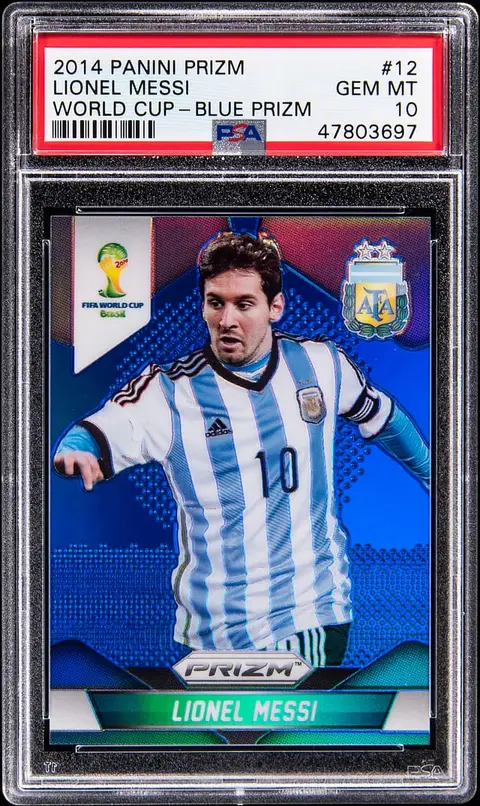
Sold Card
2014 Panini Prizm World Cup Blue Prizm #12 Lionel Messi (#194/199) - PSA GEM MT 10
Sale Price
Platform
Goldin2014 Prizm Blue Messi in PSA 10: What This $50,020 Sale Tells Us
A serial‑numbered Lionel Messi parallel from the first modern World Cup Prizm set just cleared the auction block in gem mint condition.
On May 22, 2026, Goldin sold a 2014 Panini Prizm World Cup Blue Prizm #12 Lionel Messi, serial‑numbered 194/199 and graded PSA GEM MT 10, for $50,020.
Below, we’ll unpack what this specific card is, why collectors care about it, and how this sale fits into the broader Messi and World Cup Prizm market.
Card snapshot: what exactly sold?
• Player: Lionel Messi (Argentina) • Team: Argentina National Team • Year: 2014 • Set: 2014 Panini Prizm World Cup • Card number: #12 • Parallel: Blue Prizm, serial‑numbered /199 (this copy is #194/199) • Rookie status: Not a rookie card; it’s a key early‑Prizm World Cup issue • Grading company: PSA • Grade: PSA GEM MT 10 (Gem Mint) • Attributes: Color parallel, low serial numbering relative to base, popular chromium (shiny) Prizm stock
2014 Prizm World Cup is widely treated as the “flagship” chromium World Cup release, similar to how 2012 Prizm is viewed in basketball. It’s the first World Cup set produced under the Panini Prizm brand, which is why collectors often give it long‑term weight.
The Blue Prizm parallel sits in the core color run for the product and, at /199, is considerably scarcer than base silver Prizms but more obtainable than ultra‑low serials like Gold /10 or Black 1/1.
Why 2014 Prizm World Cup matters
When we talk about “set importance,” we’re looking at how collectors view a release over time. 2014 Panini Prizm World Cup checks several boxes:
• First World Cup Prizm set: This gives it a historical anchor in the same way first‑year Chrome or first‑year Prizm does in other sports. • Global player checklist: Messi, Ronaldo, Neymar, Modrić and other modern icons all appear together, which concentrates demand in one product. • Condition sensitivity: Prizm cards often pick up surface scratches, dimples, and edge chipping. That makes high‑grade copies (PSA 10) more meaningful.
For Messi specifically, 2014 Prizm World Cup has taken on extra significance after Argentina’s 2022 World Cup title. Collectors who want a World Cup‑era Messi card with global recognizability often look to this set and its key parallels.
How important is this Messi Blue /199 within his card market?
Messi has several major “pillars” in his card timeline:
• True rookies: Early issues like 2004‑05 Mega Cracks and other 2004 releases. • Early Barcelona and Champions League cards. • Early chromium cards: including World Cup and high‑end club releases.
This 2014 Prizm World Cup Blue Prizm /199 is not a rookie card, but it occupies a sweet spot: it’s an early, globally distributed, color, serial‑numbered parallel from the first Prizm World Cup release.
Collectors tend to care about:
• On‑card autos and patches (jersey pieces). This card does not have either; its appeal is driven by player, set, parallel, and grade. • Serial numbering: /199 creates defined scarcity compared with non‑numbered parallels. • Eye appeal: The Blue Prizm color pairs naturally with Argentina’s kit, which helps this parallel stand out visually. • Grading scarcity: Because 2014 Prizm can be tough in high grade, PSA 10s form a relatively thin population compared with raw or PSA 9 copies.
Understanding the $50,020 sale price
The hammer plus buyer’s premium at Goldin resulted in a final price of $50,020 on May 22, 2026.
To put this in context, it’s helpful to think about “comps” (short for “comparables”), which are recent sales of the same card or closely related versions. Those give collectors a rough sense of where the market currently values a card, without being a prediction.
Key context points for this sale:
• Grade premium: For modern parallels, PSA 10 copies often sell at a significant multiple of PSA 9 or raw copies, because they remove a lot of grading risk. • Set and parallel premium: Within 2014 Prizm World Cup, lower‑numbered color like Gold /10 and other scarce variants typically command the highest prices. Blue /199 sits a step below those but above unnumbered silvers. • Messi World Cup narrative: After Argentina’s win in 2022, World Cup‑themed Messi cards, particularly from 2014 and 2022, saw increased hobby attention. That interest tends to support prices for key parallels within important sets.
Compared to:
• Lower grades of this same card: PSA 9 or BGS 9 copies of the Blue /199 tend to transact at meaningfully lower levels. PSA 10s form a much thinner supply. • Other 2014 Prizm Messi parallels: Higher‑tier parallels (such as Gold /10) have historically set much higher record prices, whereas more common colors and silvers typically land below this range.
Without relying on exact historical sales numbers here, what we can say is that a five‑figure result for a PSA 10 copy of a numbered 2014 Prizm World Cup Messi parallel is consistent with how the hobby currently values:
• Early‑Prizm, globally recognized sets • Serial‑numbered color • Iconic players with sustained demand
Within that framework, $50,020 places this particular copy toward the stronger end of recent parallel sales for non‑rookie Messi World Cup cards, especially given the combination of /199 scarcity, set importance, and a PSA GEM MT 10 grade.
Grading, population, and scarcity
When collectors mention a “pop report” (population report), they’re talking about the official counts that grading companies publish for how many copies of a card exist in each grade.
For 2014 Prizm World Cup Messi Blue /199:
• The serial number already caps total supply at 199 copies. • Not all 199 have been graded; some remain raw in collections or unopened product. • Of those graded by PSA, only a portion receives a GEM MT 10 grade.
The result is a small pool of PSA 10 Blue /199s that regularly come to market. That scarcity, layered on top of Messi’s global fan base, helps explain why competitive bidding can appear when a strong copy surfaces at a major auction house.
Market context: what might be influencing interest now?
Several broader factors are worth keeping in mind when you look at a sale like this:
• Messi’s late‑career achievements: Adding a World Cup title in 2022 significantly strengthened his “GOAT” (greatest of all time) case. Collectors often revisit earlier World Cup‑era cards after a major milestone. • Shift from rookies to key moments and sets: While rookies remain central, more collectors are building focused runs around important tournaments, sets, and parallels. 2014 Prizm World Cup is often at the center of World Cup‑focused Messi collections. • Auction house exposure: Goldin’s global reach and established buyer base can influence realized prices for high‑end soccer cards simply by putting them in front of more motivated bidders.
None of these factors “guarantee” any future outcome, but they help explain why a numbered, gem‑mint Messi from a historically important World Cup set can draw sustained attention.
Takeaways for collectors and small sellers
If you’re new to soccer cards or returning to the hobby, here are a few practical points this sale highlights:
Set history matters First‑year or landmark sets (like 2014 Prizm World Cup) can hold a premium over later releases, even when they are not rookies. Understanding a set’s place in the hobby timeline helps you interpret price levels.
Color and serial numbering add layers of scarcity A base card might have thousands of copies, but a Blue /199 has a capped, published print run. That clarity appeals to many collectors.
Condition is a real driver With modern chromium cards, surface defects are common. The jump from PSA 9 to PSA 10 can be large, because collectors are paying to avoid grading risk and to own one of the best‑preserved copies.
Use comps as a guide, not a promise Looking at recent sales of the same card and related parallels helps you understand where the market has been, but it isn’t a guarantee of where it will go.
Auction house sales can set reference points A well‑publicized sale at a venue like Goldin on May 22, 2026, becomes a reference point for future private deals and auctions, especially for a relatively thinly traded card.
Where this card fits in a Messi collection
For dedicated Messi collectors, this card often slots into one of these lanes:
• Core World Cup run: Part of a targeted group of key World Cup issues (2006, 2010, 2014, 2018, 2022), with 2014 Prizm as a cornerstone. • Color‑match and aesthetic builds: Collectors who prioritize visual harmony and serial numbering often favor Blues from this set for Argentina. • High‑grade parallel focus: For those building PSA 10 runs of important Messi parallels, a 2014 Blue /199 is a notable checkbox.
It’s not a replacement for a true rookie, and it doesn’t try to be. Instead, it represents a premium, early‑Prizm, World Cup‑era snapshot of Messi in a format the broader hobby understands immediately: serial‑numbered color in a flagship chromium set.
Final thoughts
This 2014 Panini Prizm World Cup Blue Prizm #12 Lionel Messi (#194/199) in PSA GEM MT 10 selling for $50,020 at Goldin on May 22, 2026, illustrates how the market continues to treat:
• First‑year World Cup Prizm as a key modern soccer release • Serial‑numbered color as a meaningful layer of scarcity • High‑grade copies of global icons as premium pieces within focused collections
For collectors and small sellers, it’s a useful data point rather than a forecast—one more reference when you’re weighing your own buying, selling, or grading decisions around 2014 Prizm World Cup Messi cards.
As with any card, the real value is in how it fits your collection goals, your view of the set’s importance, and your comfort level with the broader market.