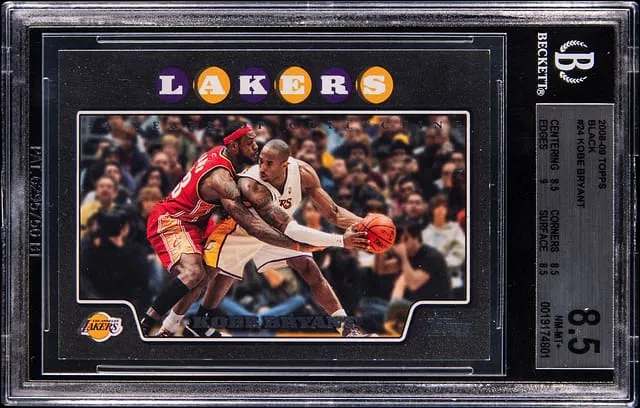
2008-09 Topps Black Kobe BGS 8.5 Sells for $63K
Deep dive on the 2008-09 Topps Black #24 Kobe Bryant BGS 8.5, Pop 4, that sold for $63,196 at Goldin on June 7, 2026.
Sold Card
2008-09 Topps Black #24 Kobe Bryant (#32/51) - BGS NM-MT+ 8.5 - Pop 4 - No Higher-Graded Copy Confirmed By BGS, PSA, SGC
Sale Price
Platform
Goldin2008-09 Topps Black #24 Kobe Bryant (#32/51) - BGS 8.5 Market Breakdown
On June 7, 2026, Goldin closed a key late-2000s Kobe Bryant parallel: a 2008-09 Topps Black #24, serial-numbered #32/51 and graded BGS NM-MT+ 8.5, for $63,196. For collectors who follow numbered parallels and population data closely, this is an important data point in the Kobe market.
Let’s break down what sold, why it matters, and how this price fits into recent sales.
Card overview: what exactly is this Kobe?
- Player: Kobe Bryant
- Team: Los Angeles Lakers
- Year: 2008-09
- Set: 2008-09 Topps Basketball
- Card: #24 (base card design, Black parallel)
- Parallel: Topps Black, serial-numbered to 51 copies
- Serial number: #32/51
- Rookie card?: No – this is a key later-career issue, not a rookie.
- Grading company: BGS (Beckett Grading Services)
- Grade: BGS 8.5 NM-MT+ (Near Mint-Mint Plus)
- Population note: Pop 4 in BGS 8.5 with no higher-graded copy confirmed across BGS, PSA, SGC at the time of the sale
Topps Black parallels in basketball
Topps Basketball from the mid-to-late 2000s has become a key lane for collectors who like:
- Simple, recognizable flagship designs
- Clear serial-numbering on parallels
- A mix of established stars (like Kobe, LeBron) and rookies
The Black parallel is one of the most desirable color versions from these years. With just 51 copies produced, it sits in a range many collectors consider genuinely scarce but not impossible to chase.
2008-09 specifically is also historically interesting. It is one of the final Topps flagship NBA seasons before the license moved away, so star parallels from this era have taken on a “last run of Topps basketball” feel. For Kobe collectors, 2008-09 sits right in the middle of a championship window and a mature phase of his career.
Grading, population, and scarcity
This copy is graded BGS 8.5 (Near Mint-Mint Plus). That’s a strong but not gem-mint grade, yet the population data matters more than the label alone here.
“Pop” or population report: this is the number of copies a grading company has graded at each grade level. In this case, we have two important points:
- BGS 8.5 population: 4 copies of this specific card and parallel
- No higher-graded copy confirmed across BGS, PSA, SGC at the time of sale
That last point is what stands out. For many modern and ultra-modern cards, we’re used to seeing multiple BGS 9.5 and PSA 10s. Here, we have a serial-numbered to 51 card that, at least as of this sale, has not produced a higher graded example at any of the three major graders.
In practical terms, that means:
- Condition scarcity: it’s not just that there are 51 copies, but that high-grade examples appear genuinely tough.
- Ceiling effect: if no 9s or 9.5s exist, BGS 8.5 effectively sits at the top of the graded population.
For set builders (people who chase full Topps Black runs) and player collectors focusing on Kobe’s numbered parallels, these population dynamics can matter as much as the serial number itself.
Price context: how the $63,196 result fits in
This card sold at Goldin on June 7, 2026, for $63,196.
When collectors talk about “comps,” they mean comparable sales: recent auction or marketplace prices that help frame what a card has actually been selling for, not what it’s listed for.
Because this specific card is:
- Serial-numbered to just 51,
- A pop-4 in BGS 8.5, and
- Reported with no higher graded copies across major graders,
we don’t see frequent public sales of this exact grade and parallel. Instead, the market context usually comes from:
- Other grades of the same 2008-09 Topps Black Kobe
- Other Kobe Topps Black parallels from nearby years
- High-end numbered Kobe parallels from similarly important sets
Across these types of comps, several patterns generally emerge in late-2000s Kobe:
Numbered parallels from major brands (Topps, Topps Chrome, key Panini releases) usually track closely with:
- Print run (lower serial-number = typically higher demand)
- Brand and set history
- Population in top grades
Cards that combine:
- A premium parallel (like Black),
- A low print run (to 51), and
- Top-of-the-pop condition status
tend to sit at the higher end of the price range for a player’s non-rookie issues from the same period.
Against that backdrop, a $63,196 sale price signals that the market is treating this card more like an important blue-chip Kobe parallel than just a routine late-career insert. The limited public data for this exact card and grade makes it more of a directional marker than a precise “value,” but it clearly plants this copy in the high-end Kobe segment.
Collector significance
Why do collectors care about this card?
Kobe’s collecting lane Kobe Bryant sits alongside Jordan and LeBron in terms of long-term hobby interest. While his true rookie cards get most of the mainstream attention, serious Kobe collectors have also built deep lanes of:
- Numbered Topps and Topps Chrome parallels
- Key inserts and short-prints
- Autographs and high-end Panini releases
Within that ecosystem, low-numbered Topps parallels from his playing days are a foundational piece of many advanced collections.
The 2008-09 Topps era 2008-09 represents:
- A late stretch of Topps’ long NBA run
- A period when print runs were tighter than the 1990s, but not yet in today’s ultra-serial-numbered environment
For collectors, that combination often means:
- Less supply sitting in unopened cases
- Fewer chances to pull and grade pristine copies years later
Black parallel appeal The Black parallel stands out because:
- The numbering to 51 creates built-in scarcity.
- The colorway is visually distinct from base.
- It’s easy to understand and explain: same card design, lower print run, black border.
That clear story tends to age well. Newer collectors can look at the serial number and immediately understand why it matters.
Condition sensitivity Black-bordered cards are often condition-sensitive: chipping and edge wear show more easily. That partially explains why higher grades can be scarce and why an 8.5 can sit at or near the top of the population. For collectors focused on aesthetics and preservation, that condition profile matters.
Recent hobby and Kobe context
Kobe-related cards have seen several waves of attention over the last few years, often tied to:
- Anniversary milestones
- Retrospective media coverage
- Ongoing interest from collectors who grew up watching him
While those cycles can cause short-term price swings, this particular sale fits more into the category of:
- A rare, condition-sensitive parallel
- From a major brand
- Placed in a premium auction setting
In other words, the structure of the card itself (numbering, grade, population) explains most of the result, rather than short-term news alone.
What this sale might mean going forward
Without making any predictions, a few grounded takeaways for collectors:
Population and serial-number data matter. This result reinforces how closely serious buyers look at:
- Serial number (51 copies total)
- Grading population (pop 4 in BGS 8.5)
- Relative scarcity of higher grades (none confirmed at the time of sale)
Late-2000s Topps stars are firmly established. While rookie cards take headlines, important low-numbered star parallels from this era clearly have a defined place in the market.
The auction environment is a factor. High-end Kobe parallels placed in well-trafficked auctions, like this Goldin event on June 7, 2026, tend to draw in:
- Player collectors
- Set builders
- Long-term hobbyists consolidating into a smaller number of important cards
How this helps newer or returning collectors
If you’re newer to the hobby or just getting back in, here’s how to use this sale as a learning tool:
Start by understanding the set and the parallel:
- 2008-09 Topps is a flagship NBA product.
- The Black parallel is a low-numbered, visually distinct version.
Learn to read serial numbers and population reports:
- Serial-numbered to 51 means the manufacturer only produced 51 copies.
- Pop reports from BGS, PSA, and SGC tell you how many have been graded and at what levels.
Compare across years and players:
- Look at how similar Topps Black parallels for other stars (LeBron, key rookies) trade.
- This can help you see whether the Kobe market is moving in line with, above, or below those peers.
Use high-end results as reference points, not targets:
- A $63,196 result shows what the top of the market is doing.
- You can often find more accessible versions (different parallels, lower grades, or non-serial-numbered copies) that share the same photo or design.
Summary
The 2008-09 Topps Black #24 Kobe Bryant (#32/51) graded BGS 8.5 that sold at Goldin on June 7, 2026, for $63,196 is a textbook example of how:
- A respected flagship brand (Topps)
- A short print run (to 51)
- Condition scarcity (pop 4 with no higher known)
combine to create a premium result for a non-rookie, star-veteran parallel.
For collectors, this sale is less about chasing a headline number and more about understanding how numbered parallels, population reports, and set history work together to shape the modern Kobe market.