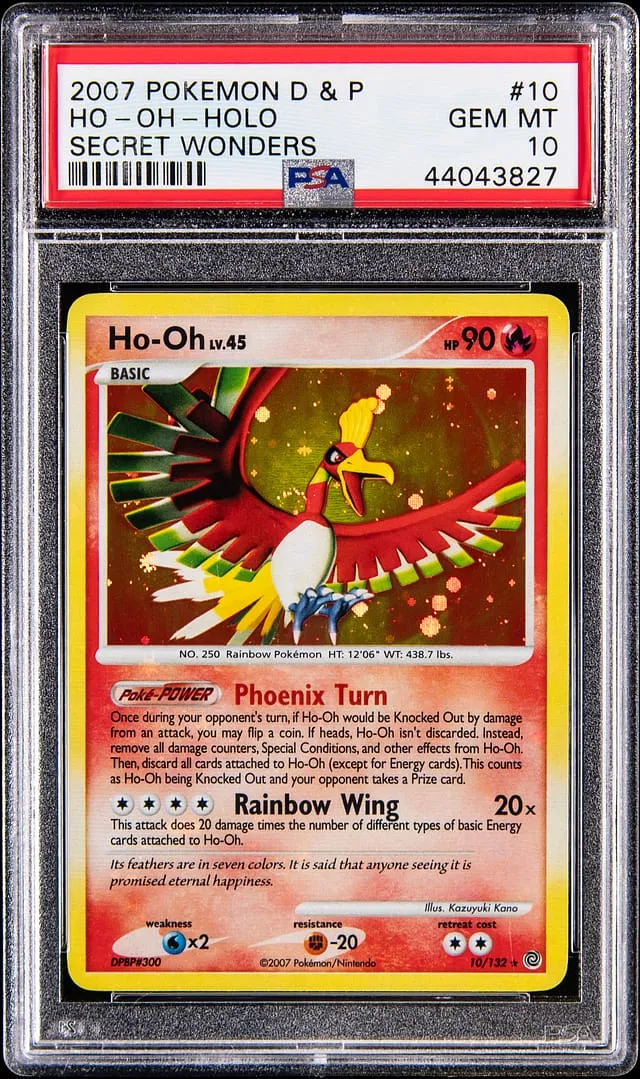
2007 Secret Wonders Ho-Oh PSA 10 Sells for $152k
A PSA 10 Ho-Oh from 2007 Secret Wonders sold for $152,500 at Goldin. We unpack the card’s significance, grade scarcity, and market context.
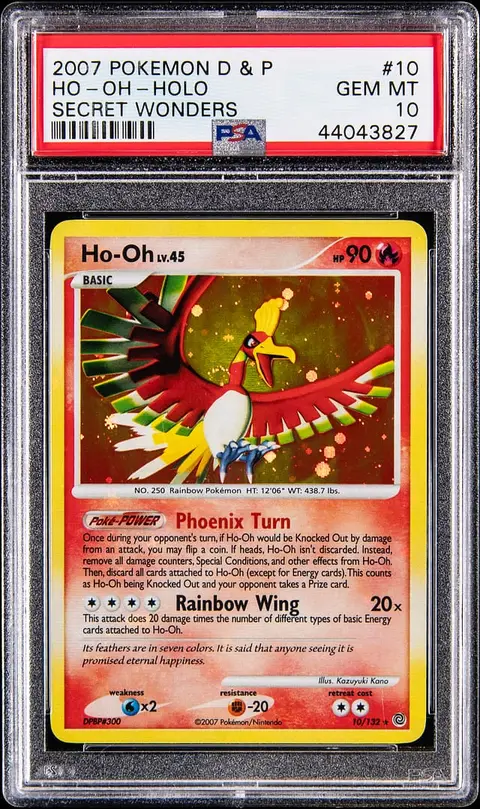
Sold Card
2007 Pokemon Diamond & Pearl Secret Wonders Holo #10 Ho-oh - PSA GEM MT 10
Sale Price
Platform
GoldinA 2007 Pokémon Diamond & Pearl Secret Wonders Holo #10 Ho‑Oh in PSA GEM MT 10 just changed hands at Goldin on 2026‑05‑11 for $152,500. For a mid‑2000s era holographic legendary, that is a serious data point for anyone tracking post‑WOTC Pokémon cards.
In this breakdown, we’ll walk through what the card is, how this sale compares to recent market activity, and why collectors care about Secret Wonders Ho‑Oh in the first place.
The card at a glance
- Character: Ho‑Oh
- Set: 2007 Pokémon Diamond & Pearl – Secret Wonders
- Card number: #10
- Variant: Standard set holofoil (not an EX, LV.X, or Gold Star)
- Era: Early DP / mid‑2000s (post‑WOTC, pre‑Sun & Moon)
- Grading company: PSA (Professional Sports Authenticator)
- Grade: GEM MT 10
- Attributes: Non‑autograph, non‑serial‑numbered; classic holo rare of a cover legendary
This is not a rookie card in the sports sense, but for Pokémon it functions as a key early‑Diamond & Pearl era appearance of Ho‑Oh, rendered in a distinctive Secret Wonders holo pattern.
Why Secret Wonders Ho‑Oh matters to collectors
1. A legendary from a transitional era
Secret Wonders released in late 2007 during the Diamond & Pearl era. It sits in a transitional period: no longer vintage WOTC (1999–2003), but well before the modern boom of full‑art, rainbow, and alt‑art chase cards.
That era has several traits collectors pay attention to:
- Print runs smaller than modern: While not as scarce as early Base/Jungle/Fossil, Secret Wonders came out long before today’s massive print cycles.
- Lower PSA submission volumes: For many years, collectors prioritized 1st Edition WOTC, Gold Stars, and early EX cards. Mid‑2000s non‑Gold‑Star holos often lagged in grading volume, which can create relatively low supply in high grades.
- Growing nostalgia: Collectors who grew up with the DS and early online Pokémon era are now returning to the hobby, often targeting sets like Secret Wonders.
Ho‑Oh itself is a franchise staple and a box mascot legendary, originally headlining Pokémon Gold. Legendary cover Pokémon tend to draw consistent interest because they sit at the center of game and anime storylines.
2. Secret Wonders as a set
Secret Wonders is known for a few things:
- A mix of classic Kanto monsters and Johto legendaries
- Distinctive holo patterns and artwork that stand apart from the EX era before it
- Being one of the earlier Diamond & Pearl sets, which many players remember from competitive play and collecting around 2007–2008
Within that context, Ho‑Oh #10 is one of the set’s better‑known holos. It is not the absolute top‑end chase card (like a Gold Star equivalent, which this set doesn’t have in the same way as EX Deoxys or Power Keepers), but it is a clear headliner for legendary collectors and those building graded Secret Wonders runs.
PSA GEM MT 10: why the grade matters
PSA 10 (GEM MT) indicates a card that PSA considers virtually flawless to the naked eye: sharp corners, strong centering, and clean surfaces.
For a 2007 holo rare, reaching PSA 10 is not automatic. Holofoil cards from this era are prone to:
- Print lines
- Scratches and micro‑scuffing from light play
- Edge wear from handling and storage
Many raw copies in long‑time collections show minor handling wear that pushes them into PSA 8 or 9 territory. That’s why collectors often look at pop reports—the grading company’s census of how many cards exist at each grade—to understand true scarcity in GEM MT.
While exact live PSA population numbers can change over time, historically the 2007 Secret Wonders holos in PSA 10 have been relatively limited compared to high‑print modern sets. Even a small population—say dozens instead of hundreds—can make a big difference when serious collectors decide they want one specific card.
Market context: how does $152,500 fit in?
This Ho‑Oh sold at Goldin on 2026‑05‑11 for $152,500. To make sense of that number, it helps to consider a few layers of context:
Era and card type: Most ultra‑high‑end Pokémon results have historically centered on:
- 1st Edition Base Set holos (Charizard, Blastoise, etc.),
- Trophy and promo cards with extremely low populations,
- Gold Star and early EX series chase cards,
- And certain rare Japanese promos.
A Secret Wonders holo, even with a franchise legendary like Ho‑Oh, sits outside those historically most expensive lanes.
Comparable cards and grades: Publicly reported sales for PSA‑graded Ho‑Oh Secret Wonders have typically been far below six figures, especially in PSA 8–9. Other Ho‑Oh chase cards—like Neo Revelation or certain Gold Star and promo versions—have tended to dominate Ho‑Oh’s top price tiers.
Auction venue and timing: Goldin is a major auction house that regularly handles high‑end sports and TCG material. Significant, outlier results sometimes occur when two or more determined bidders converge on a specific example at the same time.
Given usual market patterns for mid‑2000s holo rares, a $152,500 realized price in PSA 10 sits at the very top end of what collectors would expect to see. Compared with more typical Secret Wonders holo prices and even many iconic WOTC holos, this figure is best viewed as a standout data point rather than a baseline.
In other words: it’s an important sale, but collectors should see it as a single strong comp, not an automatic new “floor.”
What this sale might mean for the market
When a result like this appears, it tends to trigger a few reactions across the hobby:
Increased attention on mid‑2000s holos
Collectors and small sellers often re‑check their binders and storage boxes for Diamond & Pearl‑era holos. Cards that were once treated as “bulk holos” sometimes receive a second look for grading.Closer study of population and condition
After a high sale, many collectors look up the PSA and other grading company population reports for the exact card. If PSA 10 populations remain low and new 10s are slow to appear, that can support the idea that true GEM MT examples are genuinely tough.More data from follow‑up sales
One strong auction result is informative but incomplete. Collectors will be watching for:- Subsequent PSA 10 Ho‑Oh Secret Wonders sales,
- Sales of PSA 9 versions,
- And prices for related Ho‑Oh cards (like Neo era or Gold Star appearances).
Over time, these follow‑up sales help define a range rather than a single outlier number.
For newcomers and returning collectors
If you’re just getting back into Pokémon and you see a $152,500 figure attached to a 2007 holo, a few practical takeaways can help frame things:
- “Comps” means comparable sales. These are recent, similar transactions used to understand where the market has been—not where it must go.
- One big sale doesn’t guarantee future prices. The hobby is full of isolated high results tied to specific auctions, bidders, or timing.
- Condition is everything for mid‑2000s holos. Before sending cards for grading, carefully examine centering, surface scratches, edge wear, and holo print lines.
- Focus on the cards you actually like. Legendary Pokémon like Ho‑Oh hold long‑term collector appeal because of their role in the games and anime, not just their price tags.
Key facts to remember about this sale
- Card: 2007 Pokémon Diamond & Pearl Secret Wonders Holo #10 Ho‑Oh
- Grade: PSA GEM MT 10
- Auction house: Goldin
- Sale date (UTC): 2026‑05‑11
- Sale price: $152,500
This result highlights how much attention mid‑2000s sets like Secret Wonders are starting to receive, especially at the very top of the condition spectrum. As more data comes in from future auctions and fixed‑price listings, collectors will get a clearer sense of where this Ho‑Oh—and the broader Diamond & Pearl holo market—tends to settle.
For now, it stands as one of the more eye‑catching Ho‑Oh sales in recent memory and a reminder that graded condition, set context, and collector nostalgia can combine in powerful ways.