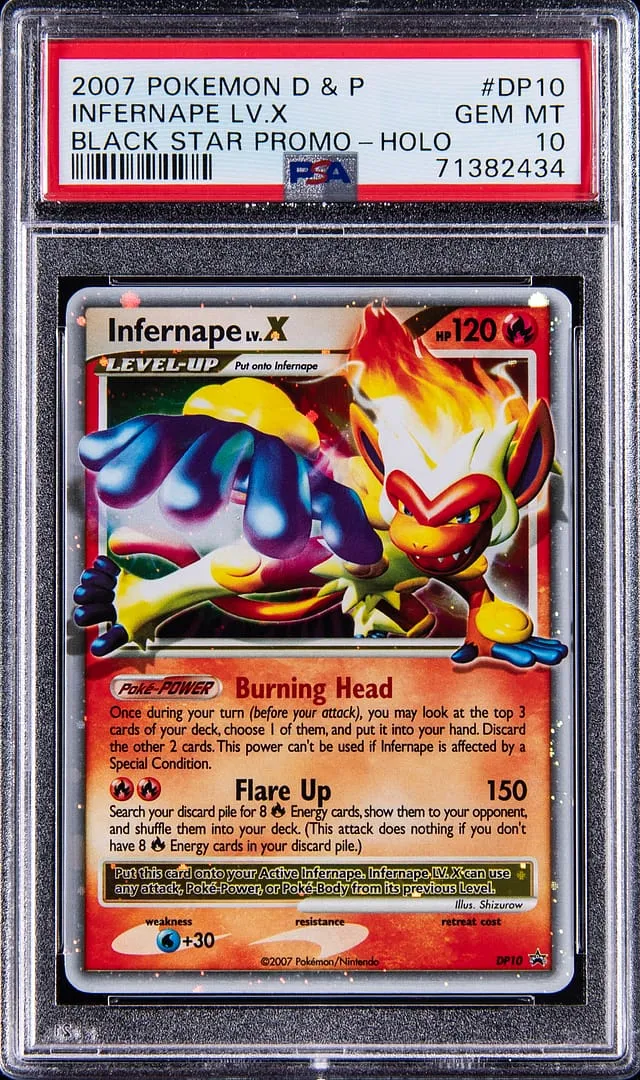
2007 Infernape Lv.X PSA 10 Promo Sells for $40,504
A 2007 Pokémon DP Black Star Promo Infernape Lv.X PSA 10 sold for $40,504 at Goldin. Here’s what this high-end result means for collectors.
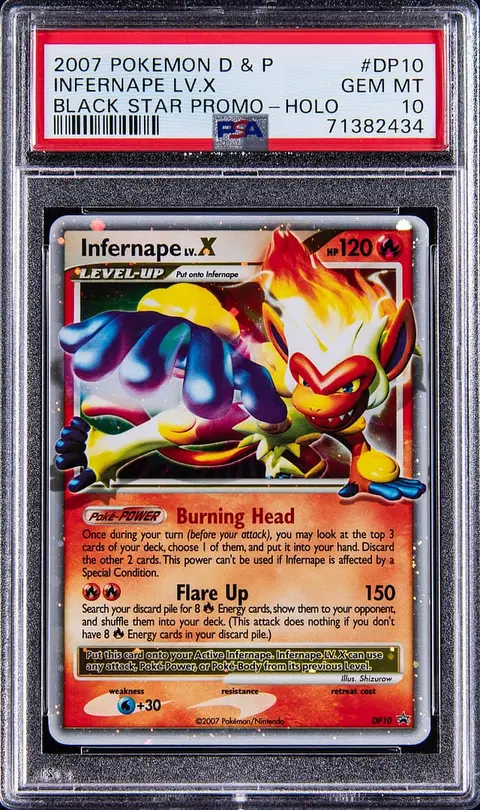
Sold Card
2007 Pokemon Diamond & Pearl Black Star Promo Holo #DP10 Infernape Lv.X - PSA GEM MT 10
Sale Price
Platform
Goldin2007 Pokémon Diamond & Pearl Black Star Promo Holo #DP10 Infernape Lv.X in PSA 10 just recorded a notable result at auction, closing for $40,504 at Goldin on March 9, 2026 (UTC). For a mid‑2000s promo card, that’s a serious number and a useful data point for anyone tracking high‑end Pokémon.
Card snapshot
- Card: 2007 Pokémon Diamond & Pearl Black Star Promo Holo Infernape Lv.X
- Set/Type: Diamond & Pearl Black Star Promo
- Card number: DP10
- Character: Infernape Lv.X
- Year: 2007
- Finish: Holofoil
- Grading company: PSA (Professional Sports Authenticator)
- Grade: GEM MT 10
- Attributes: Non‑auto, non‑serial‑numbered, promo release
- Era: Mid‑2000s “Diamond & Pearl” era (often viewed as early modern/ultra‑modern transition)
This is not a rookie card in the sports sense, but for Pokémon collectors it is an early key version of Infernape from the Diamond & Pearl era, issued as a Black Star Promo rather than from a main booster set.
Why this card matters to collectors
Infernape and the Diamond & Pearl era
Infernape is the final evolution of Chimchar, one of the starter Pokémon in the Generation IV (Diamond & Pearl) games. For many players who grew up on the Nintendo DS titles, Infernape is their “starter nostalgia” in the same way Charizard is for early Game Boy collectors.
The Diamond & Pearl Black Star Promos occupy an interesting lane:
- They’re not pack‑pulled in the same way as main set holos, which means they were originally available through specific promotions, tins, or products.
- They often have lower survival rates in clean condition, because many were handled by kids right out of the packaging.
- For characters like Infernape that anchor a whole generation’s nostalgia, these early promos act as a sort of “era‑defining” card.
PSA GEM MT 10 context
A PSA 10 GEM MT grade means the card is, by PSA’s standards, virtually flawless: sharp corners, clean edges, centered within tight tolerances, and free of print defects visible under normal viewing.
For mid‑2000s promos:
- Centering and edge wear from packaging can make 10s less common than raw supply suggests.
- Scratching and minor dents from being inserted in blister packaging or tins are common.
- Holofoil surfaces are prone to print lines and minor marks.
As a result, the best‑graded copies become the reference point for the card’s market.
Market context and recent sales
When collectors talk about “comps”, they mean comparable past sales that help frame what a card tends to sell for. For this Infernape Lv.X Black Star Promo in PSA 10, the available public data for earlier years is limited and fragmented, but the pattern is fairly consistent across mid‑2000s starter‑era promos:
- Lower grades and raw copies often trade at much more accessible levels, reflecting how many survive in played or lightly handled condition.
- High grades (PSA 9 and PSA 10) tend to show a more pronounced spread, with 10s commanding a strong premium when population is relatively low.
Within that broader pattern, this $40,504 result at Goldin on March 9, 2026, stands out as a high‑end benchmark for the card in GEM MT 10:
- It places the card in a price tier normally reserved for top‑tier, era‑defining Pokémon pieces.
- It suggests strong demand for high‑grade, nostalgia‑driven promos from the DS era, not just the early Wizards of the Coast years.
Without overstating things, this Goldin sale is best viewed as a headline comp: a recent, clearly documented auction result that other buyers and sellers will inevitably reference when discussing or listing the same card and grade.
How this sale fits into the broader Pokémon market
From vintage to mid‑2000s
For years, hobby attention centered on:
- Vintage WotC (1999–2003): Base Set through e‑Series.
- Marquee characters: Charizard, Pikachu, and a handful of legendaries.
Over time, price growth and limited supply in those lanes have encouraged collectors to explore:
- Mid‑2000s (EX era, Diamond & Pearl era) as the next nostalgia wave.
- Starters from later generations (like Chimchar/Infernape) as collectors who grew up with the DS era hit their peak collecting years.
This Infernape Lv.X promo sits right at that intersection—late enough to be nostalgic for a different cohort, early enough to still feel “old school” compared with current products.
Promo scarcity and condition
The card isn’t serial‑numbered, and it was broadly available at the time, so scarcity comes more from condition and grading than from raw print run. That’s a recurring theme with Black Star Promos:
- Many copies exist in binders and bulk lots.
- Far fewer make it into PSA 10 slabs.
As population reports (often called “pop reports”) update, they show how many copies of a card have received each grade from a grading company. For cards like this, the pop report is a key piece of context:
- A lower PSA 10 population can help explain why top copies bring strong results.
- Higher populations tend to put more emphasis on eye appeal and timing.
Reading this sale as a collector or small seller
This Goldin result doesn’t mean every Infernape Lv.X promo is suddenly worth five figures. Instead, it offers a data point at the very top of the market:
- It reflects what a serious buyer was willing to pay for a top‑graded, well‑marketed copy at a major auction house.
- It provides a reference level, not a guaranteed outcome for future auctions or private deals.
For collectors and small sellers, a few practical takeaways:
Condition matters disproportionately
- Raw or lightly played copies might be fun binder pieces but won’t track a PSA 10 price.
- If you own a clean copy, careful handling and a realistic grading assessment become more important.
Grading strategy should be data‑driven
- Check recent sales of PSA 8, 9, and 10 (and BGS/CGC equivalents) before submitting cards.
- Weigh grading fees, turnaround time, and realistic grade outcomes.
Use comps thoughtfully
- A high‑watermark sale like this is best viewed alongside more routine sales to understand a range rather than a single “true value.”
- Look at different auction houses, fixed‑price marketplaces, and private sale chatter where available.
What this says about demand for Gen IV icons
The Diamond & Pearl era continues to build its own identity in the hobby:
- Collectors who were kids in 2007–2010 are now returning with more disposable income.
- They gravitate toward characters and artworks that anchor their first memories—Infernape among them.
High‑end results like this PSA 10 Infernape Lv.X promo at Goldin don’t rewrite the entire market, but they do:
- Signal that serious capital is comfortable chasing mid‑2000s nostalgia pieces.
- Encourage closer attention to other Gen IV promos and main‑set holos in top grades.
Final thoughts
The $40,504 sale of the 2007 Pokémon Diamond & Pearl Black Star Promo Holo #DP10 Infernape Lv.X in PSA GEM MT 10 at Goldin on March 9, 2026, is a clear marker for where the very best copies of this card can land in today’s market.
For collectors, it’s a reminder that:
- Promo cards from the DS era can carry significant weight when nostalgia, character choice, and condition line up.
- Population, grading, and timing still drive the top end more than any single headline.
As always, the most useful approach is to blend this kind of high‑end comp with a wider view of everyday sales and your own goals—whether that’s building a Gen IV binder, targeting a single grail Infernape, or deciding which promos are worth submitting for grading.