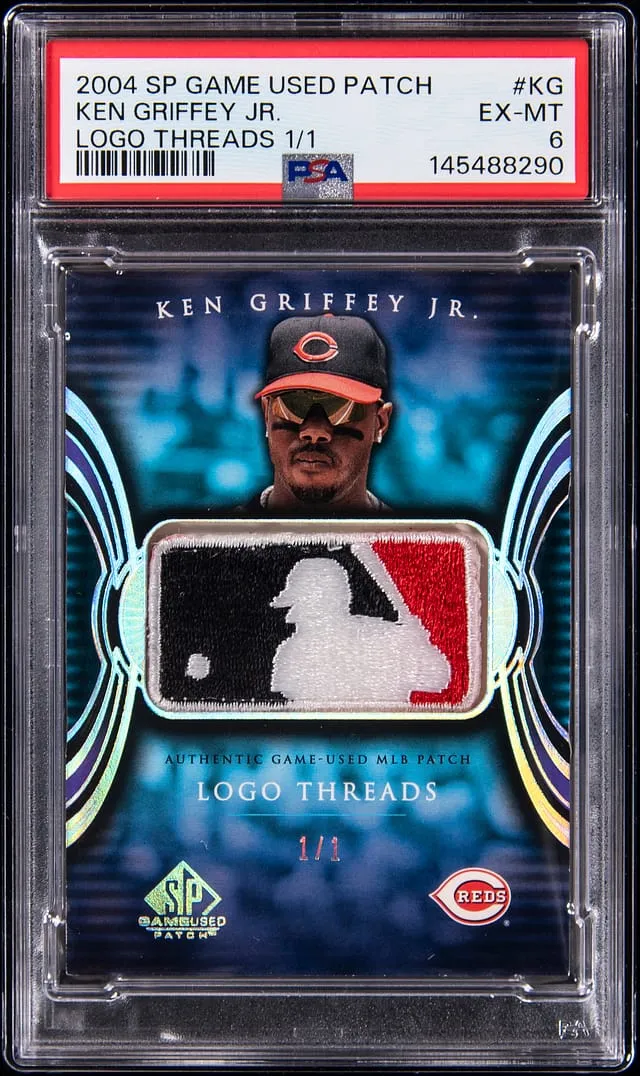
2004 SP Game Used Griffey Logoman 1/1 Sells for $58K
Goldin sold a 2004 SP Game Used Ken Griffey Jr. Logoman 1/1 PSA 6 for $58,865. A data-aware look at what this premium patch sale means for collectors.
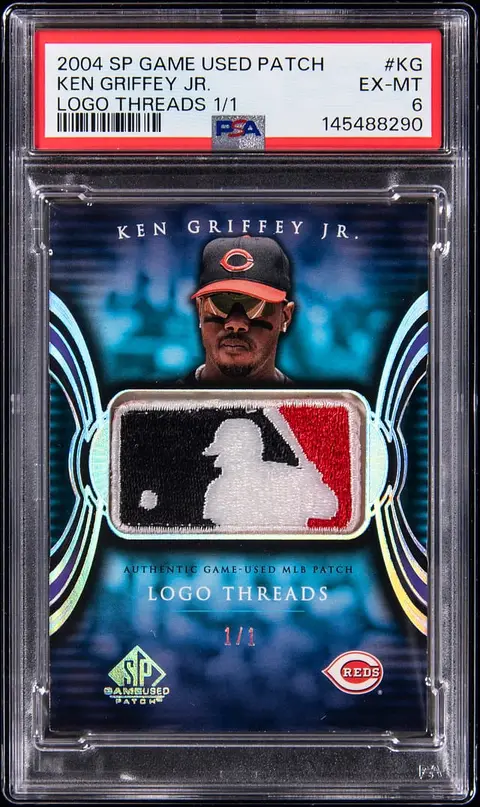
Sold Card
2004 Upper Deck SP Game Used Patch Logo Threads #LT-KG Ken Griffey Jr. Game-Used Logoman Patch Card (#1/1) - PSA EX-MT 6
Sale Price
Platform
Goldin2004 SP Game Used Patch Logo Threads Ken Griffey Jr. Logoman 1/1 Sells for $58,865
On March 15, 2026, Goldin closed a notable Griffey sale: a 2004 Upper Deck SP Game Used Patch Logo Threads #LT-KG Ken Griffey Jr. Game-Used Logoman Patch Card, serial-numbered 1/1 and graded PSA EX-MT 6, realized $58,865.
For a modern-ish, game-used Logoman of a Hall of Famer, this is a sale worth unpacking—both for Griffey collectors and for anyone trying to understand how high-end game-used patches are being valued right now.
The card at a glance
- Player: Ken Griffey Jr.
- Team: Cincinnati Reds (2004 season)
- Year / Product: 2004 Upper Deck SP Game Used
- Subset: Patch Logo Threads
- Card number: #LT-KG
- Key features:
- Game-used patch card
- Full NBA-style “Logoman” equivalent for MLB: the silhouetted batter MLB logo patch from a game-used jersey
- Serial-numbered 1/1 (one-of-one)
- Grading: PSA EX-MT 6
- Attributes: game-used patch, Logoman style logo, ultra-low serial number, non-rookie key issue
This is not a rookie card—Griffey’s rookies are 1989 (Upper Deck, Fleer, Donruss, Score)—but it is a premium, low-print-run memorabilia issue from the early game-used patch era.
Why this card matters to collectors
1. Early 2000s SP Game Used: a turning point for memorabilia
Upper Deck’s SP Game Used brand in the early-to-mid 2000s helped shape what “high-end” game-used cards would look like:
- They featured authentic game-used swatches when that concept was still relatively new.
- Logo and premium patch subsets (like Patch Logo Threads) introduced true chase cards within otherwise modestly available products.
- Serial numbering and short prints created a layered rarity structure that still influences today’s premium patch sets.
For collectors who lived through that period, SP Game Used carries nostalgia as one of the brands that made patch cards feel special instead of routine.
2. Griffey Jr. as a long-term “PC cornerstone” player
Ken Griffey Jr. has a combination of traits that make him a hobby mainstay:
- 600+ home runs and Hall of Fame status
- An iconic swing and major cultural impact in the 1990s hobby
- Broad collector base across generations
Because of this, collectors often talk about him as a “PC cornerstone” player—someone you build a collection around rather than simply flip. When you add a game-used Logoman style patch and a 1/1 stamp to his name, you get a card that fits naturally into high-end Griffey personal collections.
3. Logoman and logo patches as a category
A Logoman (in basketball) or league logo patch (in baseball) is the small, recognizable league logo patch cut from a jersey. Over time, these have become:
- A visual shorthand for “top-tier patch”
- The centerpiece of many modern grail collections
- A category where collectors often prioritize player, brand, and aesthetics over grade
This Griffey is squarely in that lane: a full logo patch, clearly presented, from a respected brand and featuring a first-ballot Hall of Famer.
Grading and condition: PSA 6 on a 1/1
This card received a PSA EX-MT 6 grade from PSA (Professional Sports Authenticator). In most modern base-card contexts, a 6 would be considered low. For thick memorabilia cards—especially early 2000s patch cards—collectors often adjust their expectations:
- These cards were condition-sensitive out of packs due to thick stock, chipping, and edge wear.
- Many high-end game-used cards are stored, displayed, or handled more than standard cards, picking up wear over time.
- For true 1/1s, some collectors prioritize eye appeal and patch quality over the numeric grade.
So while a 6 is technically “EX-MT,” the combination of 1/1, eye-catching logo patch, and brand strength means the grade is only one part of the puzzle.
Market context and price positioning
This sale closed at $58,865 through Goldin on March 15, 2026.
Because this is a one-of-one, there is no deep stack of identical historical sales to compare. Instead, collectors typically look to:
- Comparable Griffey premium patches (Logoman or multi-color prime patches from high-end brands)
- Similar-era, similar-tier Hall of Famers with logo patches
- Modern Logoman comps (even from other sports) to understand how the market values 1/1 logo patches in general
Across marketplaces and auction houses, recent trends for Griffey’s top-tier memorabilia cards can be summarized in broad terms:
- Premium Griffey patches and 1/1s from respected brands often land in the multi–five-figure range, with outliers higher or lower depending on autograph, brand, and aesthetics.
- Autographed patch 1/1s (especially from brands like Exquisite, SP Authentic, or later high-end products) generally command a premium over non-auto patches.
- Non-rookie, non-auto logo patches sit in a middle lane: highly collectible and often pricey, but usually discounted versus the absolute top Griffey grails.
Within that framework, a realized price just under $60,000 for:
- A non-rookie
- Non-autographed
- Early 2000s SP Game Used
- Logo patch 1/1
- Graded PSA 6
indicates that the market is still assigning significant value to:
- The Logoman/logo patch category itself
- Griffey’s long-term status
- Early game-used issues that pre-date the ultra-modern patch-card explosion
Rather than treating this result as an outlier, it fits into a pattern where serious Griffey and HOF player collectors continue to compete for true 1/1 memorabilia pieces, even when the technical grade is modest.
How this compares to related cards
Because reliable, card-specific public data on this exact 1/1 is naturally limited, it’s more useful to compare it conceptually with:
- Other Griffey 1/1 logo or premium patches – Some have sold higher (especially with on-card autographs and from certain flagship high-end products), while non-logo or smaller patches tend to sell for less.
- Non-logo Griffey game-used cards from the same era – These generally occupy a lower tier in both price and competition, even in higher grades, highlighting how much of the value here is tied to the logo patch and the 1/1 status.
- Contemporary HOF logo patches – Griffey’s broad appeal usually keeps him competitive with or above many of his Hall of Fame peers in similar configurations.
The key takeaway: this sale underscores the hierarchy within memorabilia—logo patches and 1/1s sit at or near the top, with brand and player quality heavily influencing where a specific card lands within that tier.
What this means for different types of collectors
Newer or returning collectors
If you’re just getting back into the hobby or new to it, this card offers a few useful lessons:
- Rarity isn’t just a serial number. A 1/1 patch from a respected brand with strong visual appeal and a beloved Hall of Famer will almost always be treated differently than a generic low-serial parallel.
- Memorabilia hierarchy matters. Plain jersey swatches, multi-color patches, and logo patches sit on different tiers in the eyes of many collectors.
- Grade is one signal, not the only one. Especially on thicker, older patch cards, collectors often weigh design, player, and patch quality more heavily than they would on a base rookie.
Active hobbyists and small sellers
For those tracking the market more closely, this sale:
- Reinforces ongoing demand for early 2000s premium memorabilia, not just ultra-modern releases.
- Highlights that Griffey remains a stable, high-confidence PC target for advanced collectors.
- Suggests that, in the Logoman/logo patch segment, auction-house placement and timing can significantly shape realized prices, since so much depends on who shows up for that specific 1/1.
It’s also a reminder to:
- Pay attention to patch placement and clarity—a well-centered, fully visible league logo tends to outperform partial or obscured patches.
- Look beyond the grade when evaluating thick-stock cards; surface, corners, and edges matter, but so does overall eye appeal.
The role of the auction house and timing
This card sold through Goldin on March 15, 2026 (UTC). For high-end, one-of-one memorabilia, the selling venue can matter:
- Established auction houses tend to aggregate serious player collectors and high-end bidders.
- Proper lot placement, high-quality imaging, and clear description can all help a niche but important card like this find its audience.
While it’s difficult to quantify the exact impact of those factors, the end result—nearly $60,000 for a non-auto PSA 6 memorabilia card—implies that the card was exposed to a sufficiently motivated bidding pool.
Putting it all together
The 2004 Upper Deck SP Game Used Patch Logo Threads #LT-KG Ken Griffey Jr. 1/1 Logoman patch, PSA EX-MT 6, selling for $58,865 at Goldin is a concise snapshot of where a few key hobby trends intersect:
- Long-term respect for Ken Griffey Jr. as a foundational Hall of Fame PC player
- Ongoing collector appetite for true 1/1 logo patches from respected early memorabilia-era brands
- A nuanced view of grading when it comes to thick, game-used patch cards
For collectors, the main takeaway isn’t that every Griffey patch will chase this number. Instead, it’s that the very top of the Griffey memorabilia ladder remains strongly bid, especially when a card checks the right boxes: brand, design, patch quality, and unique serial numbering.
As more early-2000s memorabilia cards reach collectors who grew up with them, it will be worth watching whether results like this become a reference point for how the hobby continues to value that era’s best patches.
figoca tracks notable sales like this one to help collectors understand not just “what it sold for,” but why the market might have put that number on the card. If you’re building a Griffey PC or exploring high-end memorabilia for the first time, this result is a useful benchmark for how deep demand can run for the right 1/1.