2001-02 MJ’s Back Jersey Auto Sells for $23,180
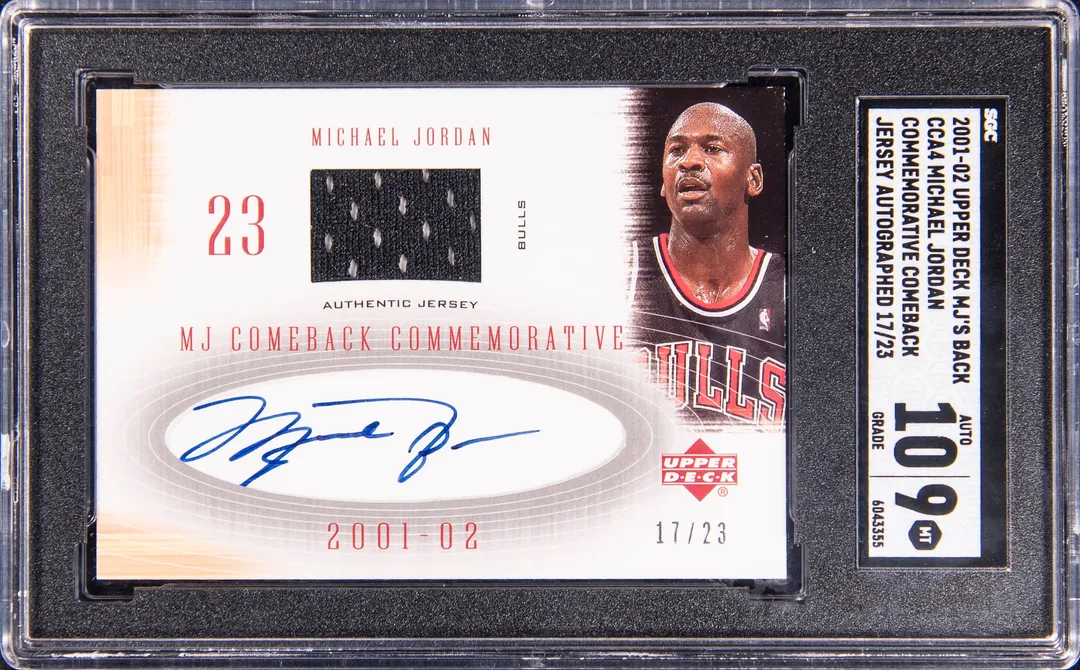
Goldin sold a 2001-02 Upper Deck MJ’s Back Commemorative Jersey Autograph #CCA4 Michael Jordan SGC 9/10 Pop 1 for $23,180. Here’s the price context.
Sold Card
2001-02 Upper Deck MJ's Back Commemorative Comeback Jersey Autograph #CCA4 Michael Jordan Signed Game-Worn Relic Card (#17/23) - SGC MT 9, SGC 10 - Pop 1
Sale Price
Platform
GoldinMichael Jordan’s 2001-02 Upper Deck MJ’s Back Commemorative Comeback Jersey Autograph #CCA4 just quietly posted a strong result at Goldin, offering a useful data point for anyone tracking high‑end Jordan autos.
In this post, we’ll break down what the card is, why it matters, and where this $23,180 sale fits in the broader MJ market.
The card at a glance
- Player: Michael Jordan
- Team featured: Chicago Bulls (commemorating his 1995 comeback)
- Year: 2001-02
- Set: Upper Deck MJ’s Back Commemorative – Comeback Jersey Autograph
- Card number: #CCA4
- Serial numbering: #17/23 (only 23 copies produced)
- Attributes:
- On-card autograph (signed directly on the card)
- Game-worn jersey relic
- Commemorative insert focused on MJ’s return to the NBA
- Grading:
- Card: SGC MT 9
- Autograph: SGC 10
- Population (pop) report: Pop 1 in this grade configuration
This is not a rookie card, but it is a key commemorative Jordan issue from the early 2000s. It sits in the broader lane of premium, on-card Jordan autos paired with game-used material—a segment that has become a core focus for many MJ collectors.
The sale: $23,180 at Goldin
- Auction house: Goldin
- Sale date (UTC): 2026-02-08
- Final price: $23,180 (hammer plus buyer’s premium, expressed here in USD)
For a low‑print, on-card Jordan auto with game-worn memorabilia and strong grades, this result is consistent with the upper mid‑tier of MJ’s autograph market—below his most famous 1990s autos and Exquisite patches, but clearly positioned as a serious, long‑term collector piece.
What this card represents to collectors
1. A focused celebration of MJ’s comeback
The “MJ’s Back” concept is designed around one of the most important narratives in Jordan’s career: his return to the NBA and resurgence with the Bulls. While many Jordan cards touch on championships or scoring, this insert line specifically anchors to the comeback storyline.
For collectors who like cards that tell a clear story, this set checks that box:
- It ties directly to a pivotal era in NBA history.
- It blends on-card ink, game-used material, and a themed design.
- It’s limited to 23 copies, echoing Jordan’s jersey number.
2. Early‑2000s premium MJ autos
This card comes from the early 2000s—a period that sits between classic 1990s inserts and the modern ultra‑premium patch-auto era.
In practice, that means:
- Print runs were relatively low compared to the “junk wax” era of the late 1980s and early 1990s.
- Jordan had already retired once (and would retire again), so demand for premium, licensed autos was already strong.
- Upper Deck still held the exclusive autograph and memorabilia license for Jordan, making these releases the main channel for high‑end MJ content.
Collectors often view this era as a sweet spot: more thoughtfully limited than the 1990s, but not yet at the manufactured scarcity levels we see in some ultra‑modern products.
3. On-card auto + game-worn relic
This card pairs:
- On-card autograph: Jordan signed the card itself, rather than a sticker. Many collectors prefer on-card autos for visual appeal and perceived prestige.
- Game-worn jersey relic: A swatch from a jersey identified as game-used, connecting the card physically to the court.
That combination—on-card auto plus game-used material—is the backbone of the high‑end Jordan lane, especially for collectors who want more than ink on cardboard.
Grading and scarcity: SGC MT 9, Auto 10, Pop 1
The copy that sold at Goldin carries:
- Card grade: SGC MT 9
- Autograph grade: SGC 10
- Population: Pop 1 in this configuration
A few key points for context:
- “Pop 1” means this is currently the only example in SGC’s population report with this exact grade. Pop reports track how many copies of a card have received specific grades from a grading company.
- On low‑serial, 23-copy cards, even a handful of submissions can heavily skew population figures. Many copies may sit raw in collections or be graded by other companies.
- An SGC 9 is a high grade for an early‑2000s, thicker-stock, autograph-relic card, where edges and surfaces can easily pick up flaws.
For collectors who care about both condition and presentation, the SGC 9/10 combo is a strong certification line: the card looks sharp, and the auto is confirmed clean and bold.
Market context and related sales
Because this is a numbered-to-23 commemorative issue, exact sales are relatively infrequent. Public auction results for this exact card, especially in this grade, do not appear regularly.
When assessing a card like this, many collectors and small sellers look at:
- Comps (comparable sales): Prices realized for the same card or very similar cards—such as other copies of #CCA4 in different grades, or comparable early‑2000s Jordan on-card auto jersey cards.
- Set tier: Where the set sits relative to iconic 1990s inserts (e.g., credentials, PMGs) and top-tier patch autos (like Exquisite).
- Player lane: Jordan occupies the top tier of basketball collecting, so his better autos often have deeper buyer pools than most players.
Based on public auction behavior for similar Jordan autograph relics:
- Higher‑profile, grail‑level Jordan autos (Exquisite patch autos, key 1990s on-card autos with iconic designs) often clear far above this number.
- Mid‑to‑upper tier Jordan autos—especially those with game-worn swatches and low serial numbering—regularly occupy this five‑figure price band, depending on design, brand, and eye appeal.
Within that framework, this $23,180 sale at Goldin is broadly in line with what seasoned collectors might expect for a low‑numbered, story-driven MJ auto relic from a respected early‑2000s Upper Deck release, graded strongly and marked as Pop 1 in SGC’s census.
Because supply is limited to just 23 copies, even a single determined underbidder or consignor decision can move realized prices meaningfully. That’s normal behavior in thinly traded, numbered Jordan autos.
Why this result matters for the broader MJ market
For active hobbyists and small sellers, there are a few takeaways from this sale:
Narrative‑driven MJ cards still track well. Cards that are tied to a clear storyline—like the comeback—continue to hold collector interest alongside championships and scoring titles.
Early‑2000s Upper Deck has a stable lane. This era’s premium MJ autos have been part of the hobby’s core for years. They don’t occupy the hype cycle in the same way ultra‑modern releases do, but steady demand tends to show up when strong copies hit major auction houses.
Condition and grading variety matter. While PSA and BGS often dominate headlines, strong results in SGC slabs illustrate that serious buyers will chase eye‑appeal and authenticity across grading companies, especially for low-serial, on-card autos.
Low‑serial supply means wide price bands. With only 23 copies in existence, it’s difficult to set a rigid “market price.” Individual sales can land higher or lower depending on timing, exposure, and who is bidding that week.
What this means if you collect or sell Jordan cards
If you’re a new or returning collector:
- Use sales like this as reference points, not guarantees. They show where serious collectors have recently been willing to spend on a specific lane of Jordan cards.
- When you hear terms like comps and pop report, think of them as tools to check how often a card sells and how many high‑grade copies exist.
If you’re an active hobbyist or small seller:
- When pricing or trading mid‑ to high‑end Jordan autos, look at a basket of similar sales from different auction houses (Goldin, PWCC, Heritage, etc.) and grading companies instead of relying on a single comp.
- Pay close attention to serial numbering, auto grade, and relic type. A clean on-card auto with a game-worn piece and low print run often tracks differently from a sticker auto or higher-numbered jersey card.
Final thoughts
The 2001-02 Upper Deck MJ’s Back Commemorative Comeback Jersey Autograph #CCA4 Michael Jordan Signed Game-Worn Relic Card (#17/23) – SGC MT 9, Auto 10 (Pop 1) sale at Goldin on 2026-02-08 adds another solid data point to the Jordan autograph landscape.
At $23,180, it reinforces the steady demand for:
- Low‑serial, story-rich Jordan inserts.
- On-card autographs paired with game-used material.
- Well‑graded examples, even outside the most common grading labels.
For collectors who care about both the narrative of MJ’s career and the structure of the modern market, this card sits at a nice intersection: a commemorative piece with real game-worn material, limited to 23 copies, supported by a recent five‑figure sale on a major auction platform.
figoca will continue tracking sales like this to help collectors understand where key Jordan issues are trading—and how they fit into the evolving picture of the high‑end basketball card market.