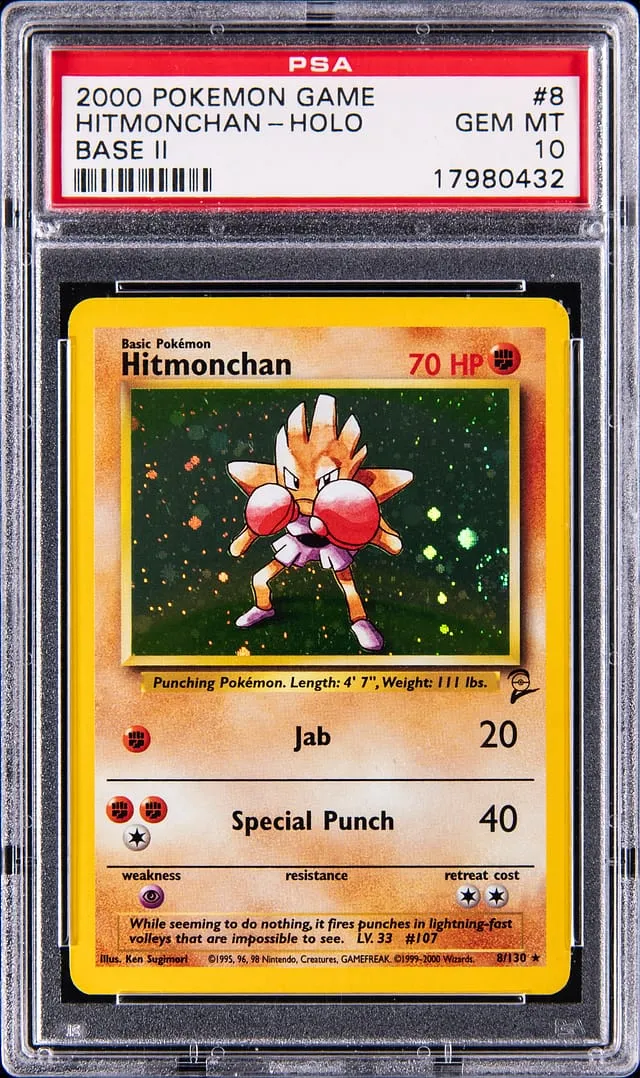
2000 Base Set 2 Hitmonchan PSA 10 sells for $12,200
Goldin sold a 2000 Pokémon Base Set 2 Holo Hitmonchan PSA 10 for $12,200. See how this vintage WotC holo sale fits into today’s Pokémon card market.
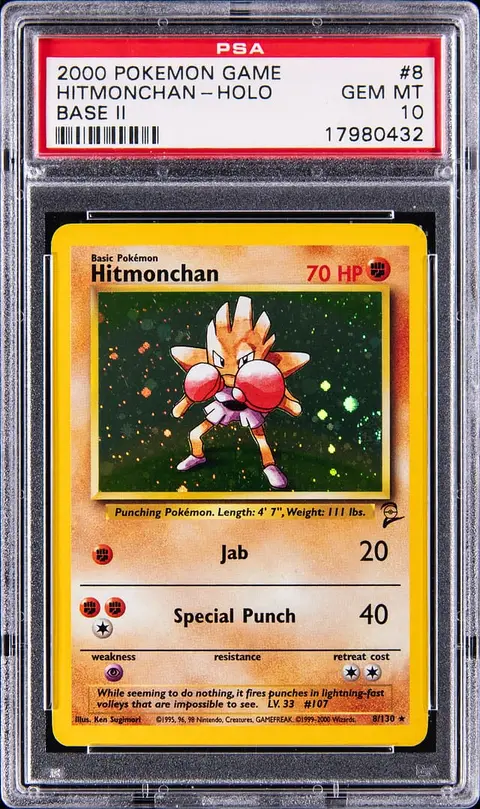
Sold Card
2000 Pokemon Game Base II Holo #8 Hitmonchan - PSA GEM MT 10
Sale Price
Platform
Goldin2000 Pokémon Game Base Set 2 Holo Hitmonchan in PSA 10 Sells for $12,200
On March 16, 2026, Goldin closed a notable sale for vintage Pokémon collectors: a 2000 Pokémon Game Base Set 2 Holo #8 Hitmonchan graded PSA GEM MT 10 realized $12,200.
For a card many of us first saw in schoolyard trades, seeing a Base-era Hitmonchan at five figures is a reminder of how far early WotC (Wizards of the Coast) Pokémon has come—especially in top grade.
The card at a glance
- Card: 2000 Pokémon Game Base Set 2 Holo Hitmonchan
- Character: Hitmonchan
- Set: Base Set 2 (a reprint blend of Base Set and Jungle, released in 2000)
- Card number: #8 (Holo Rare)
- Year: 2000
- Publisher: Wizards of the Coast (WotC)
- Grading company: PSA (Professional Sports Authenticator)
- Grade: GEM MT 10
- Attributes: Classic holo foil, no autograph, no serial numbering
- Type of card: Vintage WotC holo, not a rookie in the sports sense, but a key early-era printing
Base Set 2 is often overshadowed by 1999 Base Unlimited and early Neo sets, but it’s part of the same first generation run that a lot of collectors remember opening. Hitmonchan itself was one of the original competitive staples from the 1999 Base Set, which gives it a bit more prominence than a random holo from the era.
Why this Hitmonchan matters to collectors
Early WotC holo from the Base-era window
Hitmonchan originates in the original Base Set (1999), and Base Set 2 (2000) reprints that card with a slightly different set symbol and layout. For many collectors, Base Set 2 is still very much “early Pokémon,” and the holo rares are viewed as part of the same vintage WotC ecosystem.
Hitmonchan has a few things going for it:
- Competitive history: In the early Pokémon TCG metagame, Hitmonchan was a key attacker, which gave the card some early reputation beyond just the artwork.
- Classic Ken Sugimori-style design: While not as instantly iconic as Charizard or Blastoise, the art sits firmly in the classic era most collectors associate with the start of the hobby.
- Vintage age: Released in 2000, Base Set 2 sits in what many refer to as the "vintage" or first-generation Pokémon window, before the e-Series and EX eras.
Grading and condition sensitivity
PSA grades cards on a 1–10 scale, with PSA 10 GEM MT indicating a card that is virtually flawless under normal viewing conditions. Early WotC holos can be tough in high grade due to print lines, edge wear, and surface scratching on the holo foil.
While PSA pop reports (population reports—how many copies have been graded at each grade level) show that a handful of WotC holos are relatively common in PSA 10, demand is still heavily skewed to the very top grade. Collectors who focus on complete PSA 10 holo runs from early sets often view these cards as long-term “set-builder pieces.”
Market context for 2000 Base Set 2 Hitmonchan
Recent pricing ranges
Looking across major marketplaces and auction venues for context (eBay, Goldin, PWCC, Heritage, and fixed-price platforms), Base Set 2 Hitmonchan sales are far less frequently reported than the flagship 1999 Base Set version. When sales do appear:
- Lower grades (PSA 7–9) typically transact at much more accessible price points, often in the low hundreds of dollars or below depending on specifics.
- Raw (ungraded) copies generally trade at a significant discount vs. graded examples, especially if they show visible edge wear or holo scratches.
PSA 10 copies of Base Set 2 Hitmonchan show up less often in public auction, and realized prices can vary with timing, exposure, and broader sentiment around vintage Pokémon. The $12,200 result at Goldin on March 16, 2026 sits at the upper end of the spectrum for this card and highlights:
- Strong demand for high-grade WotC holos even beyond the “big three” starters.
- Willingness from some collectors to pay a premium for set-building or registry competition.
While more prominent WotC holos—especially 1st Edition Base Set cards—have established headline sales much higher than this, a five-figure price for a Base Set 2 holo like Hitmonchan in PSA 10 is still notable in the context of that specific set.
Comparing to related cards
When thinking about comps (comparable sales, used as reference points), collectors often look across:
- Same card, different set: 1999 Base Set Hitmonchan, especially in 1st Edition and Shadowless versions, tends to be the attention magnet and often sets the tone for what collectors expect from reprint-era cards.
- Same set, similar rarity: Other Base Set 2 holos in PSA 10 (e.g., Blastoise, Venusaur, and niche favorites) inform how the market views the set as a whole. Those cards often see stronger competition, but they also help anchor expectations for secondary holos like Hitmonchan.
Relative to these, this $12,200 Goldin sale underscores that collector interest in Base Set 2 has moved beyond just the top tier mascots. For collectors who view Base Set 2 as an accessible way into vintage, high-end gem mint examples can still command serious attention.
Collector significance of this Goldin sale
A data point for vintage WotC strength
This result provides another data point in the ongoing story of early Pokémon pricing:
- Vintage stability: Even in periods when modern chase cards and new releases take headlines, strong results on older WotC cards suggest steady underlying demand.
- High-grade premium: The spread between PSA 10 and lower grades remains substantial. Condition sensitivity and grading standards matter a lot for this era.
For newcomers and returning collectors, this is a reminder that:
- Not every vintage holo is a five-figure card.
- The cards that do reach that level are usually the cleanest examples, with grading to back it up.
Base Set 2’s place in the hobby
Base Set 2 has historically been viewed as a step down in desirability from original Base Set, largely because it is a reprint product and has memories tied to later waves of distribution. That said, many collectors who were just a bit too young for 1999 Base remember Base Set 2 as their actual entry point.
In that sense, high-end Base Set 2 sales signal two things:
- Collectors who grew up on this set are now in their prime collecting years.
- Registry and set-building collectors are increasingly willing to extend their focus beyond only the very first prints.
Takeaways for collectors and small sellers
This Goldin sale from March 16, 2026 doesn’t change the fundamentals of the Pokémon market, but it does provide useful context:
- For collectors: If you’re building a vintage holo run, especially in PSA 10, it’s worth paying close attention to how non-headliner cards are performing. Cards like Hitmonchan can quietly move up as the more famous chase cards become out of reach.
- For small sellers: High-end results like this are not automatic. They reflect strong condition, reputable grading, and visibility via a major auction house. Most raw or mid-grade copies will sit in a very different price tier, and it’s important to calibrate expectations using real, recent sales.
As always, this is a snapshot—not a forecast. The $12,200 realization for the 2000 Pokémon Game Base Set 2 Holo Hitmonchan #8 in PSA GEM MT 10 at Goldin is a helpful reference point for understanding how the market currently values clean examples of early WotC holos beyond the poster characters.
If you collect this era, keep an eye on future PSA 10 Base Set 2 holo sales. Together, they paint a clearer picture of how nostalgia, condition, and set-building are shaping the vintage Pokémon landscape.