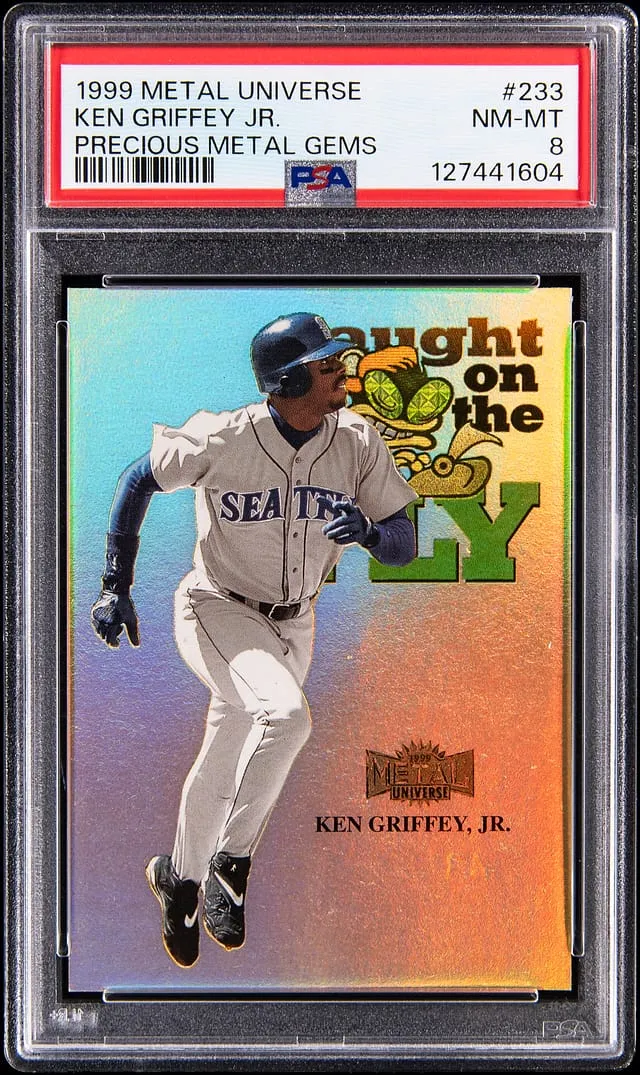
1999 PMG Ken Griffey Jr. PSA 8 Sells for $34,953
Breakdown of Goldin’s $34,953 sale of the 1999 SkyBox Metal Universe PMG #233 Ken Griffey Jr. PSA 8 (43/50), a pop 1 with none graded higher.
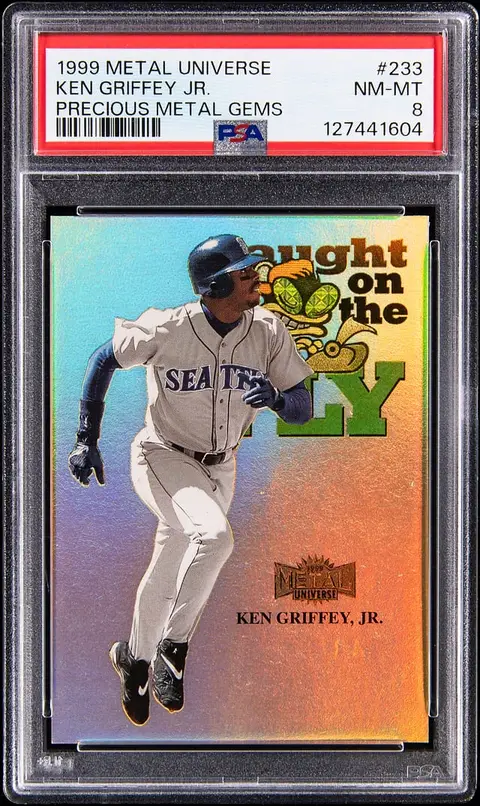
Sold Card
1999 SkyBox Metal Universe Precious Metal Gems (PMG) #233 Ken Griffey Jr. (#43/50) - PSA NM-MT 8 - Pop 1; None Higher
Sale Price
Platform
Goldin1999 SkyBox Metal Universe Precious Metal Gems (PMG) cards sit at the intersection of 90s design, true scarcity, and superstar checklists. When one of the era’s defining players appears on a low-pop, high-grade PMG, the market tends to pay attention.
On May 10, 2026, Goldin sold a 1999 SkyBox Metal Universe Precious Metal Gems #233 Ken Griffey Jr. serial numbered 43/50, graded PSA NM-MT 8, for $34,953. For PSA, this copy currently sits as a population 1 with none graded higher, making it the top example in their census at the time of sale.
Below is a closer look at what sold, why this particular Griffey PMG matters, and how the price fits into recent market context.
The card at a glance
- Player: Ken Griffey Jr.
- Team on card: Seattle Mariners (1999 Metal Universe checklist)
- Year / Set: 1999 SkyBox Metal Universe
- Insert / Parallel: Precious Metal Gems (PMG)
- Card number: #233
- Serial numbering: 43/50 stamped on the card
- Grading company: PSA (Professional Sports Authenticator)
- Grade: NM-MT 8
- Population: Pop 1; none higher currently in PSA’s population report
- Key attributes: Low-serial parallel, iconic 90s insert line, star Hall of Famer, top-graded copy
This is not a rookie card—Griffey’s rookies come from 1989—but within the 1990s insert and parallel landscape, PMGs are widely treated as key issues for players who appear in the run.
Why 1999 Metal Universe PMGs matter
The Precious Metal Gems lineage
Precious Metal Gems started in 1997 Metal Universe (basketball and football first, then across into other sports). The original PMGs—especially the 1997–98 basketball runs—became foundational to the modern high-end parallel market: bold foil, aggressive designs, and extremely low serial numbering for the time.
By 1999, Metal Universe had already established itself as the home of highly stylized, sometimes wild backgrounds that contrasted sharply with flagship base sets. PMGs from this era are important to collectors because they combine:
- Established star power: Griffey was already a perennial All-Star and one of the faces of the sport.
- True scarcity: A print run of 50 is objectively small, especially for a mainstream 90s release.
- Condition sensitivity: Foil-heavy, dark, and chipping-prone surfaces make high grades difficult.
In other words, these cards condense 90s aesthetics and serial-numbered scarcity into one package. For many Griffey collectors, PMGs sit alongside his earliest rookies and core 90s inserts as central PC (personal collection) targets.
Position in the Griffey market
Griffey’s hobby profile is unusually stable:
- First-ballot Hall of Famer with enduring nostalgia
- Face of 90s baseball for many collectors
- Large but focused collector base that has had decades to mature
Because of that, Griffey’s key cards—especially rare parallels like PMGs—often act as reference points for how the hobby is valuing 90s stars more broadly.
Grading, population, and why PSA 8 matters
A pop report (population report) is a running count from a grading company of how many copies of a specific card they’ve graded at each grade level.
In this case, PSA notes this 1999 PMG Griffey as:
- Population: 1 copy at PSA 8
- Higher grades: None
In practical terms, that means:
- This is currently the best-graded PSA example of this exact card.
- Condition-sensitive PMGs can stack up in the 6–7 range (or lower) because of surface scratching, edge chipping, and foil issues.
A PSA 8 might not sound “high-end” if you’re thinking in modern, ultra-protected terms, but for late-90s foil parallels with only 50 copies to begin with, an 8 can be firmly in the top tier of surviving examples.
Price context: how does $34,953 fit in?
This Goldin sale closed on May 10, 2026 at $34,953.
When we look at comps (short for comparables, or recent sales of the same or similar cards), a few points stand out:
Exact-card comps are thin. Low-serial, niche-era PMGs—especially of a single player in a specific year—do not trade frequently. That means you’re often working with:
- A small sample size
- Older sales that may not reflect the current market mood
Cross-grade / cross-set comparisons help. To understand this number, collectors typically look at:
- Other Griffey PMG or Metal-era parallels in similar grades
- Other 1990s PMGs of comparable-tier stars (in both baseball and other sports)
Card-specific scarcity seems to be fully priced in. The combination of:
- Serial number out of 50
- Pop 1, none higher at PSA
- Established demand for 90s Griffey inserts
supports a strong price relative to many of his non-serial 90s cards.
Because transaction histories for this exact card and grade are not widely published or frequent, it’s hard to label this sale definitively as a record or as “cheap.” It is, however, clearly in the upper tier of Griffey’s 90s parallel market—well above the bulk of his inserts and more in line with how collectors treat cornerstone, low-print cards.
Market factors that can influence a sale like this
A few general dynamics are worth keeping in mind when interpreting this result:
1. 90s insert and parallel maturation
Over the past several years, the hobby has spent more time re-evaluating 1990s inserts and parallels:
- Collectors who grew up in the 90s now have more disposable income.
- There’s been more education around print runs, pack odds, and condition difficulty.
- Sets like Metal Universe, Flair Showcase, and SPx have been re-examined for their design and scarcity.
PMGs sit near the top of that ecosystem, so as the broader 90s insert market matures, it often pulls PMGs upward as reference pieces.
2. Griffey’s long-term collector base
Griffey’s career is complete and his Hall of Fame status is secure, which means:
- There isn’t the same speculative swing tied to current performance.
- Demand often comes from long-term collectors rather than short-term flippers.
That can smooth out some volatility but can also make rare opportunities—like a pop 1, none higher example—more competitive when multiple long-time collectors are involved.
3. Grading and reholder risk
With a pop 1, none higher PSA 8, there is always a question of whether:
- Additional raw copies will surface and grade as well or better.
- Existing graded copies will be crossed or resubmitted to different grading companies.
Collectors generally understand this as part of the landscape: population numbers are snapshots, not guarantees. Still, being the top PSA example at the time of sale is a meaningful factor in how bidders assess scarcity.
What this sale suggests to collectors
For active collectors and small sellers, this Goldin result offers a few practical takeaways:
True scarcity plus iconic name retains attention. A low-printed parallel of a Hall of Famer from a respected 90s insert line continues to command a strong premium versus more common inserts.
Condition sensitivity really matters. High-grade PMGs—especially from the late 90s—remain tough. Eye appeal, centering, and surface quality can swing bidding dramatically even within the same numerical grade.
Comps will often be imperfect. When only a handful of copies exist and they trade infrequently, price discovery happens one auction at a time. Collectors may need to look at:
- Other years’ PMGs
- Other rare 90s Griffey parallels
- PMGs of similar-caliber players
to build a reasonable expectation range.
Auction house context counts. A sale at Goldin on May 10, 2026 means the card was exposed to a broad, high-end audience. That tends to increase the chance that multiple serious Griffey or 90s insert collectors were in the mix, making the result a meaningful reference point rather than a one-off outlier from a small venue.
How newcomers can think about cards like this
If you’re newer or just returning to the hobby and see a $34,953 Griffey card, it can feel distant from everyday collecting. There are still useful lessons here:
- Learn the set: Studying Metal Universe and PMGs helps you spot underappreciated parallels in more affordable players.
- Understand print runs: Serial numbering and confirmed production numbers are key drivers of long-term scarcity.
- Respect condition: Foil and surface-heavy 90s cards are rarely truly mint; the grading spread alone can reveal how hard a card is in top shape.
You don’t have to chase a PMG out of 50 to apply those principles. They translate well to other inserts, parallels, and even modern releases.
Final thoughts
The $34,953 sale of the 1999 SkyBox Metal Universe Precious Metal Gems #233 Ken Griffey Jr. (43/50) in PSA 8 at Goldin on May 10, 2026 underscores how the hobby is currently valuing:
- Rare, low-serial 90s parallels
- Condition-sensitive designs
- Established Hall of Fame stars with deep collector bases
As more data points emerge—whether through additional Griffey PMG sales or comparable inserts of similar players—collectors will get an even clearer sense of where this segment of the market is settling. For now, this pop 1, none higher PSA 8 stands as a notable marker in the ongoing story of 90s insert and parallel collecting.