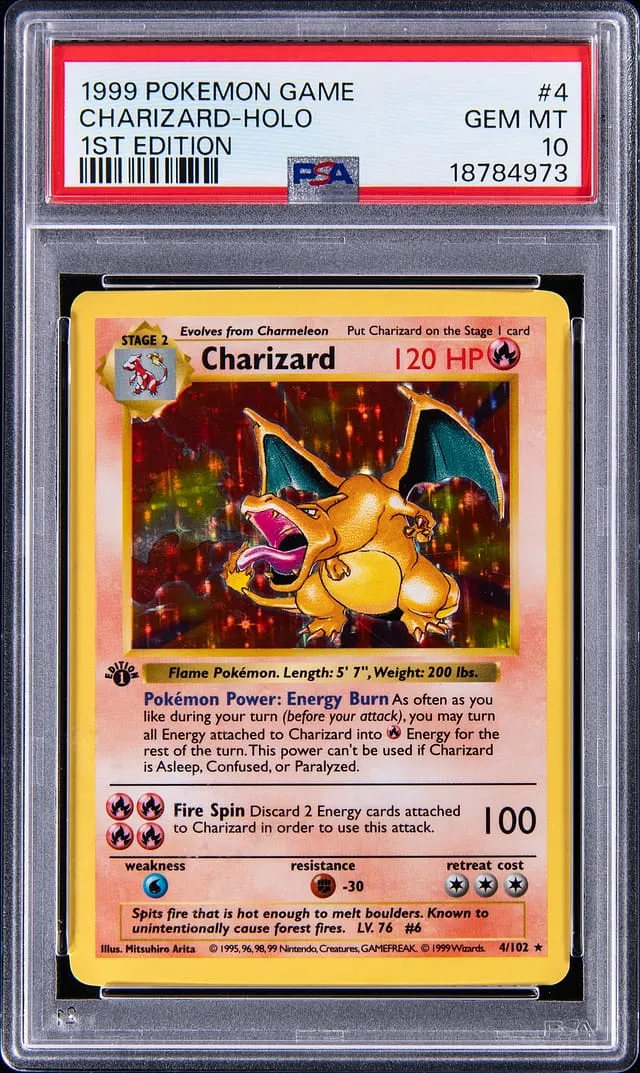
1999 1st Edition Charizard PSA 10 Sells for $518K
Goldin sold a 1999 Pokémon Base Set 1st Edition Holo Charizard PSA 10 for $518,500 on March 9, 2026. Learn what this key sale means for collectors.
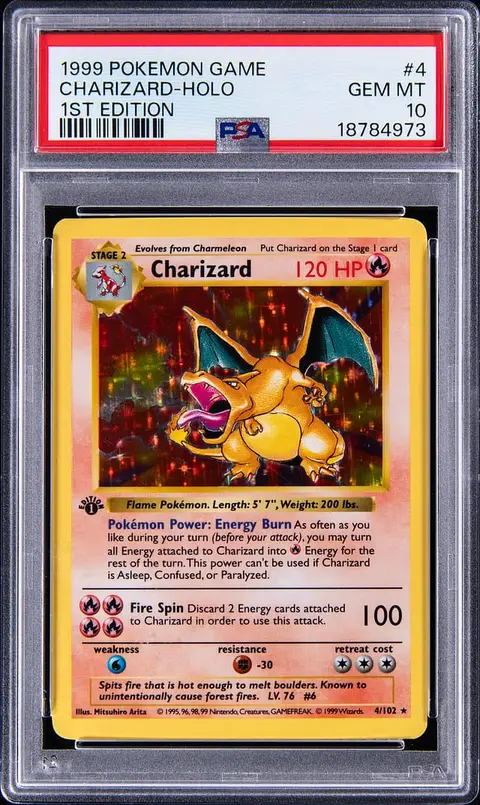
Sold Card
1999 Pokemon Base Set 1st Edition Holo #4 Charizard - PSA GEM MT 10
Sale Price
Platform
Goldin1999 Pokémon Base Set 1st Edition Holo Charizard in PSA 10 has long been one of the defining cards of the entire hobby. On March 9, 2026, another copy of this card – specifically the 1999 Pokémon Base Set 1st Edition Holo #4 Charizard graded PSA GEM MT 10 – sold at Goldin for $518,500.
For many collectors, this is the cornerstone of vintage Pokémon: the flagship Charizard from the very first English Base Set, in true pack-fresh condition.
Card overview
- Character: Charizard
- Year: 1999
- Set: Pokémon Base Set (1st Edition)
- Card number: #4
- Version: 1st Edition Holographic
- Grading company: PSA (Professional Sports Authenticator)
- Grade: GEM MT 10 (Gem Mint)
- Key status: Iconic, key issue of the Pokémon TCG’s vintage era
This is not a parallel or alternate artwork. It is the original holo Charizard from the 1st Edition English Base Set run, which introduced Pokémon cards to a large part of the Western audience. In PSA 10, it represents the highest standard of condition: sharp corners, strong centering, clean holofoil, and essentially no visible flaws under normal viewing.
Why this Charizard matters
Among Pokémon cards, a few issues function like the 1952 Topps Mantle or the 1986 Fleer Jordan in sports cards. The 1999 1st Edition Base Set Charizard is one of those:
- First English Charizard holo: It’s the earliest mass-released Charizard holo in English, tying it directly to the 1999–2000 Pokémon boom.
- Key issue of the Base Set: Base Set is the original English Pokémon set. The 1st Edition print run is the earliest and scarcest version of that set.
- Cultural icon: For many collectors who grew up with Pokémon, pulling a Charizard from a booster pack was the ultimate childhood chase card.
In hobby terms, this is a “key issue,” meaning it is one of the most important and recognizable cards in its category. It isn’t technically a rookie in the sports sense, but it fills a similar role: the earliest and most iconic representation of a star character.
Population and scarcity
While exact PSA population figures change as more cards are graded, the broad picture has been consistent for years:
- High submission volume: This card is heavily graded because of its importance.
- Relatively low PSA 10 count: Only a small fraction of copies achieve GEM MT 10 due to print quality, centering, and surface issues common in Base Set.
A “pop report” (population report) is a grading company’s public count of how many copies of a specific card have been graded at each grade level. Even though thousands of 1st Edition Charizards have been examined, the top grade remains rare compared to total demand.
Market context for PSA 10 1st Edition Charizard
Looking at recent and historical sales for this exact card and closely related versions helps place the $518,500 Goldin result into context. Public auction results over the past several years show:
- High-end volatility: PSA 10 1st Edition Charizard has seen six-figure to mid–seven-figure action at various points, especially during peak hobby interest.
- Tiering by grade: PSA 9, PSA 8, and lower grades usually occupy very different price bands, often with large gaps between each grade. PSA 10 sits at the top of that ladder as a true trophy for many collectors.
- Consistent interest: Even as broader market conditions have shifted, the card remains one of the most tracked and discussed Pokémon issues.
Comps (short for “comparables”) are recent sales of the same or very similar cards used to understand current price levels. For this Charizard, comps tend to come from major auction houses and high-visibility marketplace sales, reflecting sustained demand among serious collectors.
Because market conditions, supply, and buyer preferences change over time, it’s more helpful to think in ranges and trends rather than a single “true value.” This $518,500 sale sits within the modern range for top-tier examples at major auction houses and reinforces the card’s status as a flagship piece.
What this Goldin sale tells us
This sale at Goldin on March 9, 2026, confirms a few ongoing themes:
Core vintage Pokémon is still highly collected
Even as attention moves between modern sets, alternate arts, and new releases, the original 1999 Base Set continues to anchor many collections. The 1st Edition Charizard in PSA 10 is at the center of that.Top grades behave differently from the rest of the market
There is a meaningful separation between PSA 10 and the rest of the grading ladder. While PSA 9 and below can move more with short-term trends, true GEM MT copies attract buyers who are focused on long-term collecting and completing top-tier sets.Auction format still matters
High-end copies often surface at established auction houses like Goldin. The visibility, marketing, and bidder pool of a large auction platform can influence realized prices for elite examples.
How collectors can think about this sale
For newcomers, returning collectors, or small sellers, this sale doesn’t mean every Charizard will suddenly reach six figures. Instead, it highlights a few practical ideas:
- Condition drives value: Even within the same card, the difference between a lightly played copy and a true gem can be enormous.
- Know your version: 1st Edition, Shadowless, and Unlimited Base Set Charizards are all related but sit in different tiers. The card highlighted here is the 1st Edition holo, which is the premier version from the English Base Set.
- Use comps as context, not predictions: Recent sales show where cards have sold, not where they must sell next. They are tools for understanding the current landscape, not guarantees.
Final thoughts
The March 9, 2026 Goldin sale of the 1999 Pokémon Base Set 1st Edition Holo #4 Charizard in PSA GEM MT 10 for $518,500 is another data point in the ongoing story of one of the hobby’s most important cards.
For some collectors, this card represents nostalgia and a connection to the earliest days of Pokémon. For others, it is a centerpiece of a carefully built vintage collection. Either way, its performance at auction continues to underline the enduring appeal of early Pokémon and the lasting importance of condition, scarcity, and historical significance in the trading card market.
At figoca, we track these key sales to help collectors of all experience levels understand where the market has been—and to give context as they decide what to collect next.