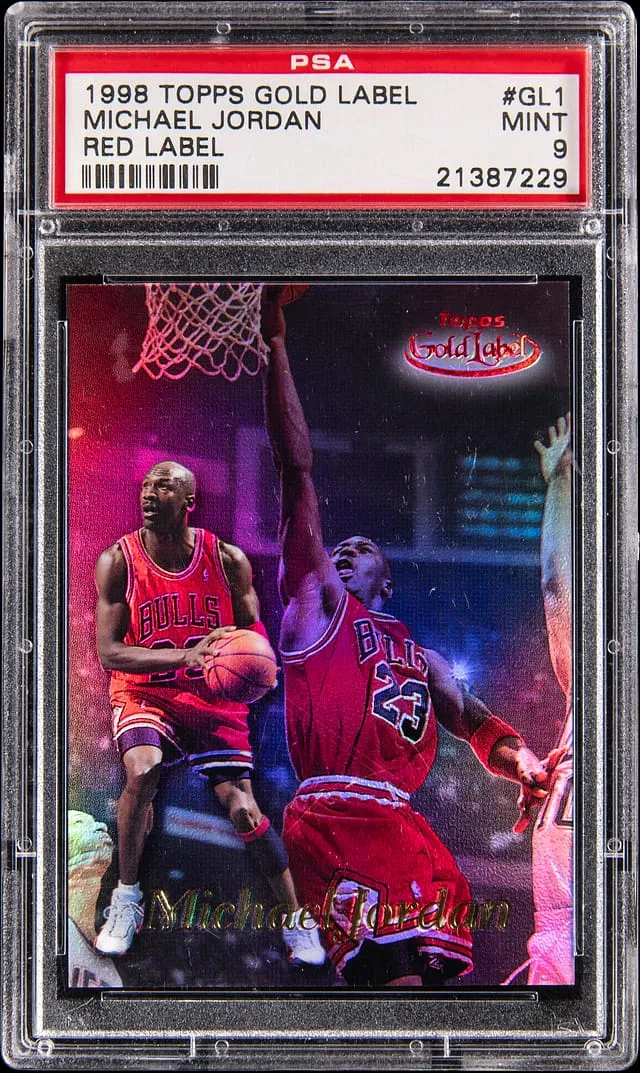
1998-99 Gold Label Red Label MJ /100 PSA 9 Sale
Figoca reviews the $23,180 Goldin sale of a 1998-99 Topps Gold Label Red Label #GL1 Michael Jordan /100 PSA 9 jersey-number card.
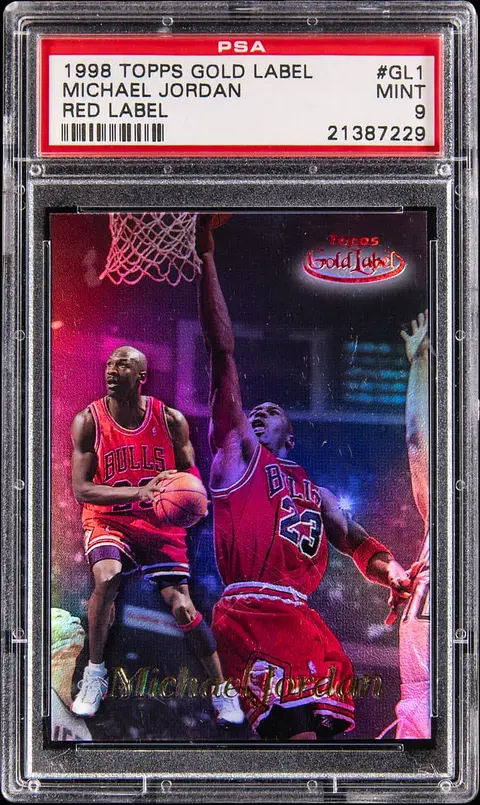
Sold Card
1998-99 Topps Gold Label Red Label #GL1 Michael Jordan (#045/100) - Jersey Number - PSA MINT 9
Sale Price
Platform
Goldin1998-99 Topps Gold Label Red Label #GL1 Michael Jordan (#045/100) just recorded a strong modern-era sale, closing at $23,180 in a Goldin auction on 2026-06-07. For Jordan collectors who pay attention to late‑90s parallels, this is a useful data point for understanding where high-end, non‑autograph MJ inserts are sitting right now.
The card at a glance
- Player: Michael Jordan
- Team: Chicago Bulls
- Year: 1998-99
- Set: Topps Gold Label
- Card number: GL1
- Parallel: Red Label, serial numbered 045/100
- Special attribute: The serial number matches Jordan’s jersey number (45), a detail many player collectors treat as a premium.
- Grading company: PSA
- Grade: PSA MINT 9
- Type: Late‑career insert/parallel, not a rookie card
Topps Gold Label is known for its layered foil technology and tiered parallels. The Red Label cards are limited to 100 copies, making them genuinely scarce compared with most base issues of the era.
Why this issue matters to collectors
Late‑90s Jordan inserts as a lane
While 1980s Fleer and early 1990s issues tend to get mainstream attention, many advanced Jordan collectors have been quietly building run after run of late‑90s inserts and parallels. Sets like Credentials, PMG, Rubies, and Gold Label sit in that ecosystem where:
- Print runs are meaningfully low by 1990s standards.
- Designs feel distinctly “era correct” — foil, shine, and layered imagery.
- The cards are tough to keep in high grade due to chipping and surface issues.
Gold Label in particular offers:
- A defined parallel hierarchy (Class levels and color labels) that is easy for collectors to understand and chase.
- Strong visual continuity across the checklist, which suits player and set collectors.
- Low‑serial parallels like this Red Label /100 that bridge the gap between mass‑produced base and ultra‑rare grails.
For newcomers: when people talk about a “key MJ insert”, they typically mean a non‑rookie card from the 1990s that is significantly scarcer or more visually distinctive than base cards, and that has a proven collector following. This GL1 Red Label fits squarely into that conversation, especially when paired with a top grade.
The jersey-number serial premium (45/100)
Jordan’s most iconic jersey number is 23, but 45 has its own niche appeal tied to his baseball stint and 1995 return to the Bulls. Some collectors seek out “jersey-numbered” serials — where the stamped number on a card matches the player’s jersey. Whether it is 23 or 45, those copies often:
- Attract added competition in auctions from player‑focused collectors.
- Get remembered and tracked more often, because the serial is easy to recall.
Not every buyer will pay a large premium for a jersey-numbered Jordan, but it tends to matter more for rare inserts, on‑card autos, and high grades. This card checks two of those three boxes: rarity (/100) and grade (PSA 9).
Grading and scarcity
This copy earned PSA MINT 9, which is one step below gem mint but still considered a top‑tier grade. Late‑90s foil cards frequently show surface dimples, scratches, or edge chipping. That reality keeps gem‑mint populations relatively low.
While exact current population numbers can move as more cards are submitted, cards from this parallel typically show a small total pop compared with mass‑printed base issues. For context:
- A “pop report” is the grading company’s public count of how many copies exist in each grade.
- Low populations in high grade can support stronger prices when a card surfaces in auction, especially if it has a serial number twist like this one.
Market context: where does $23,180 sit?
This Goldin result at $23,180 adds another data point for high‑grade, low‑serial MJ inserts. Without referencing individual sale links, a look across major marketplaces and auction houses over the past couple of years shows that:
- Standard 1998-99 Gold Label Jordan cards in PSA 9 trade far lower; the premium here is driven by the Red Label parallel, the /100 serial, and the jersey number match.
- Other late‑90s MJ numbered inserts in PSA 9 can cover a wide range, from low four figures to well into five figures, depending on the brand (e.g., Fleer, SkyBox, Topps), the exact set, and whether the card has become a recognized hobby landmark.
- Comparable MJ parallels from the same general era that combine low serial numbering, brand recognition, and strong aesthetics have also been selling in the mid‑ to high‑five‑figure range when graded PSA 9 or better.
Given that backdrop, this $23,180 sale feels:
- Strong but not disconnected from broader MJ late‑90s insert pricing.
- Supported by the jersey-number serial, which likely helped this particular copy stand out.
It does not appear to reset the overall Jordan market, but it does reinforce that:
- High‑grade, low‑serial MJ inserts from respected 1990s brands remain well bid.
- Not all demand is focused solely on rookies or the very top 1–2 grail issues.
How this fits into the 1990s Jordan landscape
The 1990s hobby is often broken down into:
- Flagship base and rookies (e.g., 1986 Fleer, late‑80s and early‑90s Jordan base cards).
- Mass‑produced inserts with nostalgic appeal but large populations.
- True scarcity inserts and parallels, often serial numbered, with complex designs and limited print runs.
This Gold Label Red Label /100 lands in that third category. It is not as foundational to the hobby story as Jordan’s rookie, but it offers a combination many collectors target:
- Recognizable player and team (Jordan on the Bulls).
- Late‑90s aesthetic and brand story.
- Serial numbering that clearly defines scarcity.
- High third‑party grade, which simplifies condition assessment for online buyers.
Possible drivers behind demand
Rather than tying this sale to a specific news headline, it is more grounded to look at structural factors:
Stability of Jordan’s collector base
Jordan’s fan and collector community remains one of the deepest in the hobby. Even when broader markets move up and down, demand for his more meaningful cards tends to stay active.Ongoing 1990s insert education
As more content, checklists, and historical sales data become available, collectors who started with base rookies often branch into 1990s inserts and parallels. Sets like Gold Label are benefiting from that renewed attention.Comfort with graded, numbered cards
For many buyers, it is easier to evaluate a graded, serial‑numbered card than a raw, unnumbered one. You can see the population report, verify the exact serial, and reference past comps (recent comparable sales) without guessing as much about condition.
What this sale might signal (without predicting the future)
This Goldin sale on 2026-06-07 doesn’t guarantee anything for future prices, but it does offer a few practical takeaways for collectors and small sellers:
Document your comps carefully. If you own a similar MJ late‑90s insert or parallel, this result can be added to your comparison set for future buying or selling decisions. Just note differences in grade, serial number, and eye appeal when you line things up.
Jersey-number serials deserve a closer look. Whether it is 23 or 45, tracking how jersey-numbered Jordans perform versus non‑jersey copies can help you understand where some collectors are willing to stretch.
Condition still matters. Even within a PSA 9 population, centering, surface, and overall eye appeal can influence bidding. Clear, high‑resolution photos and honest descriptions remain essential if you ever bring a similar card to market.
Niche sets can have staying power. Gold Label is not the loudest brand in the Jordan universe, but this sale shows that respected 1990s brands with real scarcity can hold meaningful spots in advanced collections.
Final thoughts
The 1998-99 Topps Gold Label Red Label #GL1 Michael Jordan (#045/100) in PSA MINT 9 brings together scarcity, condition, and a jersey-number twist. At $23,180 via Goldin on 2026-06-07, it slots comfortably into the narrative of serious but measured demand for late‑90s MJ inserts.
For collectors, it’s another reminder that the Jordan story extends well beyond his rookie card. The right combination of brand, design, serial numbering, and grade can make late‑career issues like this one important pieces of the broader MJ collecting landscape.