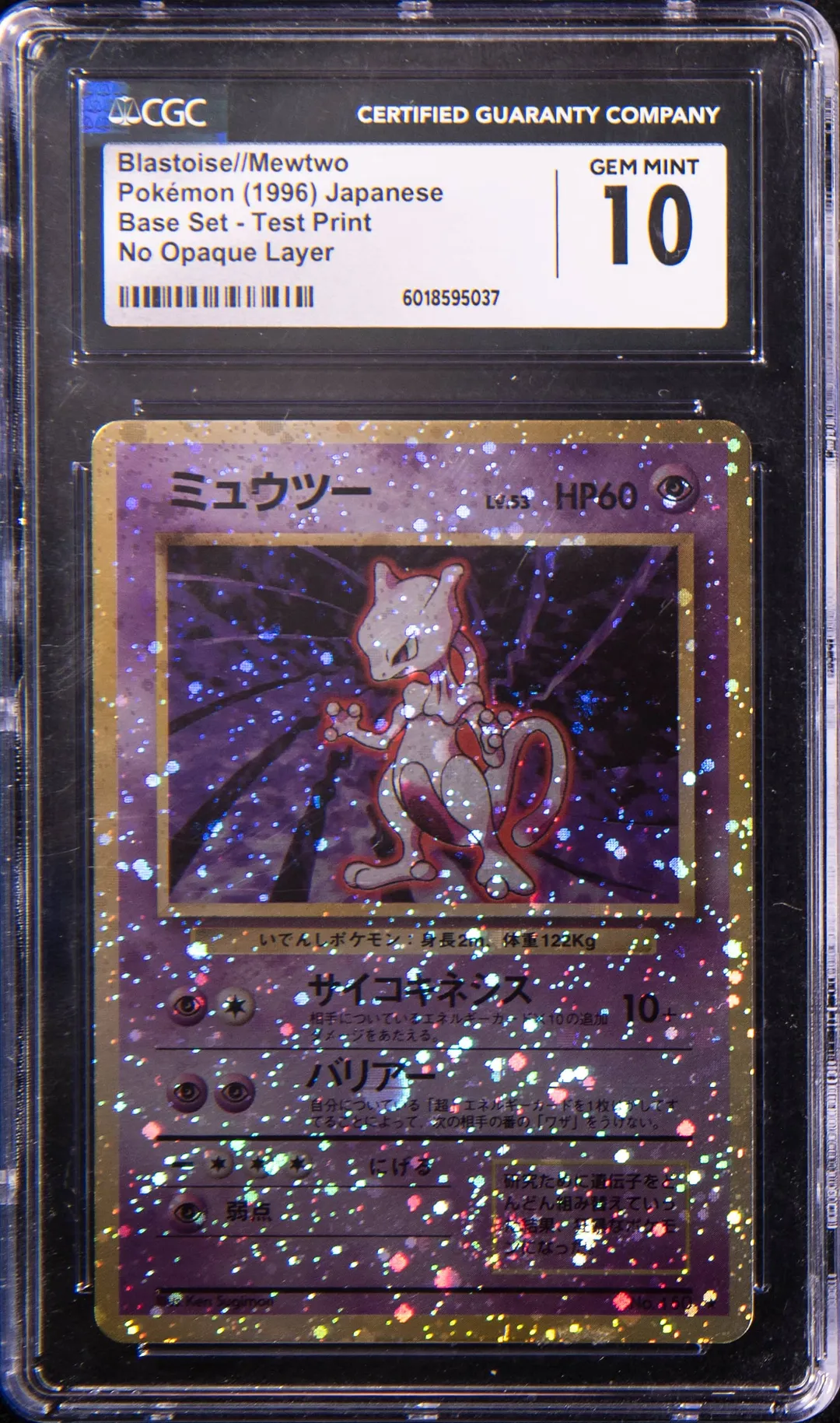
1996 Test Print Blastoise/Mewtwo CGC 10 Sells for $12K
Breakdown of the 1996 Pokémon Test Print No Opaque Layer Blastoise/Mewtwo CGC 10 sale for $12,400 at Goldin on 2/16/26 and what it means.
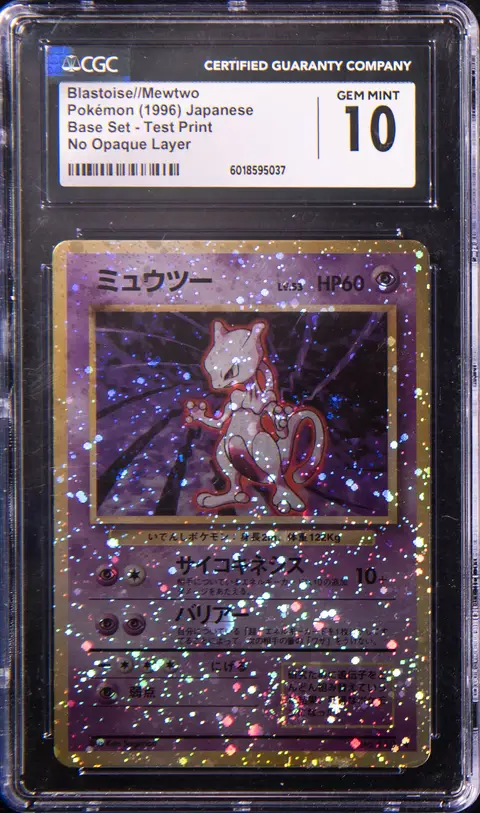
Sold Card
1996 Pokemon Japanese Base Set Test Print No Opaque Layer Blastoise/Mewtwo - CGC GEM MINT 10 - Pop 3
Sale Price
Platform
Goldin1996 Pokémon Japanese Base Set Test Print No Opaque Layer Blastoise/Mewtwo in CGC GEM MINT 10 quietly changed hands at Goldin on 2/16/26 for $12,400. For a small, experimental slice of TCG history, that’s an important marker.
In this article, we’ll unpack what this card is, why it matters, and how this sale fits into the broader market for early Pokémon test material.
What exactly is this card?
Card: 1996 Pokémon Japanese Base Set Test Print – No Opaque Layer – Blastoise/Mewtwo
Characters: Blastoise (front focus) and Mewtwo (paired/test imagery, depending on the sheet)
Year: 1996
Origin: Early Japanese Base Set test print
Variant: “No Opaque Layer” test print (non‑standard production piece)
Grading: CGC GEM MINT 10
Population: Pop 3 in this grade
This is not a regular pack‑pulled card. It’s an early test print—material produced during the printing and calibration process before the final production run of the 1996 Japanese Base Set.
The phrase “No Opaque Layer” refers to the missing white/opaque underlayer that’s normally used in production to make the colors pop and to block what’s behind the ink. On these test pieces, that layer was not applied, which creates a distinct, technically “incorrect” but historically important printing variant.
CGC has graded this example as GEM MINT 10, the highest standard grade on their 10‑point scale, indicating essentially no observable flaws under normal handling. According to the pop report (population report, which tracks how many copies exist in each grade), this is one of only three CGC 10s for this specific test issue.
Because these are test prints, they are often treated more like pre‑production ephemera than traditional trading cards. That puts them in a niche similar to prototype cards, printer’s proofs, and sample cards from other TCGs.
Why collectors care about this test print
Several overlapping factors give this piece real collector significance:
1. Early 1996 Japanese Base Set roots
The 1996 Japanese Base Set is the starting line for Pokémon TCG history. Anything tied directly to that first wave carries a foundational appeal. While regular Base Set Charizard, Blastoise, and Venusaur are the iconic pack cards, test prints like this one sit even closer to the creation process of the game.
For many advanced collectors, early test prints represent the bridge between design and final product. They’re not about in‑game playability; they’re about the hobby’s origin story.
2. Blastoise and Mewtwo as core Generation 1 legends
Blastoise and Mewtwo are two of the most recognizable Generation 1 Pokémon:
- Blastoise anchors one of the original starter lines and has long been a flagship character in early sets.
- Mewtwo is central to the first Pokémon movie and a symbol of the franchise’s early narrative.
Having both names tied to a single early test print places this card squarely in the “core nostalgia” lane even if the configuration isn’t something you’d ever pull from a pack.
3. Test print / pre‑production appeal
Test prints, prototypes, and sample cards tend to:
- Exist in very low quantities, often far below standard production runs.
- Have less predictable survival rates, since many were never intended for public release.
- Attract a specific sub‑group of collectors who prioritize rarity, production quirks, and history over checklisted set completion.
Within that niche, the lack of an opaque layer is an easily understood, clearly visible printing difference, not just a subtle ink or alignment quirk.
4. High‑end grade scarcity (CGC GEM MINT 10, Pop 3)
Population 3 in CGC 10 means only three copies are graded at this top tier by CGC at the time of the sale. For a test print that likely had a tiny original run, population numbers may stay compressed for years.
Because test prints weren’t widely distributed or protected like chase cards, finding one in true gem‑level condition is still far from guaranteed.
Where this $12,400 Goldin sale fits in the market
- Sale venue: Goldin
- Sale date: 2/16/26 (UTC)
- Realized price: $12,400
To understand what this means, it’s helpful to look at the broader categories rather than chase exact one‑to‑one comps, which are often thin or non‑existent for this kind of item.
Comparing to other test prints and pre‑production Pokémon pieces
Public auction records for this exact “No Opaque Layer Blastoise/Mewtwo” CGC 10 are very limited. There simply aren’t many copies, and even fewer that hit public auction as opposed to private sales.
Instead, most context comes from:
- Other early Japanese test and sample pieces tied to Base Set.
- Western prototype cards, such as various Blastoise test cards used by Wizards of the Coast, which have set a precedent that pre‑production items can command serious interest from advanced collectors.
- Comparable graded test prints where top grades (PSA 10, CGC 10, BGS 9.5+) routinely generate prices that don’t follow the same pattern as normal release cards.
Within that ecosystem, a low five‑figure USD result for a rare, early test print featuring top‑tier characters is in line with how the market has treated similarly scarce Pokémon pre‑production items when they surface.
Relative to mainstream 1996 Japanese Base cards
It’s also useful to compare very roughly to mainstream 1996 Base cards:
- High‑grade, pack‑issued 1996 Japanese Base holos (Charizard, Blastoise, Venusaur, etc.) have a much deeper sales history, more graded copies, and a broader buyer base.
- However, their population is also significantly larger, which caps the scarcity premium to some extent compared with true pre‑production pieces.
In that context, $12,400 for a low‑population, pre‑production artifact does not look out of step with the way advanced collectors prioritize scarcity plus historical importance, even when the card doesn’t function like a normal pack release.
What this sale might be signaling
Because data on this exact test print is sparse, it’s more accurate to talk about directional context rather than firm conclusions.
Here are a few grounded observations:
Continued appetite for pre‑production Pokémon
The Goldin result confirms there is still steady demand for historically important, low‑supply Pokémon items that sit outside standard checklists.Grading matters, even for test prints
With a CGC GEM MINT 10 and pop 3, condition clearly contributed to the realized price. High‑end grading continues to act as a sorting mechanism that separates display‑ready pieces from raw or mid‑grade examples.Niche but stable buyer pool
The audience for this type of card is narrower than for iconic pack‑issued cards, but the depth of that niche appears healthy enough to support five‑figure sales when important items come to a major auction house.Auction house visibility still helps
Goldin’s reach puts specialized pieces in front of more advanced buyers. For unusual items like test prints, a high‑visibility platform can be the difference between a niche forum sale and a well‑contested auction.
Takeaways for collectors and small sellers
For collectors and small sellers looking at this result, a few practical notes:
- Comps (comparable sales) are thin for true test prints. Use them as a loose guide, not a price formula. Even small differences in characters, provenance, or grade can swing outcomes.
- Documentation matters. When dealing with test prints, clear third‑party attribution (from grading companies or recognized experts) helps buyers understand what they’re looking at.
- Condition is still king. Even in a tiny‑population niche, the gap between top‑tier and mid‑tier grades can be substantial, because the top pieces become the default targets for focused collectors.
- Know your audience. These cards appeal most to advanced Pokémon historians and pre‑production collectors. For general nostalgia buyers, a standard 1996 Base holo may feel more familiar and easier to understand.
Final thoughts
The 1996 Pokémon Japanese Base Set Test Print No Opaque Layer Blastoise/Mewtwo in CGC GEM MINT 10 is a small but telling piece of the hobby’s story. Its $12,400 sale at Goldin on 2/16/26 reinforces that:
- Early, well‑documented test prints remain a respected corner of the Pokémon market.
- Population scarcity at the top grade level can be just as important as character choice.
- For collectors who focus on the origins of the game, pre‑production items like this are more than curiosities—they’re reference points for how the TCG was built.
As more collectors move beyond standard checklists and look deeper into the history of Pokémon’s production, results like this one provide useful signposts for how the market currently values that history.